
Editor's note: This assessment is the fourth installment of a series exploring whether Ukraine or Russia is more capable of emerging victorious from a protracted war. The third installment, which argued that longer-term factors had begun to shift significantly in Russia's favor, can be found here, while first and second parts can be found here and here.
In August 2023, we argued that Ukraine still had a path to victory on the battlefield but that because Ukraine's counteroffensive had failed and Russia's relative military advantages were on a trajectory to grow amid lackluster Western support, the possibility of Ukraine retaking enough territory to trigger instability in Russia had fallen precipitously. The start of 2024 offers an opportune time to update the narratives we explored six months ago.
The Case For Ukrainian Optimism - Not in 2024 but in 2025?
Military analysts and observers increasingly believe that the Ukrainians lack the resources for notable territorial gains in 2024 and that Russian forces are better poised for limited gains. Domestic developments in Ukraine amid disagreements over mobilization and strategy are only likely to reinforce this belief. At the same time, media reports citing Western analysts and officials have increasingly speculated that Ukraine could retake the initiative in 2025 when some factors may begin to shift in its favor.
The argument is basically the following: Ukraine has, since November 2023, begun constructing its defensive lines to prepare for a defensive fight in 2024. Moscow's desire to fuel narratives in the West for political reasons that Russia is gaining ground in Ukraine in 2024 will prompt Russia to continue attempts to break through Ukrainian defenses. But these efforts will largely fail due to the entrenchment of Ukrainian forces, degrading Russia's manpower, equipment and structural advantage. This will set the Ukrainians up to return to the offensive in 2025 against weakened Russian forces.
Improvements in their material situation will be paramount in aiding the Ukrainians. Reports suggest that because Ukraine mostly ceased large-scale breakthrough attempts with armored vehicles on just the fourth night of its long-awaited counteroffensive in June 2023, instead opting for methodical infantry assaults, Ukraine preserved some key elements of the Western equipment it was given for last year's offensive, particularly niche systems such as demining and bridging equipment.
But most important of all for Ukraine will be new military production scheduled to come fully online in 2025. U.S. and European contracts for increased ammunition production for numerous critical weapons systems that were made back in 2022 should start entering full-scale production. This will allow Ukraine to begin receiving larger amounts of equipment, as the West will no longer have to draw as deeply from their own stockpiles — which has limited their willingness to do so amid concerns about saving them for escalation contingencies or other possible sudden global conflicts (of which the 2023 Israel-Hamas war is an example), or even ones years away (such as a Chinese invasion of Taiwan).
This is particularly important for 155mm artillery ammunition, as the United States plans to increase its production fivefold compared to 2022 levels to 100,000 artillery shells a month by 2025. At the same time, the West is ramping up production of tactical missiles — such as GLSDB (and other ammunition for HIMARS) and air-launched ones such as SCALP/Storm Shadow. The Western coalition providing Ukraine with F-16s and potentially other NATO aircraft will also likely make substantial progress in 2024 and 2025.
Ukraine's Challenges May Only Grow in 2025
While this optimism about these capabilities is not entirely misplaced, there are still significant outstanding questions about their ability to solve Kyiv's fundamental challenge: Ukraine's need to overcome Russian defenses in the south by retaking the Kherson and Zaporizhzhia regions. It is doubtful that these capabilities will enable Ukraine to overcome Russia's increasing entrenchment and other long-term advantages, namely, manpower, domestic arms production and economic independence.
The West and Kyiv's plan at this time appears to be to degrade Russian forces through disproportionate damage and merely hope this will be sufficient in allowing for a breakthrough of the Russian lines capable of ending the war at some hypothetical, unspecified time in the future.
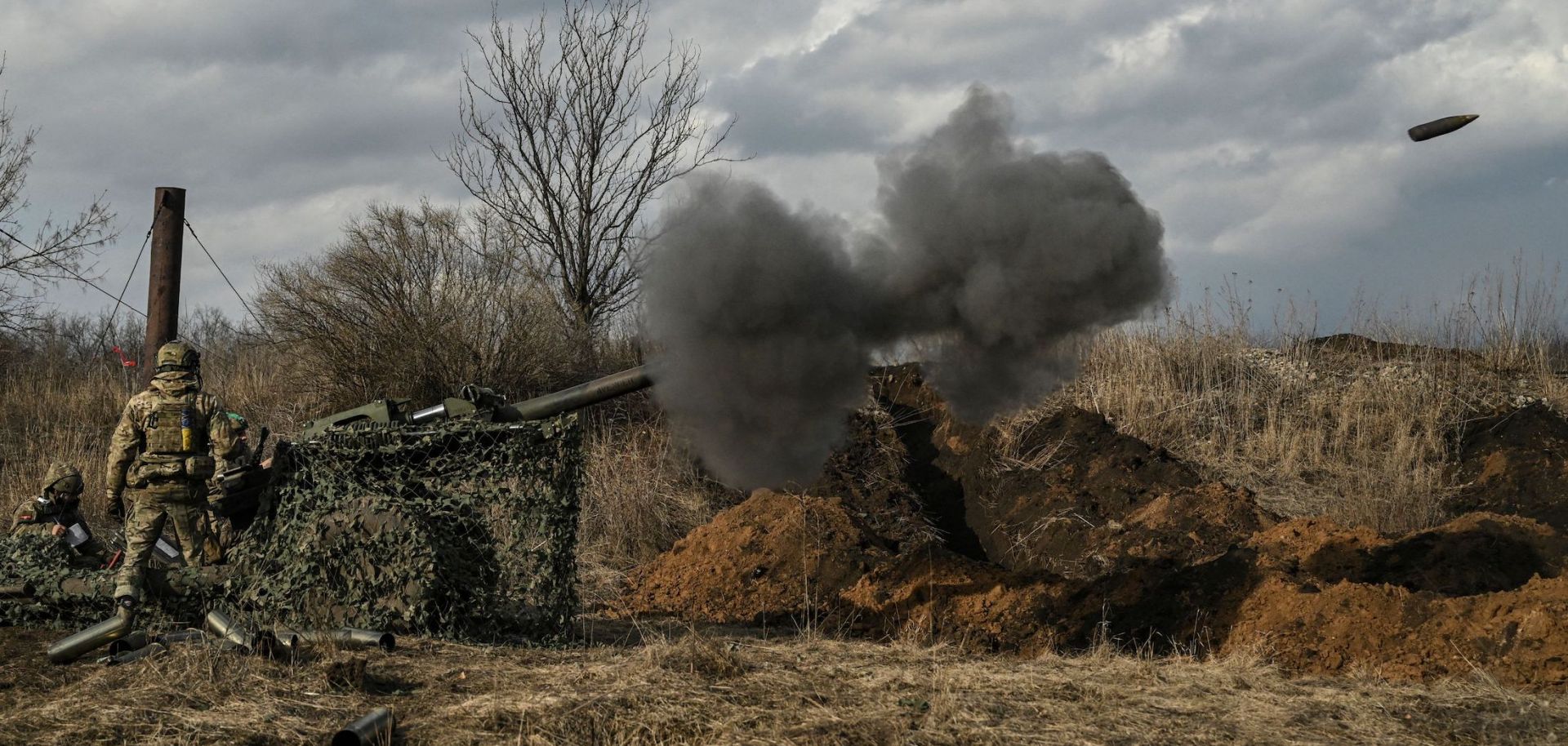
To be clear, Russian forces will be heavily degraded through 2024 and 2025. Ukraine will need artillery ammunition, aircraft and tactical missiles to hold its ground and make any further gains. Artillery is the primary casualty-inflicting weapon in the war overall, and the increased number of shells the Ukrainians can fire would likely directly increase attrition on the Russian side. Aircraft such as F-16s might allow Ukraine to decrease the threat from some Russian missiles and helicopters, which were major problems during their last offensive. Air- and ground-launched tactical missiles are essential for striking high-value targets and preventing Russian forces from amassing for a successful offensive.
But while these capabilities are critical for any offensive push, there is little reason to believe that they, on their own, will enable Ukraine to overcome the fortifications and minefields that prevented a breakthrough in the summer of 2023. In fact, Russian forces will have an additional year or more of entrenchment — meaning more minefields, new and deeper concrete bunkers, including hardened locations to store equipment more safely, and improved roads and logistics in the occupied south — which will make a Ukrainian breakthrough much more challenging in 2025 compared to 2023 or 2024.
In this context, events in 2025 appear unlikely to unfold as optimists in the West speculate. Identifying the changes in equipment, capabilities, tactics and strategy that would allow Ukrainian forces to alter the situation in their favor is presumably a priority of Western and certainly Ukrainian leaders. Still, few changes that Ukraine's military can realistically undertake would conceivably allow it to overcome Russian fortifications in southern Ukraine.
For this reason, the presumably outgoing chief of the Ukrainian army, General Valery Zaluzhny, concluded in the Economist magazine in November 2023 that it may take a "massive technological leap to break the deadlock." Such a leap could come in Ukrainian access to large quantities of new and advanced electronic warfare systems, drones and precision munitions. However, amid debilitated foreign support and election campaigns in the West, as well as war exhaustion in Ukraine, this is hard to imagine.
Without Ukraine retaking more territory in southern Ukraine — which appears likely necessary to have any chance of triggering a political crisis in Russia — the conflict will solidify as a war of attrition in which Russia enjoys structural advantages. Moscow will be able to take its time degrading Ukraine and will leverage its advantages to accomplish this.
Russia can use its larger population and at least partially plug its military manpower and labor shortage with Central Asian migrants. While mobilization is unpopular in Russia, the country's volunteer drive and smaller-scale "shadow mobilization" avoided a mobilization in 2023 and will likely continue in 2024. Russia's steady stream of revenue from its oil and gas exports will also continue — which, while they have declined significantly, are not at risk of drying up entirely for at least the next several years, while China can be relied on to plug key economic capability gaps, preventing a Russian financial meltdown. Finally, Russia has a massive and expanding domestic arms industry that, along with support from Iran, North Korea and China, appears capable of providing the Russian army with sufficient resources for the foreseeable future.
By contrast, manpower shortages are the biggest challenge facing Ukraine. But earlier this month, President Volodymyr Zelensky appeared to rule out mobilizing women and said he would reject further mass mobilization until the plans were worked through in more detail. Currently, a draft law on mobilization expanding the groups of Ukrainian men eligible for the draft and increasing the consequences for avoiding it is stalled in parliament. Opposition to further mobilization is high, not only due to obvious social and political reasons but demographic ones. Ukrainians rarely volunteer for military service, and meanwhile, the average age in the army is likely above 40. Ukraine could look to decrease the age at which men are drafted into the army from the current 27 to 25 or even lower. However, men of this age are from generations born at a time of relatively small birthrates, and their deaths would risk impeding Ukraine's ability to regenerate its population after the war, risking another Russian invasion in the future.
Moreover, Ukraine's economic situation appears worse than Russia's. Ukraine's economy is kept afloat by Western loans and grants, and should those be cut off in the future, Ukraine's economy would collapse rapidly into hyperinflation. Kyiv will not be in a position to rebuild its economy until the country is relatively secure, which Russia is likely dead set on preventing.
The case is similar with regard to military production. While Ukraine is ramping up domestic production of drones, munitions and the few systems it was manufacturing before the war, only a tiny portion of the arms Kyiv needs are made domestically. While Rheinmetall and some other European arms manufacturers are reportedly trying to move some production inside Ukraine, these facilities will be small and vulnerable, meaning Ukraine's dependence on foreign arms supplies is likely to continue.
New Strategies and Battlefields for Ukraine?
Much of the optimism among some Western sources regarding structural forces shifting in Ukraine’s favor and a theoretical Ukrainian breakthrough in 2025 (or beyond) appears to be serving as an argument for relative inaction. While optimism may help Ukraine get what it needs now merely to preserve the status quo, clear-eyed arguments about the need to proactively ramp up Western production further are necessary for a breakthrough and a more effective strategy to win the war.
This bloating of the Western public's expectations for 2025 opportunities may be unintentional or out of an intention to support Ukraine. Still, it’s shortsighted because it reinforces the idea that the West should only support Ukraine if it is regaining territory rather than arguing that the West should support Ukraine to the fullest extent and put it in the best possible negotiating position no matter what, thus ensuring it can hold all its territory and threaten new offensives, which would require larger Western industrial investments.
The slim prospects for a 2025 breakthrough on the front line raise the question of what an alternative victory strategy for Ukraine could look like, particularly considering that war fatigue in the West will likely grow during the coming year. Struggles within the European Union and the United States to approve more than $130 billion in financial and military aid for Ukraine offer a potential example of this fatigue, even if largely driven by the compulsions of individual populist leaders.
An alternative Western strategy for Ukraine to win would likely need to recognize the importance of Kyiv bringing the war deeper into the heart of the Russian core. Just as Russia is using North Korean and Iranian equipment as part of its regular airstrikes across Ukraine, the West would need to allow Ukraine to use its equipment to strike deep inside Russia.
Kyiv and Western capitals have consistently recognized that a political and/or civil-military relations crisis in Russia would likely be necessary for Ukraine to win the war outright. While some hoped that such a crisis could be induced by retaking ground in occupied southern Ukraine, it is becoming increasingly apparent that Ukraine would need to induce such an event through other means, such as attacks on Russia. Frequent and substantial strikes on military infrastructure and key industries in Moscow and St. Petersburg would make the war much more real for Russian citizens there (who have been the least touched by mobilization) and would deal a political blow to Putin's authority and increase elite and regime functionary pressure on the Kremlin to end the war.
In this scenario, while the West would not openly encourage strikes deep inside Russia, it would quietly accept them as necessary, especially considering that Western weapons of numerous kinds — from basic artillery to drones to anti-air missiles — have already been used on Russia's sovereign territory without resulting in escalation by Moscow. As a result, this would presumably not represent a large step in escalation toward a direct Russia-NATO conflict beyond what the West has already been willing to risk.
Strikes inside Russia would also serve to recenter the economic component of the war. Western sanctions have proven largely ineffective in stopping Russia's war efforts and will likely remain unable to do so in the next few years. Unless Ukraine and the West induce Russian economic turmoil through other means, Russia is unlikely to come to the negotiating table. Ukraine's chance of winning would be significantly higher if oil were $40 a barrel (from roughly $80 currently) because it would render Russia's largest tax-paying industries unprofitable and risk making the Russian government unable to pay foreigners for goods. Because such a drop in oil prices is extremely unlikely in the foreseeable future, Ukraine would need to induce similar effects artificially by striking Russian oil and gas infrastructure, as it has already begun to do in an expanding geographic scope in 2024, with attacks on refining infrastructure on both the Baltic and Black seas and deep inside the Russian core.
In short, for Ukraine to win, it will need to increasingly shift the war inside Russia in 2024 and beyond; otherwise, its prospects of victory may prove dimmer with each passing year. To defeat Russia, Ukraine needs to build a wartime economy capable of withstanding possible reductions in Western financial and military support while still dealing significantly disproportionate damage to Russian forces on the battlefield — perhaps even without the support of the U.S. President or Congress, as Donald Trump and his supporters are unlikely to provide Ukraine the resources it would need to win the war should the win the 2024 U.S. elections. They may be more willing to tolerate and partially finance a strategy foreseeing increased Ukrainian strikes inside Russia to more economically increase Ukraine's leverage in negotiations with Moscow compared to gathering the more expensive equipment needed for a large-scale armored push in southern Ukraine.
