
The act of naming something endows it with a definite identity — from children to countries, a name is the most basic thing one can know about someone or someplace. It is the first building block from which an identity grows, extending outward into behaviors and probable futures. The name of a nation reflects the history, aspirations, culture and behaviors of its people and can, at times, suggest the long-term goals of its leaders. But when those goals change, so too can a name, as evidenced by India's occasional use of the term "Bharat" to describe itself at the recent Group of 20 summit. Though India may not be quite ready to change out its business cards, New Delhi's possible contemplation of such a name change makes sense amid shifting identities, power dynamics and goals in the age of multipolar power politics
There are various reasons countries relabel themselves. For example, former colonies could use new names to break free from European legacies as they reassert or rebuild their old, pre-colonial identities. Additionally, political upheaval and revolution could lead new regimes to toss old state labels to mark a new historical chapter. Sometimes a name change is a reaction to how geopolitical shocks can reshape identity, like after an invasion by a foreign enemy. Often, these name changes reflect new aspirations for a population, while also trying to reshape foreign assumptions about a place. However, not all new names achieve these goals — and some don't even stick around.
India: Decolonization or nationalism?
It comes as no surprise that India, once the jewel of the British Empire, has impulses to re-label itself as it emerges as a great power in the multipolar era. The decision of the ruling Bharatiya Janata Party (BJP) to occasionally label India as "Bharat" — a Sanskrit word used in ancient Hindu texts and in various regional languages — has fueled speculation the government is testing the waters for a potential name change. During the course of its nearly decade-long tenure, the Hindu nationalist BJP has led efforts to change the names of cities and roads it claims are associated with the country's Mughal imperial or British colonial past. The BJP has generally rationalized these changes through the lens of decolonization, implicitly associating those who use former names with the country's imperial and colonial history. A number of BJP lawmakers have similarly criticized the name India as having colonial connotations, as the Greek-origin label took international hold of the subcontinent's identity during the British era.
However, critics have claimed BJP-led name changes are aligned with the party's broader efforts to orient India toward Hindu majoritarianism and more narrowly define legitimate or acceptable names and behaviors. Opposition parties have also claimed their formation of the Indian National Developmental Inclusive Alliance (or "INDIA" coalition) to contest the BJP in the mid-2024 general elections was the proximate spur for the government's decision to avoid "India" and favor "Bharat," a decision the opposition claims underlines the BJP's perceived vulnerability.
India's government has not released any official statements that indicate a name change is imminent, though a special parliamentary session from Sept. 18-22 had initially fueled further speculation that a proposal may be forthcoming. It also remains possible the government will pursue these changes more informally by first normalizing the term Bharat in place of India. Regardless, name-changing under the BJP will remain a relatively contentious issue given the party's Hindu nationalist orientation, which will sustain criticisms that these efforts are ultimately in service of a Hindu majoritarian agenda.
Turikye: Breaking free from the bird
In the Middle East, a legacy of empire and Cold War has relabeled more than a few countries — and in 2022, Turkey decided to relabel itself Turikye, despite its non-colonized past. (Here at RANE, we await the Associated Press' official redesignation before we follow suit). In fact, Ankara has called itself Turikye since its previous name swap after the fall of the Ottoman Empire. But for decades, it deferred to the English-leaning "Turkey" at international forums like the United Nations out of simplicity and ease of communications — despite the fact that this name brought to Western, and particularly American, minds the image of the bird rather than the country's Islamic, European and Middle Eastern culture. The 2022 declaration pushed the Turkish-language version of the country's name into such institutions.
But this was not merely a push in the name of cultural accuracy. President Recep Tayyip Erdogan's vision for Turkey hinges on a growing and evolving Turkish nationalism, one that embraces the risks and opportunities of the multipolar world. "Turikye" is a break with the previous, more deferential, post-Ottoman "Turkey," which was a key NATO ally in the bipolar world and then a poster child of globalization in the 2000s. "Turikye" is meant to reflect the state's multiple interests in multiple geopolitical camps, as seen in its willingness to negotiate and coordinate with Russia and China as readily as it sends arms to Ukraine and buys American F-16 fighter jets. Turkey's name change is a statement of independence, this time from its own past.
Sub-Saharan Africa: Renouncing colonial legacies
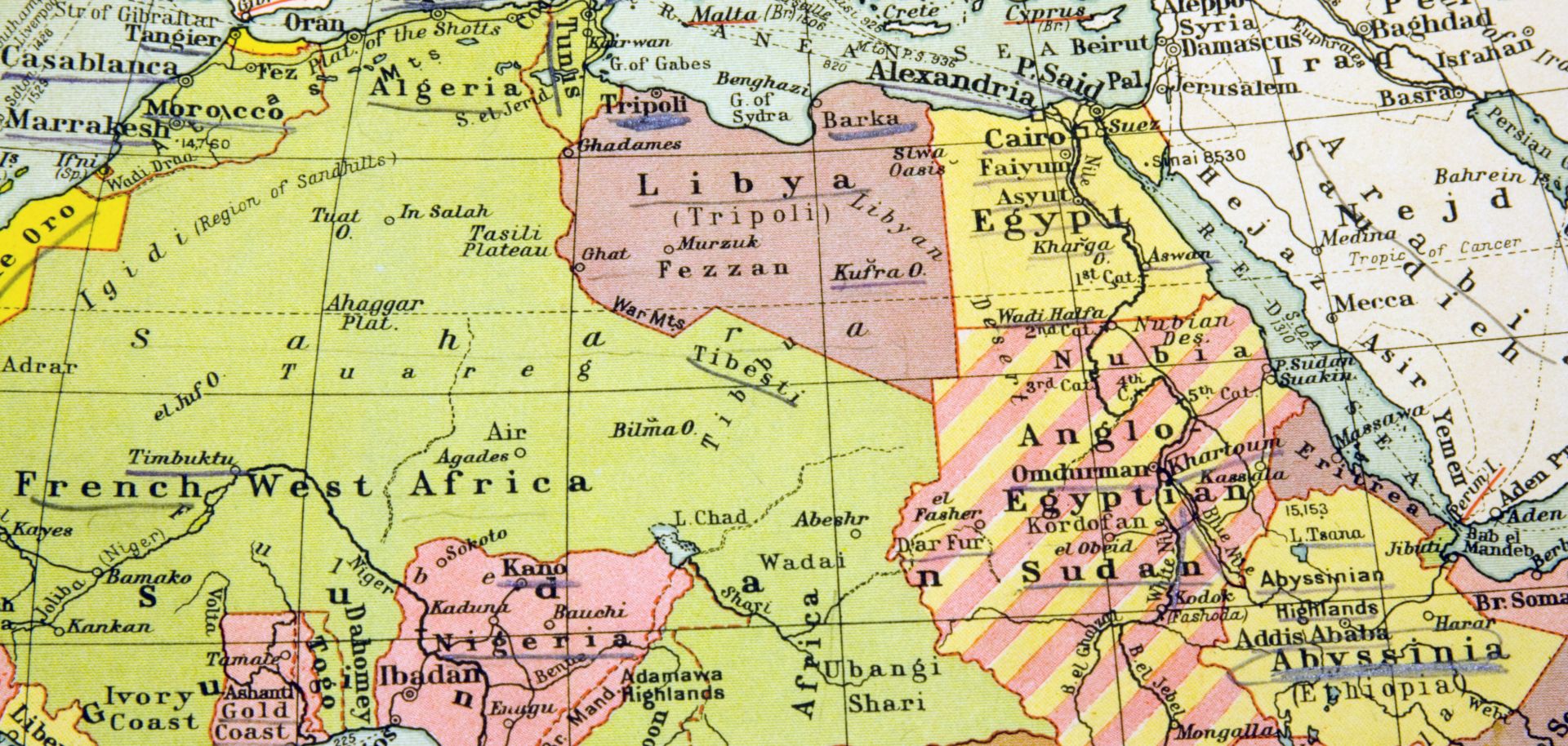
In sub-Saharan Africa, the politics of nomenclature is closely linked to colonial legacies. Upon gaining independence from European powers, leaders of newly formed African states drew on pre-colonial ethnolinguistic histories as a means of consolidating national pride behind new flags; German Southwest Africa became Namibia, French Upper Volta became Burkina Faso, Dahomey became Benin, Southern Rhodesia became Zimbabwe and Belgian Congo-Leopoldville eventually became the Democratic Republic of the Congo. These are only a few of the many name changes across the continent. While uniting disparate — and at times warring — ethnolinguistic groups has challenged several sub-Saharan African countries' stability and statehood, names and nationalist pride in the form of official languages, sports teams and national songs have been powerful tools in creating national identity.
Despite the long-past conclusion of African independence movements, the era of African name changes hasn't ended, as shown by Swaziland's switch to eSwatini in 2018. Looking forward, name changes could reflect shifts in governance structures, regimes and/or demographics, as well as extend to countries that still retain their colonial titles. South Africa — named the Union of South Africa in 1910 and the Republic of South Africa upon independence in 1948 — is one such case study. Efforts to rename the country in the image of one particular ethnic group (some have advocated for the name "Zululand" to reflect the country's largest ethnic group and pre-colonial kingdom) have not gained national traction. However, the ruling African National Congress (ANC) party is facing an identity crisis as its mandate shrinks and parties advocating Black empowerment and populist-leaning policies gain support in the country's heartland. This evolution suggests that a political break with the ANC — and a broader cultural shift — is underway. On the municipal level, many apartheid-era names have been replaced with names in local languages, like Gqeberha, previously Port Elizabeth. Whether this will include a national name change is yet to be seen, but a new title that draws on the land's pre-colonial roots would certainly be an authoritative emblem of the country's shifting power centers.
North Macedonia: Compromise, pressure and national branding
Though Europe has dozens of national renaming stories to tell, especially after the world wars and the Cold War, one of its more recent name changes helps illustrate how small nations react to the constraints and compulsions of the multipolar era. North Macedonia, situated between Albania, Bulgaria, Greece, Kosovo and Serbia, is a mountainous region that culturally overlaps with its neighbors, particularly the Greeks and Bulgarians. In the late 19th century, as the Ottoman Empire began to unravel, the idea of a Macedonian nation — which up until then was mostly a provincial label rather than a distinct identity — began to emerge. This identity sharpened when Yugoslavia established Macedonia as a constituent state of its communist federation after World War II, and when the federation fractured, an independent Macedonia was born.
In previous eras, Macedonia's neighbors might have partitioned the new state, but such expansionism was verboten in the 1990s, and Macedonia found itself in search of security and identity as the Yugoslav wars ravaged the Balkans. Leaning into pre-Ottoman, and even pre-Roman, history and legends, Macedonia asserted its heritage through Alexander the Great and his father Philip II of Macedon, despite modern Macedonians being largely Slavic and having a tenuous cultural connection with the Hellenistic conqueror. This irked the Greeks, who themselves have a province called "Macedonia" (and which actually hosts Pella, the capital city of Alexander the Great's ancient kingdom) and worried the modern Macedonians might one day make claims to Greek territory. The Macedonian government's decision in 2014 to place dozens of statues across its capital, Skopje, depicting historical figures and events that Greece claims as part of its heritage did little to ease tensions.
But Skopje's main security concerns came from its neighbors in Albania and Serbia; to protect itself, Macedonia sought to join NATO, which in 1999 had fought a brief war with Serbia. However, additions to NATO's ranks require unanimity from its members, and Greece was not prepared to allow a country with unresolved territorial and cultural disagreements to join without assurances Skopje would not become another thorn in its territorial side, as Turkey sometimes is. Thus, Macedonia relabeled itself "North Macedonia" and dropped any pretense of claims to Greek Macedonia, earning Greece's "yes" vote for NATO membership in 2020.
Eurasia: Escaping Russian legacies
Eurasia is home to numerous pushes for name changes, almost all of which aim to remove Russian imperial legacies from countries, cities, geographic objects and groups of people after breaking from an empire hundreds of years old. A recent event is the Ukrainian government's insistence that Ukraine's capital be transliterated from Ukrainian instead of Russian in English, a shift from Kiev to Kyiv. The process is ongoing as part of a renewed decommunization push that began in 2015. This push hit another milestone in June when a national commission recommended that 1,400 cities and villages be renamed as part of the decolonization of Ukraine's toponyms and the removal of Russia's imperial legacy, as many of the previous names did not lexically correspond to the norms of the Ukrainian language when rendered in Ukrainian.
Similarly in Belarus, in particular following mass protests in 2020, the anti-Russian opposition has insisted upon rendering Belarusian transliteration for cities and towns as opposed to their Russian names that were long the norm. In fact, the country is still settling into its current name from the archaic Belorussia, which comes from the Russian name for the country.
But the most prominent country name change movement in the region belongs to Georgia. Following the country's war with Russia in 2008, Georgia has fueled a movement to rename itself abroad as Sakartvelo, the land of Kartvelians; the country already refers to itself by this name domestically. However, the Georgian government is not actively attempting to remove the name "Georgia" from the international stage. Instead, it is engaged in the more geopolitically focused task of getting other countries — and in particular those in the region — to stop using the Russified name for Georgia — Gruziya — in their own languages, instead urging the use of Sakartvelo and appropriate derivatives.
Name issues of course aren't just confined to the states that gained independence following the Soviet Union's collapse. Within Russia, numerous regions and groups of people are still known by competing names, most often by one in Russian and one in the local language. For example, Russia refers to its largest republic as Yakutia, while locals prefer the name Sakha. In short, name-changing is likely to remain a topic in the region in the decades ahead as Russia faces the prospect of continued decline and critics continue to examine the imperial and colonial legacies of the Russian empire and the Soviet Union.
Taiwan: Living in the shadow of China
The debate in Taiwan about whether to use its de facto or de jure name has intensified in recent years as the nation (only diplomatically recognized by 13 countries) balances its relations with Washington and Beijing against its own identity. In official documents, the country is still called the "Republic of China," or ROC, derived from the aims of Taiwan's first leader Chiang Kai-shek to reclaim all of China from the communists after his 1949 retreat from the Chinese civil war to the island of Taiwan. Since then his party, the Kuomintang, has effectively abandoned revanchism but has fought to maintain this official name to improve trade ties and reduce military tensions with Beijing, which requires that all trade partners at least tacitly affirm its "One China" policy that there is only one nation on both sides of the Taiwan Strait. But Taiwan's ruling Democratic Progressive Party and the nation's increasingly sovereignty-minded populace are keen on slowly expanding the usage and legitimacy of the more common "Taiwan."
Meanwhile, Beijing has used its economic sway in concert with the aforementioned One China policy to ensure that myriad international bodies — ranging from the World Trade Organization to the World Baseball Classic — refer to Taiwan as "Chinese Taipei," a name that suggests China's sovereignty (if only on paper) over Taiwan. This naming debate is not merely for Asian policy wonks; it drives China's trade and security ties with the world. Beijing cut trade with Lithuania by roughly 80% in 2021 after Vilnius changed the nameplate on its de facto Taiwanese Embassy from "Chinese Taipei" to "Taiwan." And in August 2022, China disrupted global shipping and air traffic around Taiwan with live-fire military drills after U.S. House Speaker Nancy Pelosi met with Taiwanese President Tsai Ing-wen in Taipei, a meeting China claims flouted diplomatic decorum by circumventing Beijing's authority.
Name labeling in the 21st century
Beyond these examples, there remain open questions as to how long some places may keep their current names. If republicanism ever gains the upper hand in London, what is to become of the "United Kingdom?" If current demographic trends continue to favor the population share growth of the Indigenous Maori in New Zealand, how long will it retain its Dutch-origin name? And how many other countries will take the Turkiye route, pushing for the Indigenous language to supplant their globalized, often English labels?
If there is a notable connection between all these name changes, it is that they carry with them nationalist overtones — with different ways that nationalism may impact the global balance of power. For a place like Ukraine, its shearing of Russian place names is another step away from its Soviet and imperial histories and toward an independent identity that will give greater social and political cohesion as it resists Russian military aggression. Meanwhile, Turkey is embracing a nationalist, indigenous ethos that will ride the coattails of identity politics to place Turkey in the global middle, with no natural affinity for East or West. For South Africa, a shift toward "Zululand" could mean its assertion as the new home of pan-Africanism — or at the very least, as a power more connected and concerned with African rather than Western or globalized interests. And in Taiwan, state labels carry connotations of war and conflict, as a Taiwanese government that embraces an official, overt identity as the Republic of Taiwan may spark more forceful Chinese action. All these examples show that as the multipolar global order unfolds, nation-states will refashion their national identities, not least by embracing new names that describe who they strive to be.
