
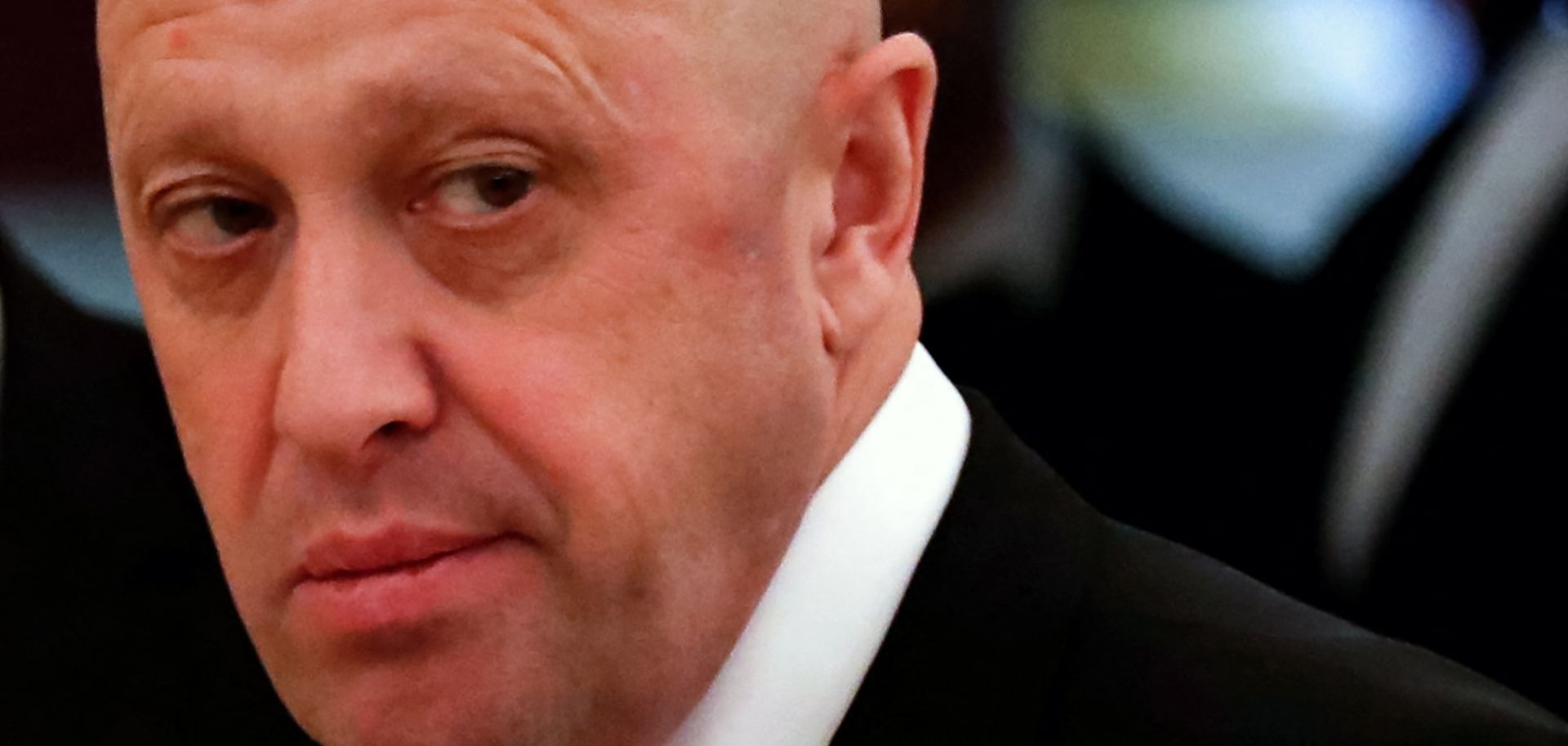
The death of Yevgeny Prigozhin, the head of Russia's paramilitary Wagner Group, will enable the Kremlin to consolidate political control and extend its influence over the Wagner Group, whose fighters are likely to focus on deployments in Africa and Ukraine. On Aug. 23, an Embraer ERJ-135 aircraft with tail number RA-02795 linked to Prigozhin exploded over Russia's Tver region between Moscow and St. Petersburg. Russia's aviation authority Rosaviatsiya said Prigozhin and his chief Wagner deputy Dmitry Utkin were on board. Sources linked to the Wagner Group claimed that the plane exploded after an anti-air system shot it, and a Western official told the Financial Times the plane had been brought down by a Russian anti-aircraft missile system. However, other Russian media sources claimed that the wreckage did not show signs of being struck by an anti-air system and instead suggested that a bomb may have been placed on board. Russian authorities have not definitively confirmed Prigozhin's death, but the Grey Zone Telegram channel linked to the Wagner Group claimed it had confirmed that both Prigozhin and Utkin were killed.
- The explosion came almost exactly two months after the start of Prigozhin's mutiny in June, and — aside from killing Prigozhin and Utkin — left five other high-ranking Wagner associates, plus the plane's three crew members, dead.
Prigozhin's death is likely an assassination at the hands of the Kremlin in order to deter challengers and dispel notions of Russian President Vladimir Putin's weakness ahead of the 2024 presidential election. Since the Wagner Group's mutiny in late June, the Kremlin has used the uprising to reveal and neutralize military personnel, officials and public figures suspected of sympathizing with Prigozhin's criticism of the Kremlin's handling of the war in Ukraine. While the mutiny ended with a deal to send Wagner personnel to Belarus, Putin was only incentivized to abide by the agreement until it stopped serving his interests. As a result, there was always a large risk that he could backtrack on the deal once Prigozhin was sufficiently marginalized and the Russian government was ready to take over the Wagner Group's activities under new leadership. Prigozhin's death is likely intended to reduce perceptions in Russia and around the world that Putin responded to the mutiny with weakness by allowing Prigozhin to preserve his life, wealth and status despite the damage dealt to national unity by his brief revolt. Prigozhin's death will likely deter similar challenges to Putin's rule that could have made the Russian political system more volatile ahead of the 2024 presidential election.
- Belarusian leader Alexander Lukashenko claimed that an informal "deal" he helped broker to end the Wagner Group's mutiny included a "security guarantee" for Prigozhin. Prigozhin's death will therefore serve as the latest reminder for would-be opponents that Putin will always prioritize power preservation — a message that he and his supporters can use to curb any internal pushback ahead of next year's election.
- As per Russia's usual information strategies, Russian propaganda networks will likely offer an array of explanations for the plane's explosion. But the Kremlin will likely hint that Prigozhin's death should serve as a lesson to would-be opponents.
Prigozhin's and Utkin's deaths make the Wagner Group's future uncertain, but the Russian government will likely strive to send its fighters to Africa and Ukraine. Telegram channels associated with the Wagner Group have said the organization is calling an extraordinary meeting of its commanders in the coming days. It is likely that as a result of this meeting, Russia's security services, namely the GRU and FSB, will gain more control over Wagner leaders. This greater unity of command will reduce the political liability and operational volatility associated with Prigozhin's and Utkin's leadership of the Wagner Group. The death of Utkin and the other Wagner leaders means the organization's remaining leadership will likely come under firmer Kremlin control. The organization's new leaders will likely claim to be continuing Prigozhin's recently announced renewed focus on Africa, where Wagner troops are present in the Central African Republic, Libya, Mali, Sudan and possibly Burkina Faso; speculation also swirls suggesting they could be sent to Niger. Furthermore, Prigozhin's death renders the role of Belarus in the group's future largely unnecessary and likely to be wound down in the near- to mid-term, as Wagner's fighters are unlikely to want to engage in major provocations against NATO from its territory. Furthermore, Belarus is unlikely to desire the group's long-term presence in the country given that Minsk would have to absorb a greater share of the costs, and more important, as Wagner forces are much more needed in Ukraine and would be of greater use for Russia in Africa than in Belarus.
- At a meeting with Wagner leaders June 29, just days after the mutiny, Putin reportedly tried to reveal and expand differences between Prigozhin and Wagner's top commanders by suggesting that, unlike Prigozhin, they want to return to the war in Ukraine.
- On Aug. 21, Prigozhin posted a video address on his Telegram channel, his first since the June mutiny, in which he said he would seek to expand Russian influence on all continents and make Africa "more free." While Prigozhin's location in the video was unconfirmed, some observers suggested it was filmed in Mali.
