
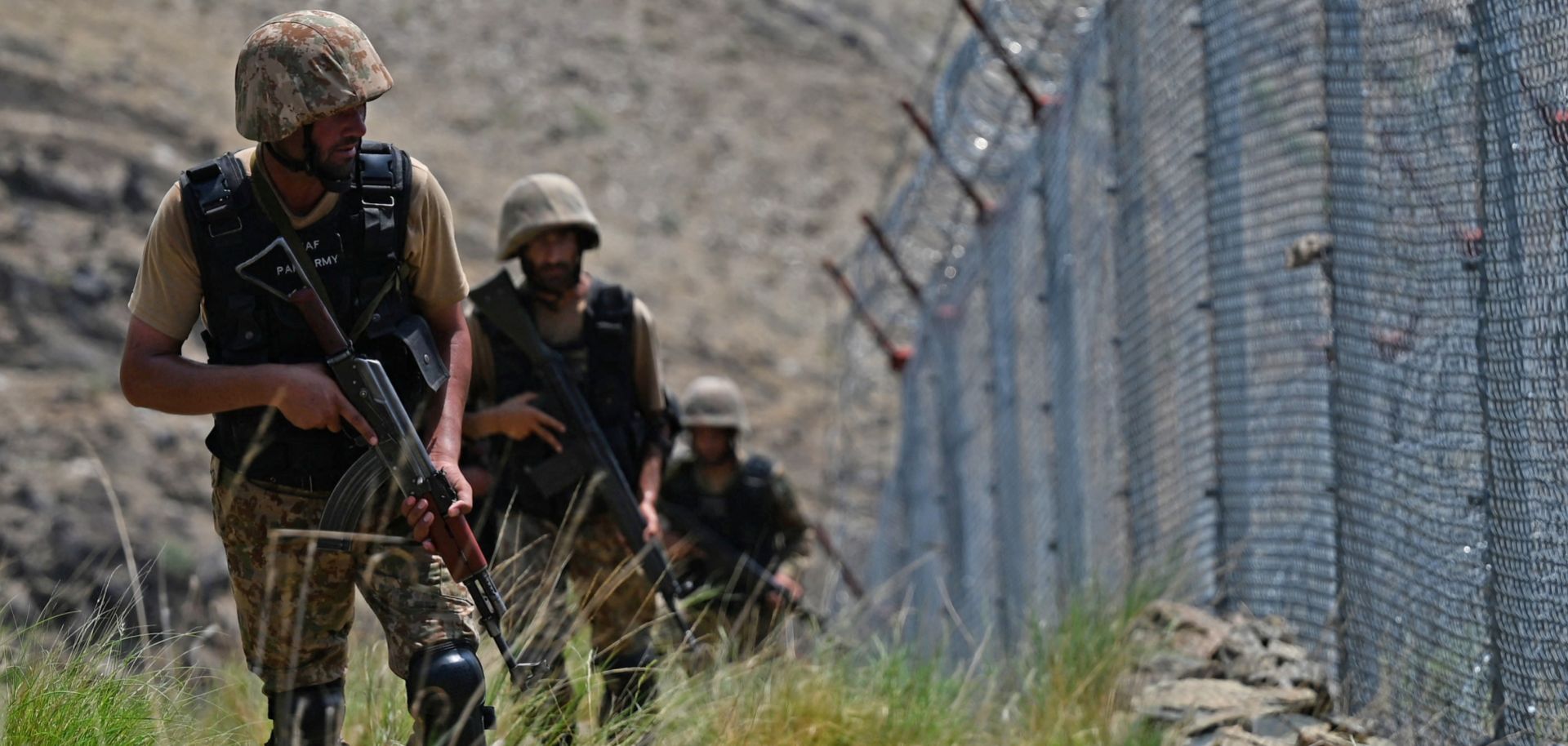
Pakistani troops patrol the fence along the Afghan border in August 2021.
The Afghan Taliban’s success in mediating between militants and the government in neighboring Pakistan could help bolster the credibility of the transitional government in Kabul and assuage some regional security concerns by showcasing the Taliban leaders’ ability to prevent cross-border terrorism. A month-long cease-fire deal between Tehreek-e-Taliban Pakistan (TTP), also known as the Pakistani Taliban, and the government of Pakistani Prime Minister Imran Khan went into effect on Nov. 9. The deal, which was facilitated by the Afghan Taliban, calls for Pakistan to release some TTP soldiers in exchange for pausing attacks until Dec. 8, which have escalated in the wake of the Taliban’s success in Afghanistan over the summer.
- The TPP has conducted at least 44 attacks in Pakistan since the Taliban launched their offensive against the former Afghan government in June.
- In August, shortly after seizing control of Kabul, the Taliban established a commission to investigate the ongoing conflict between the TPP and Islamabad. The following month, the Pakistani government proposed offering amnesty to TTP fighters if they surrendered, which the militant group promptly rejected. But the TTP continued to engage in talks with Islamabad in Afghanistan’s Khost province, which ultimately led to the current cease-fire.
Amid pressure from Taliban leaders in Afghanistan, the TTP will likely uphold the cease-fire until the agreed-to expiration date. A more permanent solution to the group’s violent activity in Pakistan, however, remains unlikely. In the long term, factions of the TTP that oppose the terms of the current cease-fire or any compromise of the group’s ultimate goal of imposing Islamic law in Pakistan will eventually be pushed to resume violence. The Afghan Taliban have previously stated it would take military action should certain TTP factions resume attacks. This, however, would risk alienating TTP fighters, many of whom helped the Taliban seize control of Afghanistan over the summer. A harsh crackdown would also risk diminishing the Afghan Taliban’s influence over the Pakistani militant group, further dimming the prospects of ongoing peace talks between the TTP and the Pakistani government.
- The TTP supported the Taliban’s offensive against the former Afghan government and continues to operate from Afghanistan without direct objection from the Taliban. Pakistan has also maintained a close alliance with the Taliban for the past 20 years.
- The Pakistani government and the TTP have reached several previous peace agreements over the years. The longest lasted a month, while others only lasted days.
For the Taliban, the success of the current peace deal would earn their transitional leadership in Afghanistan some credibility by illustrating a capacity to prevent potential terrorist activities. Like the TTP, the Afghan Taliban have established links with other terrorist groups that remain a security threat to the larger region including al Qaeda, as well as ethnic Uyghur militants that concern China and ethnic Uzbek militants. The Taliban’s brokered peace deal between the TTP and Islamabad will likely collapse over time. But any success in managing potential violence in the short term will help the transitional government in Kabul maintain or gain aid and informal support from the international community, thus helping the Taliban consolidate their control over Afghanistan.
