
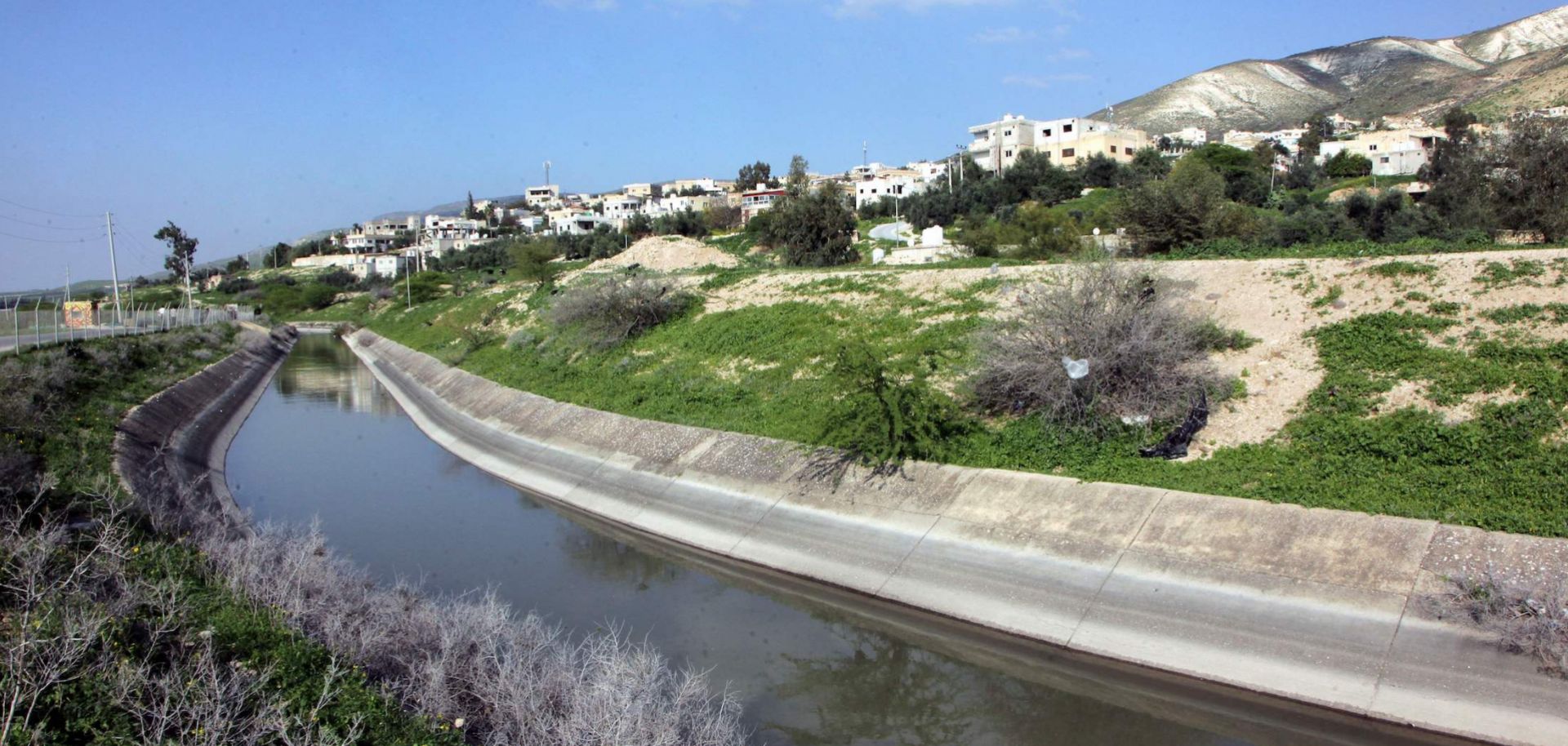
A photo shows a stretch of Jordan’s King Abdullah Canal on March 12, 2018.
Jordan and Israel are taking active steps to improve their bilateral relationship, but Amman’s deep roots in the West Bank mean the durability of the rapprochement will hinge on Israeli policy in the Palestinian territories. In early July, officials from Israeli Prime Minister Naftali Bennett’s new government held their first meeting with their Jordanian counterparts since taking office. During that meeting, Israel agreed to increase the amount of water it annually shares with Jordan to 50 million cubic meters — nearly double the 30 million cubic meters Israel usually provides. If this larger transfer actually happens, it would mark the first time that Israel has followed through on the water-sharing component of its peace agreement with Jordan since it was signed in 1994. In a further indication of warming ties between the two countries, Bennett also secretly met with Jordan’s King Abdullah II in Amman earlier this month.
- During the July meeting, Jordan and Israel agreed to raise the cap on the former’s exports to the West Bank as well.
- As one of the driest countries in the world, Jordan and has long depended on water from Israel for both agricultural and household consumption.
The appointment of a new Israeli government for the first time in 12 years has provided an opening for calmer relations with Jordan. The aforementioned steps toward normalizing the two countries’ strained ties only occurred in the weeks after Bennett’s government was sworn in. This indicates that the new Israeli government is trying to start with a clean slate with its eastern neighbor, whose relationship with Israel has been stormy in recent years. Given intensifying global scrutiny around Israeli actions in the Palestinian territories following the bloody May 2021 Gaza war, bolstering ties with an Arab neighbor could also provide the Israeli government with a much-needed reputational boost. Moreover, Israel needs Amman’s cooperation to ensure stability in restive Jerusalem, given Jordan’s partial stewardship of the Al Aqsa Mosque and the surrounding Temple Mount area.
- The previous Israeli government under Benjamin Netanyahu took some actions that Jordan’s government viewed as offensive, including refusing to let Jordan’s crown prince visit the Al Aqsa Mosque, welcoming the White House’s decision to move the U.S. embassy to Jerusalem in December 2017, and dramatically expanding settlements in West Bank territory. Bennett’s new government, however, has yet to signal it plans to reverse course on these issues.
- Jordan became custodian of some of Jerusalem’s holy sites nearly a hundred years ago. After losing those rights in the 1967 Arab-Israeli war, Jordan then regained the custodianship claim in 1994 as part of its peace agreement with Israel.
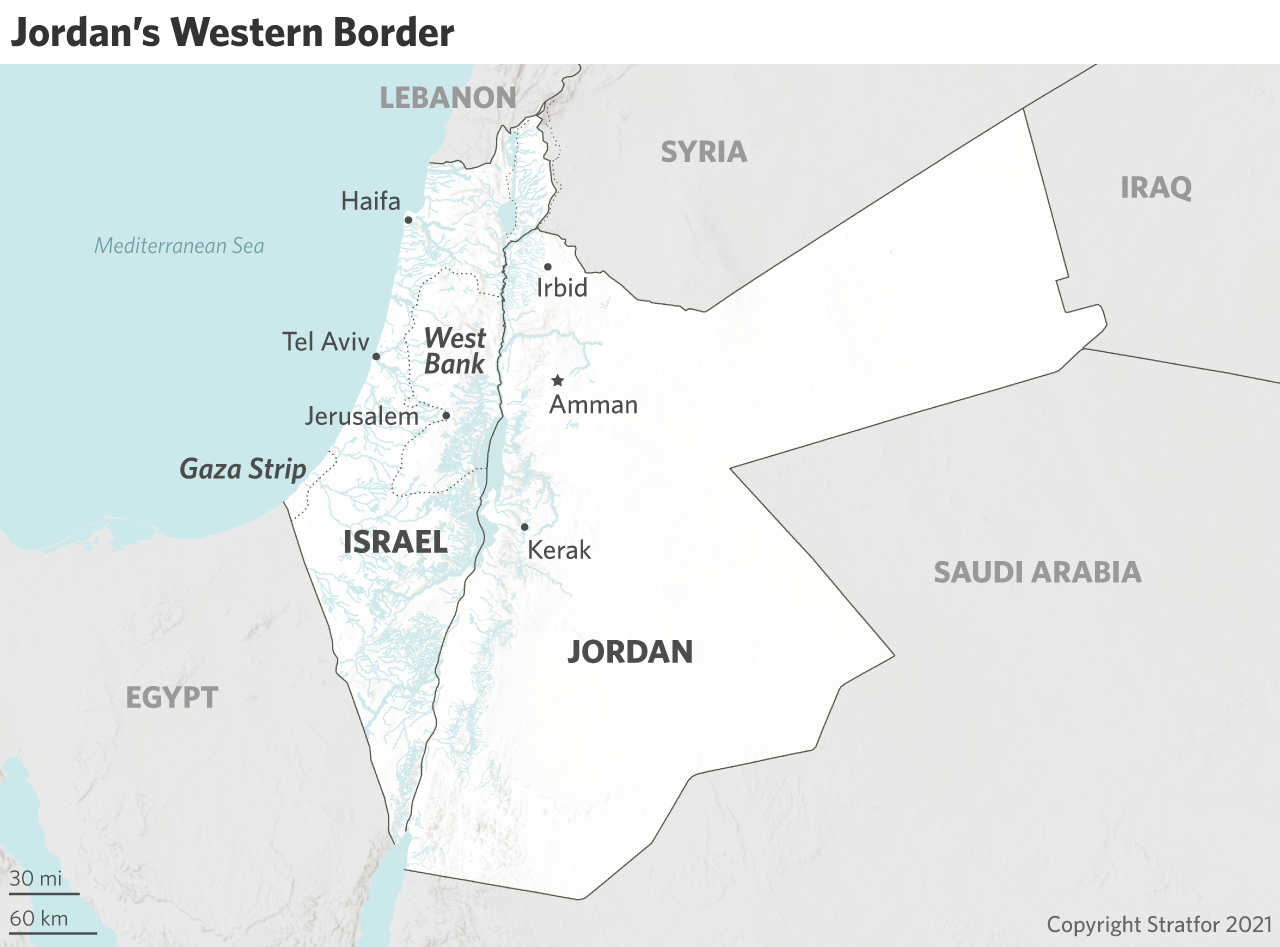
How Jordan approaches its budding ties with Israel will depend heavily on Israeli actions in the Palestinian territories — and in particular, in the neighboring West Bank. Many Jordanians are of Palestinian descent and resent any public display of closeness between their kingdom and Israel. To ensure domestic stability, Amman will thus be compelled to create some diplomatic distance with Israel when there are upticks in the conflict with Palestinian militants, or when Israel expands settlements in the West Bank. Preventing dissatisfaction with the royal court from becoming a source of active anti-government unrest is all the more important amid Jordan’s sluggish economic recovery from COVID-19 and a foiled coup plot in April.
- Compared with the Gaza Strip, Jordan is more likely to react strongly to upticks in Israeli-Palestinian tensions in the West Bank given its proximity to the region, as well as Jordan’s historical ties to the Palestinian communities living there. Amman also has close relationships with West Bank political groups like Fatah and the Palestinian Authority, which it conversely lacks with those in Gaza — namely, Hamas.
- On April 3, Jordanian authorities arrested the former crown prince and half-brother of Jordan’s King Abdullah II, Hamzah bin Hussein, and his mother, for an alleged plot to overthrow the government. The rare royal family dustup has since blown over, but there remains a residual need to reassure Jordanian partners, including Israel, that King Abdullah II is still in control and that his preferred succession line also remains in place.
A closer diplomatic relationship between Israel and Jordan could offer both countries key economic and security benefits. For one, more functional and pragmatic ties at the top level of both governments will enable even deeper cooperation between Israel and Jordan’s intelligence and security agencies. Jordan can also advocate for more regional visitors to the Al Aqsa Mosque in Jerusalem, which could boost its regional standing and help display Amman’s care for the Palestinian cause. More Israeli water for parched Jordan is especially important for the stability of the kingdom’s agricultural sector as well, with Jordan’s environment ministry warning in May that severe droughts in the country will only worsen in the coming years due to climate change.
- Jordan needs a functional relationship with Israel for its own security and economic well-being. Jordan was the second Arab state, after Egypt, to sign a peace agreement with Israel. The 1994 agreement grants Jordan some access to Israeli economic and agricultural aid, as well as water and energy resources. The agreement has also enabled intelligence sharing between Jordanian and Israeli agencies, which has likely helped contribute to some of the relative calm Jordan has experienced in the militant-ridden Levant region.
