
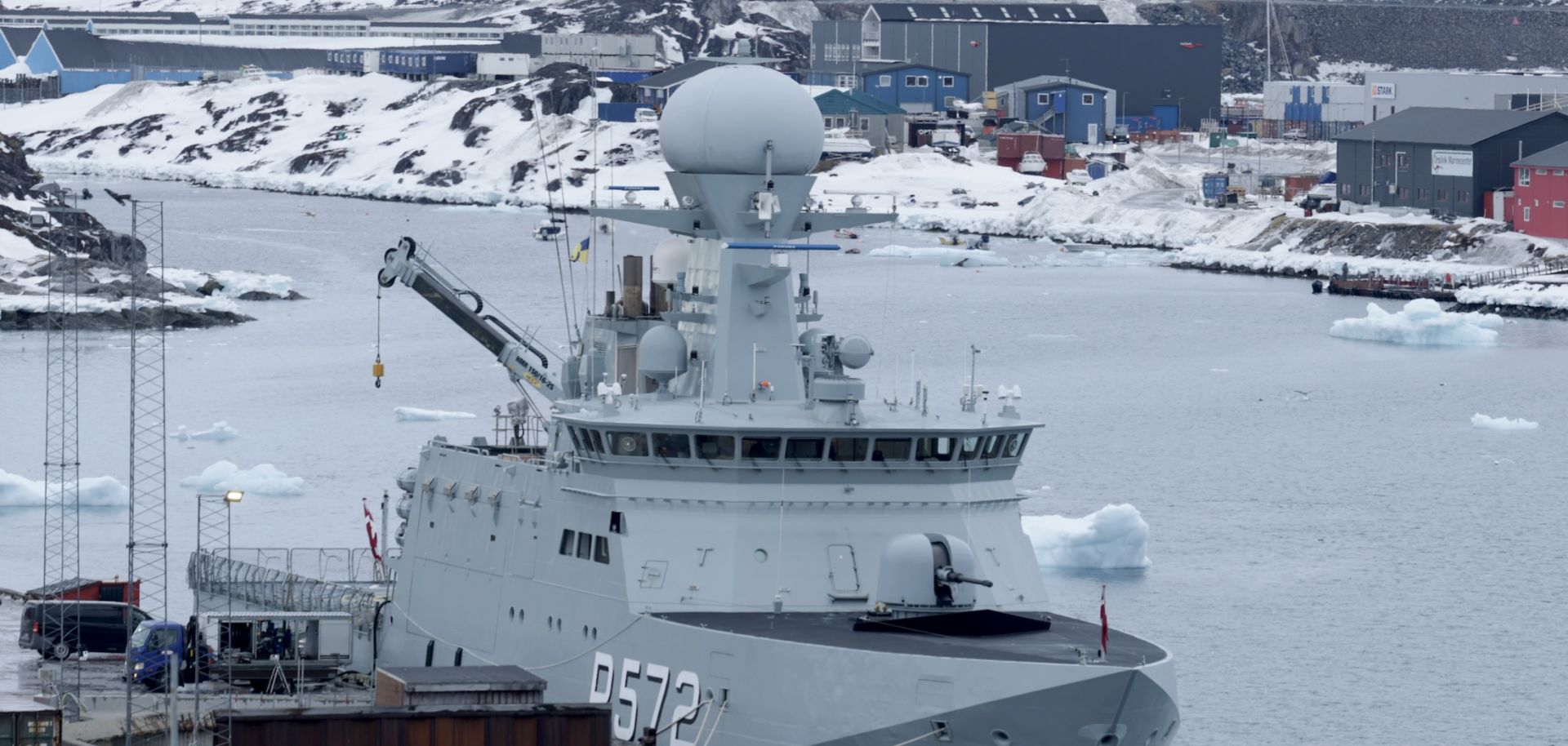
In 2026, U.S. pressure on Greenland could range from expanded military deployments and economic and political coercion to unilateral intervention, which would aim to strengthen Washington's Arctic presence while eroding Danish authority and would prompt calibrated Russian, Chinese and European responses. During the 2024 presidential campaign and since his return to the White House in January 2025, U.S. President Donald Trump has repeatedly expressed interest in Greenland, often describing the territory as key for American national security. Throughout 2025, Trump repeatedly asserted that "ownership" and "control" of the island were an absolute necessity to counter Russian and Chinese influence in the Arctic, even refusing to rule out the use of military or economic coercion to achieve this goal. This stance has triggered significant tensions with Denmark and Greenland, with both governments repeatedly saying that the territory is not for sale. U.S. pressure peaked in late December 2025 with the appointment of Louisiana Gov. Jeff Landry as special envoy to Greenland, a move that prompted Denmark to summon the U.S. ambassador in protest. Following the U.S. military operation in Venezuela on Jan. 3, Trump doubled down on these ambitions, telling reporters that the United States "absolutely" needs Greenland for defense.
- Greenland is an autonomous territory within the Kingdom of Denmark, currently governed under the 2009 Act on Greenland Self-Government. Denmark remains responsible for the island's defense, foreign policy and monetary system. Under the act, Greenland could become independent following a decision by the Greenlandic Parliament, then a national referendum and negotiations with the Danish government.
- Independence remains a core political goal for most Greenlanders. Elections in March 2025 brought a new coalition to power under Prime Minister Jens-Frederik Nielsen that favors a gradual path to sovereignty. Greenland is economically dependent on Denmark, which provides an annual grant covering a large share of public spending and funding for essential services. This makes fiscal self-sufficiency a central constraint on Greenland's path toward independence.
- Despite intense pressure from the United States to annex the territory, Greenlandic leaders have consistently cited their constitutional right to self-determination, asserting that their future will be decided by the people of Greenland alone, not by foreign powers.
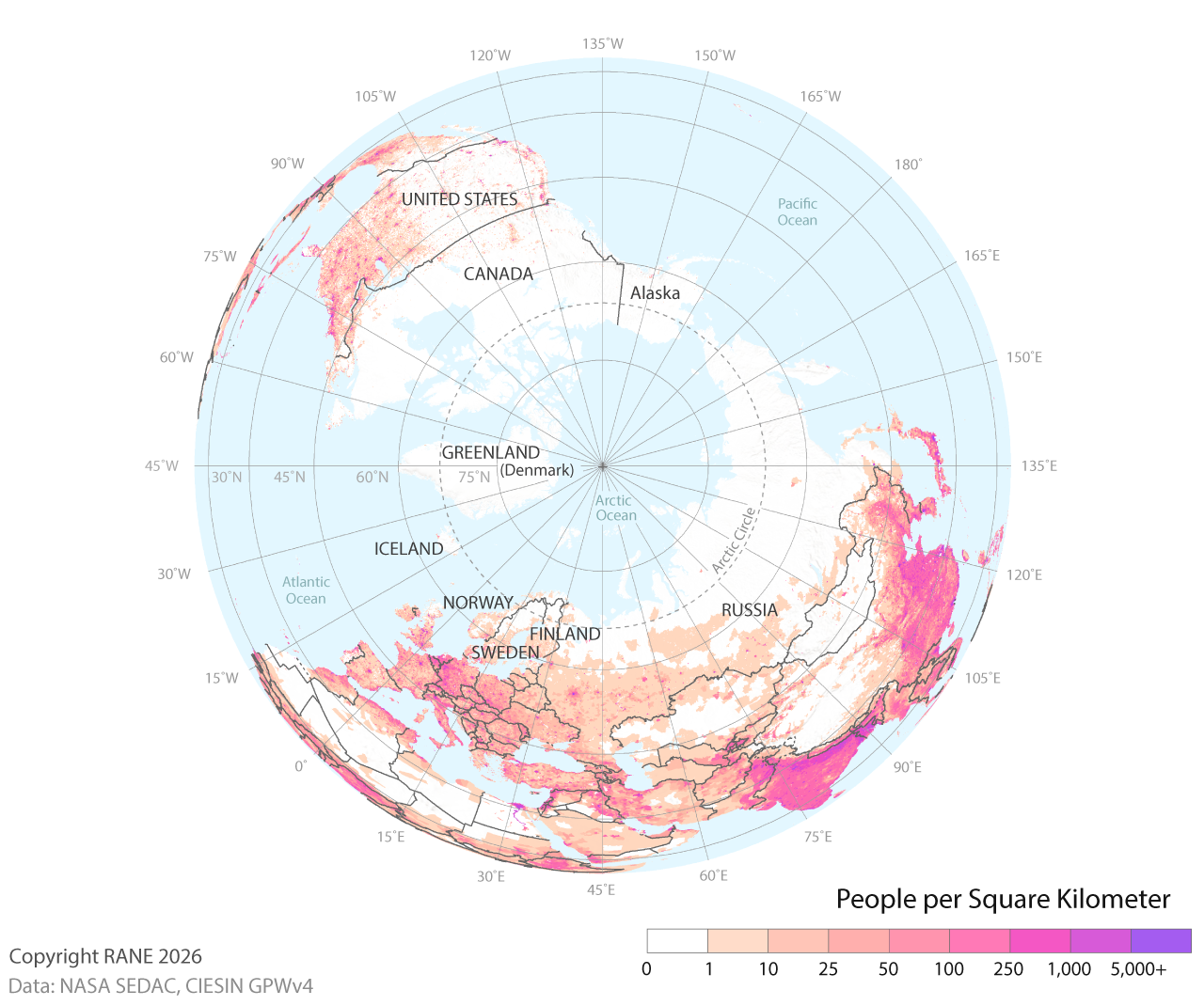
The United States' interest in Greenland is driven by its strategic position in the Arctic, which offers military, intelligence and economic advantages while serving as a platform to counter Russian and Chinese influence in the region. The United States' interest in Greenland is driven primarily by its strategic location in the Arctic, which offers critical advantages for missile defense, early-warning systems and space and intelligence operations. Greenland sits astride key trans-Arctic air and maritime routes and on the shorter route for missiles from Russia, providing a forward position to monitor Russian military activity, secure undersea communication cables and project power in the North Atlantic and Arctic Ocean. Beyond security, Greenland's vast natural resources (including rare earth elements, critical minerals and potential hydrocarbon reserves) offer economic and technological incentives for Washington to maintain influence over the island. In addition, Greenland is geopolitically valuable as part of a broader effort to counter China's growing Arctic presence, including shipping routes, research stations and resource investments, as well as Russia's expanding northern military capabilities. The United States maintains a longstanding military presence in Greenland, centered on Pituffik Space Base (formerly Thule Air Base), which hosts early-warning radar, missile defense and space surveillance systems critical to U.S. homeland defense. This presence is governed by U.S.-Denmark defense agreements, which allow Washington to operate military infrastructure on Greenlandic territory.
Should the United States decide to take concrete action regarding Greenland over the next 12 months, these are the main scenarios, in increasing order of impact:
Scenario 1: A U.S.-Denmark-Greenland Agreement (15% likelihood)
In this scenario, the United States, Denmark and Greenland reach a negotiated settlement that balances Washington's strategic objectives in the Arctic with Greenlandic desires for economic growth and political autonomy while maintaining Denmark's formal sovereignty. The primary drivers for a deal include Greenland's interest in diversifying its economy, strengthening its infrastructure and securing technological and environmental partnerships beyond Denmark and Washington's goal of securing missile early-warning and space monitoring assets, deterring Russian and Chinese influence and securing privileged access to Greenland's natural resources. The Danish government could be coerced to accept a deal that increases U.S. military and economic presence in Greenland out of fear of U.S. retaliation (the White House has repeatedly threatened to impose tariffs and other punitive measures against Copenhagen unless it negotiates a deal on Greenland). In this scenario, the United States could offer a package of financial assistance, infrastructure investment in ports, airports and undersea communications and technology transfers to Greenland, framed as supporting Nuuk's priorities and decision-making authority rather than imposing unilateral control. Security cooperation could include expanded joint exercises, rotational U.S. forces at Pituffik Space Base and other installations, U.S. access to civilian airports for military use and intelligence-sharing agreements, all formalized under U.S.-Greenland-Denmark frameworks to provide legal legitimacy.
A deal between the United States, Denmark and Greenland would avoid a deterioration of trans-Atlantic ties but would also face political, legal and societal constraints. While this scenario would avoid an escalation of U.S.-Danish and U.S.-EU friction and preserve NATO integrity, the constraints are significant. To begin with, a negotiated settlement with the United States after so many months of heated U.S. rhetoric, and especially one that happens under the threat of punitive measures, would be politically difficult for the Danish government to accept, as it would trigger a significant domestic social and political backlash that would destabilize the government. Even if Copenhagen agrees to pay the political price of a deal with Washington, Danish officials would insist on a legal framework that gives Copenhagen a say on Greenlandic issues, which the Trump administration is almost certain to refuse. Moreover, Greenlandic authorities could resist what they perceive as giving up the island's self-determination aspirations to Washington and reject a deal, while local environmental groups and civil society could challenge expanded military and economic activity on the island. U.S. domestic politics may also constrain funding allocations, particularly if Congress views Greenland as a peripheral priority. Additionally, competing Chinese and European economic offers could slow negotiations with the United States as Nuuk could seek to exploit international interest in the island to its advantage.
A successful U.S.-Denmark-Greenland agreement would strengthen Washington's Arctic presence while minimizing legal, diplomatic and strategic backlash. In this scenario, the United States would gain access to key strategic sites in Greenland, including ports and satellite and undersea communications infrastructure, while minimizing international backlash and avoiding violating international law. Rotational U.S. forces could be scaled up or down based on perceived Russian or Chinese activity, while economic incentives and infrastructure projects could be adjusted over time to maintain Greenlandic political support. Greenland would receive economic and technological support, enabling incremental increases in autonomy from Denmark and capacity for self-governance. Denmark would maintain formal sovereignty, reducing political friction within NATO, but over time, Copenhagen's influence over Nuuk would decrease. Russia would likely issue rhetorical protests and increase Arctic military signaling, particularly around Northern Sea Route operations and missile deployments, but would be constrained by NATO cohesion and Greenland's growing alignment with Washington. China would view the arrangement as a strategic setback, likely increasing diplomatic engagement, investment offers and Arctic research initiatives to maintain influence, but would avoid overt confrontation given U.S. and NATO capabilities.
Scenario 2: Expanded U.S. Military Presence (35% likelihood)
In this scenario, the United States significantly expands its military footprint in Greenland by exploiting the ambiguity of the existing U.S.-Denmark defense agreements without formally altering Greenland's legal status. In this scenario, the United States would increase the deployment of air defense assets, intelligence platforms, rotational forces and supporting infrastructure in Greenland. The White House would justify this expansion as a technical and defensive response to evolving threats from Russia and China and insufficient Danish capabilities. The 2004 Igaliku Agreement requires the United States to consult both the Danish and Greenlandic governments prior to any "significant changes" to military operations or facilities. While Copenhagen argues that this consultation requirement gives it veto power over any U.S. moves on Greenland, the White House would argue that the consultation is a formality that does not constrain its moves. As a result, the White House would frame an expanded military presence in Greenland as legal. While Denmark and the European Union would protest unilateral U.S. action, the bloc is unlikely to take any drastic moves against the United States out of fear of retaliation and because it would continue to prioritize cooperation with the United States on issues such as the war in Ukraine. Greenlandic authorities would face strong U.S. pressure to acquiesce in exchange for the promise of security guarantees, investment and other economic incentives. Local opposition (particularly related to sovereignty violations, environmental damage, land use and the island's militarization) could spark anti-U.S. protests, though these would be unlikely to meaningfully impact Washington's plans.
An expanded U.S. military presence in Greenland would signal a more assertive U.S. posture in the Arctic without immediately provoking direct confrontation with Russia or China. An expanded U.S. military footprint would give Washington de facto control over Greenland's security environment, further reducing Denmark's strategic relevance on the island while stopping short of a sovereignty challenge that would trigger a major transatlantic crisis. Over time, this dynamic would deepen Greenland's practical reliance on the United States, strengthening local arguments that Copenhagen is no longer the island's primary security guarantor. Russia would likely respond with increased Arctic patrols and military signaling (such as bomber flights or naval deployments) rather than direct confrontation. China would likely perceive an expanded U.S. footprint in Greenland as a geopolitical challenge to its Arctic ambitions (including shipping routes, scientific research stations and access to natural resources) but it would have limited capacity to directly contest U.S. actions. The Trump administration may provide guarantees for existing Chinese mining assets and investment stakes in Greenland to prevent Chinese retaliation, as it did when it promised to honor China's energy contracts in Venezuela. China could also use trade and investment ties to pressure Greenland or Denmark indirectly, emphasizing economic cooperation in Greenlandic mineral extraction, infrastructure or technology projects to compete with U.S. influence. While unlikely to provoke immediate escalation, this scenario would accelerate the militarization of Greenland and normalize a more assertive U.S. posture in the Arctic. On a longer timeframe, a unilateral reinterpretation of the United States' basing agreement with Denmark could undermine U.S. basing arrangements in allies including Japan, South Korea and Germany.
Scenario 3: Expanded Economic and Political Influence (30% likelihood)
In this scenario, the United States seeks to expand its political and economic influence over Greenland by deepening direct engagement with Greenlandic authorities and encouraging greater autonomy (or, over the longer term, independence) from Denmark. The main drivers for this scenario are Washington's assessment that Greenland's growing desire to diversify its economy and reduce reliance on Danish subsidies create an opening for U.S. leverage, as well as the belief that a more autonomous or independent Greenland would align more naturally with U.S. strategic priorities in the Arctic. To exploit this, the White House would promise expanded financial assistance, development aid and political support while also promising to mobilize U.S. private investment in critical sectors including ports, airports, energy infrastructure, mining and telecommunications. This promise of capital would be designed both to crowd out Chinese commercial influence and to gradually displace Denmark as Greenland's primary external partner. Politically, the United States would complement economic engagement with a narrative campaign aimed at reshaping perceptions of Greenland's future. U.S. officials, lawmakers and aligned policy institutions would increasingly question Denmark's ability to defend Greenland or invest sufficiently in its development. Washington would also signal (implicitly or explicitly) that it would recognize an independent Greenland and provide long-term economic and security support, reinforcing the credibility of independence as a viable option. This approach would remain formally political, allowing the United States to frame its actions as support for Greenlandic self-determination rather than a direct assault on Danish sovereignty, thereby limiting immediate backlash within NATO. This scenario does not exclude an expanded U.S. military presence in Greenland along the lines of Scenario 2.
U.S. efforts to increase political influence in Greenland would face significant economic and political constraints, which means that any shift in authority is likely to occur gradually. Greenland's economy remains heavily dependent on annual Danish subsidies, which fund a large share of public services. While replacing this funding would not be a problem for the United States from a purely economic perspective (at around $600 million a year, it represents a negligible percentage of U.S. GDP) the decision may be politically controversial in the United States and large influxes of private U.S. capital may not be immediate. Moreover, overt U.S. political engineering risks provoking domestic backlash within Greenland, where fears of exchanging Danish oversight for U.S. dominance could energize nationalist opposition. Denmark, for its part, would likely respond by increasing subsidies, accelerating investment and offering additional autonomy concessions to retain influence, raising the cost of U.S. competition. As a result, Washington would likely pursue this strategy incrementally, avoiding explicit calls for independence while steadily expanding its role in Greenlandic decision-making. The implications of this scenario would also unfold gradually. Even without formal independence, deeper U.S. political and economic engagement would erode Denmark's leverage over Greenland's regulatory, security and investment choices, giving Washington growing informal influence over the island's strategic orientation. This would further strain U.S.-Danish relations, but without triggering a decisive reaction by the European Union or NATO, which would remain worried about taking any actions that could trigger U.S. retaliation.
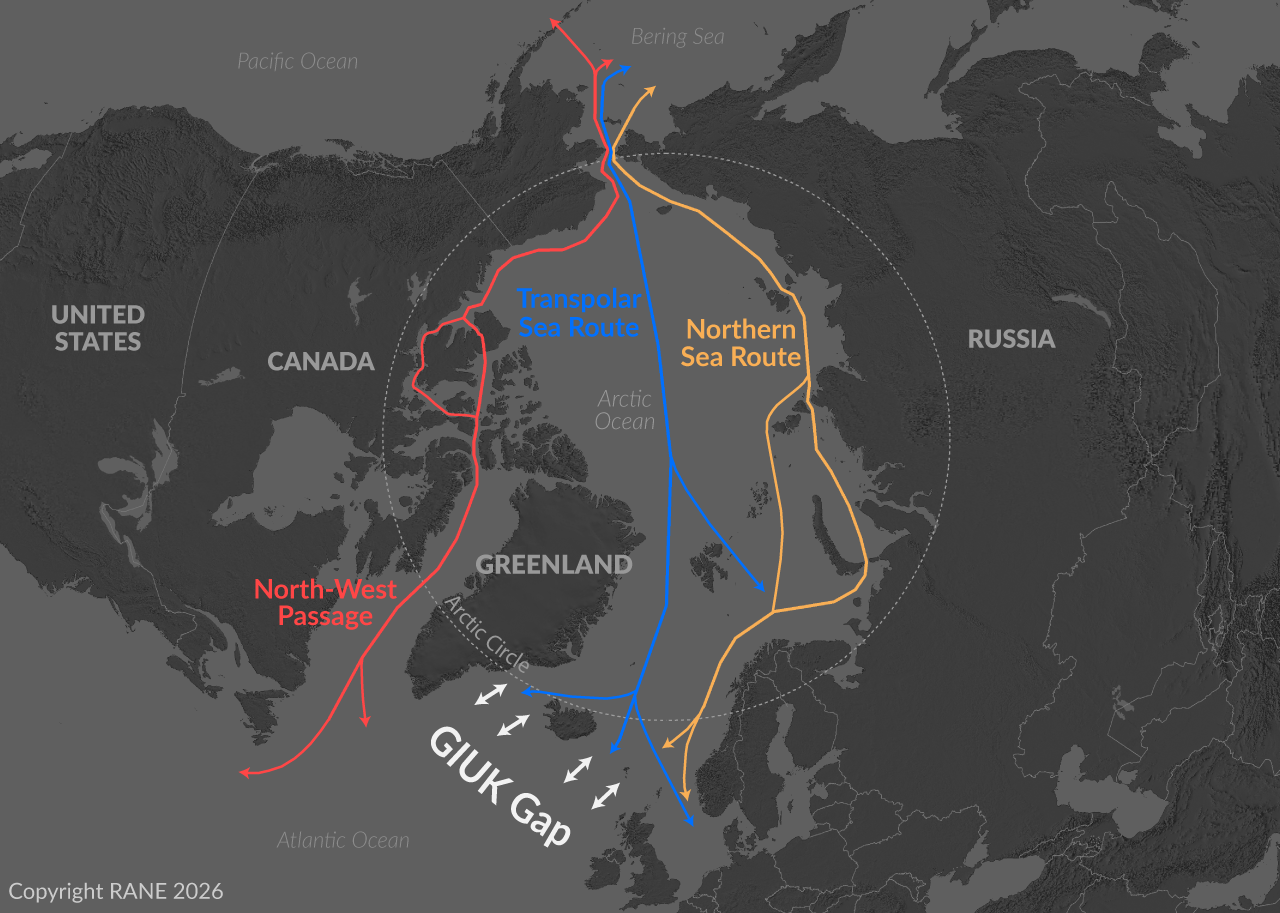
A Greenland increasingly aligned with Washington would consolidate the U.S. strategic advantage in the Arctic, diminishing European influence and prompting calibrated Russian and Chinese responses aimed at countering American gains through military signaling, diplomacy and economic maneuvering. A Greenland more closely aligned with Washington would reinforce the U.S. presence in the Arctic while reducing European influence there. Russia would see a gradual erosion of Danish influence in Greenland in favor of Washington as consolidating U.S. control over the Greenland-Iceland-U.K. (GIUK) gap and strengthening American early-warning, missile-defense and space-tracking capabilities. In response, Moscow would likely intensify military signaling, including increased bomber patrols and naval activity in the Arctic and North Atlantic, more frequent exercises involving long-range aviation and submarines and sharper rhetorical warnings about U.S. "militarization" of the Arctic. However, Russia's ability to directly counter U.S. political influence in Greenland would be limited by geography, a lack of economic leverage and Greenlandic suspicion of Russian intentions. China would react primarily through economic and diplomatic channels. Beijing has long viewed Greenland as a potential gateway for Arctic access, critical minerals and future shipping routes and a U.S. strategy that crowds out Chinese investment would directly threaten these ambitions. China would likely increase diplomatic outreach to Greenlandic political and business groups, emphasizing economic diversification, infrastructure financing and non-interference. Beijing could also seek to work more closely with Denmark and the European Union, framing itself as a defender of international law and territorial integrity against U.S. pressure. If U.S. political dominance appears inevitable, China would eventually reassess the viability of large-scale investments in Greenland, shifting instead toward smaller, lower-profile commercial engagements.
Scenario 4: U.S. Direct Military Intervention in Greenland (20% likelihood)
A direct U.S. military intervention in Greenland would most likely occur under the pretext of an acute Arctic security crisis, enabling Washington to bypass Copenhagen's authority and rapidly assert de facto control over the island's critical infrastructure. A direct U.S. military intervention in Greenland could be triggered by an event in the Arctic that Washington frames as an immediate threat to U.S. national security. Such a trigger could include intelligence of Russian preparations to target Arctic infrastructure, deploy advanced missile systems near Greenlandic airspace, conduct sabotage against undersea cables or exploit political instability in Greenland to establish a covert foothold. In this context, the Trump administration could argue that Denmark lacks the capacity or political will to respond decisively, justifying unilateral U.S. action to secure key sites. Under this scenario, the United States would deploy additional air, naval and special operations forces to Greenland, moving beyond the existing agreements. U.S. forces would likely seize operational control of critical infrastructure (including major airports, ports, satellite installations and communications nodes). The intervention would be designed to be swift, limited in footprint and heavily focused on air and maritime dominance rather than large ground formations, minimizing the appearance of an occupation while establishing de facto U.S. control over Greenland's security environment. Washington would simultaneously pressure Greenlandic authorities to endorse the intervention, leveraging security guarantees, economic aid and promises of greater autonomy or future self-determination. If Greenland's government resists or fractures, the United States could bypass local institutions entirely. This would trigger local protests that would further damage the United States' reputation if it decided to crack down on the protesters. Denmark would protest and seek EU and NATO backing, but it would be unlikely to confront U.S. forces directly, given the absence of realistic military options.
A unilateral U.S. military intervention in Greenland would expose profound fault lines within NATO and the European Union, severely straining their cohesion and raising the risk of long-term fragmentation rather than immediate collapse. A U.S. unilateral military intervention in Greenland would put NATO's continuity at risk. The alliance's mutual protection guarantee, Article 5, is unclear about what happens if one member attacks another. While Denmark would invoke NATO consultations under Article 4 and ask for help, the rest of the alliance's members would be reluctant to confront the United States militarily. In an extreme situation, Denmark could exit NATO in protest at U.S. actions and a lack of solidarity from other alliance members. This would trigger domestic debates in neighboring countries such as Iceland and Norway (which are close politically and culturally to Denmark and have their own presences in the Arctic) on whether to leave NATO, but an immediate exit is unlikely. In the meantime, frontline states such as Poland, the Baltic countries, Finland and Romania view NATO (and especially U.S. military power) as indispensable for deterrence against Russia and would be unlikely to leave. Large European countries such as France and Germany would remain in NATO but use the United States' unilateral actions to argue for a stronger, more independent European defense posture. To a lesser extent, a U.S. unilateral military intervention in Greenland would also shake the European Union, which has its own mutual defense provisions. Still, the bloc would almost certainly be unable to help Denmark either through military means or by imposing economic sanctions against the United States, as both options require unanimity and many EU member states would push against it. In the long run, however, such a traumatic event would lead to more hedging behavior among NATO and EU member states, bilateral defense arrangements and EU-centric security mechanisms that would hollow out NATO politically even if membership numbers remained stable.
A unilateral U.S. intervention in Greenland would also trigger a calibrated Russian response in the Arctic, combining military signaling, gray-zone operations, more aggressive actions on the alliance's borders and political moves to counter U.S. influence while avoiding direct confrontation, at least in the immediate term. Russia would interpret a unilateral U.S. intervention in Greenland as a fundamental escalation in the Arctic balance of power and as confirmation that Washington is prepared to use force to reshape strategic geography. Moscow would frame the intervention as proof that the United States is militarizing the Arctic and undermining international law, using it to justify its own military expansion in the High North. Russia would increase the tempo and visibility of military activity in the Arctic and North Atlantic, including long-range bomber patrols near NATO airspace, submarine deployments toward the GIUK gap and large-scale Arctic exercises involving missile forces, air defense systems and electronic warfare. Moscow could also accelerate the deployment of hypersonic and air defense systems in its Arctic territories and signal a lower threshold for defensive responses to NATO activity in the region. While Russia would avoid direct confrontation with U.S. forces, these actions would increase the risk of a confrontation — intentional or accidental — over time. Moreover, Russia could launch information campaigns aimed at European audiences and probe NATO air and maritime defenses elsewhere in the Arctic. Moscow's diplomatic and propaganda efforts would focus on exploiting rifts within NATO and the European Union, portraying the United States as an unreliable and destabilizing ally that violates the sovereignty of even its closest partners. Russia may also take advantage of NATO's internal turmoil to become more aggressive in areas such as the Baltic, counting on the alliance being unable to react in a meaningful way.
China would respond to a U.S. military intervention in Greenland through diplomatic, economic and strategic maneuvers aimed at countering U.S. influence while avoiding direct military confrontation. Beijing would condemn the intervention as a violation of international norms and territorial sovereignty, aligning its rhetoric with European outrage to position itself as a defender of multilateralism and the rules-based order and to drive a wedge between Europe and the United States. China would reassess its exposure in Greenland and may scale back future investments without completely leaving the island. Should the United States directly threaten any of China's assets in Greenland, Beijing would likely retaliate with measures such as export controls on key goods, such as rare earths. At the same time, Beijing could deepen Arctic cooperation with Russia as a counterweight to the United States, including expanded joint research, shipping coordination along the Northern Sea Route and potentially greater Chinese participation in Russian Arctic energy and infrastructure projects. China may also send military vessels around the Russian Arctic border to signal its growing interests in the region. However, China would be careful to avoid actions that could provoke confrontation with the United States.
