
Editor's Note: This is the first installment of a two-part column exploring the history and future of the transatlantic alliance between the United States and Europe. This first part examines the U.S. viewpoint, and the second will focus on the European perspective.
The transatlantic alliance is at an inflection point, with the United States now signaling a profound shift away from its traditional security commitments in Europe. Since taking office in January, U.S. President Donald Trump and various members of his administration have repeatedly insisted that Europe must take primary responsibility for its security, announced a withdrawal from future military exercises in Europe and warned that the United States may not protect its NATO allies that fail to meet the alliance's 2% of GDP defense spending target. Further alarming European leaders, Trump has repeatedly floated the prospect of annexing allied territories, including Greenland and Canada, and has refused to rule out the use of force to do so. Adding to European anxieties is the Trump administration's handling of the war in Ukraine, notably its rapprochement with Russia, exclusion of European allies from negotiations and pressure on Kyiv to enter peace talks by temporarily suspending military aid and intelligence sharing.
These developments have increased pressure on Europe to assume greater responsibility for its own security and increase its self-reliance on the development, production and procurement of defense equipment in preparation for a future in which Washington's commitment to its security can no longer be taken for granted and where the burden of deterrence against Russia and other adversaries falls increasingly on European shoulders. The U.S. strategic retrenchment from Europe will likely take years to fully materialize, and transatlantic coordination will not vanish entirely, as Washington itself retains vested interests in maintaining a stable Europe and strong defense-industrial ties on the Continent. However, the growing risk of strategic divergence from Washington underscores the urgency for Europe to secure its defense posture against the uncertainties of shifting American priorities, regardless of how far Trump truly intends to go in following through on his threats and whether his efforts outlast his administration.
Beyond increasing defense spending, Europe will also have to confront deeper structural challenges in order to meaningfully advance its strategic autonomy agenda. The real challenge will be ensuring that increased funding translates into effective resource allocation to fill critical capability gaps and enhance military readiness. Europe will need to develop a cohesive, competitive and self-reliant defense industrial base. It will also need to coordinate development and procurement strategies to replenish arms stockpiles, reduce redundancies and develop next-generation technologies; overcome logistical bottlenecks, regulatory inconsistencies and infrastructure deficiencies that continue to undermine military mobility; and improve command-and-control structures that would enable it to take on large-scale operations without U.S. leadership. Most importantly, Europe will have to define and agree on a set of strategic priorities and perceived threat vectors, the lack of which has long hindered the formation of a truly cohesive and coherent European foreign and security policy.
This transition will carry profound military, economic and societal implications that will deeply reshape Europe's security landscape and reverberate far beyond its borders. But the Continent will also face significant structural, financial and political constraints, meaning a fundamental shift in transatlantic burden-sharing remains years away and NATO will likely remain the backbone of Europe's security architecture for the foreseeable future.
The Evolution of NATO and Transatlantic Security Cooperation
For over seven decades, NATO has been the cornerstone of Europe's security architecture. It has weathered periodic existential crises and recurring transatlantic tensions as it evolved from a Cold War bulwark against Soviet expansionism into an increasingly fragmented alliance grappling with shifting global threats and waning U.S. leadership.
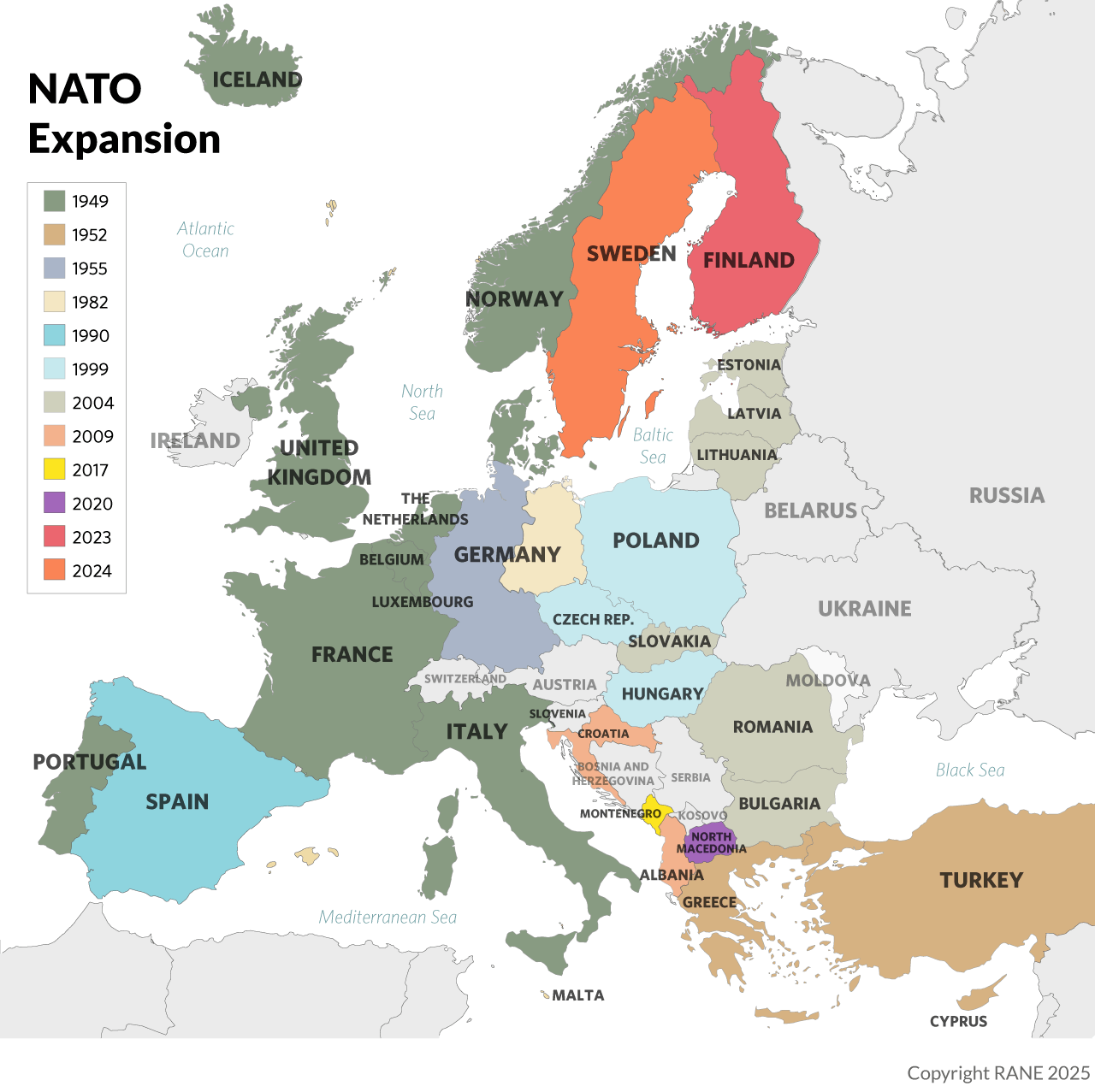
In the immediate aftermath of World War II, with the Soviet Union occupying much of Central and Eastern Europe, the idea of a transatlantic alliance crystallized into a strategic doctrine under U.S. President Harry S. Truman (1945-1953), as the United States broke from its traditional isolationism to deter Soviet influence into Western Europe. NATO's formation in 1949 entrenched the transatlantic security partnership as the pillar of Western defense, an alliance that would steadily expand beyond its 12 founding members in search of a new purpose over the following decades.
Throughout the Cold War, NATO's primary functions remained threefold: deterring Soviet expansion, preventing the resurgence of nationalist militarism in Europe, and (especially from the European perspective) fostering political integration in Europe through strategic and military cooperation. This framework ensured decades of stability, sustained U.S. engagement and an environment that enabled Europe to prioritize economic integration, ultimately contributing to the formation of the European Union in 1993. Despite internal fractures and periodic crises — like France's withdrawal from NATO's integrated military command in 1966 — the alliance never unravelled.
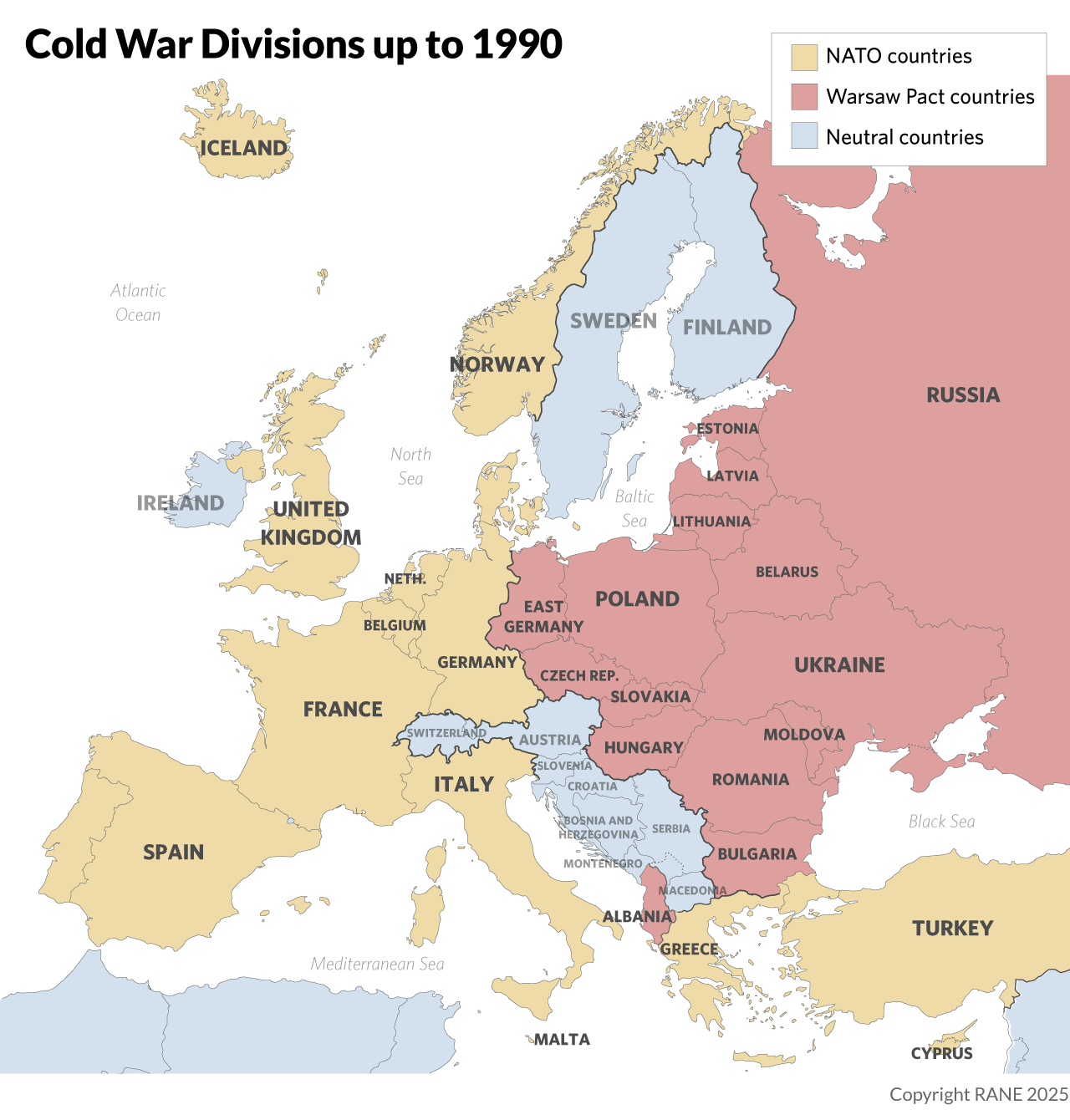
But with the Soviet Union's collapse in 1991, NATO had to redefine its identity without its primary adversary, which opened the door to eastward expansion as a way to integrate newly independent Central European and Eastern European countries into the Western bloc. This led to Poland, Hungary and the Czech Republic joining NATO in 1999, followed by the Baltic states and several Balkan countries in the 2000s. Despite efforts to establish alternative pan-European security frameworks, such as the OSCE, and embed a security component within the European Union with the introduction of a mutual defense clause in 2009, NATO remained Europe's security backbone. Meanwhile, the alliance's mission and operational scope widened to global security and counterterrorism, exemplified by interventions in Kosovo (1999), Afghanistan (2001) and Libya (2011). This period exposed strategic and operational challenges, fueling debates over NATO's very purpose while Washington questioned Europe's overreliance on U.S. military power.
By the late 2000s, Russia's invasion of Georgia (2008) and later Ukraine (first in 2014 and then in 2022) reaffirmed collective defense against Russia as NATO's core mission. The alliance refocused on deterrence, deploying rotational forces in Northern Europe and Eastern Europe. Meanwhile, debates over European strategic autonomy gained momentum, with EU-led initiatives, such as the Common Foreign and Security Policy and Permanent Structured Cooperation, aiming to lay the basis for a greater European role within the NATO framework (often referred to as NATO's European pillar). But internal tensions did not subside, and instead peaked under the first Trump administration (2017-2021) as the White House began openly questioning NATO's value and more bluntly demanding greater burden-sharing, which prompted French President Emmanuel Macron to describe the alliance as "brain dead" in 2019. And yet, despite resurging transatlantic frictions, NATO has so far proven remarkably resilient, with the accession of Sweden and Finland in 2023 underscoring Europe's enduring reliance on NATO as the backbone of its security and breathing new life into the alliance — that is, until Trump's reelection in November 2024.
The U.S. Perspective
Since the end of World War II, the United States' strategic interests in Europe have been guided by two overarching priorities: preventing any single power from dominating the Continent and maintaining a security architecture that safeguards American economic and military interests. NATO has been the primary vehicle for advancing these objectives.
During the Cold War, U.S. security concerns in Europe were primarily shaped by the credible threat of Soviet military expansion, which posed a direct challenge to U.S. global leadership and thus national security more broadly. American troops were initially stationed in Europe as a temporary measure, intended to support European countries as they rebuilt their military capabilities. But with the failure to establish an independent European defense framework — most notably, with the collapse of the European Defence Community (EDC) proposal in 1954 — the U.S. security presence in Europe effectively became permanent. To offset its conventional force disadvantage against the numerically superior Soviet forces, the United States introduced tactical nuclear weapons in Western Europe in the 1950s, reinforcing deterrence against potential Soviet aggression, which remains a key element of the alliance's strategic posture today.
With the dissolution of the Soviet Union and the end of the Cold War, the original rationale for NATO — i.e. deterring a direct Soviet military threat — disappeared, raising questions over the need for U.S. forces and nuclear weapons in Europe. But with the start of the relatively brief U.S. unipolar moment in the 1990s, Washington saw in NATO a useful mechanism for stabilizing the post-Soviet space and integrating former communist states into the Western-led liberal order (which in turn benefited American businesses and financial markets), a vision that underpinned NATO's eastward expansion.
However, with the subsequent expansion of the European Union, such economic advantages for the United States became less evident, particularly compared with the costs of maintaining Europe's defenses and increasing tensions with Russia, which saw NATO's encroachment as a direct threat. Throughout the post-Cold War era, U.S. leaders have thus consistently pressed European allies to increase their defense spending, as plummeting defense budgets on the Continent and declining European military capabilities raised concerns about overreliance on Washington. While NATO allies pledged in 2014 to meet a 2% GDP defense spending target within a decade, only recently has a majority of member states met this commitment, and nearly half still haven't. The disproportionate burden placed on the United States — historically responsible for nearly 70% of NATO's total defense expenditures — has since fueled transatlantic tensions, with Washington taking an especially confrontational approach under the first Trump administration.
Trump 2.0: A Strategic and Tactical Shift
Washington's renewed pressure on NATO allies under the second Trump administration — both in the form of aggressive rhetoric and concrete actions — is a combination of strategic realignment, domestic political considerations and the transactional pragmatism typical of Trump's foreign policy approach, serving as both a negotiating tool and reflecting a genuine reassessment of U.S. strategic priorities.
At its core, Washington's shift aims to scale back its role in European security, compelling allies to assume greater responsibility for their own defense so as to redirect U.S. resources and attention toward the Indo-Pacific and the systemic challenges posed by a rising China, which the United States views as the primary threat to its strategic interests. While this shift has been in motion for years — made explicit as early as 2012 by the Obama administration's "pivot to Asia" — it has gained new political momentum under Trump's "America First" agenda, which prioritizes domestic concerns and the great power competition with China over traditional alliance structures.
Yet openly questioning NATO's collective security guarantees and threatening troop reductions does not necessarily signal an imminent U.S. departure from Europe. Trump's aggressive rhetoric is likely also a negotiating tactic aimed at extracting concessions on defense and trade to advance U.S. economic and strategic interests, with his threats serving to pressure European governments into ramping up defense spending, pursuing bilateral agreements with Washington and signing new contracts with U.S. defense contractors. This interpretation aligns with the approach observed during Trump's first term as well as Trump's current trade agenda, which has seen him repeatedly float increased European purchases of U.S. defense products as potential leverage to avert or reduce U.S. tariffs. This would also align with the preferences of the more traditional Republicans in his administration and Congress, who favor maintaining strong defense-industrial ties with Europe and preventing (or at least slowing down) the emergence of an autonomous European defense structure that could sideline U.S. contractors.
The Russia and China Factor in U.S. Strategic Realignment
Beyond concerns that the United States lacks the resources to fight a two-front war against Russia and China, another potential factor in Washington's rationale for reducing its military presence in Europe is Trump's ambitious attempt at a rapprochement with Russia. The strategy aims to normalize economic and political relations with Moscow to reduce its growing economic reliance on China and weaken its strategic alignment with Beijing — mirroring the Nixon administration's 1970s strategy of establishing diplomatic ties with Mao's China to draw Beijing away from the Soviet Union. Though a full Russian realignment with the West remains unlikely amid deep-seated mistrust and limited avenues to meaningfully expand cooperation, this has also fueled European anxieties over a potential U.S. retrenchment from the Continent.
Yet Washington is unlikely to pursue this strategy at the expense of transatlantic cooperation. For one, the marginal gains from weakening Russia's ties with China would not justify undermining U.S. alliances in Europe, not only for security and strategic reasons, but also given the scale of U.S.-EU trade and investment ties. Secondly, any serious attempt at luring Moscow away from Beijing would likely require coordination with Europe. The economic incentives that the United States could alone offer Russia beyond sanctions relief are limited, and a significant U.S.-Russia trade or investment relationship remains unlikely — both because of the limited appeal of the Russian economy to U.S. markets and investors, and due to the sheer geographic distance between the two countries. Europe, by contrast, was (and still is) a major importer of Russian energy and had substantial investment ties with Moscow prior to the war in Ukraine and the resulting decoupling. A more viable approach would involve allowing Europe to reopen some energy trading and economic cooperation with Russia, but this would only be feasible if Europe's broader defense architecture were stable enough for European governments to feel confident that the Russian threat could be contained without resorting to full economic isolation. In other words, only continued transatlantic coordination and a sustained, albeit gradually reduced, U.S. military presence in Europe may provide the necessary conditions for any such strategy to succeed.
More broadly, even as Washington shifts focus away from Europe and toward the Indo-Pacific, it still has strong incentives to keep Europe stable, functional and aligned, as transatlantic cooperation remains an important piece of American power and containment strategy vis-a-vis China. U.S. military presence in Europe offers more than regional security — it provides the United States with forward-deployed infrastructure supporting power projection into the Middle East, North Africa and parts of Asia. Without it, American global reach would weaken. Moreover, a hasty withdrawal of U.S. security guarantees would leave a vacuum that not only Russia but also China would be eager to fill. A weakened and hostile Europe could drift closer to Beijing, making European countries far less likely to align with Washington on China policy, from sanctions (such as in response to a move on Taiwan) to export controls and coordinated efforts to counter China's growing influence in the Arctic. This would, in turn, significantly undermine U.S. efforts to curb China's technological and geopolitical rise.
Overall, while a substantial reduction in troops is probable in the coming years, a complete U.S. withdrawal from Europe remains unlikely, as Washington retains a strategic interest in maintaining a military footprint and strong defense-industrial ties on the Continent given the economic and strategic benefits it derives from a stable Europe and its defense partnerships in the region. Over time, the United States will gradually move most of its conventional assets and recalibrate part of its defense industrial priorities (production, procurement and exports) to other priority areas like the Indo-Pacific. This shift is inevitable in an increasingly multipolar world, where power is now far more dispersed, leaving the United States unable to sustain a global posture that seeks to be everywhere, all at once. Yet in such a world, alliances matter more, not less. For this reason, any U.S. retrenchment away from Europe will more likely be a gradual and calibrated transition, rather than an abrupt exit, and include a corresponding strategy to help reorganize European security and preserve stable transatlantic relations to ensure the Continent isn't left in disarray.
