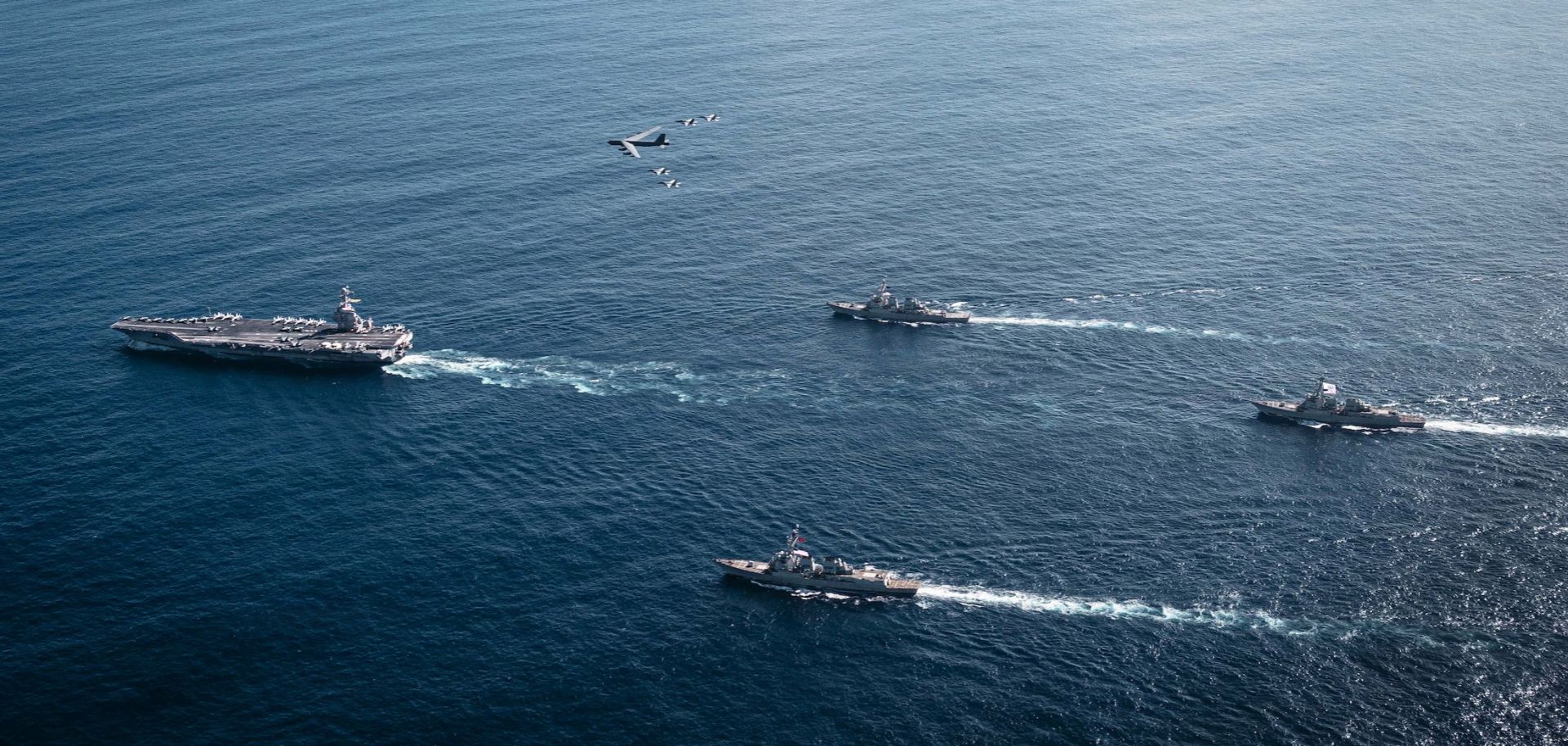
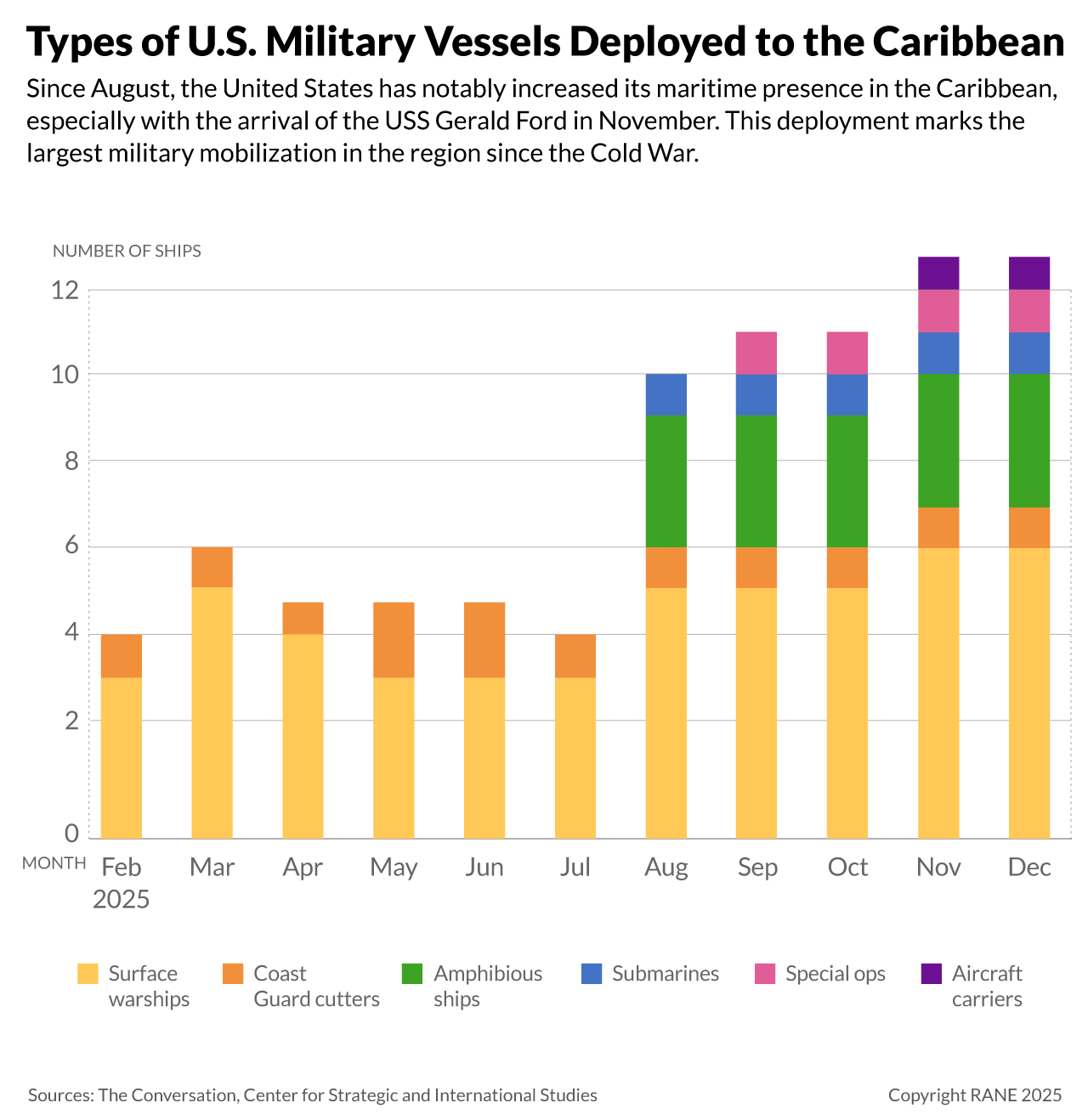
Increased military mobilization, failed negotiations and persistent aggressive rhetoric amid broader geopolitical, ideological and economic goals indicate that the United States will most likely escalate its military campaign in the Caribbean to attacks in Venezuelan territory over the coming days or weeks. Since October, the United States has increased its military presence in the Caribbean, especially with the Nov. 16 arrival of the USS Gerald Ford, the world's largest aircraft carrier. The U.S. military has also continued to conduct attacks against alleged drug trafficking boats in the Caribbean and eastern Pacific, which have reached a total of 23 strikes, killing 87 people. Media leaks revealed that in the first of such operations, on Sept. 2, the U.S. military carried out a follow-up strike, potentially killing survivors. The allegations have sparked controversy within the United States, prompting investigations in Congress and raising concerns about the potential commitment of war crimes. Despite those allegations, U.S. President Donald Trump on Dec. 3 said Washington would conduct land strikes "very soon." Trump has also confirmed that he held a phone call with Venezuelan President Nicolas Maduro, which media reports indicate occurred on Nov. 21. During the conversation, Trump reportedly refused Maduro's request for broad immunity and his offer to step down within three years, instead giving him one week to relinquish power. The day after that one-week deadline, on Nov. 29, Trump declared Venezuela's airspace closed, leading several airlines to suspend flights to the South American country.
- As of Dec. 1, the latest public data available, the USS Gerald Ford was near Puerto Rico and the U.S. Virgin Islands, nearly 530 miles (850 kilometers) north of the Venezuelan coast.
The United States' growing military presence and pressure on Venezuela come as Washington is shifting its focus to the Western Hemisphere, based on a narrative of fighting drug trafficking and illegal immigration in the region. Throughout his presidential election campaign and since taking office in January, Trump has promised to combat drug trafficking and illegal immigration into the United States. This pledge, combined with U.S. Secretary of State and interim National Security Advisor Marco Rubio's ideological opposition to leftist autocracies in Latin America, has propelled the region to the top tiers of U.S. global priorities. It is against this backdrop that the White House has increased rhetorical and military pressure against Venezuela, while also seeking to weaken Maduro. Beyond ideology, regime change in Venezuela would also create business opportunities for U.S. companies, especially in the oil and gas and mining sectors, should the opposition take office and establish a stable government in the country.
- On Dec. 4, the Trump administration published its 33-page National Security Strategy outlining an "America First" framework that rebukes past cornerstones of U.S. foreign policy, like alliance structures and globalization, in favor of what it says needs to be a more pragmatic and realistic approach that emphasizes U.S. sovereignty and retrenchment to focus on core interests in the homeland and the Western Hemisphere. Specifically, the document establishes a goal of "restor[ing] American preeminence in the Western Hemisphere" while denying "non-Hemispheric competitors the ability to position forces or other threatening capabilities, or to own or control strategically vital assets" in the region. The White House also pledges to combat irregular migration and the drug trade in the Western Hemisphere, while promising to reward and encourage the region's governments, political parties and movements aligned with the Trump administration's principles and strategy.
- On Dec. 2, after discussing cocaine production in Colombia, Trump said that any country trafficking drugs into the United States could be targeted by military attacks.
- Venezuelan opposition leader and Nobel Peace Prize Laureate Maria Corina Machado has outlined a 15-year, $1.7 trillion economic plan aimed at tripling Venezuela's GDP through market liberalization, the privatization of 500 companies, macroeconomic and regulatory stability, and the restoration of independent institutions and rule of law. On Nov. 5, Machado remotely attended the America Business Forum and pitched the plan to U.S. companies and investors; she also described the current U.S. strategy toward Venezuela as "absolutely correct" and said that Trump is "ending" a war that Maduro began.
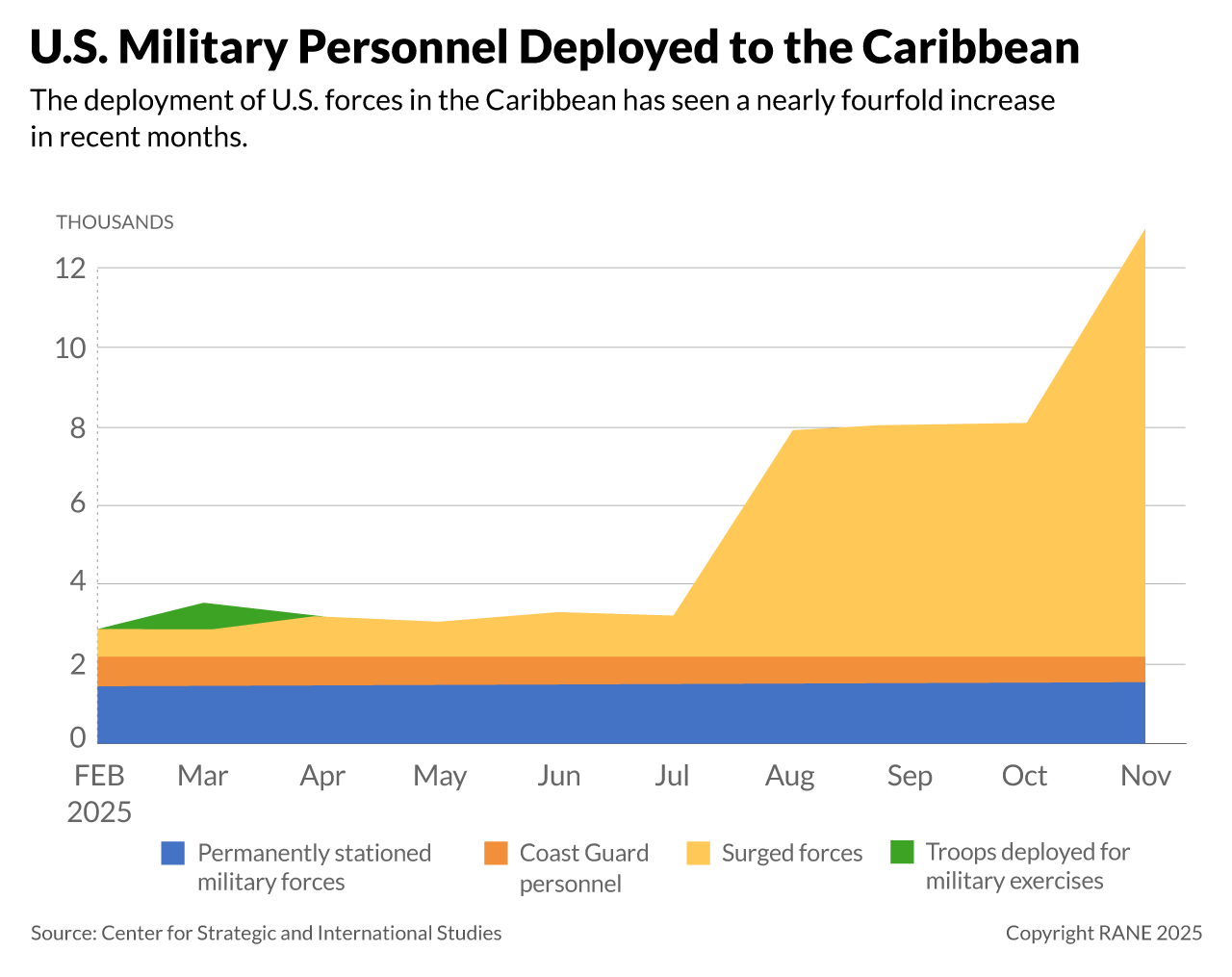
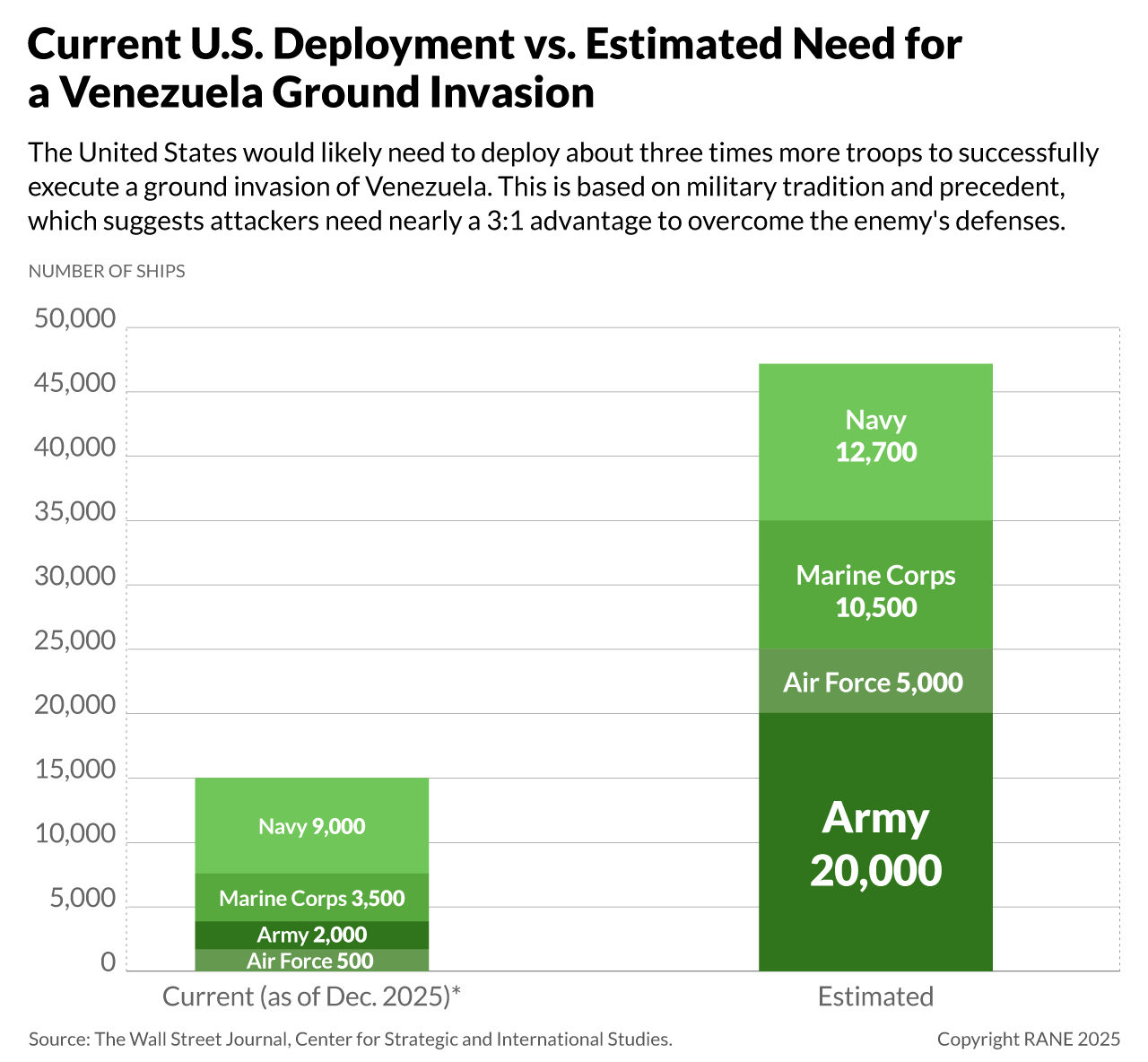
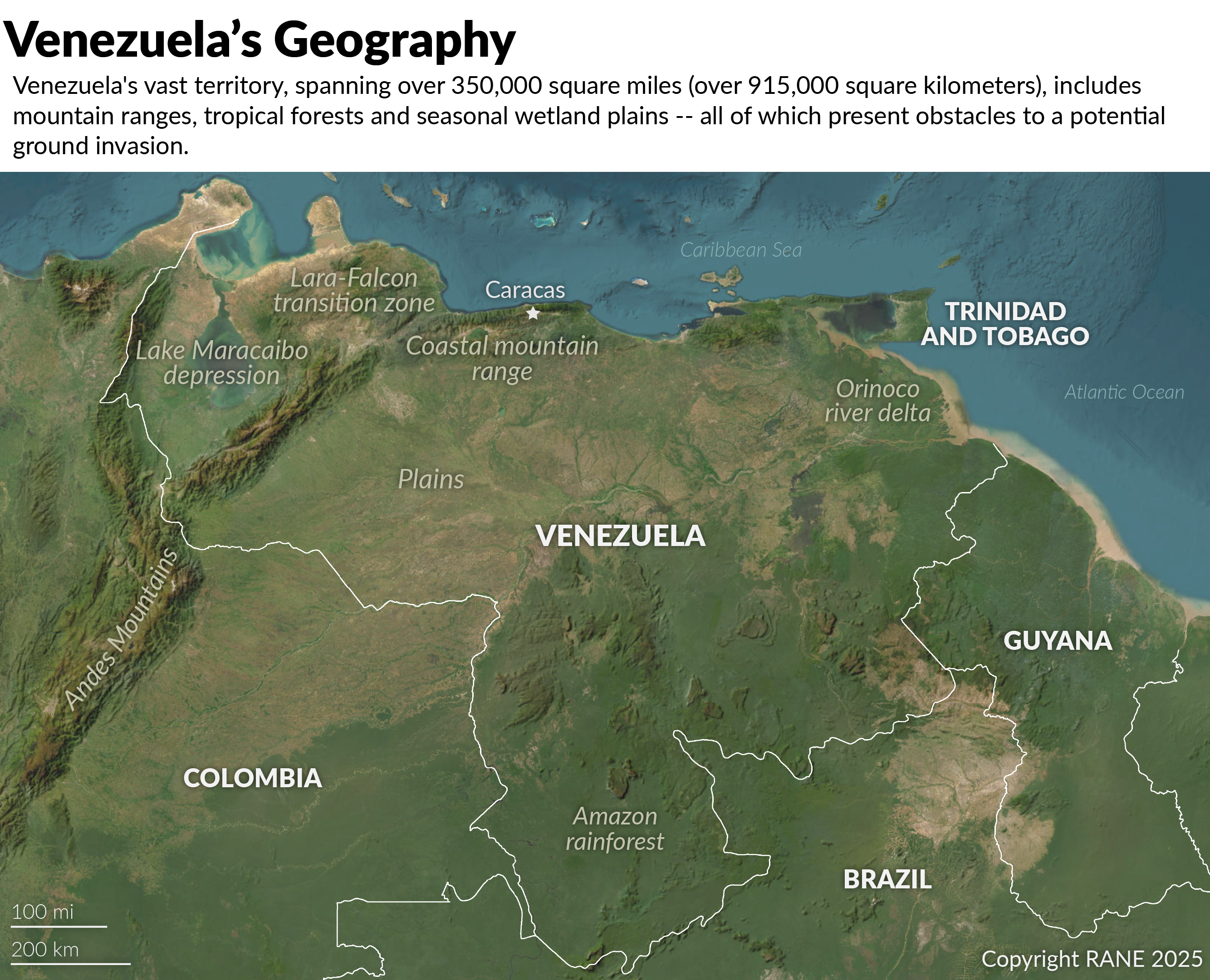
In the coming weeks, the United States will probably escalate its military campaign to targeted strikes in Venezuelan land as the prospects of maintaining the status quo or retreating have declined. Meanwhile, a negotiated settlement or a full-scale U.S. ground invasion remains highly unlikely. The events over the past seven weeks have not changed RANE's outlook for a potential U.S. confrontation with Venezuela, published on Oct. 20. The most likely scenario remains an escalation to U.S. airstrikes or special forces operations inside Venezuelan territory, as Washington tries to weaken Maduro and indirectly create the conditions for regime change in the long term. Such land-based operations would likely target Venezuela's air defense systems to allow for further U.S. strikes on cartel sites, such as drug camps, cartel logistics hubs and isolated air strips, as well as some Venezuelan military assets that are also used for drug trafficking. Given the increased U.S. military mobilization in the Caribbean, along with Trump's repeated statements that attacks on land are imminent and his administration's persistent criticism of Maduro, the likelihood of a scenario in which the United States only maintains ongoing kinetic strikes against boats or targets planes that are allegedly trafficking drugs is low. For the same reasons, the White House is currently unlikely to retreat and allow Maduro to consolidate power. However, congressional investigations into potential war crimes, U.S. court rulings curbing the executive branch's power, or the emergence or re-emergence of conflicts elsewhere in the world could make this scenario more likely in the coming months. Trump's recent call with Maduro indicates that a negotiated solution for the ongoing crisis remains highly unlikely. A full U.S. ground invasion in Venezuela also remains highly unlikely, given that popular and political opposition within the United States against deploying troops abroad will remain strong. Moreover, the number of U.S. military personnel mobilized so far remains significantly below what would be required for a land invasion — especially for a country as large and geographically diverse as Venezuela, whose terrain would pose several obstacles to a military incursion or occupation.