
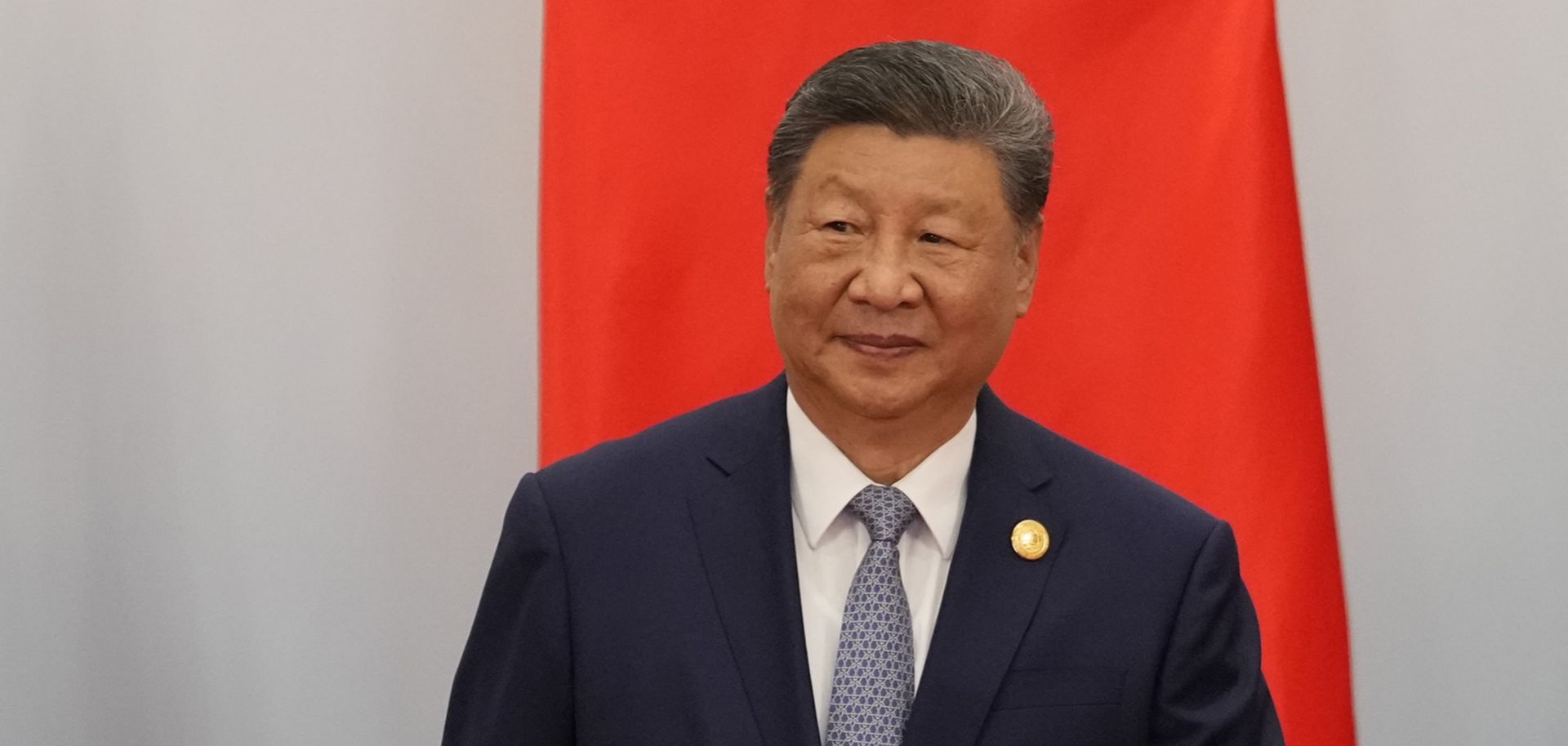
China's policy plan for 2026-2030 lays out continuity in economic policy but also highlights an intent to pursue new industrial priorities, further securitize Chinese society, launch internal anti-corruption probes to enforce President Xi Jinping's policy vision, and use lawfare amid foreign disputes. On Oct. 28, China's State Council published the details of the Chinese Communist Party's proposal for the 15th Five-Year Plan (15th FYP) for National Economic and Social Development, which was passed at the CCP's recent Fourth Plenum in Beijing from Oct. 20-23. The document charts China's policy trajectory from 2026-2030, but it is mainly thematic and qualitative in nature, lacking many of the quantitative targets that China's rubber-stamp legislature will unveil at its annual meeting in March 2026. Still, the document reflects the policy priorities of the CCP and, thus, those of China's central government. It also offers a rare glimpse into the worldview of China's leadership, particularly that of President Xi Jinping. Over the next year, all government ministries, as well as provincial and municipal governments, will release their own five-year plans to facilitate the implementation of the central plan.
The 15th FYP largely signals continuity on economic policy by outlining support measures that are still modest but are gradually increasing in financial scale. The plan describes a world beset by chaos and frequent geopolitical conflict, and denounces unilateralism, protectionism and hegemonism (a thinly veiled swipe at Western, especially U.S., trade disputes). It also highlights internal challenges, including unbalanced economic growth, population decline and low domestic demand. Against this backdrop, the FYP emphasizes the importance of stable, sustainable and high-quality development, as a contrast to the fast and sometimes hazardous growth of previous decades. This includes ''reasonably'' increasing public expenditure to boost consumption and eliminating ''unreasonable'' restrictions on housing, as well as supporting a steady expansion of China's consumer goods subsidies program and efforts to revive slow real estate growth without supporting speculation. To address youth unemployment, the plan encourages companies to create more jobs and vows to offer public career guidance services, support flexible employment and improve vocational skills training programs. It also proposes expanding coverage and payouts for social insurance schemes, though this is a common promise that the government has yet to significantly fulfill since 2023, when China emerged from the COVID-19 pandemic. Additionally, the FYP emphasizes proactive fiscal policy tempered by fiscal sustainability and sound monetary policy, suggesting slow spending growth but without a shift toward large-scale stimulus. The plan's overall admonition is to tweak, not revolutionize, economic policy to make it more efficient (e.g., by cutting down on interregional barriers to commerce), but without reflating China's debt balloons, encouraging moral hazard or abandoning long-term goals, like reducing reliance on real estate growth. However, absent major policy changes, China's challenges of slow-growing consumption, rising youth unemployment and a stagnating real estate sector will persist.
- China's youth unemployment rate (for those aged 16-24) has steadily risen since 2010, driven by growing cohorts of college graduates in an economy without sufficient high-end jobs to absorb them. From 2012 to August 2023, the rate grew from 10% to 21%. For several months, Beijing stopped publishing the figure as it altered its calculation method to exclude students, later reinstating it in December 2023 at 15%. But the youth unemployment rate has continued to rise since then, reaching 19% in August 2025.
- Since 2023, retail sales — just one, albeit important, component of consumption — has generally grown slower (3-5% year-on-year) than pre-COVID rates (7-10%), and slower or equal to China's GDP, slated this year for ''roughly 5%.'' This suggests the government is struggling to reach its long-term goal of raising consumption as a share of GDP growth.
- China's sales in the real estate sector grew an average of over 16% annually in the five years prior to 2020. But the government's ''three red lines'' program of debt brakes, revealed in August 2020, has since arrested the industry's decades-long boom, leading to an average annual sales decline of 12% from 2021 to 2024. This shift is arguably good for long-term economic stability by reducing China's reliance on the volatile real estate market for growth. However, it is a net negative for Chinese consumers, as roughly 70% of household wealth is stored in real estate. The real estate dip has thus weighed on consumption.
- The 15th FYP pledges to ''eliminate local protectionism and market segmentation,'' as well as to regulate the economic promotion behavior of local governments. In addition, it emphasized improving the systems for market access, mergers and acquisitions, and market exit, and eliminating barriers to factor acquisition, certification, bidding and government procurement. These notes highlight Beijing's efforts to reduce municipal and provincial protection of local champions, which will grant both Chinese and foreign companies greater market access, intensifying competition.
The 15th FYP's content on industrial policy focuses on leveraging tech (especially AI) to supercharge development, highlights key industries for state support, and outlines a greater expansion of China's high-skilled immigration program. One key theme throughout the FYP and for industrial policy in particular was ''new-quality productivity,'' referring to the integration of high technology into various fields, like manufacturing, to move up the value chain and make up for stagnating factors of productivity, like labor. Artificial intelligence is at the forefront of this ''new-quality'' integration, with the technology frequently mentioned and Beijing asserting its aims to achieve breakthrough technologies and supply sufficient computing power for AI. Though the CCP will seek far-reaching oversight of data flows, impeding privacy, the government will continue to support a ''move fast and break things'' model for AI development, relative to Western regulations, posing a staunch technological challenge to U.S. and European competitors. The FYP calls for upgrading and improving the competitiveness of traditional industrial sectors, including mining, metallurgy, chemicals, light industry, textile, machinery, shipbuilding and construction, most of which are dominated by large, state-owned firms. The plan also urges the strengthening of strategic emerging industries, including new energy, new materials, aerospace and the low-altitude economy (e.g., drones and vertical takeoff flying vehicles). Furthermore, the FYP outlines the development of regulations and business models for emerging ''future industries,'' including quantum technology, biomanufacturing, hydrogen and nuclear fusion energy, brain-computer interfaces, embodied intelligence and sixth-generation mobile communication. The government also commits to supporting small and medium-sized enterprises and ''unicorns'' within these sectors, which the plan identifies as ''new economic growth drivers.'' These three industry categories will receive greater state support and looser regulation, particularly for Chinese companies but also for foreign companies that can facilitate their development. To staff these industries, the FYP calls for establishing a ''high-tech talent immigration system,'' likely aiming to build off of China's recent K visa system.
- China's K visa program, effective Oct. 1, 2025, provides visas for young STEM talent without the usual employer or institution invitation letter. This is a notable step for the normally immigration-averse China, suggesting Beijing may be reaching the limits of its campaign to repatriate overseas Chinese tech talent to compete with Western giants.
- A notable absence from the strategic emerging industries list, and one that was present in the 14th FYP, is new energy vehicles (hybrid and electric). This is likely more a reflection of the sector's maturity than of the CCP's disinterest in becoming a global leader in electric vehicles, as NEVs have surpassed internal combustion engine sales within China and Chinese firms are already leading in EV sales to the Global South and making strong inroads in Europe, despite recent EU tariffs.
The FYP's national security section highlights the ongoing risks of unrest and identifies sectors with greater security overlap, for which regulation and self-reliance initiatives will be more intense. Rhetoric on national security reflects China's focus under Xi Jinping on securitizing society, or viewing every area of governance as a source of risk that requires active prevention and control methods, revealing Beijing's sense of growing internal and external threats. As usual, the FYP urges party members to ''prioritize safeguarding political security,'' indicating partly Beijing's concerns about growing public dissent and unrest driven by youth unemployment and perceptions of economic inequity. Relatedly, there is a particular notice about preventing and resolving risks related to real estate, local government debt and small and medium-sized financial institutions, which together are responsible for a large share of China's protest activity in recent years. Though growing unrest will threaten neither the CCP's supremacy nor Xi's rule in the coming years, it will raise policing and surveillance costs for strained municipal budgets and spur new curbs on outward information flows about China, like the June 2025 closure of the Hong Kong-based China Labour Bulletin, which was previously one of the main sources of aggregated social media information about unrest activity in mainland China. The FYP's admonition to ''strengthen national security capacity-building in emerging areas such as cyberspace, data, artificial intelligence, biology, ecology, nuclear power, space, deep sea, polar regions, and low-altitude areas'' reflects that Beijing views these as dual-use industries. Thus, national security regulations and political pressure to strengthen self-reliance (i.e., on Chinese companies) will be stronger in these areas, curbing opportunities for foreign competitors.
- To address these many areas of risk and unrest, the FYP urges adherence to the ''Fengqiao experience,'' a reference to former Chinese leader Mao Zedong's 1960s campaign to mobilize citizens to monitor and correct their fellow citizens' errant (e.g., unorthodox or politically verboten) behaviors, sometimes through coercion and violence. The FYP's rhetoric entails greater grassroots coordination between police, local officials and volunteer citizens to monitor for neighborhood risks, including anti-government activity or signs of personal crises that could generate the kinds of public knifings and car rammings that have proliferated in China in recent years.
The FYP's sections on political matters centered on strengthening the rule of law, suggesting a continued emphasis on both streamlining policy enforcement and empowering China to combat foreign trade pressures and integrate domestic minorities. This rule of law topic aims to expand the adoption of central government policies over local versions and to reduce the extent of inter-ministerial disputes through a single set of guiding rules. In line with this rule of law focus, the FYP aims to prevent local officials (e.g., bureaucrats, judges and public security officers) from bending the law for their personal or local institution's benefit, like double-fining people or enforcing rules outside of jurisdictions — an increasingly common phenomenon driven by stretched local budgets and that mainly targets Chinese businesses and citizens. This rule of law focus also aims to legitimize the CCP's various means of employing its power domestically and abroad with the trapping of legality, something Beijing increasingly wields to fight off trade wars and foreign sanctions (e.g., with China's rare earth export licensing regimes). Relatedly, the FYP emphasizes the rule of law and the ''Sinicization of religion'' in managing affairs with China's many minorities in its poorer inland and border regions. This entails continued CCP forced political education campaigns, repression of religious practices, and in extreme cases, forced labor migrations or mass detentions in areas like Xinjiang, Inner Mongolia and Tibet. Tibet, in particular, is likely to be a source of such risk amid the increasingly likely death and succession of the 90-year-old, exiled Dalai Lama. This campaign portends continued human rights-related disputes with Western nations (like the dispute from 2019-2022 over China's abuses of Uyghur muslims), which can imperil trade ties. It also poses reputational risks for businesses that struggle to conduct due diligence on forced labor flows from these regions to eastern Chinese factories, given China's increased legal scrutiny since 2023 of firms conducting related research and consulting work.
The plan indicates that anti-corruption investigations will remain Xi's main tool for shoring up his political leadership, but that his efforts to bring the military to heel are incomplete, risking war readiness and hinting at political factionalism. The document enjoins the entire Party to ''fight a tough, protracted and comprehensive battle against corruption.'' This suggests that Xi's anti-corruption campaign, which has been ongoing since 2012 and has helped him remove impediments to his personal power in his first two terms, will continue to accelerate over the next five years, with more and higher-level cadres being targeted each year. While the escalating purges will slightly help curb the most egregious instances of corruption, they will also continue to instill a sense of fear among local cadres about bold leadership and innovating in policy formation, a problem for a country of 1.4 billion in which Beijing needs the help of tens of thousands of local leaders to effectively govern. With regard to the military, the FYP vowed to ''uphold the Party's absolute leadership'' over the military, implement the responsibility system of the Chairman of the Central Military Commission (Xi Jinping), ''advance political building,'' ''strengthen evaluation of major decisions and supervision of major projects'' and ''promote reform of military budget management.'' Coming on the back of the CCP's latest round of military purges, this rhetoric suggests Xi is still struggling to break up long-established patterns of cronyism, branch and location favoritism, and passive resistance to central policies that emphasize politics over traditional military training, impeding Beijing's efforts to modernize the military and prepare it for war (for example, over Taiwan). It may also suggest the existence of political factions in the military that are either directly opposed to Xi's policies or are trying to support alternative political leaders, which would warn of nascent political instability, but there is no clear proof of this yet.
- At the fourth plenum, the Central Committee announced that at least nine military leaders, including two members of the seven-man CMC, He Weidong and Miao Hua, had been removed from the party and their positions due to corruption. A contemporaneous article from the military's mouthpiece, the PLA Daily, specifically denounced He and Miao for undermining CCP leadership and challenging the CMC Chairman's (Xi's) responsibility. It also called their corrupt actions ''a mutated manifestation of the pernicious influence of Guo Boxiong and Xu Caihou,'' two former CMC vice chairmen whom Xi purged early in his first term ostensibly for corruption, but more likely due to their close political ties to previous Chinese presidents.
The FYP's comments on foreign policy were brief and mainly signaled continuity, but they also previewed China's engagement with Taiwan, overseas development focus and shift to a tougher self-image in the face of external challenges. The document enjoined authorities to ''firmly safeguard'' marine interests and security and to improve maritime law enforcement and judicial capabilities. This suggests China will continue to actively contest disputed features in the South China Sea, especially with the Philippines, and develop related legal tools like the June 2024 rule that allows the coast guard to detain foreign persons in ''waters under Chinese jurisdiction.'' Policy on Hong Kong and Macao focused on integrating the two formally independent territories into China's legal, political and economic system while maintaining Hong Kong's status as an international financial hub and diversifying the Macao economy (i.e., away from gambling). Thus, the labor markets, policies and political risks (to rule of law and fair competition) in those territories will escalate to align with those in mainland China. Regarding Taiwan, the document voiced the CCP's usual focus on advancing ''reunification'' and cracking down on ''separatist forces,'' but it also focused on deepening cultural, industrial, educational and economic exchanges with the island. These notes suggest China will continue to steadily expand military drills around Taiwan to perfect its capabilities for unification by force, but will also keep engaging with the Taiwanese political opposition (via the Kuomintang party) to offer local economic incentives for working with China and to undermine the authority of the government of pro-sovereignty President William Lai. Rhetoric on the Belt and Road global infrastructure development program was brief, with an emphasis on developing high-quality ''small but beautiful projects,'' as well as improving a ''diversified, sustainable and risk-controllable'' financing system and strengthening the protection of overseas assets. Regarding specific geographies, it mentioned enhancing ''China-Europe (Asia) freight trains'' as a way to strengthen China's trade routes to Eurasia, partly to insulate them from Western shipping sanctions. The plan also explicitly called out the Western Land-Sea New Corridor, which is focused on connecting China's inland provinces to its eastern ports and, subsequently, with South and Southeast Asia. Lastly, in a section on international outreach, the FYP pressed authorities to ''present a credible, endearing and respectable image of China,'' a notably more austere formulation than previous admonitions to propagate an image of a ''lovable China.'' This suggests Beijing's continued efforts to present China as a strong nation that engages fruitfully and reliably with cooperative nations, but that reserves heavy and effective retaliation for China's rivals (e.g., greater rare earth export curbs in its trade wars with the United States and Europe).
