
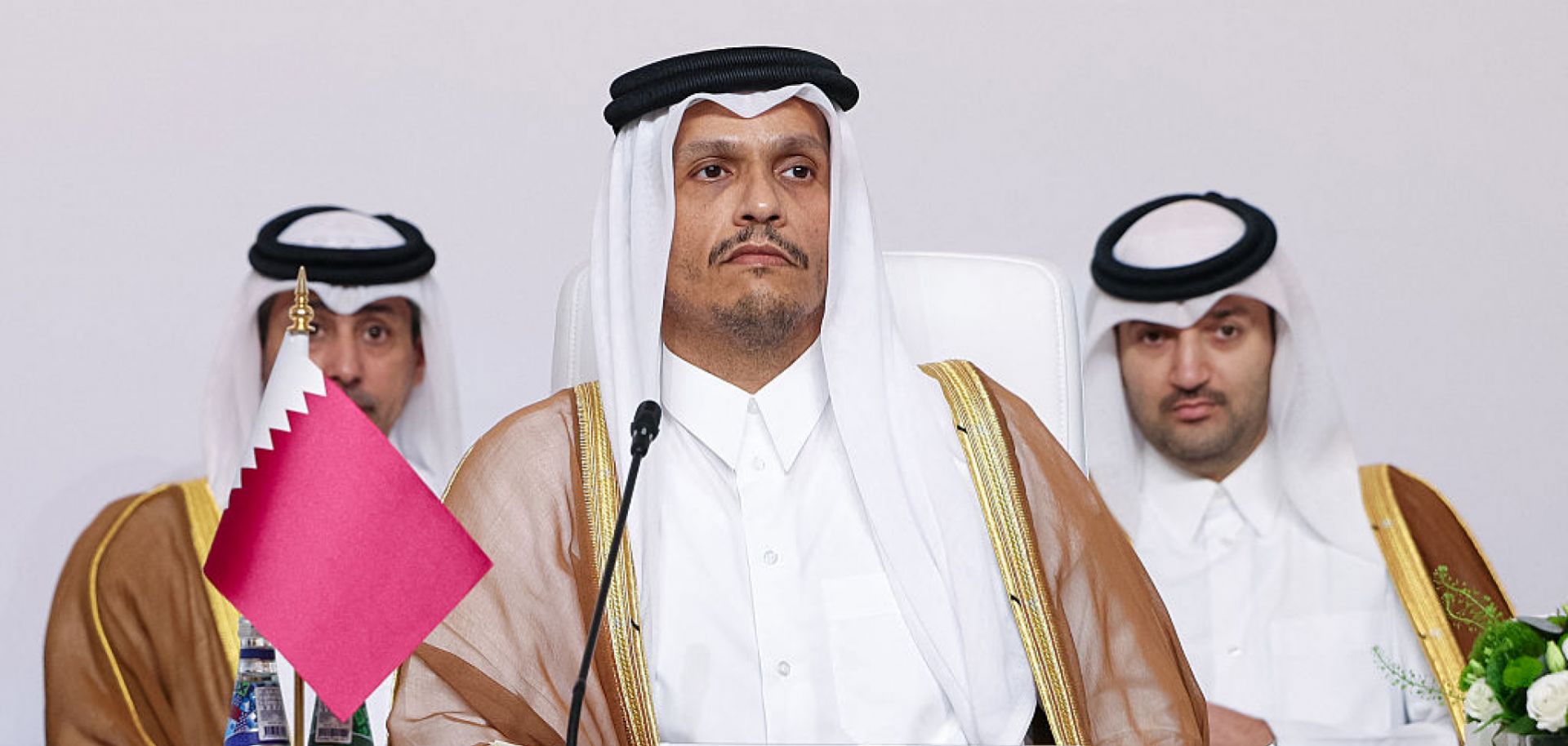
Israel's Sept. 9 attack on Qatar will spur unified rhetoric among Gulf Cooperation Council (GCC) countries but is unlikely to produce real defense cooperation. It will also limit the prospects of Saudi-Israel normalization and a regional missile shield and prompt GCC states to diversify their weapons systems, though they will remain heavily reliant on the United States. On Sept. 14 and 15, Qatar hosted an emergency Arab-Islamic summit to discuss Israel's Sept. 9 attack on Hamas leadership in Doha. At the summit, the GCC members pledged to "activate a joint defense mechanism." The GCC's Unified Military Command is expected to convene soon in Doha to plan to enhance the GCC's deterrent capabilities. While the specifics of the joint defense mechanism are unclear, the GCC's stated stance is that an attack on one member is an attack on the broader GCC. The summit also produced a joint statement condemning the Israeli attack and affirming Qatar's sovereignty. Following the summit, on Sept. 16, U.S. Secretary of State Marco Rubio visited Qatar in an effort to encourage Qatar to resume mediation efforts in the Israel-Hamas war, reaffirm the U.S. commitment to Qatar's sovereignty and discuss a defense deal that had been in process before the attack.
- In the days following the Israeli attack that killed at least five Hamas members (though not senior leaders) and one Qatari security officer, several high-profile regional politicians visited Qatar in solidarity. Prior to the summit, senior Qatari and Emirati officials indicated that a significant, coordinated effort to retaliate against Israel was in the works.
- In response to the strike, Qatar announced that it was suspending mediation efforts for a ceasefire deal in the Israel-Hamas war. At the summit, Qatari Emir Sheikh Tamim bin Hamad al-Thani claimed that Israel had conducted the attack to derail ceasefire efforts since the attack occurred when senior Hamas leadership had reportedly gathered to consider the latest U.S. proposal.
The Israeli attack has raised concerns among Gulf Arab countries about the limitations of U.S. security guarantees and Israel's increasingly aggressive military posture. Israel's Sept. 9 attack marked the second time in just a few months that Qatar was attacked as part of the broader regional conflict, after Iran conducted an attack in June on the al-Udeid Air Base in response to U.S. strikes on its nuclear program. In both instances, Qatar's bilateral defense cooperation with the United States and the hosting of the largest U.S. military base in the Middle East were insufficient to prevent or completely intercept the attacks. Qatar's position as a regional mediator and neutral foreign power had traditionally afforded Doha a certain degree of security. As recently as August 2025, Qatar had received both Israeli and U.S. reassurances that Israel would not conduct an attack on Qatari soil. Although the United States condemned the attack and U.S. President Donald Trump called the Qatari emir, pledging that there would not be another attack on Qatari soil, some media reports suggested that Israel had only informed the Trump administration after the attack had already been launched. In other words, the United States may not have the ability to prevent Israel from launching future attacks on Qatar or other GCC members. More broadly, GCC states, many of which house permanent U.S. military bases, have grown increasingly doubtful of U.S. security guarantees in the aftermath of the attack. Many regard Israel as a growing regional threat, especially in light of its high risk tolerance in the two years since the Oct. 7, 2023 attacks. With Israel fighting conflicts on multiple fronts, many GCC countries, including Saudi Arabia, are concerned that Israel could eventually target them. The prospect of potential attacks also threatens GCC economic diversification efforts, which rely on foreign investor confidence which will be undermined by heightened security concerns.
- Following the Sept. 9 attack, Israeli Prime Minister Benjamin Netanyahu said that he would not rule out additional strikes against Hamas leadership "wherever they are," indicating that if Qatar continues to host Hamas leadership, Israel could strike again.
- In addition to the U.S. military presence at al-Udeid Air Base in Qatar, the United States maintains a permanent military presence in Bahrain, Kuwait, the United Arab Emirates and Saudi Arabia.
- Former Israeli Prime Minister Naftali Bennett, considered a frontrunner to become the next prime minister following parliamentary elections due by October 2026, has said that Israel will target any country that harbors terrorists responsible for harming Israeli citizens. Bennett's belligerent rhetoric suggests that even with a change of government, Israel could still conduct similar attacks.
Despite their shared sense of risk, the GCC unified response will likely be symbolic as internal rivalries and national priorities will likely prevent the implementation of a joint defense mechanism. Though rhetorically united in condemnation of Israel's attack, few substantive actions emerged from the summit. For one, GCC countries have different levels of diplomatic and economic ties with Israel. Both Bahrain and the United Arab Emirates normalized relations in 2020 as part of the Abraham Accords. Emirati officials have publicly floated the possibility of reassessing ties with Israel, saying that Israeli annexation of the West Bank would be a "red line." However, breaking ties would risk U.S. retaliation through such means as suspended or slow-walked arms sales, reduced AI chip exports and, in extremis, sanctions on trade. In addition, despite the lifting of the GCC blockade on Qatar in 2021, members remain divided on some issues, including Qatar's support for Islamist groups and Al Jazeera's unfavorable reporting of other GCC countries. Other GCC countries are unlikely to potentially enter a broader conflict on behalf of Qatar if they provide defense support as the joint defense mechanism alludes to. There are few details about how this joint defense mechanism would be used, under what circumstances, and the extent of commitments by GCC member countries. While there may be some meetings of the Unified Military Command to discuss the proposal, the mechanism is mostly symbolic and unlikely to materialize into a broader GCC-wide defense coordination.
- Bilateral trade between Israel and Bahrain as well as Israel and the United Arab Emirates increased after ties were normalized in 2020. For example, the volume of bilateral trade between Israel and the United Arab Emirates has grown from $900 million in 2021 to $3.2 billion in 2024, facilitated by a Comprehensive Economic Partnership Agreement which entered into force in April 2023. The United Arab Emirates and Israel have expanded cooperation in the technology sector, especially on artificial intelligence and cybersecurity. Among GCC countries without normalized relations with Israel, the volume of bilateral trade is minimal. Israel and Saudi Arabia do cooperate to some extent on technology and cybersecurity.
The attack will likely end efforts to implement an integrated regional missile shield that includes Israel and likely curtail any lingering hopes of Saudi-Israeli normalization. The United States has long had aspirations to create a regional missile shield including GCC countries and Israel to counter Iran's regional threat, but anti-Israel sentiment in the Gulf and normalized relations between only some GCC countries and Israel already limited the plan's prospects. With Israel emerging as a regional threat to GCC countries, Iran having been weakened by the June Israel-Iran war and Gulf rapprochement with Iran having somewhat reduced tensions, the proposed missile shield is even less likely to come to fruition. Furthermore, GCC countries having Israeli air defense systems would likely increase the risk of Iran or its proxies targeting them in potential future conflicts between Israel and Iran. Finally, the Israeli attack on Qatar all but closes the door on the prospect of Saudi-Israeli normalization, already virtually impossible due to Saudi Arabia's insistence on a plausible path toward Palestinian statehood, which Netanyahu rejects. GCC countries will likely maintain economic ties with Israel. However, deepened diplomatic or security ties are unlikely in the medium term due to the further increase of anti-Israel sentiments in Gulf countries and increasing wariness of the regional threats Israel poses.
- A regional integrated missile defense system would also rely on intelligence-sharing, including exposing potential vulnerabilities to the GCC's own systems. While regional rivalries between Gulf countries already make this a challenge, Gulf Arab countries will likely resist providing sensitive information to Israel out of concern that Israel could potentially exploit these weaknesses to use in potential attacks.
Gulf countries will increasingly look to diversify their arsenals and enhance their deterrent capabilities, looking to NATO or Asian countries to supplement — though not replace — U.S. weapons systems. The Doha attack exposed the weaknesses of Qatar's defense systems. In its wake, GCC countries will reassess their own defenses. Being unable to fully trust U.S. security guarantees, they will increasingly look to other countries to bolster their deterrent capabilities. One potential partner is Turkey, which has seen relations with GCC countries including Saudi Arabia and the United Arab Emirates improve in recent years. Since Turkey is a NATO country, the purchase of systems would be less contentious to the United States than the acquisition of defense systems from geopolitical rivals like China. Nor will Turkey, with aspirations to develop its defense sector, have many end-use requirements. Gulf states could also look to other U.S. allies, including South Korea, Japan and the United Kingdom. Conversely, GCC imports of Chinese weapons will remain limited, partly because purchasing Chinese systems would be certain to raise concerns in Washington, though Gulf countries have done so in the past and will likely purchase more to support diversification efforts. On the whole, however, GCC states will continue to heavily rely on the United States and other Western countries for the majority of their defense deals. In fact, during Trump's May visit to the Middle East, Saudi Arabia, Qatar and the United Arab Emirates inked a series of commitments to acquire advanced weapons systems and expand defense cooperation with the United States. While the sales are very unlikely to amount to the full amount pledged, these deals, reliance on previously acquired U.S. systems largely incompatible with other countries' technologies and the permanent U.S. military presence in several GCC members will continue their reliance on the United States.
- During the 2017 to 2021 Saudi-led embargo on Qatar, Turkey provided key support to Qatar, causing tension between Ankara and the blockading countries. However, since the blockade lifted, Turkey has inked deals including a sale for an unknown number of unmanned combat aerial vehicles to Saudi Arabia, reportedly valued at over $3 billion.
- Saudi Arabia has had Chinese DF-21 anti-ship ballistic missiles in its arsenal for many years. Similarly, in 2017, Qatar unveiled that it had obtained a Chinese SY-400 missile system.
- On Sept. 17, Saudi Arabia announced that it had signed a "strategic mutual defense" pact with Pakistan to boost deterrence. The deal is unlikely to significantly address missile attacks from Iran and its proxies, among Saudi Arabia's primary security concerns. Prior to the public announcement, Saudi Arabia reportedly informed Washington of the agreement.
