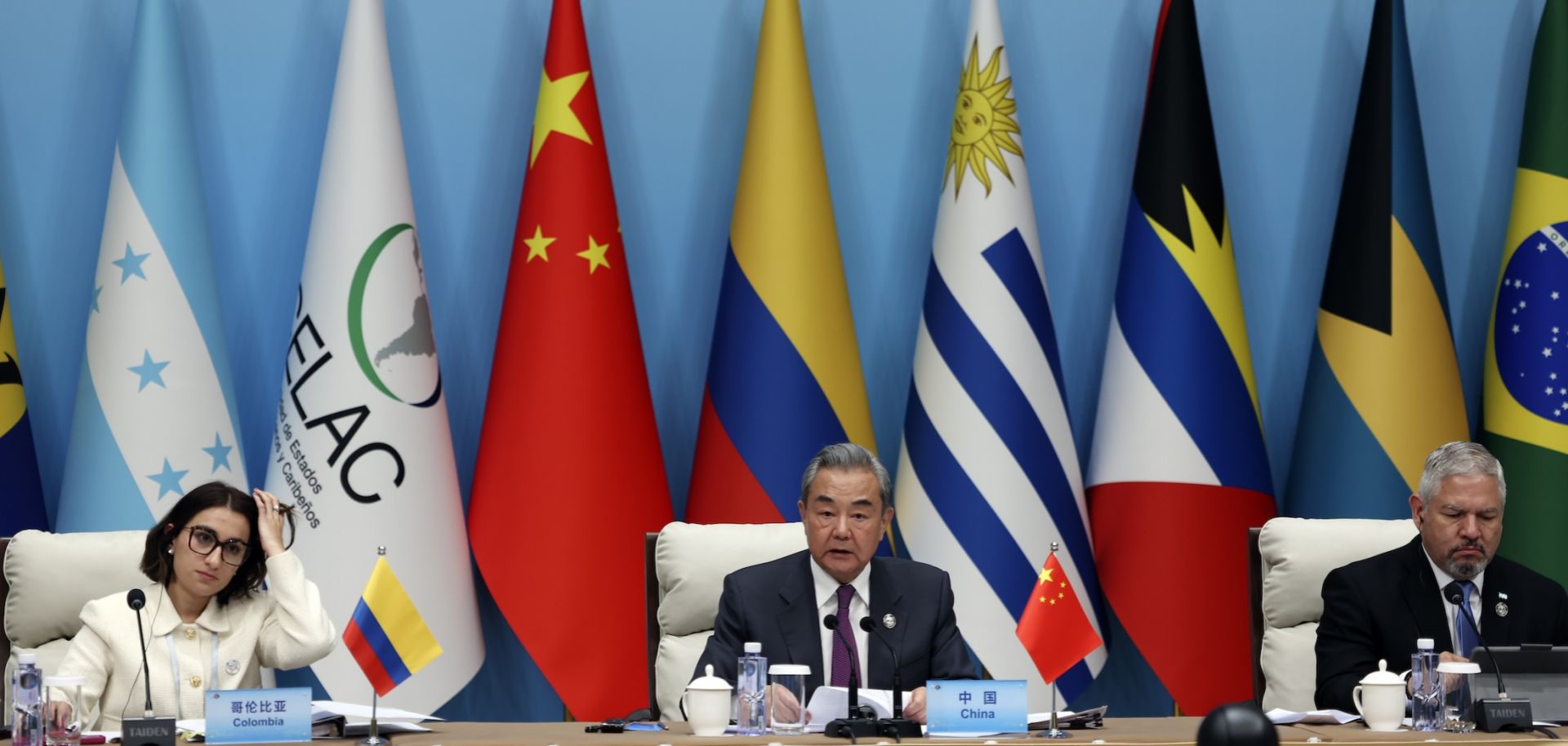
In the coming years, China will diversify and expand trade and investment in Latin America and the Caribbean amid U.S. protectionism, but Beijing's influence will likely remain limited due to its declining financial capacity and the region's enduring ties with the West. On May 13, China hosted its fourth ministerial meeting with the Community of Latin American and Caribbean States, or CELAC. Chinese President Xi Jinping pledged to provide the region with a new 66 billion yuan ($9.18 billion) credit line to support development, in addition to new infrastructure investments and cooperation on artificial intelligence, clean energy and the digital economy. Delegates from around 30 countries attended the event, including Brazilian President Luiz Inacio Lula da Silva, Colombian President Gustavo Petro and Chilean President Gabriel Boric, all of whom are leftist leaders. On the same trip, Petro and Xi signed an agreement for Colombia to join China's Belt and Road Initiative, or BRI, while the Brazilian government announced that China would invest an additional $5.5 billion in the country. More broadly, Xi highlighted how both China and Latin American and Caribbean states back multilateralism, seek global governance reform and support energy transition efforts in the face of climate change, a stark contrast to U.S. President Donald Trump's push for protectionism, transactional bilateral agreements and investments in fossil fuels.
- CELAC is a regional intergovernmental organization founded in 2010 that congregates Latin American and Caribbean countries. The China-CELAC forum was established in 2014 to promote cooperation and business partnerships.
- During the forum, Xi outlined the 2025-27 China-CELAC Joint Action Plan, which is based on five pillars: solidarity, development, civilization, peace and people-to-people connectivity. He also announced the temporary suspension of visa requirements for citizens from Argentina, Brazil, Chile, Peru and Uruguay for stays of up to 30 days.
- The Brazilian government stated that China will invest the pledged $5.5 billion in sectors such as automotive, renewable energy, fast food and delivery apps.
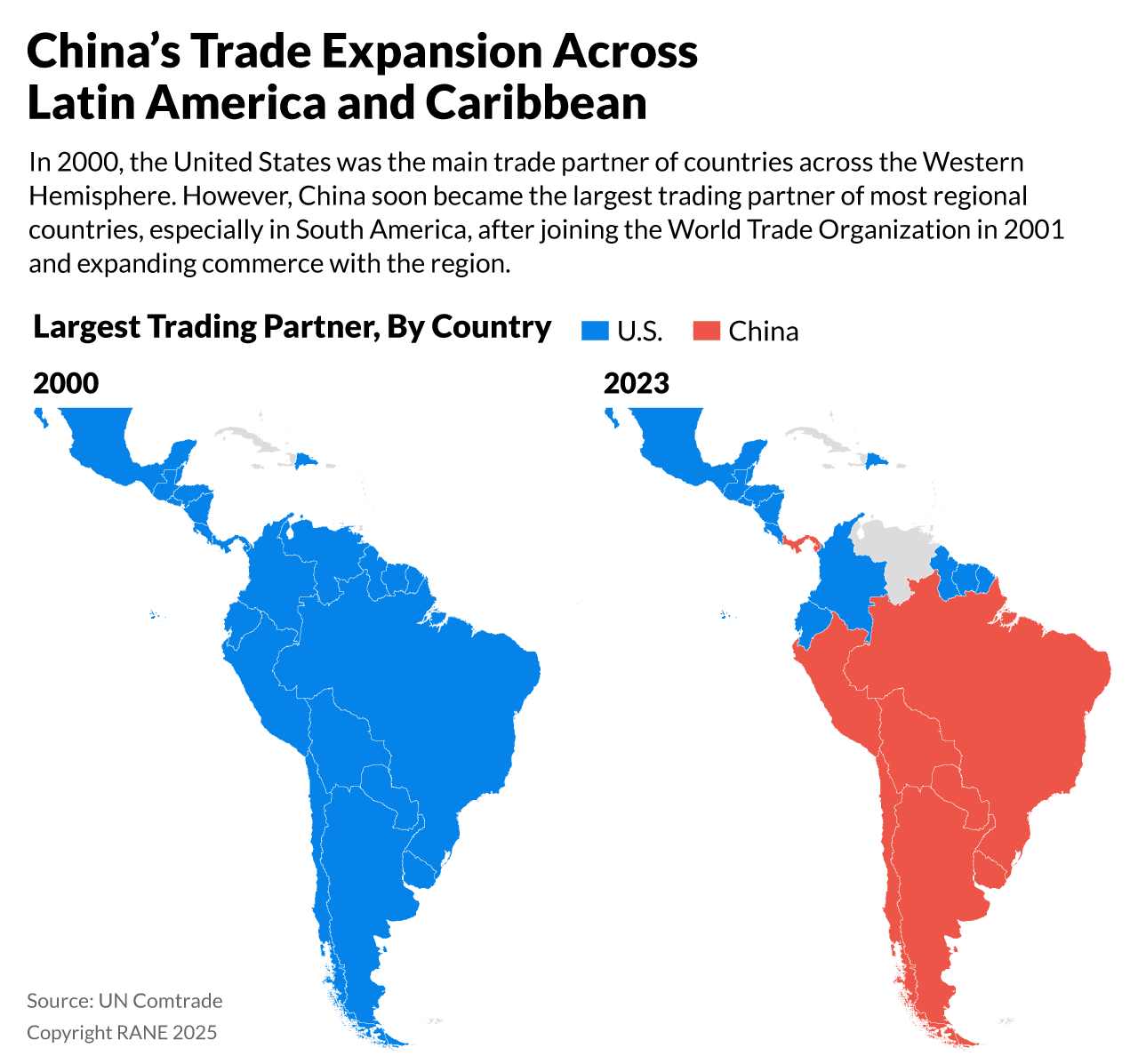
The forum occurred as trade flows have consolidated Latin America and the Caribbean's role as a strategic source of raw commodities for China and as a growing destination of Chinese-manufactured goods over the past decades. Since joining the World Trade Organization in 2001, China has expanded commerce globally, including with Latin American and Caribbean countries. The Chinese market went from receiving less than 2% of Latin American exports in 2000 to becoming the main trade partner of several countries in the region today. The change came on the back of Beijing's global push to secure critical minerals, agricultural goods and markets for its manufacturers, which has translated mostly into large Chinese state-owned and private companies' investments in energy and transport infrastructure. Latin American and Caribbean countries' broad adherence to the BRI has further strengthened trade and investment flows.
- China has free trade agreements with Chile, Costa Rica, Ecuador, Nicaragua and Peru. In 2024, trade between China and Latin American and Caribbean countries exceeded $500 billion for the first time, an increase of over 40 times that seen at the beginning of the century.
- Currently, 13 countries in Central America and the Caribbean and nine in South America are part of the BRI, which has implemented more than 200 infrastructure projects in Latin America and the Caribbean. However, in 2024, the region saw its lowest level of BRI investment in almost 10 years.
- Brazil and Paraguay are the only countries in South America that have not signed onto the BRI. Meanwhile, Panama announced amid U.S. pressure in February 2025 that it would not renew its BRI membership.
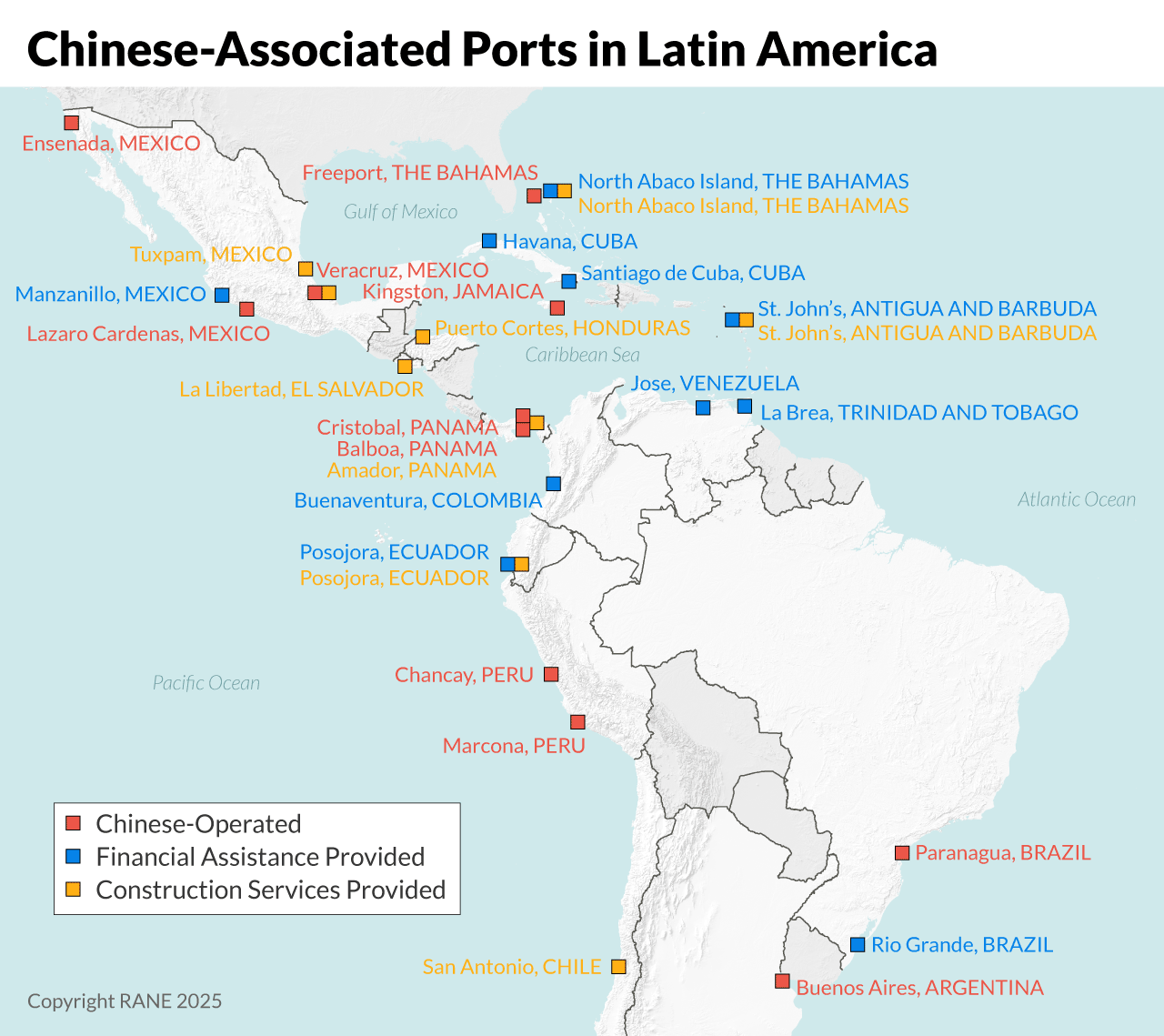
Latin American and Caribbean countries will likely remain strategic trade partners of Beijing, but China's economic slowdown will limit its investment appetite and influence, especially compared with the United States and Europe. Beijing's strategic trade priorities will likely push China to maintain Latin America and the Caribbean as a key investment destination over the next decade. China's continued interest and increased presence in traditional sectors, such as mining, agriculture and energy, will likely translate into several additional transport infrastructure projects, especially the construction or expansion of highways, railways and ports, improving logistics efficiency, reducing costs and streamlining intraregional and intercontinental trade. Moreover, Chinese companies in the renewable energy, telecommunications, e-commerce and digital payments sectors, as well as gig economy platforms, will likely expand operations in the region, eyeing its large consumer market. These areas align with Beijing's long-term industrial development plans as it aims to consolidate global leadership in these sectors to help drive China's evolution into a developed economy. However, China's economic deceleration in recent years will translate into stricter scrutiny of business decisions and a consequent reduction in investment volumes. These constraints on investment will likely limit Beijing's capacity to engage with and influence Latin American and Caribbean governments' broader decisions on geopolitical and diplomatic matters. In contrast, Latin America and the Caribbean's economic, political and cultural ties with the United States and Europe date back centuries, and Western companies have consolidated widespread presence across the region's economy. This will likely help the United States and Europe retain influence and defend their interests despite the region's growing trade ties with China.
- One of the remaining large infrastructure projects Chinese companies are discussing with South American countries is the construction of railways that would connect ports in the Atlantic Ocean in Brazil to terminals in Chile and Peru, especially the Chinese-operated one in Chancay. The railways would pass through grain-producing areas in Brazil and mining regions in Argentina.
- China accounted for only 0.48% of the foreign direct investment of the 11 Latin American and Caribbean countries that disclosed inflow sources in 2023. The United States led the ranking with 33% of the total, followed by the European Union with 30%. This data is similar to that seen over the past decade.
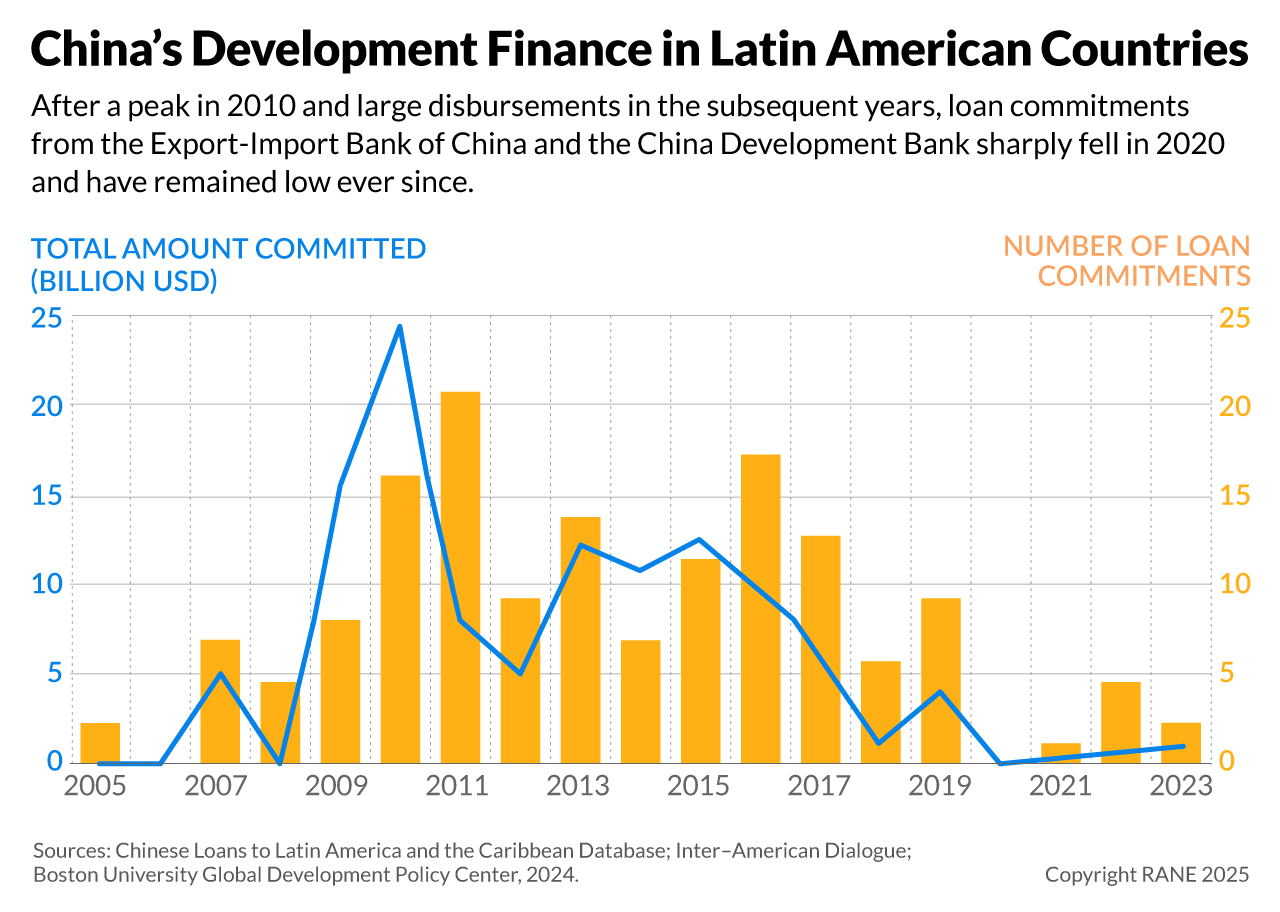
Although China will continue to strengthen ties with Latin America and the Caribbean through development financing, Beijing's disbursements are unlikely to return to levels seen in the 2010s, which will limit regional "debt trap" risks and curb Chinese leverage. Chinese development banks, especially the Export-Import Bank of China and the China Development Bank, have been significant players in Latin America and the Caribbean in recent decades, mostly supporting energy and infrastructure projects but also oil payments. However, the funding these banks have offered has significantly declined to an average of just over $1.15 billion per year from 2019 to 2023, down from a peak of $24.5 billion in 2010. Also, the $9.18 billion yuan-denominated credit line Beijing announced in May is just under half the amount it offered during the inaugural China-CELAC forum in 2015. Lastly, China has fulfilled just a small share of the dollar amounts it has pledged to Africa and will likely maintain the same dynamics vis-a-vis Latin America. As a result, funds actually disbursed will be low relative to the size of the region's economy. China's dwindling willingness and capacity to lend to the region comes amid a domestic economic slowdown and reflects a broader strategic realignment in the country's investments and financial commitments abroad. Against that backdrop, China is unlikely to surpass the International Development Bank and the World Bank as the main sources of development financing for Latin America and the Caribbean over the next five years. Nevertheless, financial integration between China and the region will likely diversify into other financial instruments over the coming decade, such as regional governments' and companies' issuance of yuan-backed debt.
- The Export-Import Bank of China and the China Development Bank have committed $120.5 billion in loans to Latin American and Caribbean governments and state-owned enterprises between 2005 and 2023, according to the Inter-American Dialogue's Asia & Latin America Program and a Boston University Global Development Policy Center report. In contrast, Chinese financial institutions extended 1,306 loans to 49 African countries and seven regional organizations, totalling $182.3 billion between 2000 and 2023. Loans to Africa were also higher in relative terms since Latin America and the Caribbean's GDP was 2.4 times higher than that of Africa in 2024, meaning the share of Chinese debt represented, on average, a higher percentage of African countries' economies than those in Latin America and the Caribbean.
- Brazilian pulp and paper producer Suzano became the first nonfinancial Latin American corporation to issue debt in China's capital markets, issuing a bond worth 1.2 billion yuan ($166.5 million) in November 2024. In May, Brazilian officials said the government was considering issuing its first yuan-denominated sovereign bonds in the Chinese market.
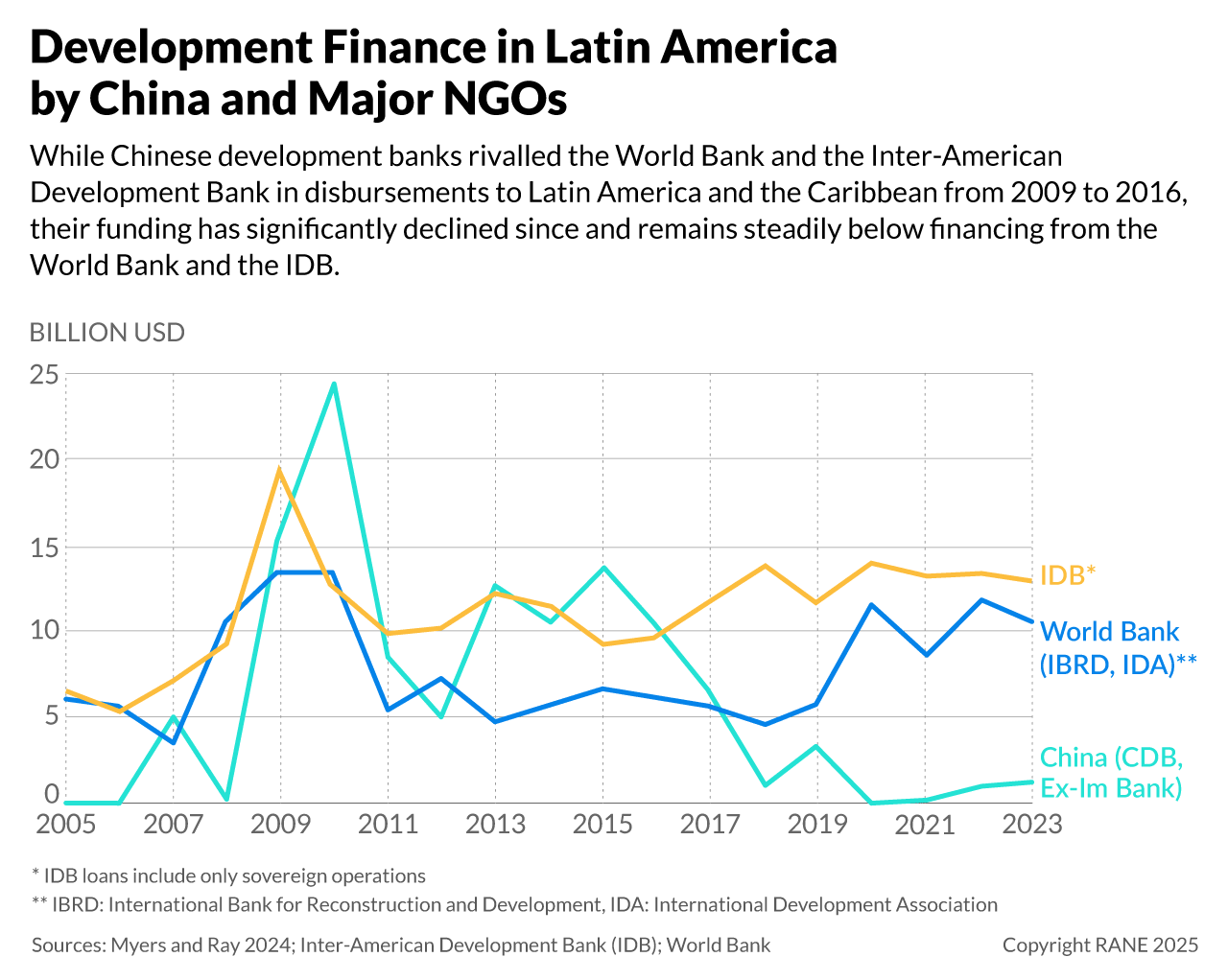
Given Latin America and the Caribbean's fiscal constraints and investment needs, the region will welcome Chinese inflows, even if at lower levels, but extensive support for Beijing's broader agenda remains unlikely. To various degrees, all Latin American and Caribbean countries lack enough resources to maintain or expand adequate infrastructure and improve social welfare, meaning that Chinese support in the form of foreign direct investment or credit lending will be well received. Additionally, the uncertainty and expected negative impacts of Trump's protectionist initiatives will likely increase incentives for governments across the region to diversify trade away from the United States and seek new markets for their products, even though doing so would increase their dependency on the Chinese economy in the medium to long term. Growing influence and economic ties will enable Beijing to push its diplomatic agenda further in the region, including on contentious issues like Taiwan's diplomatic status. However, given Latin America and the Caribbean's heterogeneity, China is unlikely to consolidate the entire region's support for its broader international agenda. Instead, regional support for Chinese initiatives — like a multipolar order, de-dollarization, global governance reform and a noninterference doctrine — will likely remain sporadic as countries seek to avoid U.S. sanctions while benefiting from renewed multilateral institutions and Chinese backing.
- From 2007 to 2023, several Latin American and Caribbean countries ceased recognizing Taiwan as an independent country, including Costa Rica, the Dominican Republic, El Salvador, Honduras, Nicaragua and Panama. Still, seven of the 12 countries that maintain official diplomatic ties with the island are from Latin America and the Caribbean; two of them, Haiti and Saint Lucia, sent representatives to Beijing for the CELAC summit on May 13.
In sum, different groups of Latin American and Caribbean countries have varying incentives, domestic drivers and degrees of susceptibility to U.S. pressure that will ultimately influence how they engage with China. Ideological affinity will continue to strengthen relations between China and many Latin American and Caribbean countries, particularly those with leftist governments. Additionally, the prioritization of investments and access to credit, as well as the relative ease of securing funds from China-backed organizations compared with their Western counterparts, will lead many right-wing administrations in the region to actively engage with Beijing. However, several Latin American and Caribbean governments will shy from Beijing's overt influence to avoid U.S. retaliation, including tariffs threats, the reduction or reprioritization of aid and loans, investment restrictions, blacklisting, reduced security and diplomatic cooperation, or even military threats, such as in the case of Panama. Countries that significantly rely on trade with the United States, such as Mexico and some Central American states, will be particularly wary of appearing overly aligned with Beijing, leading them to occasionally curb investments from China. However, Washington will have less leverage over larger economies, such as Brazil and Argentina, and countries whose trade has grown increasingly interconnected with China, such as Chile and Peru, meaning that South America will have fewer constraints on pursuing closer ties with Beijing.
- Boric, da Silva and Petro attended a ministerial forum in Beijing in May, illustrating regional leftist presidents' efforts to foster close ties with China. Additionally, Argentina's libertarian President Javier Milei, who harshly criticized Beijing during his presidential campaign in 2023, has adopted a friendly rhetoric since taking office, noting that China is a "great trade partner" and securing the extension of a long-standing $18 billion bilateral currency swap for another year in April.
- After a call with Trump on March 6, Mexican President Claudia Sheinbaum announced a review of tariffs on Chinese shipments, mentioning the negative impacts imported goods from China have on the country's textile and shoe industries. In January, the Mexican government imposed a 19% tariff on goods entering Mexico via courier companies, affecting mostly Chinese online retailers. In December 2024, Mexico introduced a temporary duty increase from 25% to 35% on textile goods amid the government's broader crackdown on the commercialization and smuggling of Chinese-manufactured goods.
- Different U.S. administrations have expressed concern about Chinese influence in Latin America and the Caribbean, from the construction and operation of strategic ports or 5G infrastructure to increased debt reliance and military cooperation, warning of the sovereignty and surveillance risks China poses. Trump has vowed to "take back" the Panama Canal amid concerns over a Hong Kong-based company operating two out of the five ports on both sides of the waterway.