
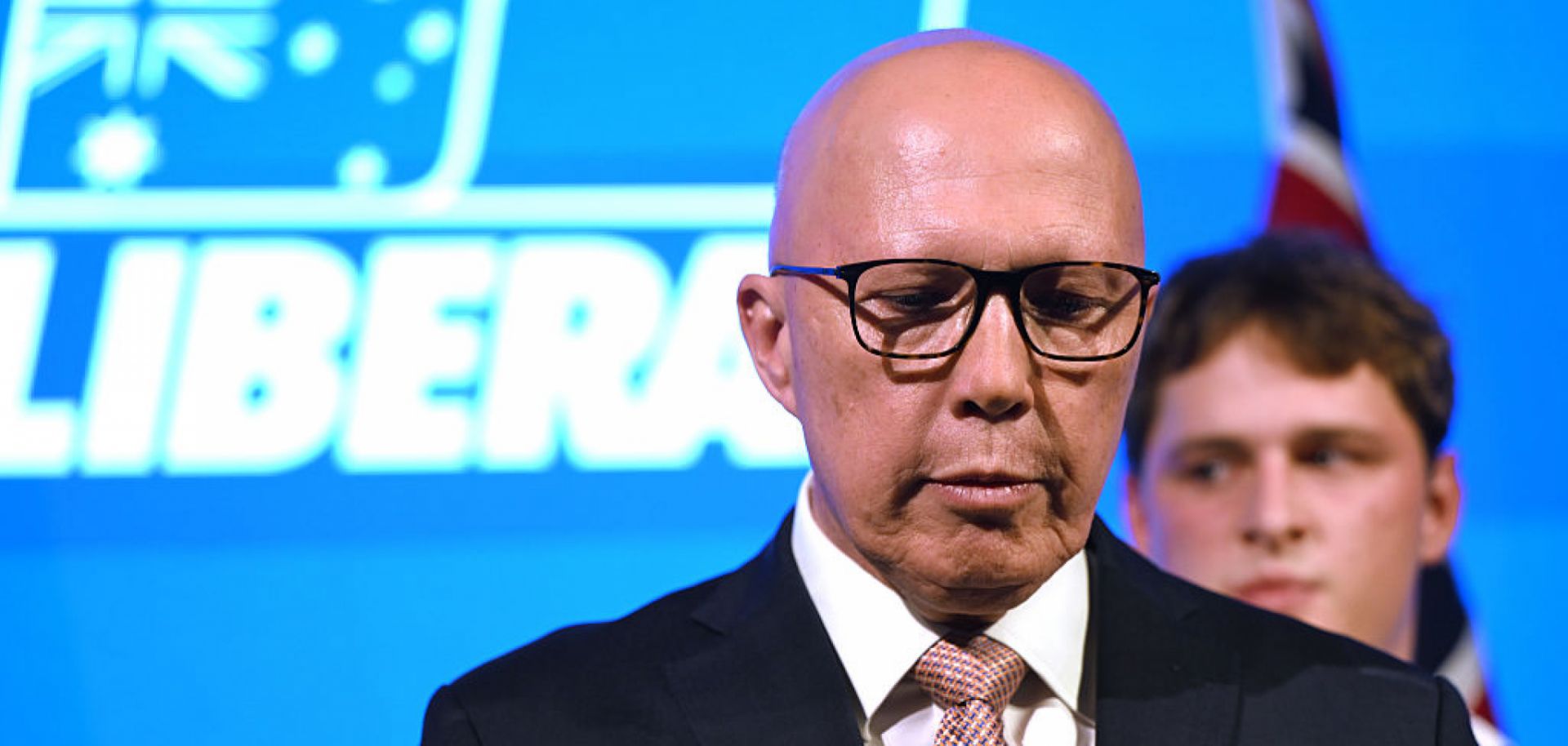
In Australia, the collapse of the conservative coalition between the Liberal Party and National Party will fracture opposition to the ruling Labor Party's agenda, granting the government freer rein to implement energy transition, industrial investment and fiscal reform policies. On May 20, Australia's main opposition group, the center-right Liberal-National Coalition (LNC), formally split amid deepening urban-rural divides over energy and economic direction, marking the end of one of the longest-standing political partnerships in the country's history. The collapse came after negotiations on a renewed coalition agreement broke down over major policy divisions, especially around energy, with the National Party demanding an aggressive push for nuclear power and fossil fuel development, while the Liberal Party leaned toward a more moderate, suburban-friendly climate and emissions policy. Other points of contention included rural subsidies, carbon market regulation, and transmission line infrastructure for renewables, all of which revealed a deepening philosophical divergence between the two parties. The Nationals, moreover, declared they would no longer function as a junior partner amid the Liberals' recent electoral losses and instead move to the crossbench, effectively removing themselves from the formal opposition structure. As a result, the Liberal Party will now carry all shadow ministries and serve as the lone official opposition to Prime Minister Anthony Albanese's ruling Labor Party.
- National Party leadership argued that the coalition model had become unworkable and that remaining tethered to a party that no longer represented regional Australia would betray their electoral base. The National Party also repeatedly argued that nuclear energy was not politically toxic as claimed by critics, and that the renewables rollout was "tearing rural Australia apart" — a reference to growing backlash in regions over land acquisition for solar farms, wind turbines and high-voltage transmission corridors.
The immediate trigger for the breakup was the outcome of the May 3 federal election, which exposed stark geographic and ideological divides within the right-of-center base. While the National Party made gains in rural and regional electorates by campaigning on energy sovereignty and infrastructure investment, the Liberal Party suffered devastating losses in urban and suburban seats, suggesting their policy platform alienated a significant number of typically loyal voters. The resulting shift in internal power dynamics gave the National Party more leverage, which it used to demand an overhaul of the coalition agreement. When the Liberal Party failed to meet those demands — particularly around nuclear energy and rural infrastructure priorities — the National Party chose to exit entirely. This departure is not just a tactical maneuver as it represents a strategic reset for the National Party, which now believes it can expand its influence by operating independently and courting rural voters directly, who are increasingly drawn to populist policy and messaging. Reunification in the current context would require significant concessions from the Liberal Party, including formal policy carve-outs for regional issues, public recognition of equal partnership, and likely a structural overhaul of opposition strategy. However, such reconciliation is unlikely in the short term due to the level of distrust between the two parties and their diverging electoral priorities — that is, unless external shocks, like another crushing electoral loss or a national crisis, compel a pragmatic reunification.
- The split, while not entirely unprecedented, represents the most definitive rupture in the LNC's federal structure since its formation in the 1940s.
- This is not the first time the LNC has fractured, though past splits were either temporary or localized. A notable example occurred in the 1987 federal election, when the Nationals and Liberals campaigned separately after disagreements over economic and social policy. That experiment failed, with Labor winning reelection, prompting the LNC's formal reunification by 1990. More recently, state-level tensions, such as in Western Australia and Victoria, have led the Nationals to sit on state crossbenches after election losses, but these were tactical choices rather than ideological schisms.
The collapse of the LNC will fracture the conservative movement, weakening the opposition's ability to serve as an effective check on the center-left Labor government, thus giving it greater freedom to advance its policy agenda. The LNC breakdown reduces resistance to Labor's legislative agenda on key issues like the energy transition, industrial policy and fiscal reform. More broadly, the collapse creates a severely fractured right-of-center bloc, with the National Party seeking to chart its own path as a rural-focused party, likely aligning with right-populist minor parties like One Nation down the road. With the Nationals moving to the crossbench and the Liberals now alone in shadow government, the ruling Labor Party now faces a severely disjointed opposition bloc. While Labor does not hold a Senate majority, the disunity on the right will make it easier for the government to pass key legislation by negotiating with the Greens (who support faster decarbonization, fossil fuel bans and rent control) or centrist independents (who often support infrastructure and social reforms but with tighter fiscal oversight demands). The collapse of the LNC will also amplify the influence of minor parties in shaping national policy, especially in the upper house, where discipline and unity among conservatives had been key to blocking or amending government bills. Meanwhile, the absence of a coherent conservative alternative means Labor's agenda will face fewer institutional checks in the short term, enabling it to move forward on emissions targets, energy transition infrastructure and industry decarbonization. In the longer term, the fractured opposition could pave the way for a realignment on the right, potentially leading to a three-way contest between centrist Liberals, rural-based right-populists and a consolidated left-of-center bloc under Labor going forward, reshaping Australia's political trajectory and making the formation of future governments more difficult.
- Highlighting the weakness of the formal opposition, which now only includes the Liberal Party, the Liberals hold only 28 of 150 seats in the House of Representatives after losing 19 as a result of the May 3 federal election. The National Party holds 15 seats, joining 9 independents and three smaller party representatives on the crossbench. The ruling Labor Party has a strong House majority with 93 seats.
- The LNC's collapse also undermines bipartisanism on national security issues such as defense spending, AUKUS implementation and Australia's strategic posture toward China. This is because the more hawkish National Party, despite lacking legislative power, could now push a more unilateral security agenda without Liberal moderation, thus shifting public discourse and undermining broad bipartisanship that has emerged in recent years on this issue.
- The National Party will likely double down on its push for nuclear energy, fossil fuel expansion and targeted rural spending, while the Liberal Party will likely moderate economic and environmental policies to win back urban and suburban voters.
