
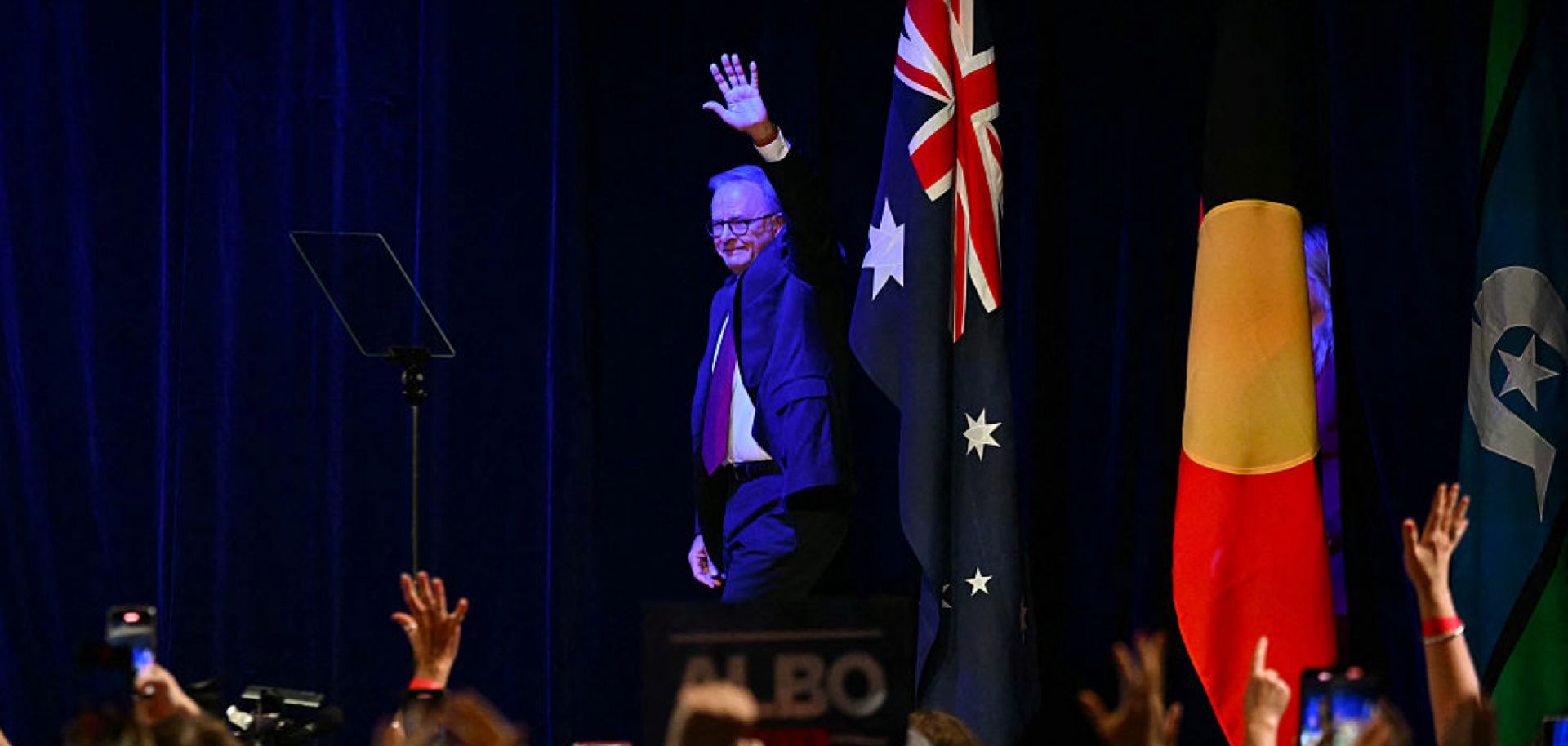
In Australia, the Labor Party's commanding mandate will enable economic reforms and green investments while reinforcing — but also testing — the country's AUKUS commitments amid rising U.S.-China tensions and friction with the Trump administration. On May 3, Australian Prime Minister Anthony Albanese's center-left Labor Party won a decisive majority in federal elections , securing up to 91 seats in the 151-member House of Representatives, a substantial 14-seat increase from its prior majority and well above the 76 needed to govern outright. The center-right Liberal-National coalition, or LNC, led by Peter Dutton, collapsed from 58 to just 24 seats, its worst performance since the end of World War II. Dutton himself lost his Queensland seat of Dickson to a Labor challenger, marking the first time since 1903 that an opposition leader has failed to win reelection in his own district.
