
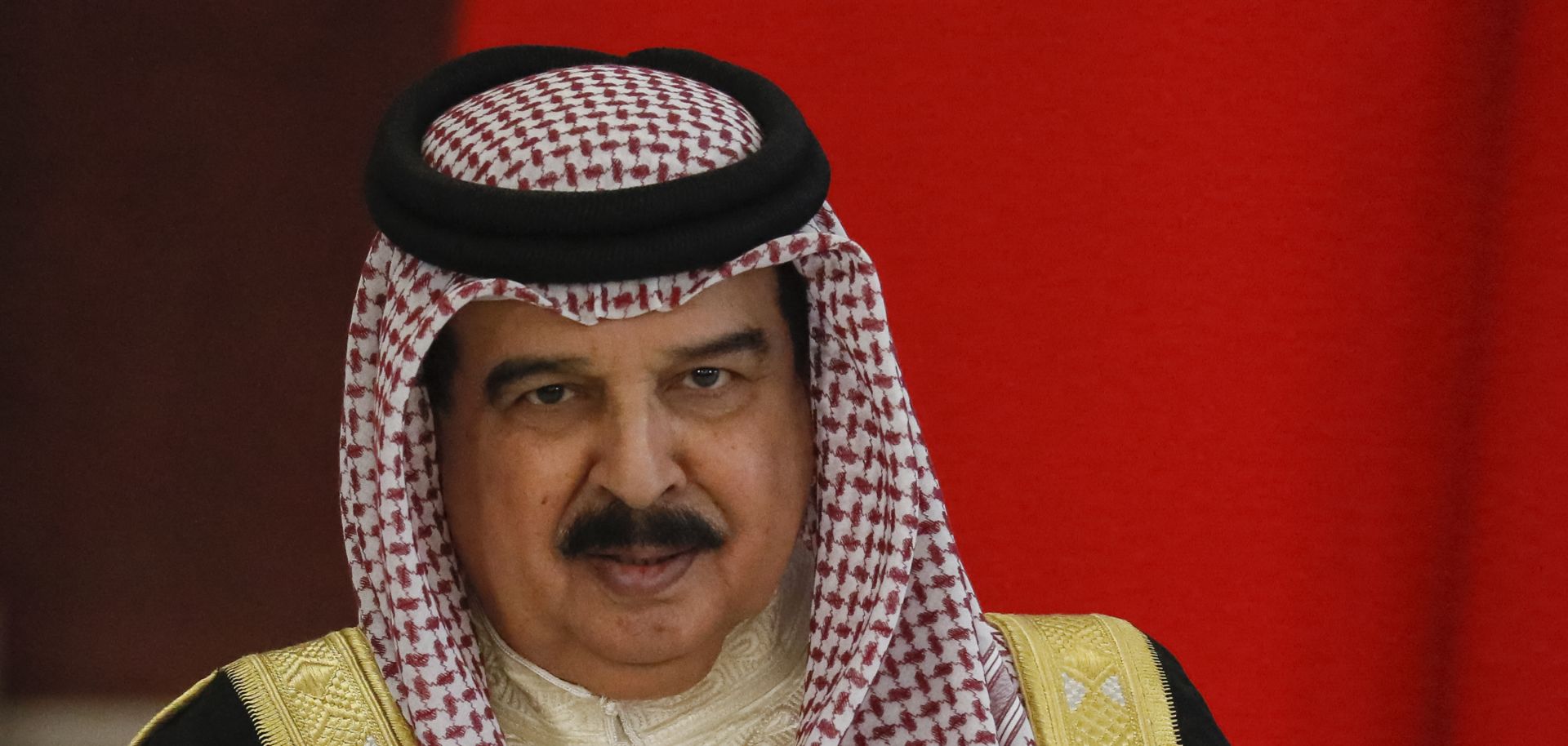
The prospect of normalized relations between Bahrain and Iran will lower some security risks for Manama amid the threat of a broader regional war, but it will not fully remove the threat of Iranian proxy attacks or Iranian support for Bahrain's Shiite opposition. On June 23, Bahrain and Iran's foreign ministries released a joint statement announcing the two countries would begin discussing steps to normalize relations. The announcement followed a meeting between Bahraini Foreign Minister Abdullatif bin Rashid al-Zayani and Iran's acting Foreign Minister Ali Bagheri Kani. The statement came weeks after Bahrain reportedly sent a message to Tehran through Russia requesting to normalize relations. In addition, during recent trips to both Russia and China, Bahrain's King Hamad bin Isa Al Khalifa expressed interest in improving relations with Iran.
- During a May 23 visit to Moscow, King Hamad told Russian President Vladimir Putin there was "no reason to delay with normalization of relations" with Iran.
- Al-Zayani's visit to Iran came at Bagheri Kani's invitation to participate in the Asia Cooperation Dialogue's ministerial meeting on June 24.
Bahrain is likely pursuing normalization with Iran to de-escalate regional tensions and follow preexisting normalization trends established by other Arab nations. Bahrain maintains close military ties with the United States, most recently seen in its participation in the U.S.-led Operation Prosperity Guardian against Yemen's Houthi rebels, who are key Iranian allies. Bahrain also hosts the U.S. Naval Forces Central Command and the U.S. Fifth Fleet and maintains close relations with Saudi Arabia, Iran's chief regional rival. These relationships make Bahrain a prime target for Iran and its proxies, particularly as regional tensions rise amid the Israel-Hamas war in Gaza and Israel's escalating conflict with Lebanon's Iran-backed Hezbollah militant group. Bahrain likely hopes to de-escalate tensions with Iran and its regional allies via normalization, following in the steps of Saudi Arabia, which reached a China-brokered normalization pact with Iran in March 2023, and Sudan, which normalized relations with Iran in October 2023. Bahrain, along with Saudi Arabia and Sudan, had previously severed ties with Tehran in 2016 after Saudi-Iranian relations severely deteriorated. At the time, Iranian mobs stormed Saudi missions in Tehran and Mashhad following Riyadh's execution of Shiite cleric Nimr al-Nimr.
- Ties between Bahrain and Iran have been strained since 2011 after Manama accused Tehran of supporting Shiite-led anti-government protests that called for the government to transition to a constitutional monarchy. A constitutional monarchy would upend the existing political status quo under which a Sunni monarchy rules Bahrain’s Shiite majority population.
- Bahrain-Iran relations worsened further in 2013 after the establishment of the Al Ashtar Brigades, an Iranian-backed terrorist group designed to overthrow the Bahraini government. The group has been responsible for several deadly attacks on police and security targets.
- Bahrain's Sunni government significantly weakened its Shiite opposition after the judiciary banned and dissolved two major opposition parties in 2016 and 2017, Al-Wefaq and Waad. Bahrain's opposition deteriorated further after the government revoked the citizenship of a prominent Shiite cleric and cracked down further on Shiite opposition groups.
- In April 2024, Bahrain's King Hamad pardoned more than 1,500 prisoners, a majority of whom were political dissidents imprisoned after the 2011 anti-government protests. The release of the prisoners is a sign that Manama believes the threat of renewed anti-government protests led by the Shiite-majority opposition is greatly diminished.
Bahrain is very likely to normalize relations with Iran to reduce the risk of being targeted by Iran or its allies, but this will not fully remove Bahrain's security vulnerabilities, and Manama will likely remain wary of Tehran due to its alleged support of Bahraini domestic unrest. While the Bahrain-Iran joint statement did not give a timeline for signing a full normalization deal, Bahrain and Iran would not have made the public announcement if they did not believe they would reach an agreement. Following rapprochement, Bahrain and Iran will likely reopen their respective embassies, although they are unlikely to reach significant economic or political breakthroughs. Similarly to other Gulf Cooperation Council countries that have improved relations with Iran, Bahrain will likely leverage improved diplomatic relations to de-escalate regional tensions and protect itself in case of re-escalation. For instance, rapprochement would likely provide Bahrain with some security insulation from a Houthi escalation, as Iran would likely discourage the Houthis from targeting countries with which it has normalized relations. However, normalized relations with Iran would not fully remove the threat of Iranian proxies like the Houthis targeting Bahrain in a scenario of significant regional escalation. Furthermore, despite decreased domestic protest risk, Manama will likely remain wary of Iranian influence in domestic affairs, as Iran would be unlikely to desert the Shiite cause in Bahrain if anti-government protests resurge. In this scenario, Iran would likely still provide political and rhetorical support for Bahrain's Shiite dissidents and try to provide financial and clandestine arms support, though Bahraini intelligence and security forces have successfully limited such support channels in recent years.
