
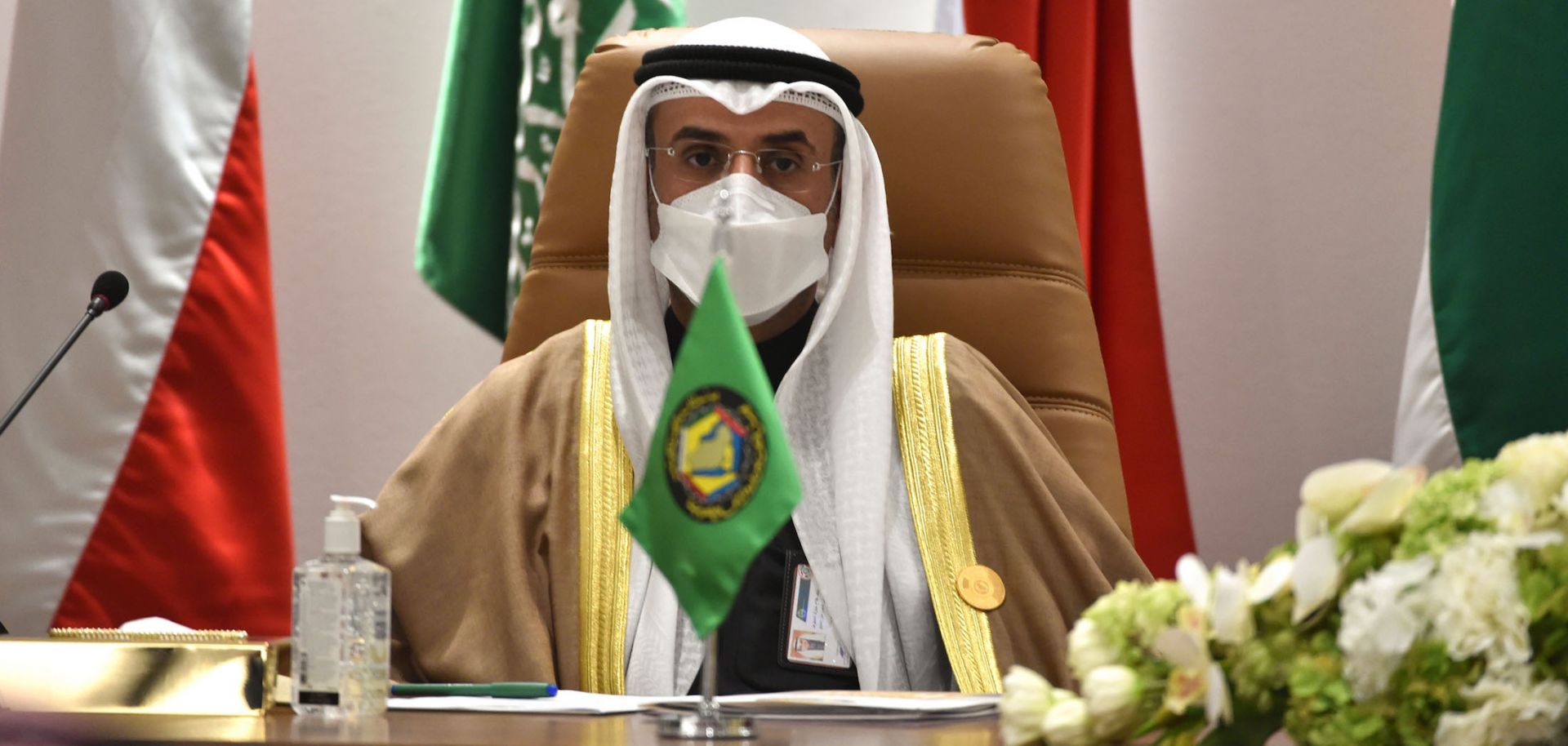
Secretary-General of the Gulf Cooperation Council (GCC) Nayef Falah Al-Hajraf holds a press conference at the end of the GCC's 41st summit in the city of al-Ula in northwestern Saudi Arabia on Jan. 5, 2021.
By easing its three-year blockade on Qatar, Saudi Arabia is attempting to improve its troubled relationship with the United States before President-elect Joe Biden takes office. But serious differences between Riyadh and Washington remain, which will continue to create tension in their relationship. On Jan. 4, Saudi Arabia, Bahrain, the United Arab Emirates and Egypt agreed to open their land and maritime borders, as well as their air space, to Qatar. Then on Jan. 5, the same four countries pledged to restore relations with Qatar. The breakthrough came after U.S.- and Kuwait-brokered negotiations between Qatar and Saudi Arabia. Qatar’s emir, Sheikh Tamim bin Hamad Al Thani, visited Saudi Arabia for the first time since the blockade began in 2017 to attend the GCC conference, where Saudi Crown Prince Mohammed bin Salman personally greeted him in an event designed to signal a restoration of high-level relations.
- Saudi Arabia, the United Arab Emirates, Bahrain and Egypt cut diplomatic ties, travel and commercial links with Qatar in June 2017 after accusing Doha of supporting terrorism and issuing it 13 demands to change its behavior. Qatar’s emir had boycotted the annual GCC conferences since 2018 in protest of the ongoing blockade.
- Abu Dhabi Crown Prince Sheikh Mohammed bin Zayed Al Nahyan, a fierce opponent of Qatari regional policies, did not attend the Jan. 5 summit. Though not a GCC member, Egyptian President Abdel Fatah al-Sisi also did not attend, and sent his foreign minister to the event in his place.
Riyadh is trying to preemptively offset criticism from the Biden administration amid calls in the United States for the GCC to reduce their internal rifts. The June 2017 blockade was unpopular with U.S. officials and politicians, who feared the subsequent GCC crisis would undermine a united regional front against Iran, as well as overall stability in the Arab Gulf. U.S. lawmakers have also criticized Saudi Arabia’s aggressive foreign policies against places like Yemen and Qatar. Publically waiving the 13 demands issued to Qutar in 2017 better aligns Riyadh’s priorities with Washington, prioritizing GCC solidarity over intraregional concerns with Qatari behavior.
- The United States maintains a substantial regional military presence in the Arabian Peninsula, with bases in Qatar, the United Arab Emirates, Kuwait and Bahrain. Washington has also been a major security backer for all the GCC states, with Saudi Arabia relying on U.S. strategic cooperation and support throughout Riyadh’s intervention in the ongoing Yemen conflict.
- Qatar has yet to adjust its behavior to meet any of the 13 initial demands issued by Saudi Arabia, Bahrain, the United Arab Emirates and Egypt in 2017 — thus leaving a source of friction between Riyadh and Doha.
Removing the blockade, however, will not resolve potential tension points in the U.S.-Saudi relationship over arms agreements, nuclear technology coordination and Riyadh’s human rights policies. U.S.-Saudi arms agreements will face new scrutiny under the Biden administration as it assesses how the weapons are used by the Saudis. The easing of the Qatar blockade will also not quell bipartisan concerns in Washington about the potential of a Saudi civilian nuclear program.
- In 2019, congressional opposition to another arms sale to Saudi Arabia and other Arab Gulf countries forced the administration of U.S. President Donald Trump to push through the deal via emergency authorization. In their criticism of the deal, U.S. lawmakers specifically cited concerns about the use of American-made weapons in Yemen, where Saudi forces have been accused of causing civilian casualties.
- The incoming Biden administration has promised a strategic review of U.S.-Saudi ties. Biden has also declared a renewed interest in multilateralism and has been critical of Saudi Arabia’s actions in Yemen, as well as the kingdom’s overall human rights record.
- Saudi Arabia’s growing civilian nuclear program has stoked fears in the United States that Riyadh is readying to develop nuclear weapons. Riyadh has not provided assurances over how it would manage its nuclear fuel cycle, which has only heightened these fears.
- U.S. lawmakers fear that a Saudi civilian nuclear program may not adhere to the same safeguards its other allies, such as the United Arab Emirates, have in place to limit nuclear proliferation.
