
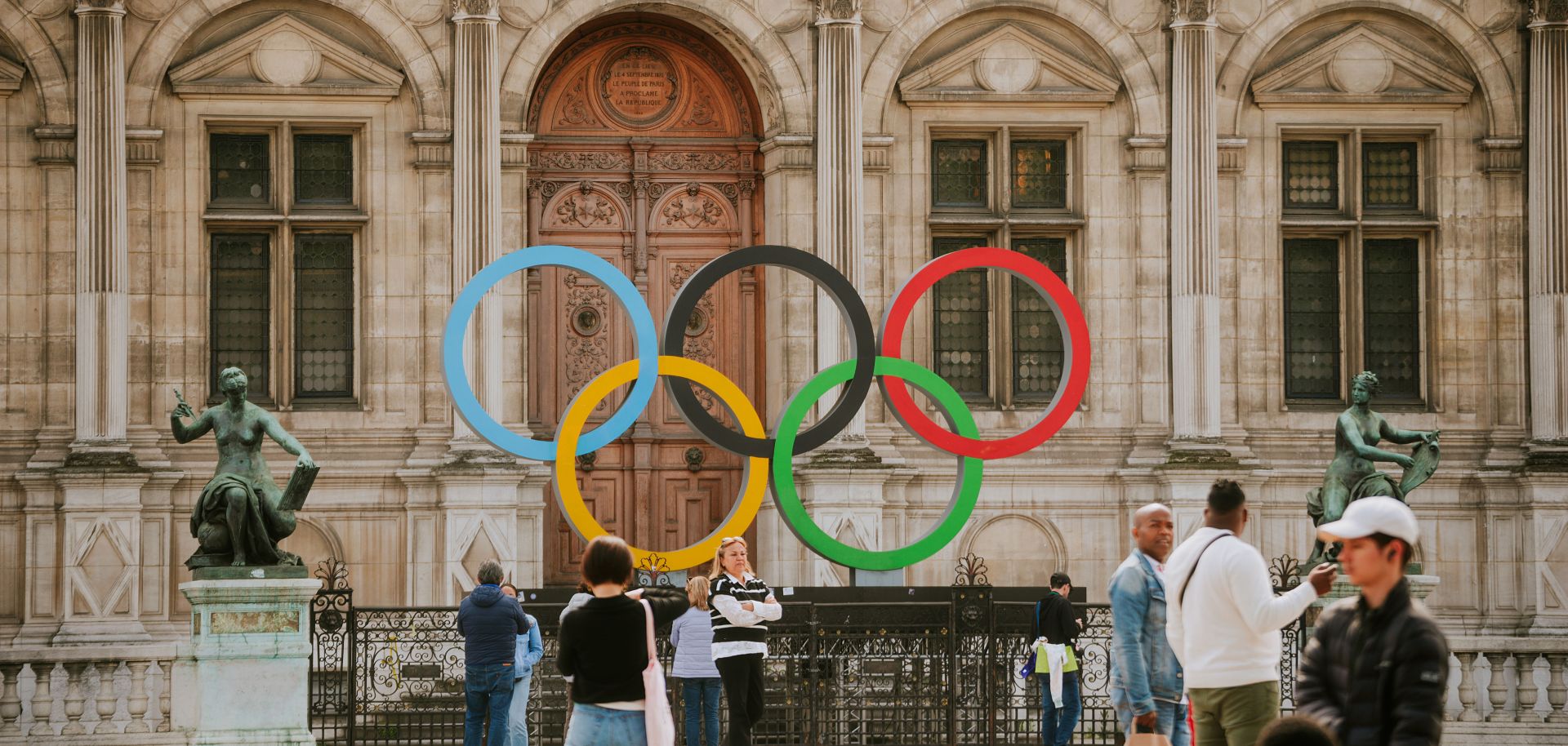
Editor's note: This is the first installment of a two-part assessment examining the increased threats Paris and the surrounding areas will face amid the 2024 Summer Olympic Games. Part one discusses threats from opportunistic crime and protest activity, and part two will focus on extremist threats and cybercrime, as well as the security operation France is launching to counter these threats.
The 2024 Summer Olympic Games will increase many types of risk in Paris, including opportunistic crime that threatens visitors and potentially some form of protest activity that could create a variety of disruptions. Paris will host the 2024 Summer Olympic Games between July 26 and Aug. 11. The event will draw the world's attention as well as millions of visitors to the French capital, posing significant security challenges that include opportunistic crime against newcomers and a variety of possible protest activities, especially on the back of recent political instability in France. While these risks will intensify during particularly high-profile events, like the opening ceremony, they will remain elevated throughout the Games across Paris and beyond, including in areas not necessarily in proximity to sporting venues. As a result, visitors and Parisians alike will face increased risks of theft, violence and transportation disruptions in the weeks surrounding and during the Games.
While Paris is generally considered a safe destination for foreign travelers, visitors will likely face increased risks of opportunistic and potentially other crime during the Olympics as criminals seek to exploit the large crowds that will converge on the city. Opportunistic crimes such as pickpocketing, swarm and grabs, and scams are conducted fairly frequently in Paris, and as more than 15 million visitors are expected in the city for the Olympic Games, such crimes are set to increase throughout the three weeks the event will take place. Several studies of previous Olympic games demonstrate consequent spikes in crimes such as pickpocketing and theft during large-scale events, underscoring this risk. While tighter security measures and an enhanced, visible police presence will reduce the threat of such crime in the vicinity of Olympic venues and sporting events, visitors in other areas of the city — including popular tourist sites, parks, public squares, public transport and major transport hubs like train stations — will be exposed to higher risks of pickpocketing, bag snatching and other opportunistic crimes. Although these crimes are typically non-violent, visitors should exercise heightened vigilance in peripheral and economically deprived areas, high-traffic sites like metro or train stations, and more isolated areas in the city center like parks and quaysides, where violent crimes are more likely after dark. Criminals in the city also occasionally conduct armed robberies or use motorbikes to conduct smash-and-grabs targeting valuables on passengers or in cars stopped at intersections or in traffic. Risks of injury during armed or violent robberies typically increase if victims do not comply with criminals' demands. More broadly, other property crimes such as car theft, carjacking and residential burglaries also occur regularly in Paris and may impact foreign travelers, depending on their mode of transportation and/or residence; however, given most visitors for the Olympics are expected to arrive by train or plane and stay in hotels or other local lodging, this sort of crime is unlikely to spike solely due to the event. Should travelers need law enforcement assistance, French police and security forces tend to be well-trained, well-equipped and professional, though they do not always speak English. Additionally, their response times to reported incidents during the Games may be slower than usual since the city will likely be overwhelmed by the large number of visitors.
- In Paris, travelers should exercise heightened vigilance on the rail link from Charles de Gaulle Airport to the city center and on Metro line 1, which runs east to west and stops at various tourist sites, as pickpockets are reportedly particularly active in these areas. Travelers should also be more cautious after dark, when violent crime becomes more prevalent, even in relatively central night-life districts such as Barbes, Pigalle and Chateau Rouge in the 18th arrondissement. Other areas to potentially avoid after dark include Stalingrad, Jaures, Danube, Mouzaia and Cambrai in the 19th arrondissement, as well as isolated places such as the Buttes Chaumont and Bois de Boulogne parks or the Ourcq canal, where petty crime targeting individuals walking alone is common. Paris' metro stations and the surrounding areas can also experience higher crime levels at night, particularly the Marx Dormoy and Porte de la Chapelle stations in the 18th arrondissement, the Chatelet station in the center, and the Porte de Montreuil station in the 20th arrondissement. Paris' two main railway stations, the Gare du Nord and Gare de l'Est, are located in the 10th arrondissement and should also be avoided at night.
- According to figures from the Paris Police Prefecture, crime rates in 2023 generally declined compared with the previous year. Property crimes such as armed robberies and pickpocketing decreased by 13.5% and 3.4%, respectively. Burglaries committed in the urban area remain relatively stable, while thefts from homes and vehicles declined by 3.5% and 7.3% in the broader Paris metropolitan area. According to the authorities, these declines were mostly a result of the significant increase in police presence, particularly in hotspots for this sort of crime (such as busy tourist areas and train stations) in the run-up to the Games. This suggests the expected, robust police presence will help limit the likely increase in crime throughout the event.
- Outside Paris, while criminal activity is lower, both opportunistic theft and physical assaults still occur. Like in the capital, crime across French cities will be more prevalent in high-traffic areas like train and metro stations, shopping centers and crowded markets, as well as dense tourist areas. To this end, the historical centers or old towns of many cities will likely attract more criminality, given these are where most tourist destinations are located. Economically marginalized peripheral areas experience higher drug-related and potentially violent crime, particularly after dark.
- Travelers should be aware that thieves, in Paris just like in other major French cities, tend to operate in small groups and swarm people in crowded spaces to rob them of luxury watches, jewelry, wallets, passports, smartphones and other small electronic devices. Such criminals are also often under the age of 18, partly because minors are less likely to face prosecution in France. Another common method for thieves is to work in tandem, with one distracting unwary travelers with questions while the other attempts to steal valuables from their pockets or bags.
The high visibility of the event may incentivize unions and various protest movements to stage industrial actions and demonstrations that could result in transport disruptions, property damage and sporadic violence. France has a history of strikes and mass protests related to various socio-economic issues, and demonstrations, large public gatherings and various other forms of protest are common, especially in Paris. While the majority of demonstrations in France are typically peaceful, in the capital, several large and influential protest, activist and labor movements across the ideological spectrum regularly engage in public activities that disrupt travel and business operations across the city. Although generally temporary, transport disruptions, strikes and street violence occur frequently and can sometimes be protracted, causing significant and occasionally prolonged interference in daily life and to foreign travelers visiting the French capital. Violence is more likely to break out during major protest movements, as seen in 2018 during the yellow vest protests and twice in 2023 during the pension reform mass protests and the riots following the fatal police shooting of a teenager of North African descent in a Paris suburb. In addition, industrial action from public sector workers or other essential sectors can lead to severe country-wide disruptions to train transport, air traffic, public services and fuel deliveries. Against this backdrop, social unrest may threaten the Games, with protest activity and strikes (should they occur) potentially disrupting the event's operations and restricting movement within Paris. Labor unions as well as a range of protest movements — from disgruntled farmers to environmentalist or pro-Palestinian groups — may seek to capitalize on the global significance and high visibility of the event to put pressure on or increase their leverage in negotiations with the government by staging disruptive demonstrations and strikes. Most recently, unionized French farmers brought the area around Paris to a standstill in January 2024 by blocking major motorways around the capital as part of a highly disruptive nationwide protest against agricultural and environmental policies; the protests threatened to escalate until government concessions in early February managed to quell the movement. While the government will maintain an accommodative stance with farmers' unions to avoid fuelling anti-establishment parties ahead of European Parliament elections in early June and/or disrupting the Olympic Games later in the same month, eventual breakdowns in negotiations may lead to a resumption of protests and potential significant disruptions to the event. The ongoing war in Gaza, recent spending cuts by the government on climate and green energy measures, and various potential grievances by labor unions may also result in some form of protest activity during the Olympics — though prior such protests suggest they would likely be significantly less disruptive compared with potential farmers' protests. Travelers should thus monitor potential alerts of scheduled protests and more generally be aware of any contentious, high-profile events or political developments ahead of the Games that may trigger disruptive demonstrations and social unrest during the Olympics.
- Prior protest activity suggests politically and economically-motivated protests around the Games would risk drawing high turnout and very likely converge in Paris, with protesters assembling at locations such as central squares, major avenues, and government and institutional buildings. Such activity and consequent security precautions (including movement restrictions and road closures) would likely drive localized business and transport disruptions, as well as risks of violence, in and around these areas.
- Some of the most common sites in Paris for demonstrators to target include Place de la Bastille, Place de la Nation, Place de la Republique, Place de Stalingrad, Place d'Italie and nearby areas. As seen in recent protests from farmers and environmental groups, demonstrators may also use roadblocks to target major highways into and out of Paris, particularly those connecting the city with its major airports, such as the A1 toward Charles de Gaulle and the A6B toward Paris-Orly.
- The potential for powerful protest movements to lead to protracted and widespread disruptions in Paris and the whole country was evident in the first half of 2023 when France experienced a months-long wave of civil unrest and nationwide strikes to protest an unpopular pension reform. Demonstrations attracted tens and at times hundreds of thousands of participants to the capital and included roadblocks, arson and clashes with police; meanwhile, coinciding strikes severely impacted rail and air travel, fuel deliveries, health services and other sectors, disrupting the country for several months.
