
The Hamas-Israel war is harming the economies of Egypt, Jordan and Lebanon, but Cairo and Amman's access to IMF loans means they're better positioned to weather the storm than Beirut. As the Israel-Hamas war approaches its fifth month, the economic toll of the war on regional neighbors is becoming more apparent. The International Monetary Fund (IMF) and the World Bank expressed concerns over the economic impact that a sustained conflict would have on Egypt, Lebanon and Jordan's economies due to their geographic proximity and immediate risk of spillover effects. While some sectors, including the energy sector, rebounded after the initial shock of the Gaza war's outbreak, regional uncertainty has left lasting impacts on the region's tourism, transportation and service industries. The United Nations estimated that the first three months of the war cumulatively cost Egypt, Jordan and Lebanon $10.3 billion, though the cost will continue to grow as the war between Israel and Palestinian militants rages on.
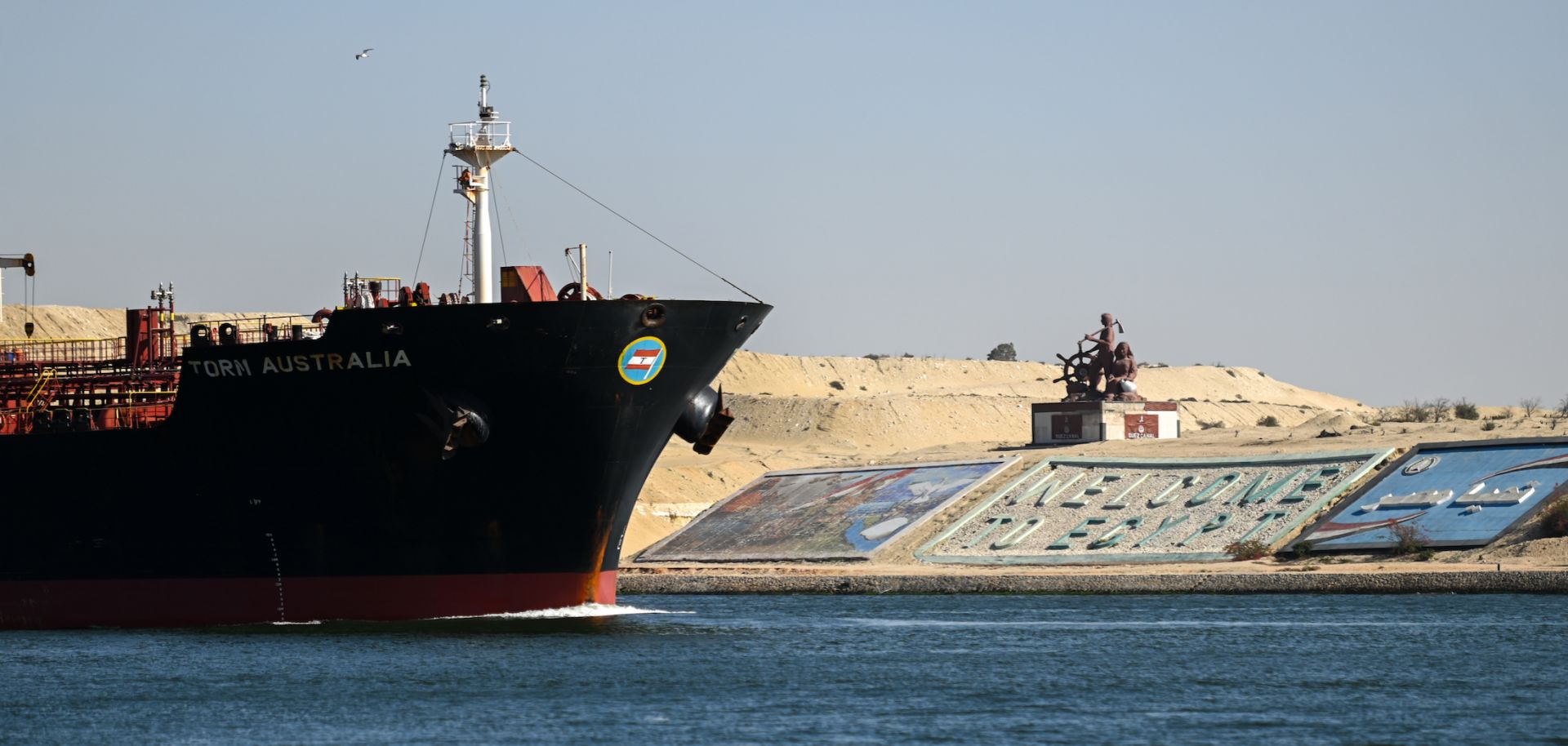
Regional uncertainty has negatively impacted Jordan, Egypt and Lebanon's tourism and transportation. Uncertainty from the nearby Hamas-Israel war — and growing fears around its potential expansion amid Houthi maritime strikes and cross-border exchanges between Hezbollah and Israel — have taken a toll on the tourism and transportation sectors in Egypt, Lebanon and Jordan since the conflict began on Oct. 7. Meanwhile, since mid-November, Iranian-backed Houthi militants in Yemen have attacked ships transiting the Red Sea and the Gulf of Aden, diverting shipping traffic from the area. The consequent disruptions have impacted the transportation sector through the Suez Canal, increasing shipping costs, and decreasing Egyptian revenue from the key waterway. Although the Egyptian, Lebanese and Jordanian governments have supported the Palestinian cause by providing aid and criticizing Israel's actions in Gaza, pro-Palestinian sentiment among their citizens has added to the economic fallout by galvanizing boycott movements against Western brands, resulting in job losses and cut hours for locally employed workers. The three economies were already struggling before the start of the Hamas-Israel war due to high unemployment rates, decreased tourism revenue from the COVID-19 pandemic, and higher grain import costs due to the Ukraine war. Against this backdrop, the IMF reached loan agreements with Egypt and Jordan in December 2022 and January 2024, respectively. While Lebanon also reached a tentative deal with the IMF in April 2022, the IMF was unable to finalize the agreement due to Beirut's inability to make requested reforms.
- The tourism sector generated 12% of Egypt's GDP in 2023, and 14.6% and 24.7% of Jordan and Lebanon's GDPs, respectively, in 2022. Within the first month of the war, international flights to Egypt decreased by 26%, to Jordan by 49%, and to Lebanon by 74% compared with the same time last year. Local newspapers in Jordan and Lebanon have also reported significant hotel occupancy declines in the aftermath of the war, while the impact on Egyptian hotels was less significant.
- In early December, the Jordanian Labour Observatory projected that 15,000 jobs in the country could be lost as a result of the anti-Israel and anti-Western boycotts of international companies like McDonald's and Starbucks, and warned the number of job losses could increase if the boycotts continued. Egyptian employees who work for international brands have also reported cut hours, unpaid leave and layoffs due to similar boycotts.
- Between Jan. 1-11, revenue from Egypt's Suez Canal was down 40% compared with the same period last year, while shipping traffic was down 30%, due to the risk of Houthi maritime attacks. Trade through the waterway provides a crucial revenue source for Egypt, with the Suez Canal generating a record $9.4 billion in the fiscal year that ended on June 30, 2023.
- In December 2022, the IMF reached a $3 billion loan agreement with Egypt; in exchange, Cairo agreed to move to a flexible exchange rate, and take measures to reduce inflation and consolidate debt. In January, the IMF also reached a $1.2 billion loan agreement with Jordan; in exchange, Amman agreed to continue its fiscal consolidation and increase private investment to expand Jordan's business sector.
In the coming months, Egypt will likely tighten monetary and fiscal policies to unlock additional IMF financing while continuing to support long-term tourism and economic growth plans. Despite the ongoing economic headwinds, Egypt will continue to pursue megaprojects designed to expand both its tourism sector and the volume of maritime traffic that can traverse the Suez Canal. Although Egypt wants Yemeni Houthis to halt their attacks on Red Sea shipping to bring business back to the Suez Canal, Cairo remains highly unlikely to participate in naval patrols alongside the U.S-led Operation Prosperity Guardian for fear of triggering a broader regional escalation that would only continue to divert transit. For the same reason, Egypt will also avoid taking any military action in response to Houthis' maritime harassment, such as conducting strikes against Houthi targets in Yemen. However, the ongoing Houthi attacks and the Gaza war will nonetheless continue to eat into the government's foreign exchange reserves, which were already low before the conflict broke out, by decreasing sources of foreign currency. Cairo will thus still seek additional sources of financing to prop up its economy. The IMF has indicated it'd be willing to expand its existing loan if Cairo tightens monetary and fiscal policies, and takes steps toward adopting a flexible exchange rate, which Egypt will likely do to unlock more funding if economic conditions continue to deteriorate. The IMF has also encouraged Cairo to further devalue the Egyptian pound, but the government will likely work to curb inflation rates and expand the foreign currency reserves, while trying to prevent worsening economic conditions for its citizens, before resorting to another currency devaluation. On Jan. 22, Egyptian Foreign Minister Sameh Shoukry also met with EU foreign ministers in Brussels, where he tried to secure additional funding commitments but ultimately failed to do so at the time, as the economic downturn in Egypt has harmed the country's investment appeal.
- The administration of Egyptian President Abdel Fattah al-Sisi has unveiled two megaprojects to expand the capacities of Egypt's tourism sector and the Suez Canal, which serve as two key sources of foreign currency. Cairo plans to increase the number of flights and hotel rooms to accommodate up to 30 million annual tourists by 2028, double the current amount. Before the Hamas-Israel war and the Houthi maritime attacks, about 12% of global maritime traffic passed through the Suez Canal; the Suez Canal Authority aims to increase that percentage to 15%.
- Although the United States and the United Kingdom have conducted strikes against the Houthis, Cairo has not participated in either the U.S.-led coalition or military strikes against Houthi targets in a bid to avoid getting embroiled in any escalation and to prevent any Houthi strikes from being directed toward Egyptian targets.
- On Nov. 17, the IMF's managing director Kristalina Georgieva announced that the fund was ''seriously considering'' increasing Egypt's loan due to the spillover effects of the Hamas-Israel war. However, the amount for the potential increase and specific reforms for the increase have not been disclosed. On Jan. 11, the IMF noted that additional financing would be ''critical'' for the success of the bailout program due to the impact that the war has had on Egypt's economy.
Despite Jordan's challenges, lines of credit from the IMF and investment from Arab Gulf countries will prop up the kingdom's economy in the short term and ensure the monarchy's stability. The regional boycotts' impact on Western brands will likely be felt most strongly in Jordan due to the ardent pro-Palestinian solidarity of its citizens. Grassroots campaigns have led to decreased hours and layoffs and will likely continue to do so as the boycott continues. While some local companies will pivot to hire some of the laid-off workers, slower-than-expected growth will limit the amount of investment in local businesses. Moreover, the prolonged conflict in Gaza will discourage foreign investment and slow any increase in job opportunities. Jordan will seek foreign and private investment by increasing its bilateral ties with Arab Gulf countries to create more jobs and prop up its economy. Saudi Arabia is already one of the largest commercial investors in Jordan, and will likely further invest in the country's growing pharmaceutical and farming sectors. If political instability grows against the Jordanian government due to deteriorating economic conditions and threatens the monarchy, other Arab Gulf monarchies will likely intervene to prevent social unrest and protests from spreading elsewhere in the region.
- In December, Jordan's tourism minister stated that the boycotts against Western brands ''yielded a reverse effect, impacting not only the boycotted companies but also stakeholders and supply chain actors collaborating with these companies in Jordan.''
- In addition to Jordan's grassroots boycotts, Jordanian businesses have also launched social media campaigns calling on citizens to support local businesses and help secure jobs for those laid off due to the boycotts, using the hashtags #EmployThem and #SupportLocal.
- As part of the kingdom's $1.2 billion loan agreement, the IMF had strongly encouraged Jordan to grow business opportunities and expand private investment for job growth.
- Saudi Arabia has over $12 billion worth of commercial investments in Jordan, making it one of the country's largest investors. In June 2022, Saudi Arabia also restarted a $400 million university and hospital project in Jordan.
Lebanon is unlikely to secure IMF financing or a significant amount of foreign investment due to the country's ongoing political instability, which will deepen Lebanon's various economic woes — especially if ongoing border clashes between Israel and Hezbollah bring the war to its territory. Although foreign investment could offset some of the economic turmoil in Lebanon, Beirut has not implemented the requisite reforms that could instill investor confidence and yield progress on finalizing the IMF loan that was drafted in April 2022. Rising tensions along Lebanon's southern border will only further dissuade investment, as the Iran-backed Lebanese militant group Hezbollah continues to exchange cross-border attacks with Israel, raising the risk of an expanded regional conflict. Furthermore, the ongoing political stalemate in the country, which has left the presidency vacant since October 2022, will leave the Lebanese parliament unable to pass legislation that would improve economic conditions. Amid Lebanon's worsening economic crisis, Hezbollah will seek to avoid triggering a greater war with Israel, which would only add to the economic toll and risk harming the group's domestic political influence. Israel, however, has a security imperative to expand military operations to establish a buffer zone along its border with Lebanon. While Israel has attempted to establish this buffer diplomatically, its continued tit-for-tat attacks with Hezbollah will decrease the likelihood of such a deal. Reaching an agreement with Israel would also make Hezbollah appear weak, further minimizing the prospect of a diplomatic resolution. However, if Israel conducts a ground incursion to push Hezbollah away from the border, the costs of reconstruction would increase and cause Hezbollah to make political concessions with rival parties to rebuild affected areas of southern Lebanon.
- The tourism sector and remittances are two key sources of foreign currency in Lebanon. The United Nations reported that remittances accounted for 37.8% of the country's GDP in 2022.
- In a report published on Dec. 21, the World Bank report noted that the Hamas-Israel war could push Lebanon into a recession, with the the country'sGDP expected to have shrunk by 0.6% to 0.9% in 2023.
- The 2006 Israel-Hezbollah War cost Lebanon roughly $1.75 billion, including infrastructure damage, and significantly shrunk Lebanon's tourism sector. Hezbollah has since expanded its capacities, and if Israel and Lebanon were to enter another war to establish a buffer zone, the costs could be even higher — especially in the case of a prolonged war.
