
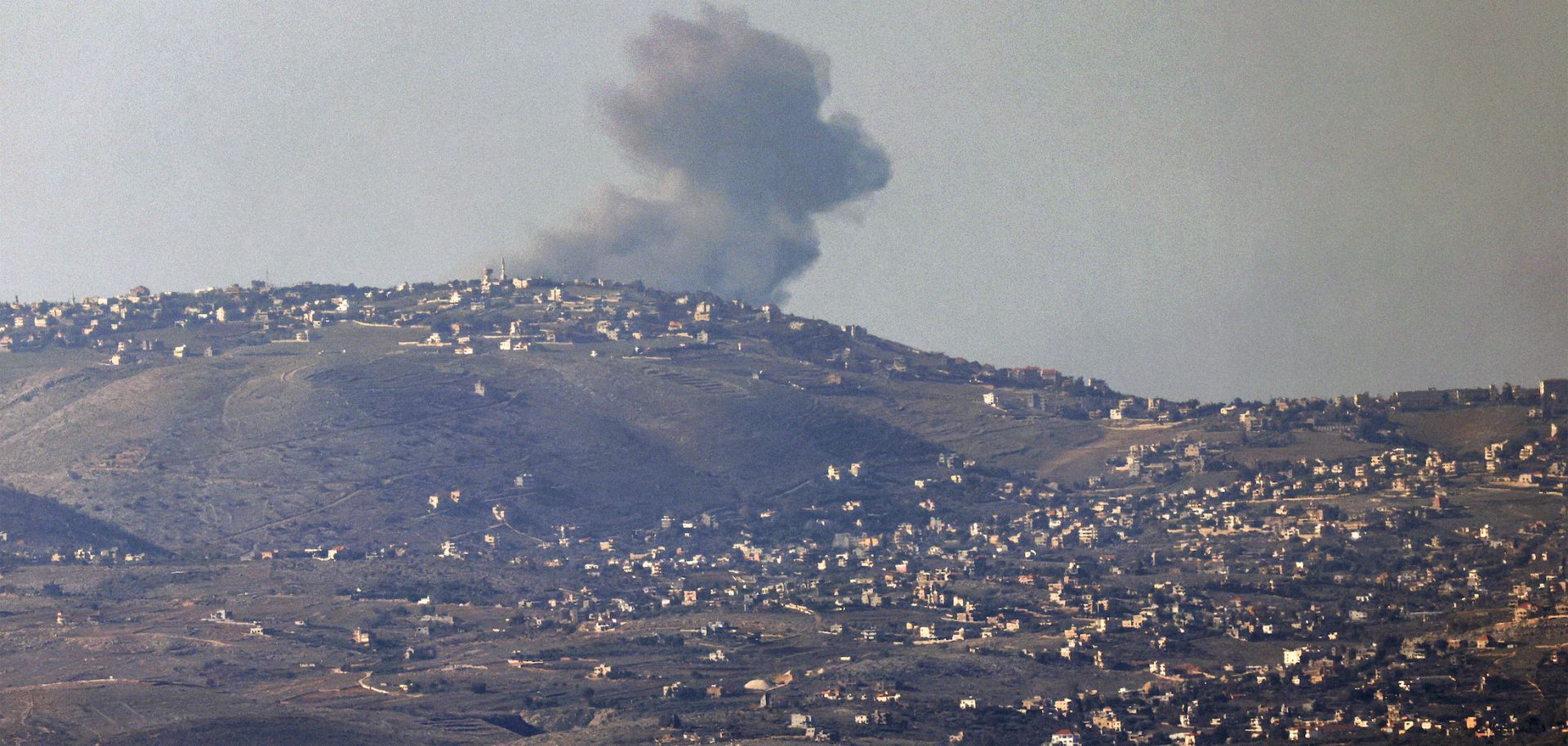
Israel will use diplomatic and covert tactics to establish deterrence with Hamas and Hezbollah in southern Lebanon, but these may fail to prevent militants from carrying out a sustained campaign against northern Israel, potentially resurging border violence and sparking regional escalation in the future. On Dec. 11, Israel's wartime cabinet member Benny Gantz said he had spoken to U.S. Secretary of State Anthony Blinken about the Iran-backed Lebanese militant group Hezbollah's recent attacks on northern Israel. The comments came just days after Israeli Defense Minister Yoav Gallant said on Dec. 6 that Israel wanted to push Hezbollah fighters back north of the Litani River in southern Lebanon in line with U.N. Security Council Resolution 1701, which ended the 2006 Hezbollah-Israel war. He made the comments while addressing leaders from the northern Israeli communities that have been evacuated due to border fighting between the Israel Defense Forces (IDF) and Hezbollah. Gallant's comments were designed to assure these communities that they would be able to safely return home without facing the same kind of security threats that southern Israelis experienced before the Oct. 7 Hamas assault. But they were also designed to kickstart possible negotiations between Israel and Hezbollah to reframe their strategic dynamics, particularly since Hamas fighters have relocated to southern Lebanon. Gallant made it clear that Israel preferred a diplomatic solution to this security challenge, but he also suggested that if diplomacy failed, Israel would be willing to use military force.
- Hezbollah intervened in the war in solidarity with Hamas shortly after Israel began major combat operations in the Gaza Strip shortly after the Oct. 7 Hamas attack on southern Israel. Since then, an estimated 80,000 Israelis have been evacuated from around 10 kilometers (6.2 miles) south of the Lebanon border amid ongoing clashes between the IDF and Hezbollah.
- Under U.N. Security Council Resolution 1701, Hezbollah was supposed to withdraw its fighters north of the Litani River in Lebanon. But after its 2006 war with Israel, the Lebanese militant group did not comply. The Litani River was also the border of Israel's buffer zone that it established in southern Lebanon after its invasion in 1982. Israel withdrew from the buffer zone under international pressure and a collapse in domestic support for the strategy.
- Hamas fighters expanded their presence in Lebanon starting in 2018, as regional dynamics changed and Turkey and Qatar were seen as less reliable bases for the militant group overseas. In recent years, Hamas has also expanded its presence in Palestinian refugee camps in southern Lebanon, and during the 2021 Gaza war, began to showcase its ability to launch limited strikes on Israel with a number of rocket attacks. Hamas fighters, however, are not the only Palestinian militants in Lebanon, with groups like Palestinian Islamic Jihad having also established a presence in the country.
Israel and Lebanon's Tense History
Israel and Lebanon's relations are multifaceted and driven by sectarian and local dynamics. Technically, Israel and Lebanon remain in a state of war, but in reality, conflict tends to be driven by Lebanese subnational groups rather than by the Lebanese state itself. From the 1960s until the 1980s, Lebanon's substantial Palestinian refugee population, led by the Palestine Liberation Organization (PLO), continuously stoked conflict between Lebanon and Israel as PLO fighters attacked northern Israel. This dynamic eventually pushed Israel to invade Lebanon in 1982, which then led to the establishment of the buffer zone. But this buffer zone radicalized the area's Shiite population and helped foment the Hezbollah movement, which replaced the PLO as the primary security threat to Israel's north. When Israel withdrew from the buffer zone in 2000, Hezbollah moved into the region to occupy it. Hezbollah kept up its provocative harassment of Israel's northern frontier for several years, culminating in the July 2006 infiltration operation that sparked a major war between Israel and Hezbollah. Since then, Israel and Hezbollah have taken steps to compartmentalize their rivalry and avoid a full-scale return to war, even resulting in sporadic diplomatic breakthroughs between Lebanon and Israel. In late 2022, Hezbollah gave its blessing to a maritime agreement between the Lebanese state and Israel that has since allowed energy companies to begin exploring offshore gas deposits in the Eastern Mediterranean. But at the same time, Hamas has also set up militant bases in southern Lebanon where its fighters have carried out occasional rocket attacks against Israel, with at least the tacit consent of Hezbollah.
Israel will not take action against Hezbollah or Hamas in Lebanon until its major combat operations in the Gaza Strip are complete, and even then, Israel will prefer to use covert or limited escalation and diplomatic pressure to establish a stable relationship with Hezbollah and Hamas on the northern frontier. Despite substantial military provocation from militants, the IDF is currently stretched thin with major ground operations still ongoing in the Gaza Strip. Israel is also eager to avoid climbing the regional escalation ladder that might spark another war with Hezbollah and draw Iran directly into the conflict. But as Israeli ground operations in Gaza switch over to occupation, the IDF will regain its operational capabilities to confront Hezbollah and Hamas in southern Lebanon. That said, the same fears of opening another front and sparking regional escalation — potentially without the same sort of strong U.S. support — will likely push Israel to focus on restoring deterrence rather than defeating Hezbollah or forcing the group to withdraw north of the Litani River. In addition, Israel also remains unlikely to pursue its goal of eradicating Hamas in Lebanon with overt military action, as this would risk drawing in Hezbollah. In addition, such a controlled escalation would take place against the backdrop of diplomatic negotiations that will be designed to convince Hezbollah to either pull its forces away from the border and/or constrain Hamas from carrying out intermittent attacks on northern Israel.
- Israel's wartime mobilization of 300,000 troops has included forces deployed to the northern border designed to deter rather than defeat Hezbollah. The bulk of Israel's ground forces are currently operating in and around the Gaza Strip or in the West Bank where major unrest is underway.
- Israel's stated wartime goals do not include defeating Hezbollah, in large part because the Lebanese militant group did not directly take part in Hamas' Oct. 7 attacks on Israel that triggered the current conflict. Although Israelis living in northern communities have voiced concern about the possibility of a future Hezbollah infiltration, few Israeli politicians are currently advocating for an expansive military operation to remove Hezbollah from southern Lebanon.
- The United States has expressed concern about Hezbollah's attacks on northern Israel but has not indicated whether it would support a major Israeli military campaign to remove the group from the area.
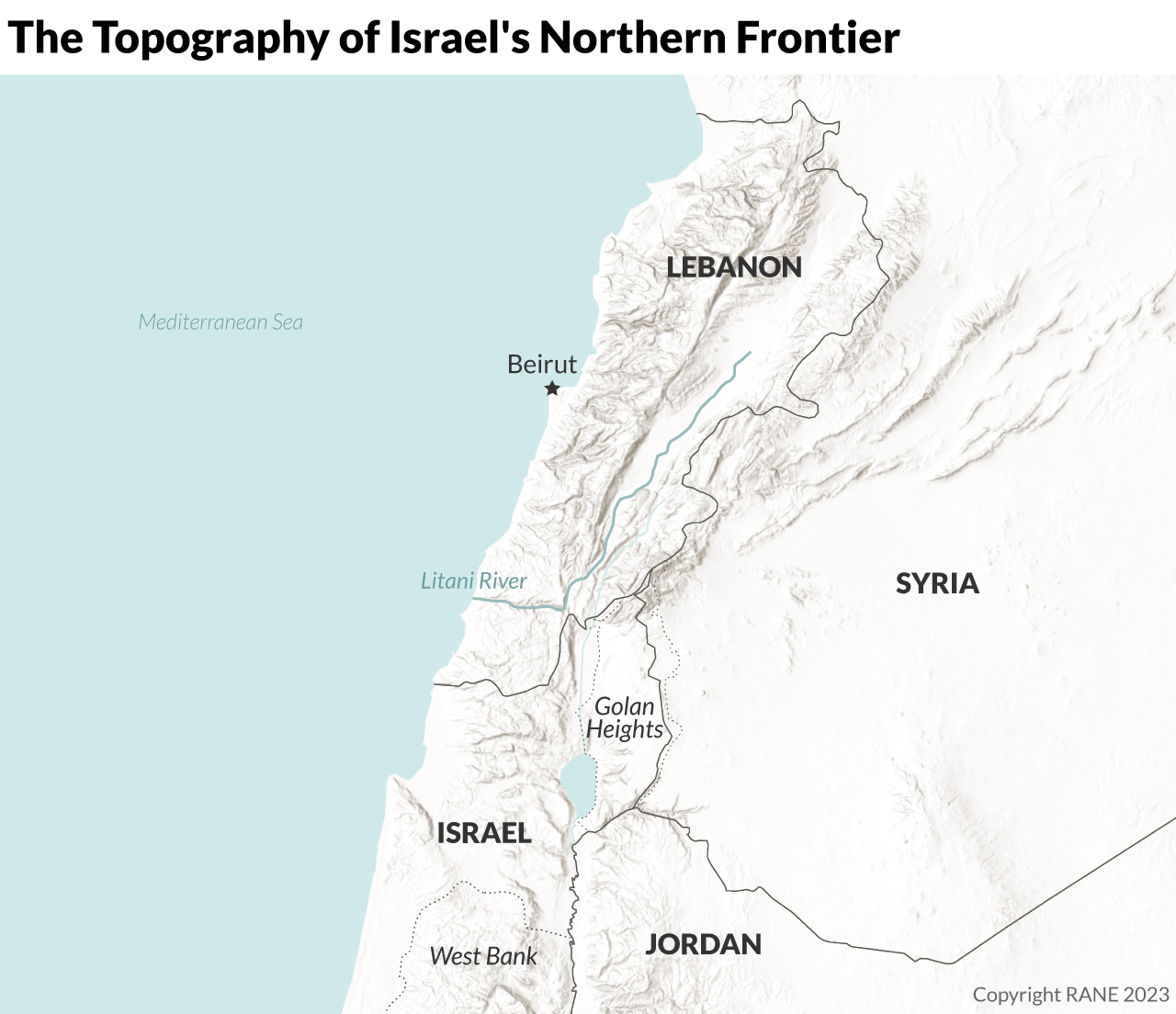
Although a partial or informal diplomatic agreement may be possible, Hezbollah is very unlikely to withdraw from the southern border or to suppress Hamas so that it's unable to carry out independent attacks on Israel's north, meaning Israel will have to endure more intermittent attacks. Hezbollah positions itself as a champion of Lebanese sovereignty and territory, and withdrawing to the north of the Litani River would serve a severe political blow to the group, making it unlikely that Hezbollah would agree to such a withdrawal. Hezbollah also positions itself as an ally of the Palestinian national cause, making it unlikely that it will completely constrain Hamas from carrying out occasional attacks on northern Israel. Hezbollah may agree to establish indirect deconfliction communication lines with Israel via an intermediary and will likely be open to finding ways to reframe rules of engagement with Israel to prevent another war, but these dynamics will be unstable and come under additional strain each time Palestinian militants attack northern Israel.
- Palestinian militants began using southern Lebanon as a base of operations to attack Israel during the 2021 Gaza War. These attacks have been smaller and less destructive than the ones militants have carried out from the Gaza Strip, in part because of their relative newness and in part because Hezbollah still dominates the security dynamics of southern Lebanon.
- Although Hezbollah pledged to disarm at the end of the Lebanese Civil War in 1990, the group claims that it needs its weapons to reclaim disputed territory with Israel at the Sheba Farms along the northern border. This political positioning as a champion of Lebanon's territorial integrity is another key reason why Hezbollah is unlikely to pull away from the Israeli border.
Without a sufficient buffer zone in southern Lebanon, militants will continue to harass northern Israel, which over time will raise the risk of a major Israeli military retaliation that could escalate to another Israel-Hezbollah war and even a regional confrontation with Iran. For the foreseeable future, Israel will likely respond to limited rocket fire with proportional responses in southern Lebanon as it aims to prevent the outbreak of another major conflict. However, this pattern of violence will be unstable and will steadily incentivize Israel's politicians to start posturing for more expansive operations designed to push back militants from the Israeli-Lebanese border. This risk is particularly pronounced, in part because of the Israeli public's reaction to the Oct. 7 assault by Hamas, which demonstrated to them that deterrence against militants has limited value without geographic buffers to constrain their aggression. In addition, Israel will likely carry out retaliatory covert action against Hamas in southern Lebanon, which will incentivize Hamas to carry out escalated strikes into northern Israel, which may, in turn, prompt a cycle of escalation. This prospect will grow more likely over time as some Hamas militants increasingly reposition themselves in southern Lebanon and carry out more frequent and aggressive attacks. Finally, events in Gaza may also spark fighting along the Lebanese-Israeli border, especially if Israel's reoccupation of Gaza appears to be forcing Palestinians out of the strip or results in significant civilian deaths that incentivize Hamas and Hezbollah to respond by attacking northern Israel. Together, these factors will make it difficult for Israel to sustain a strategy of controlled escalation on its northern border. For Israel, this will steadily raise the risk of another war with Hezbollah, as well as the possibility of a confrontation with Iran because, unlike Hamas, which receives Iranian support but is not as closely connected to Tehran, Hezbollah is by far Iran's militarily strongest and politically closest proxy. Any war between Israel and Hezbollah, especially given the current environment of high tension over the Gaza war, could thus escalate to include more direct Iranian involvement in the future.
- Many Israelis see Israel's previous deterrence strategy toward Hamas in the Gaza Strip as a failure, making it unlikely that they would accept a similar strategy to deter Hezbollah in southern Lebanon. Numerous polls have shown the vast majority of Israelis blame the current government for the Oct. 7 attack, and comments by northern city mayors have shown they no longer trust the government to protect them from infiltration attacks. A November poll by Channel 13 recorded that 76% of Israelis want Netanyahu to resign over his management of Gaza.
- On Dec. 4, the head of Israel's internal security service, Ronin Barr, said the country's intelligence agencies would continue to hunt Hamas even after the current Gaza operations were completed. Barr's comments suggested that Israeli intelligence would carry out covert action in places where Hamas has a presence, like Lebanon, Syria, Qatar and Iran.
- Israel has been deliberately vague about its post-war plans for Gaza, but they likely include a military reoccupation of the strip for much of 2024. Far-right members of the Israeli government have suggested transferring Palestinians to the West Bank and resettling the Gaza Strip with Jewish settlers, acts that would almost certainly spark a response from militants in Lebanon.
