
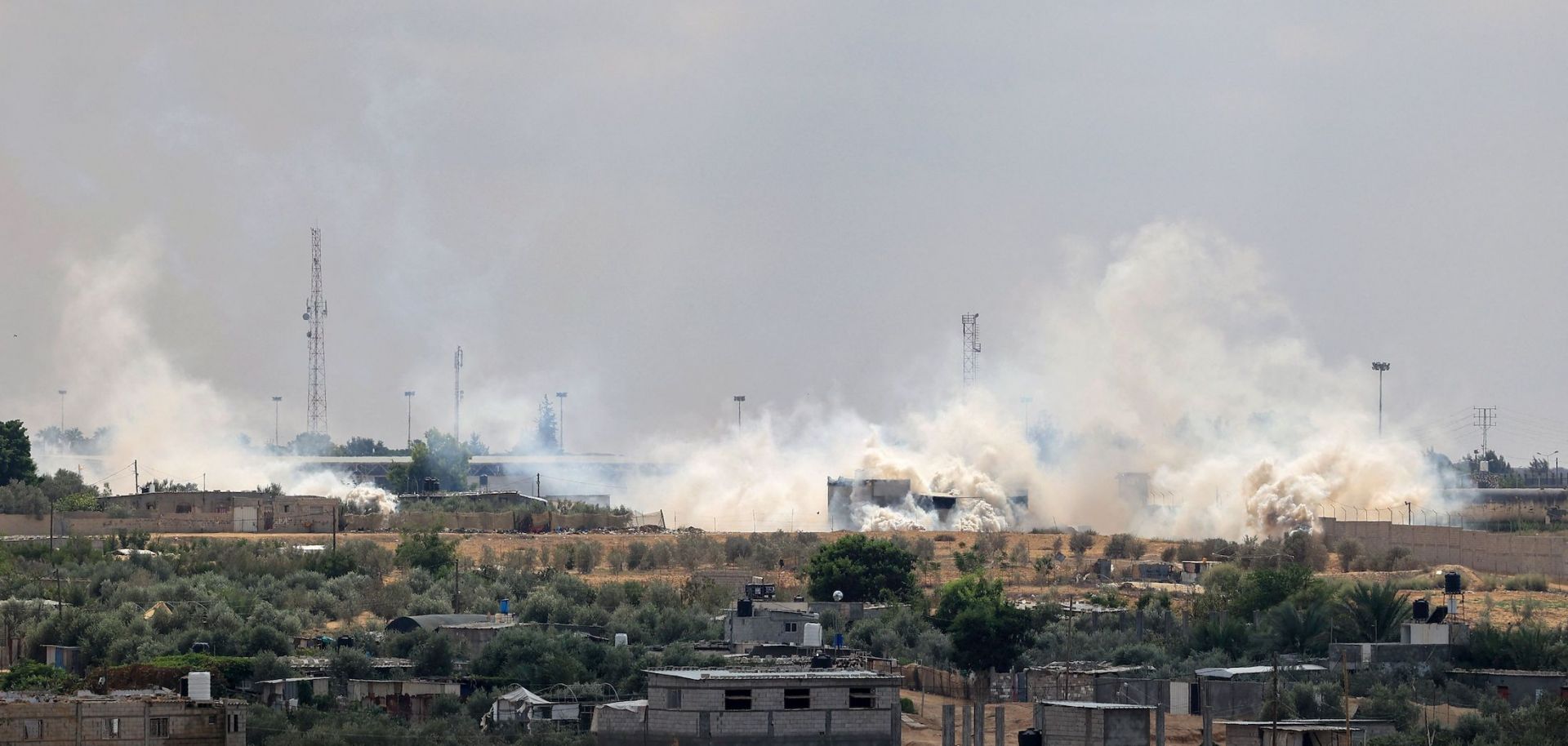
Amid escalating violence near the Egypt-Gaza border, Egypt will likely face domestic backlash for its ties with Israel, and faces the prospect of an additional backlash in the event of an influx of Palestinian refugees into Egypt. Despite long-standing diplomatic relations and a pragmatic working relationship with Israel, Cairo is hesitant to appear too pro-Israel for fear of losing legitimacy with its people and the wider Arab world amid potential mass Palestinian casualties. Its efforts to navigate the issue will become even trickier ahead of presidential elections in December, in which President Abdel Fattah al-Sisi will seek another term. In the immediate aftermath of the Hamas attacks that began Oct. 7, Cairo issued a relatively neutral statement encouraging de-escalation in the region. But as of Oct. 11, an Israeli ground incursion in the Gaza Strip looked increasingly imminent, threatening to unleash a major refugee crisis onto Egyptian territory after Israeli authorities on Oct. 9 announced a "total blockade" of Gaza. The Rafah border crossing, Gaza's sole official land entry into Egypt, is currently closed, but Egypt faces pressure to secure the border to prevent spillover violence and a potential humanitarian crisis should a significant proportion of Gaza's estimated 2.3 million citizens attempt to flee into Egypt.
- On Oct. 10, Israeli airstrikes hit the Rafah border crossing; minor infrastructure damage, but no casualties, were reported. At least three airstrikes were reported near the border crossing from Oct. 9-10.
- Israel has reportedly warned Egypt that humanitarian aid envoys will be attacked after it imposed the blockade; the Oct. 10 strikes near the border crossing caused an Egyptian humanitarian envoy to turn around.
Cairo is in no position to accommodate a wave of refugees. For Egypt, the main impact of an Israeli incursion into Gaza would be the potential outflow of Palestinian refugees given that if Rafah opens, it would be the only official and practical escape from the fighting in Gaza. While Cairo wants to appear sympathetic to the Palestinians, it is also unprepared to handle a large number of refugees, many of whom may become permanent residents whether by their own choice or in the event Israel refuses to allow them to return to the Palestinian territories. Egypt's economy is already struggling under a credit rating downgrade, high inflation, currency devaluation, high unemployment rates and foreign currency shortages, and there is no guarantee that international donors will provide sufficient funding to cover the costs of hosting a large number of Palestinian refugees.
- Israeli Lt. Col. Richard Hecht on Oct. 10 commented that the Rafah border crossing may be a path for refugees to leave Gaza, which was perceived as an endorsement to enter the Sinai Peninsula. Among other Israeli officials, Israeli Ambassador to Egypt Amira Oron clarified Oct. 10 that Israel has not asked Palestinians to relocate to Sinai.
- Multiple Egyptian members of parliament said outside calls for evacuation through the Rafah crossing infringed on Egyptian sovereignty. Cairo anticipates that any Palestinian refugees who cross the border could wind up stranded in the Sinai Peninsula like the long-time Palestinian refugee populations in Jordan and Lebanon. To avoid this outcome, Cairo has asked Israel to open other humanitarian corridors for refugees that do not lead to Egypt.
- But Egypt must be careful to avoid angering Israel too much given that it receives important supplies of natural gas from Israel, and export volumes were increased in August 2023 before Israel closed the Tamar gas field that supplies Egypt's gas imports after the Gaza conflict began. Even if the field reopens, Israel could divert natural gas to other uses.
- Other benefits of good ties with Israel could also be at risk, such as recently expanding Egyptian-Israeli bilateral trade, which Israel's Economy and Industry Ministry aims to have hit $700 million by 2025. Egypt and Israel also cooperate closely on security, especially with regard to threats from Islamic extremists.
As Egypt addresses spillover violence and a potential refugee crisis, Cairo will likely sour somewhat on Israel as it seeks to strike the difficult balance between risking anger for providing too little support for the Palestinian cause against the risk of anger for providing too much support to Palestinian refugees in Egypt. Cairo will become frustrated with Israel for spillover effects of the conflict in Gaza and will allow some shows of opposition against Israel prior to Egypt's December presidential election. But while many Egyptians have previously supported the Palestinian cause and protested against relations with Israel, Cairo could find itself facing backlash if it is seen as offering too much of its scant public resources to support Palestinian refugees in Sinai.
- With a militant presence in the Sinai Peninsula from Islamic State Sinai Peninsula, which Egypt has struggled to contain, radicalized individuals could target Egyptian military and humanitarian efforts assembled near the Gaza border or foreign interests.
- An Egyptian official working on Palestinian affairs noted, Egypt also "fears a humanitarian catastrophe that we would not know how to deal with." The toll of absorbing a substantial number of Palestinian refugees would cause additional stress on Egypt's limited resources and struggling economy; these costs could become permanent if Israel does not allow refugees to return to the strip.
- Cairo will likely allow some public shows of anti-Israeli sentiment, including some level of public protests, but will work to limit the scale of these activities to keep them from growing into a larger anti-government movement ahead of the presidential election in December.
- The al-Sisi administration may also need to take a more aggressive show of prioritizing Egyptian citizens' interests over those of Palestinian refugees ahead of the presidential election.
