
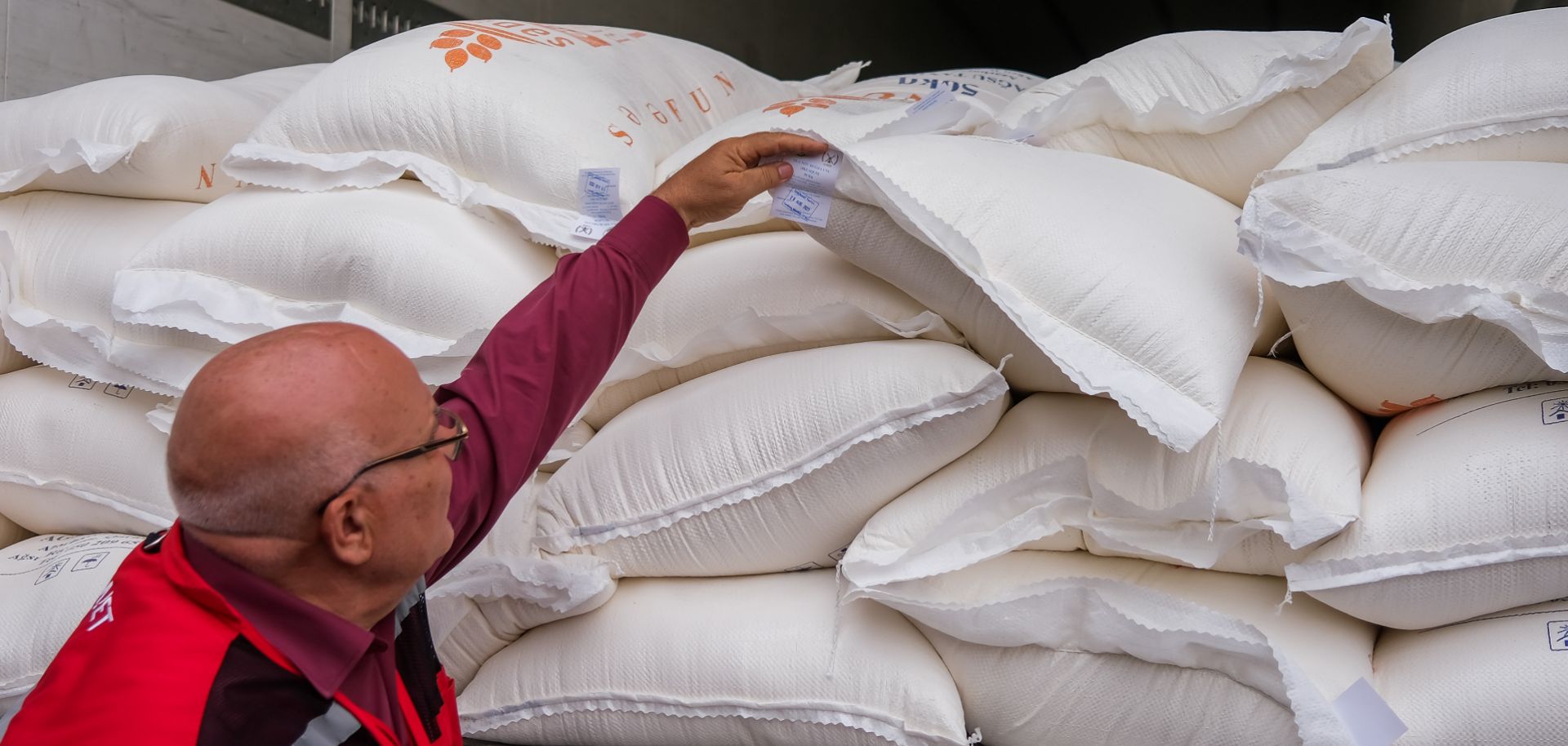
Tensions between Armenia and Azerbaijan will remain high as Baku seeks to pressure Yerevan into a peace agreement. On Sept. 12, local Armenian authorities in the disputed territory of Nagorno-Karabakh authorized the delivery of humanitarian aid to the region from Azerbaijan via the controversial Aghdam road. This was the first delivery of aid to Nagorno-Karabakh since Azerbaijan tightened its blockade of the territory in June by completely closing the Lachin Corridor, which connects Nagorno-Karabakh to Armenia. This was also the first use of the Aghdam road in around 30 years, as the Armenian-populated self-proclaimed Nagorno-Karabakh Republic has historically kept it closed in order to limit Azerbaijan's influence. The Nagorno-Karabakh Republic agreed to open the Aghdam road in return for a promise from Azerbaijan to reopen the Lachin Corridor. However, the corridor remains closed, and after the deal's announcement, Azerbaijani officials said they would not reopen it until the Nagorno-Karabakh Republic agrees to allow Azerbaijan to supply aid via the Aghdam road indefinitely. This statement has prompted some Nagorno-Karabakh and Armenian authorities to insist that Azerbaijan is failing to uphold its end of the deal. Meanwhile, Armenian Prime Minister Nikol Pashinian warned on Sept. 13 that Azerbaijan continues to move its troops along the state border with Armenia and the line of contact with Nagorno-Karabakh.
- Azerbaijan's effective blockade of the Nagorno-Karabakh Republic commenced on Dec. 12, 2022, with Azerbaijani government-backed activists' blockade of the Lachin Corridor. Azerbaijan established a checkpoint on the corridor on April 23, and in June, Azerbaijan began preventing the International Committee of the Red Cross and Russian peacekeepers from using the route to bring in small amounts of supplies and aid.
- Pashinian's warning comes amid the recent circulation of videos showing Azerbaijani military equipment — often various artillery systems and transport vehicles — moving closer to Armenia's borders. At times, Azerbaijan's military equipment is painted with symbols on its sides, which Armenia perceives as a threat of a military operation.
Tensions will likely remain high as Azerbaijan continues its military buildup, geopolitical conditions favor Baku and autumn commences. Azerbaijan will likely continue its build-up along Armenia's borders in order to increase its leverage in peace negotiations. Build-ups will be most common in areas Azerbaijan regained from the Armenia-backed Nagorno-Karabakh government following the 2020 war, as they remain relatively underdeveloped from a military standpoint. Furthermore, broader geopolitical forces since the 2020 war have increased Baku's belief that threats of military escalation may be in its best interest. In particular, Russia's 2022 invasion of Ukraine significantly reduced Russia's ability and willingness to intervene to protect Armenia's sovereign territory, let alone Nagorno-Karabakh. At the same time, the West's economic, military and diplomatic attention is focused on supporting Ukraine, while the West's reliance on Azerbaijan's oil and gas and the transit of goods across the country from Kazakhstan and China via the "Middle Corridor" is rising. Finally, tension will remain high in the coming months because autumn has traditionally been the preferred season for Azerbaijani military actions, as dryer, more favorable weather conditions and lower stream and river levels make operational movement through the region easier.
- The 2020 war between Armenia and Azerbaijan began on Sept. 27, 2020, and concluded on Nov. 10 of that year with a cease-fire. In late August 2022, Azerbaijani armed forces conducted an operation to capture strategic heights in the Nagorno-Karabakh region's Lachin Corridor. On Sept. 12-13, 2022, the deadliest clashes since the end of the 2020 war occurred, resulting in nearly 300 casualties on both sides and Azerbaijan's occupation of Armenia's sovereign territory.
- On Sept. 14, 2023, Pashinian reaffirmed that Armenia's National Assembly should ratify the Rome Statute, which would theoretically bar Russian President Vladimir Putin from visiting the country, despite clear warnings from Moscow that this would damage bilateral relations. Pashinian also reaffirmed that Russia's invasion of Ukraine meant that Armenia could no longer rely on Moscow as a guarantor of its security. As recently as Sept. 12, Putin claimed that he communicated with Pashinian regularly and broader bilateral relations remained normal. Approximately 5,000 Russian military personnel are in Armenia, in addition to several thousand other Russian state workers, while Russia's peace-keeping contingent in Nagorno-Karabakh is formally numbered at 1,960 troops.
While Azerbaijan has significant leverage over Armenia, large-scale military operations risking a full-scale war are less likely than smaller-scale escalations that will push Armenia to accept Azerbaijan's vision for a peace settlement. Azerbaijan possesses a much larger military, population and economy than Armenia. As a result, Azerbaijan has a higher tolerance for risk and losses, which it intends to demonstrate in clashes to maintain pressure on Armenia. Therefore, a military clash is arguably overdue, as deadly cease-fire violations have decreased in recent months, and deadly incidents this year have not approached the scale of the September 2022 clashes. However, a large-scale effort to seize large parts of Nagorno-Karabakh remains unlikely because Armenia's concession on the Aghdam road shows Baku that developments on the ground are continuing to work in its favor in the near term. In the longer term, the likely departure of Russian peacekeepers in 2025 will further increase Azerbaijan's leverage, making risky, high-cost action unnecessary at this time. Similarly, it is unlikely that Azerbaijan will attempt to seize Armenia's southern Syunik province, which Baku's latest military buildup appears to threaten, because it would risk economic backlash and diplomatic condemnation from the international community. Additionally, Iran and/or Russia could intervene to impede an Azerbaijani military operation, although this remains unlikely. By contrast, smaller-scale operations seizing small pieces of Nagorno-Karabakh enable Azerbaijan to increase its leverage at a much lower cost and without painful drawbacks. Therefore, while a return to full-scale war is unlikely, Armenia's falling leverage due to repeated Azerbaijani attacks will likely push it to conclude a peace agreement favoring Baku by 2025.
- Armenia and Azerbaijan have been negotiating a peace treaty since a November 2020 cease-fire ended their six-week war. On Sept. 14, Armenian Foreign Minister Ararat Mirzoyan told the National Assembly that Yerevan had received new proposals from Baku regarding the text of the peace treaty. Reports suggest Pashinian and Azerbaijan's President Ilham Aliyev will likely meet on Oct. 5 in Granada, Spain, at the next meeting of the European Political Community.
