
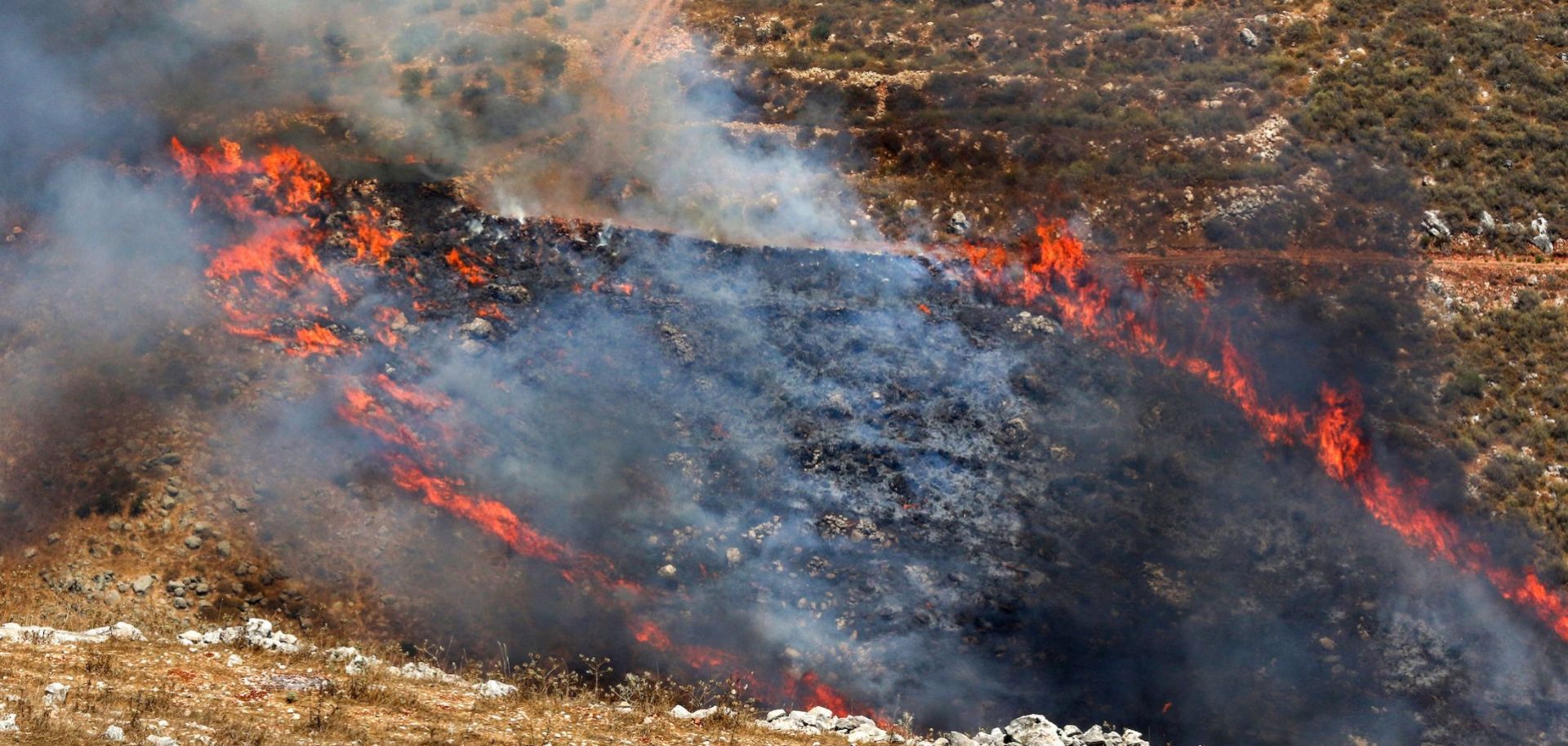
Smoke billows above towns in southern Lebanon on Aug. 4, 2021, after being hit by Israeli airstrikes.
Israel’s attempt to deter rocket fire from Lebanon risks triggering a greater conflict with Beruit and Hezbollah on its northern border, while also inspiring Gaza militants to resume attacks on its southern border. Israel launched airstrikes on southern Lebanon on the night of Aug. 4, targeting the launch sites from which rockets had been fired at northern Israel the day prior. Israeli Defense Minister Benny Gantz said the attack was “meant to send a message” to a Palestinian faction in Lebanon that he believed launched the recent rocket strikes against Israel. Gantz also cautioned that Israel “could do much more,” but hoped it wouldn’t come to that. The Israel Defense Forces (IDF) warned Lebanon to avoid “further attempts to harm Israeli civilians” as well.
- Israeli attacks on Lebanese soil are relatively rare, with Israel claiming that it hasn’t conducted such strikes since 2014. Israel hesitates to use force in Lebanon for fear of igniting another conflict with Hezbollah similar to the inconclusive and damaging 2006 war.
- Rocket fire from southern Lebanon has grown more frequent in the last year, and tends to spike during moments of conflict and tension between Israeli forces and Palestinian militants. The recent surge of tensions in Gaza thus lends credence to the theory that this latest bout of rocket fire against Israel is being launched by Palestinian militant groups in Lebanon, like the Popular Front for the Liberation of Palestine (PFLP).
Given that the two countries remain nominally at war, Israeli airstrikes inside Lebanon could provoke Hezbollah or even the Lebanese military to strike back. However, the risk of a greater conflict might also spur Lebanon to become more proactive in the south in order to halt rocket attacks. Palestinian militants — some of whom are aligned with Syria and Iran — likely conducted the recent rocket attacks against Israel. But those rockets were also launched from a territory in Lebanon that is dominated securely by the powerful Iran-backed militant group Hezbollah, which suggests Hezbollah could prevent future attacks. Additionally, Hezbollah is incentivized to halt the rocket attacks because the group is currently embroiled in Lebanon’s domestic economic and political crises and its fighters are still deployed in Syria’s civil war, stretching the group’s political and military resources too thin to handle a major war with Israel. Meanwhile, Iran (Hezbollah’s main backer) wants to keep the group’s capabilities in place to retaliate for an incident of greater severity than Israeli airstrikes on the Lebanese border. But if the rocket attacks do not stop and Israeli counterattacks result in significant casualties and damage inside Lebanon, both the Lebanese government and Hezbollah will be strongly incentivized to strike back directly at Israel to defend their country’s sovereignty.
- Hezbollah’s role in Lebanon is a key part of Iran’s regional strategy, which aims to pressure Israel through an array of militia proxies and deter Israel from attacking Iran itself.
Continued attacks against Lebanon would incentivize the Gaza-based Palestinian militant group Hamas to restart rocket attacks on Israel. With Israel distracted by a new security crisis on its northern border, Hamas might seize the opportunity to conduct a fresh military campaign in an attempt to extract fresh concessions from the Israeli government. But with Israel capable of managing a multi-front conflict, such a gambit might just spark another bloody Gaza war.
- Hamas has been attempting to force Israel to provide more aid concessions after the two sides’ violent flare-up in May. But the Palestinian group’s demands have been met by a more hawkish response from Israel’s new government, which has used a combination of more frequent airstrikes on the Gaza Strip and more conditions attached to aid to attempt to force a change in Hamas’ militant behavior.
