
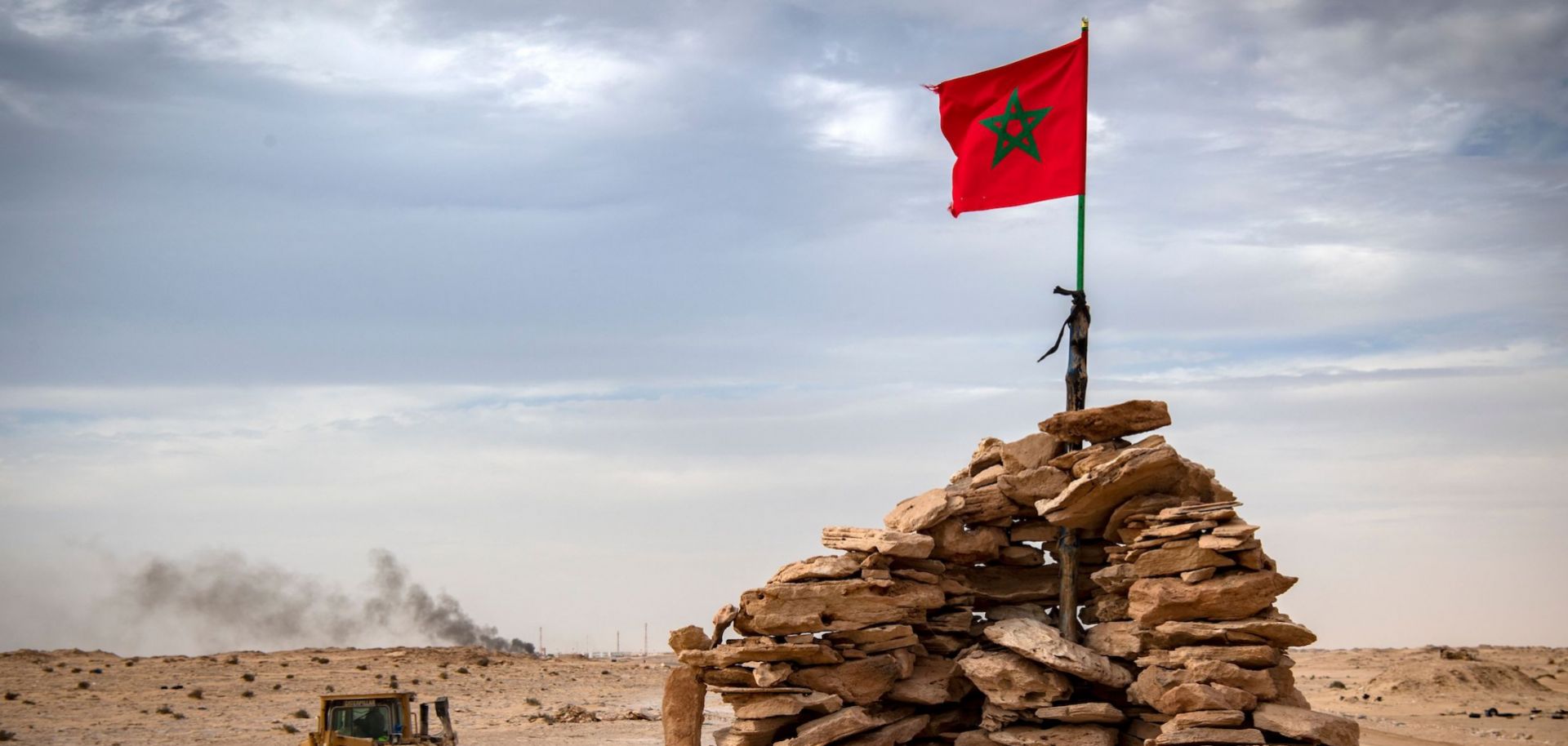
A hilltop manned by Moroccan soldiers is seen in Western Sahara on Nov. 23, 2020.
Rising diplomatic tensions between Algeria and Morocco over the disputed Western Sahara region risks sparking a tit-for-tat exchange of low-level military and economic actions between the two North African neighbors. On July 18, Algeria summoned its ambassador from Rabat for consultations after Morocco’s representative to the United Nations, Omar Hilale, implied that Algeria was hypocritical for insisting on the self-determination of the Western Sahara people while denying the same to ethnic Berbers in the northern Algerian region of Kabylia. Algeria’s foreign ministry demanded clarity on Hilale’s comments, which he made during a July 13 U.N. session, and threatened “other measures” depending on Morocco’s official response, which Rabat has yet to provide.
- Algeria and Morocco nurse one of North Africa’s biggest rivalries and maintain a closed land border due to their decades-long dispute over Western Sahara. Morocco controls about four-fifths of the region; the rest is controlled by the Algeria-backed Sahrawi Arab Democratic Republic (SADR) and militant group Polisario Front, which demand self-determination over all of Western Sahara for the native Sahrawi people who inhabit the region.
- The rights of ethnic Berbers in Algeria’s mountainous Kabylia region remain a contentious issue in Northern Africa, with Rabat and Algiers both at times oppressing Berbers in the name of overall regional stability.
Increased tacit international recognition of its Western Sahara claims is making Morocco more willing to test Algeria’s limits in order to further nudge the status quo in Rabat’s favor. In December, the United States moved to recognize Moroccan control over the disputed region. Given that Washington is Morocco’s most powerful external partner, this has since emboldened Rabat to more aggressively pursue the same recognition from other countries without fearing diplomatic consequences. Provocative statements by Hilale indicate that eagerness is prompting Morocco to test where Algeria’s red lines lie on the Western Sahara issue in the hopes of having the rest of the world accept its de facto sovereignty over the resource-rich territory. Morocco has also been testing limits with some of its European partners, namely Spain, who do not see eye-to-eye with Rabat on Western Sahara.
- Over the last 20 years, Moroccan businesses and citizens have moved into Western Sahara, helping to indirectly support Rabat’s claim of sovereignty over the region. In more recent years, over a dozen new foreign consulates and diplomatic buildings have also opened in the Morocco-controlled areas of the territory, indicating a broadening global acceptance of Rabat’s claims as well.
- Spain hosted a Polisario leader in a Spanish hospital earlier this year, prompting Morocco to leverage migrant flows as a weapon against Madrid.
Since Hilale made his controversial statement, Moroccan and Algerian state media have been attacking each other in full force, stirring the risk of a worsening disinformation campaign back and forth across the Maghreb that can increase hostilities between Moroccan and Algerian citizens. On July 20, for example, Moroccan media claimed that Algeria was a poor partner in cooperating against transnational terrorism in the Sahel region of sub-Saharan Africa, prompting immediate pushback and refutation in the Algerian press. The fallout from the global Pegasus spyware affair and the recent revelation that Moroccan intelligence was reportedly closely tracking Algerian activists is also fueling a media uproar that could further aggravate bilateral political tensions between Algiers and Rabat.
If Morocco makes more provocative diplomatic statements, the current diplomatic row with Algeria over Western Sahara could escalate to economic and/or military actions. The risk of a large military conflict between Algeria and Morocco is low, given the significant economic and human cost that neither government can afford in the wake of the COVID-19 pandemic. But rising diplomatic tensions further raise the risk of small spurts of border violence in the disputed areas of Western Sahara. Rabat has also recently signaled that it might not renew a pipeline contract that governs the flow of Algerian gas to Europe via Morocco before it expires in October. Given its dependence on Algerian gas. Morocco is unlikely to let the contract expire. But its threats nonetheless reflect Rabat’s willingness to use economic coercion tactics against not only Algiers but the European countries who also depend on the pipeline for an uninterrupted supply of natural gas.
- In November, Polisario militants announced they would no longer abide by the 1991 U.N.-backed cease-fire agreement with Morocco, citing frustration with the lack of progress on the independence referendum for Western Sahara that the United Nations has promised for decades. This has since led to a handful of small altercations along the border with Moroccan-claimed territory. The Polisario Front’s stated willingness to use force raises the risk of such skirmishes happening again.
