
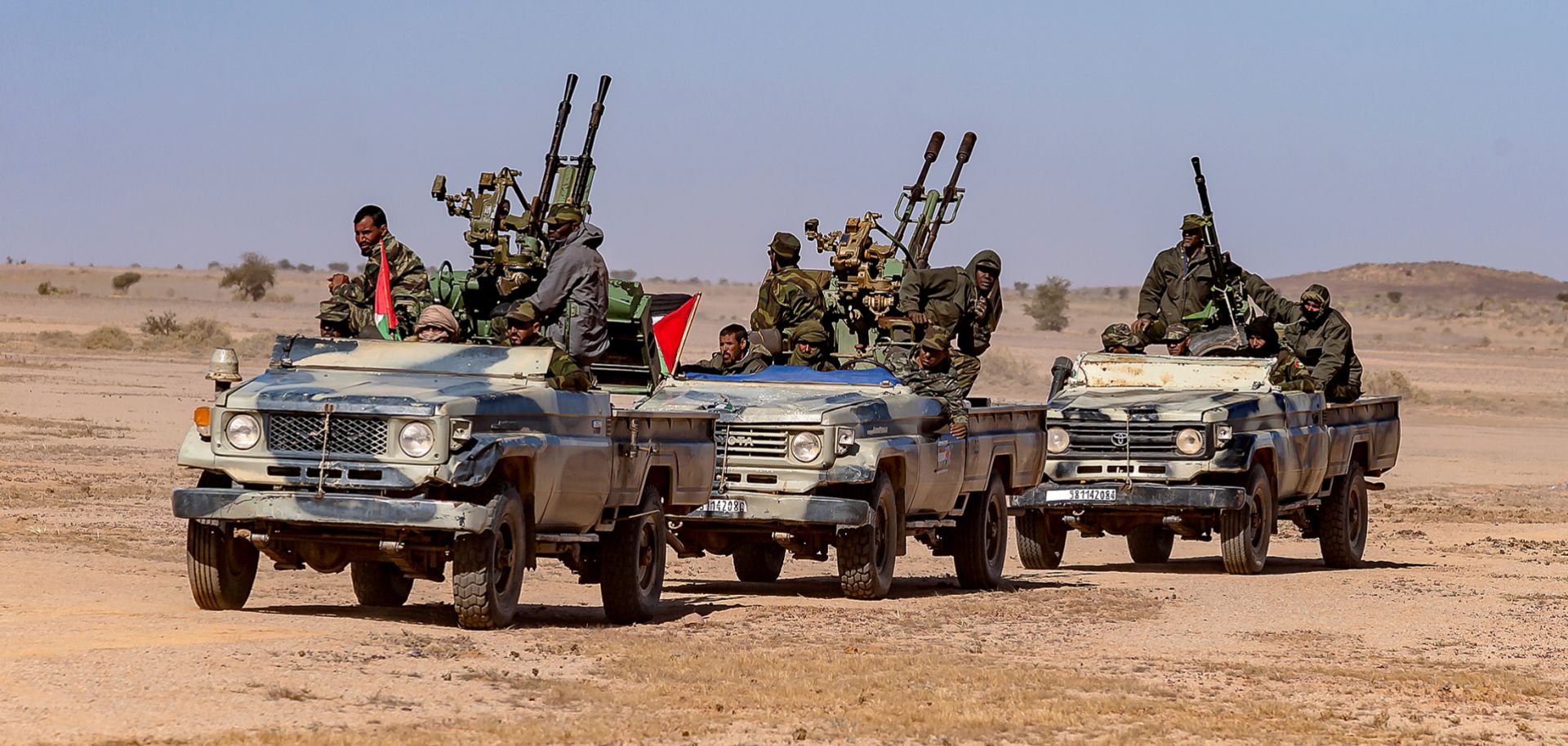
Military units from Western Sahara's military forces wait to begin maneuvers in Mehaires, Western Sahara, on Jan. 6, 2019. Morocco controls most of the territory, which has received support from Algeria amid the two countries' battle for regional dominance.
For years, Algeria has ruled the roost in the Maghreb, marshaling its underground riches to build the most powerful military in the region. Increasingly, however, it's facing a challenge from its long-time rival to the west, Morocco, which is hoping to capitalize on its neighbor's unrest to grab the mantle of regional supremacy. But Morocco's concerted effort to displace Algeria as the lead military power in the region isn't without risk, as it could inflame the underlying tensions between the neighbors, further stoking regional instability.
Bad Blood
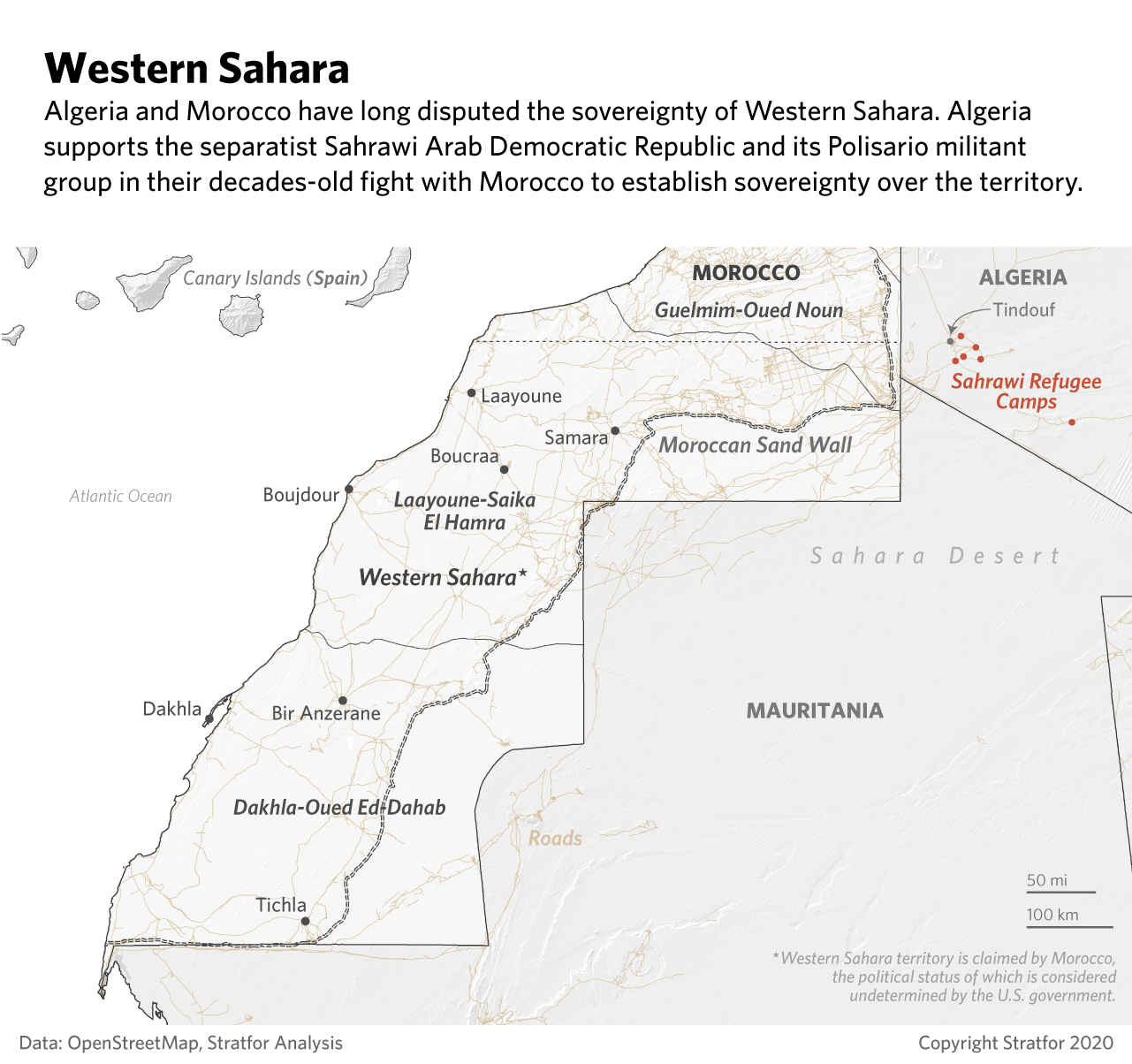
Not long after Morocco (1956) and Algeria (1962) gained independence, the two countries fought a war over their border, and even today, their long land frontier remains closed, symbolizing their enduring mistrust and hostility. What's more, Rabat and Algiers remain locked in an interminable dispute over the status of Western Sahara, a region controlled by Morocco whose push for independence has long enjoyed Algerian support.
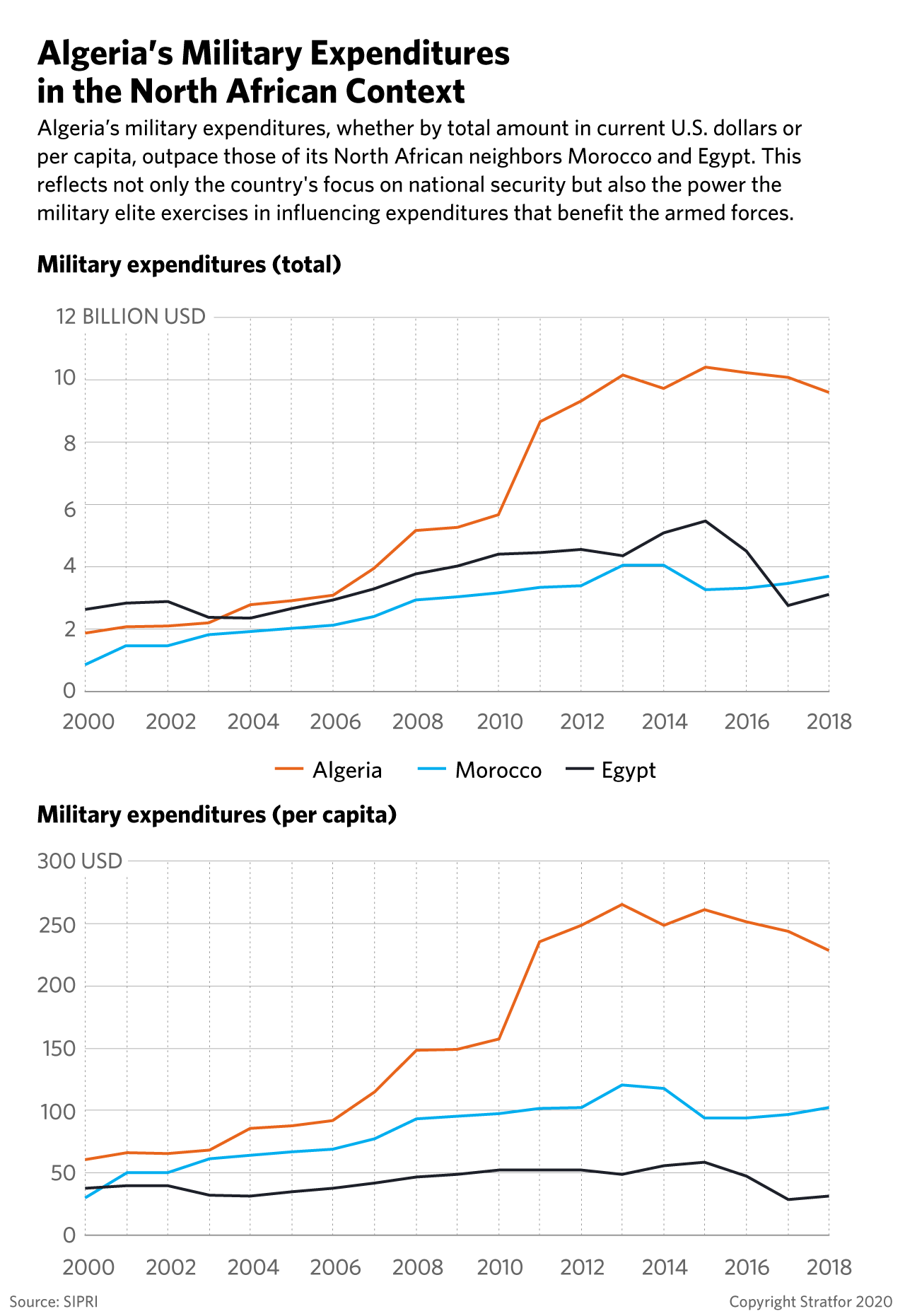
Given this geopolitical rivalry, both countries have remained primed for a potential conflict, leading the pair to search for strategies to better defend themselves against each other. In Algeria's case, leaders in Algiers leveraged the country's energy riches to bolster the military, making it one of the largest arms importers in Africa in the process. Morocco, on the other hand, lacked the hydrocarbon resources necessary to bankroll a military spending spree, meaning it hewed close to the United States, France and Gulf Arab countries like Saudi Arabia for diplomatic support and defense assistance.
Rabat Shifts Course
Morocco and Algeria have pursued these separate strategies over the past two decades, fostering a largely stable, if uneasy, balance between them. A shift in the balance of power, however, might be afoot. Algeria has been encountering increasing economic strain and domestic unrest over the past half-dozen years, particularly since the collapse of energy prices in 2014 and their slow and incomplete recovery since then. Morocco, meanwhile, has found itself in a tense diplomatic spat with its traditional economic partners, Saudi Arabia and the United Arab Emirates, over its attempt to pursue a neutral stance in the two countries' dispute with Qatar. Although Morocco has since mended some of these ties, the disagreement gave Rabat a wakeup call regarding the potential fragility of its alliance. These worries, coupled with Morocco's growing confidence as it seeks to extend its economic power and weight across Africa, have driven the country to become more ambitious about improving its domestic military capabilities and self-reliance.
In this vein, Morocco first announced an effort to achieve "regional military supremacy" in 2017. Since then, it has directed around $20 billion toward the effort, inking several prominent arms contracts with countries like the United States and France to purchase F-16 combat jets, AH-64E attack helicopters, M1A1 battle tanks, Caesar self-propelled howitzers and VL-MICA surface-to-air missile systems. As part of its push, Morocco has also invested in its own nascent domestic military production base.
An Algerian Response?
But Morocco's path toward regional military dominance in the Maghreb will not be easy. Algeria has invested heavily in military procurement for decades and retains significant advantages over Morocco in several domains. Algeria, for example, boasts a sizable, quantitative edge in combat aircraft and transport helicopters, significantly more robust ground-based air defenses, submarines (Morocco has none, but it is considering the purchase of some for its navy) and a generally superior inventory of vehicles and armored personnel carriers to support infantry. To be sure, Morocco does have some advantages over its eastern neighbor, including better training among its troops and a lead in artillery, yet the Algerian military continues to enjoy the overall edge.
Rabat's new contracts, and more anticipated investments in the years ahead, could pave the way for Morocco to become the dominant military power in the Maghreb, yet that is almost certain to drive Algeria to invest even more in military procurement and modernization. That, in the end, is likely to touch off an intensified arms race in the region that further stokes the existing mistrust, competition and hostility between the neighbors, fomenting even more regional instability.
