
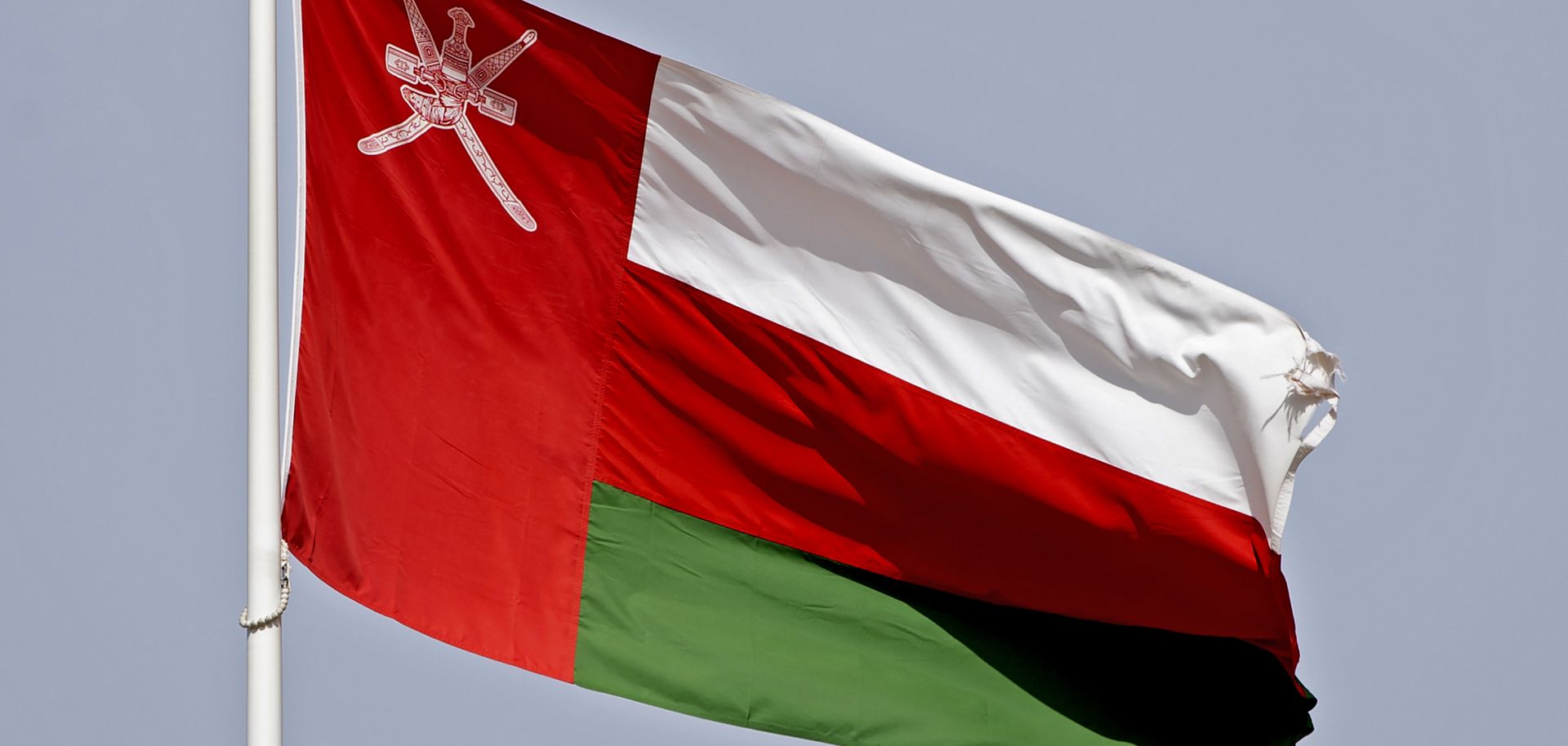
A picture taken on Sept. 15, 2020, shows the Omani national flag waving in Muscat.
Requesting technical assistance from the International Monetary Fund (IMF) underscores Oman’s commitment to reduce its growing debt dependence, though doing so will still require unpopular and socially disruptive cuts to state spending. On July 6, the IMF said that Oman had asked the international financial institution for technical assistance to help the government put together a medium-term debt strategy and implement a promised fiscal consolidation plan. The price of Omani government bonds rose on July 7, driven by the news of Muscat requesting technical support.
- The IMF’s statement underscored Oman’s weak economic position coming out of 2020. The country’s real GDP contracted by 2.8% last year and its non-hydrocarbon GDP contracted by 3.9%.
Oman’s fiscal struggles will be difficult to resolve, as its economy is characterized by high amounts of debt and a struggling private sector limiting non-oil revenue’s contribution to GDP. Debt levels have risen across the Gulf Cooperation Council (GCC) states in recent years to help offset lower oil revenue and fund economic diversification plans. In 2021, Oman’s debt-to-GDP ratio will be the second-highest in the GCC behind Bahrain, increasing from 79.2% in 2020 to 82.7%. Oman’s recovery is especially daunting because its economy was contracting even prior to the COVID-19 pandemic; Muscat began taking out high levels of debt after the 2014 oil slump.
IMF assistance could help reduce the intensity of, but not eliminate, some popular pushback against fiscal tightening measures. Oman isn’t yet discussing a loan agreement with the IMF, but even recruiting the fund’s technical expertise in planning its fiscal strategy could help Oman attract some cashflow from foreign investors who will be reassured knowing that the IMF is poised to offer support. An IMF deal could also yield additional aid from Oman’s regional neighbors, including Saudi Arabia and the United Arab Emirates. For Muscat, however, fiscal consolidation will require reducing subsidies and its public wage bill, while expanding the country’s tax base. While essential to reducing government expenditures, these measures will agitate Omani citizens by hurting their purchasing power and disrupting traditional state support. Scaling back the public wage bill will prove particularly contentious, given that so many Omanis depended on state employment for their livelihoods.
- Inflation is expected to increase to 3% in 2021 amid the introduction of a value-added tax (VAT) and increasing demand as the Omani economy gradually recovers from the COVID-19 pandemic.
- In June, hundreds of Omanis protested in rare demonstrations, demanding the government provide them employment. The Omani government responded by firmly containing and dispelling the demonstrations with police, but also by acquiescing to some of the demands and creating new public sector jobs. This approach reflected Muscat’s low tolerance for public unrest and its willingness to keep the public wage bill higher than the government might otherwise like for the sake of social stability.
