
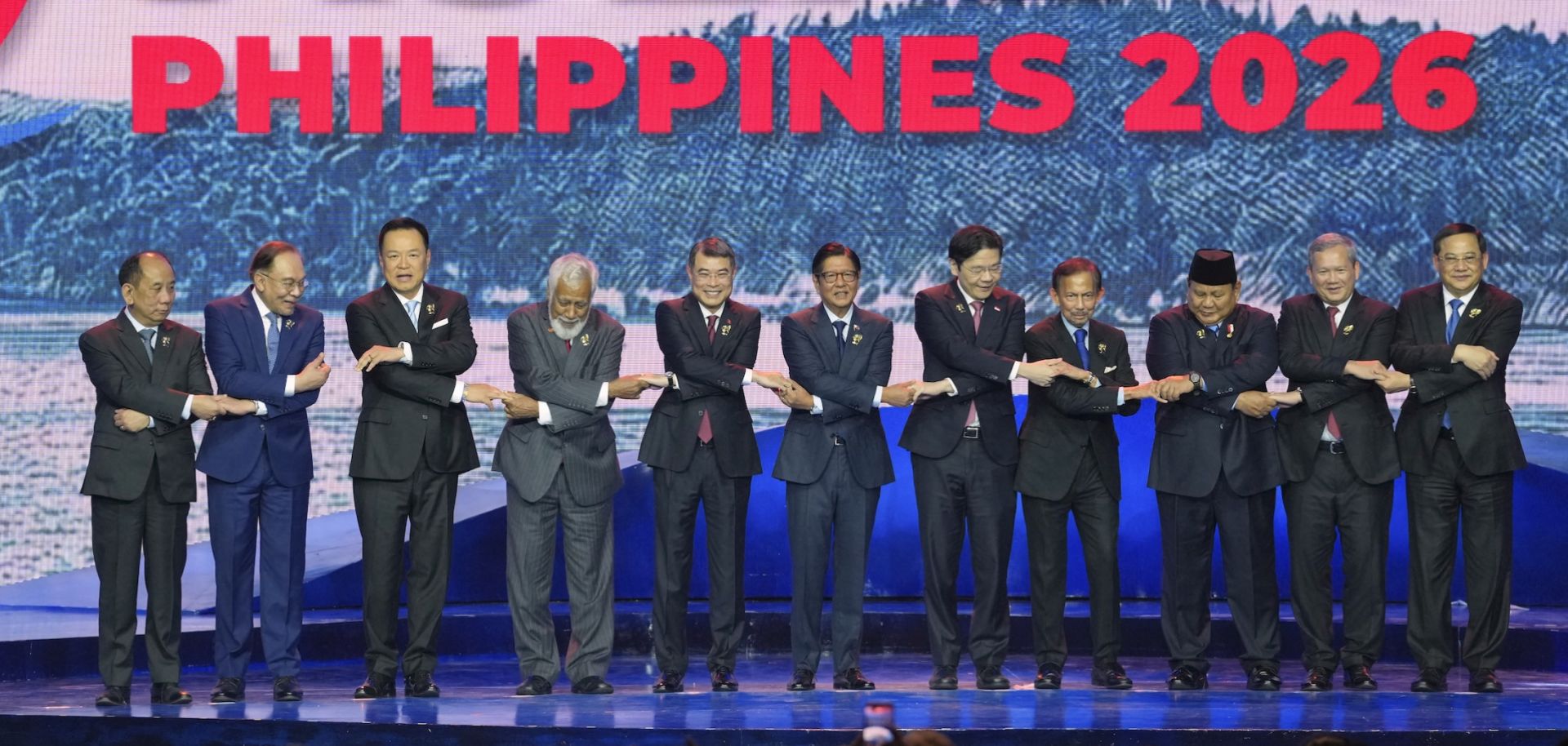
ASEAN leaders hold hands for a group photo during the opening ceremony of the 48th ASEAN summit in Cebu, central Philippines on May 8, 2026.
(AARON FAVILA/POOL/AFP via Getty Images)
ASEAN leaders hold hands for a group photo during the opening ceremony of the 48th ASEAN summit in Cebu, central Philippines on May 8, 2026.

What We're Tracking

U.S.-Iran tensions remain high. Tensions between the United States and Iran, particularly surrounding the Strait of Hormuz, will likely remain elevated over the next week following recent clashes. Although a U.S. official stated that technical negotiations are set to continue as scheduled on July 11 in Pakistan, Iran has not confirmed its participation. Even if the negotiations occur, they are unlikely to yield major diplomatic breakthroughs due to persistent divergences between U.S. and Iranian demands. Furthermore, any additional Iranian attacks against commercial vessels transiting the Strait of Hormuz risk further U.S.-Iran clashes, including Iranian attacks targeting Gulf countries. Separately, Israel and Lebanon may hold their next round of direct talks in Rome, Italy, from July 15-16, although Lebanon has threatened to skip these talks if Israel does not withdraw from the two pilot zones identified in the June 26 framework agreement.

ASEAN foreign ministers meet with Myanmar. On July 12, the Philippines, serving as the Association of Southeast Asian Nations' 2026 chair, will lead an informal meeting of ASEAN foreign ministers with Myanmar's foreign minister in Bangkok, Thailand. The meeting will be the first such in-person engagement since Myanmar's 2021 military coup and subsequent suspension from official ASEAN functions. The meeting will likely produce discussion on whether ASEAN should expand contact with Myanmar's military-backed, ostensibly civilian government that took office in April following a controlled election that ASEAN does not officially recognize, and what steps Myanmar must take in return, such as violence reduction in the context of the country's ongoing civil war, dialogue with rebel groups and eased access for humanitarian aid. This could improve Myanmar's prospects for limited ASEAN rehabilitation, particularly through greater ministerial-level engagement and backing from friendlier ASEAN governments like Thailand. However, the meeting is unlikely to bring about full normalization in the short term, and more skeptical ASEAN members like Indonesia, Singapore and the Philippines will likely resist allowing Myanmar's leaders to return to normal summit participation without at least some progress on the bloc's post-coup Five Point Consensus peace plan, against which Myanmar's new parliament is already pushing back, calling it foreign interference.

Burnham set to become U.K. prime minister. Andy Burnham will likely become the United Kingdom's next prime minister around July 20, after securing nominations from 322 of Labour's 403 lawmakers on July 9, roughly 80% of the parliamentary party and four times the threshold required to stand, making a rival bid extremely unlikely. Nominations close on July 16, and if Burnham remains the sole candidate, the party will declare him leader the following day, with caretaker Prime Minister Keir Starmer then tendering his resignation and Burnham taking office ahead of the summer recess, which he would use to form a government before Parliament returns in September. Markets will focus on Burnham's choice of chancellor and early fiscal signals; his commitments to existing fiscal rules and Labour's manifesto pledges point to broad policy continuity, though his openness to higher asset taxes and appetite for regional and social investment will keep investors cautious. Burnham would also likely preserve broad continuity on foreign and defense policy as well as on the trajectory and pace of Labour's EU reset.

Ukraine's allies meet in Paris. Ukrainian President Volodymyr Zelensky, NATO Secretary-General Mark Rutte and senior EU officials will meet in Paris, France, on July 13 for a "coalition of the willing" session focused on further military support and post-ceasefire security guarantees for Ukraine. The meeting is unlikely to produce significant new commitments, as the proposed guarantees would take effect only after a ceasefire that Russia has shown no willingness to accept, and coalition members remain divided over their eventual military contributions. Ukraine's long-range drone strike campaign is meanwhile inflicting substantial damage on Russian refineries, constraining fuel production and forcing Moscow to restrict petroleum-product exports, but the economic pressure has yet to alter the Kremlin's approach to the war. EU governments will also seek agreement before July 15 to prevent the Russian oil price cap from automatically rising from $44.10 to roughly $58 per barrel. Failure to preserve the lower cap would undermine the allies' effort to increase the economic cost of the war, just as Ukraine's strikes are intensifying pressure on Russia's energy sector.

Recommended Reading

U.S.-Iran Truce at Risk of Collapse Over Hormuz Control Dispute

Recent tit-for-tat strikes between the United States and Iran signal the rising risk of a return to high-intensity regional conflict following the June 17 memorandum of understanding.

As Le Pen Returns to the Race, What Would a Far-Right Presidency Look Like in France?

With the launch of Le Pen's campaign, the National Rally appears set to win France's 2027 presidential election, signaling a coming policy shift toward EU confrontation and weaker NATO integration, though various constraints would temper implementation.

How the 2026 El Nino Climate Event Will Affect the Global Economy and Security

The compounding effects of the weather event and disruptions to shipping through the Strait of Hormuz are set to drive global inflation and strain agricultural output well into next year. 

Podcasts

Visit the podcasts page to hear conversations about geopolitical and risk intelligence.

RANE
SUBSCRIBERS ONLY

Expert analysis when it matters most.

Get access to RANE's decision-grade geopolitical intelligence.