
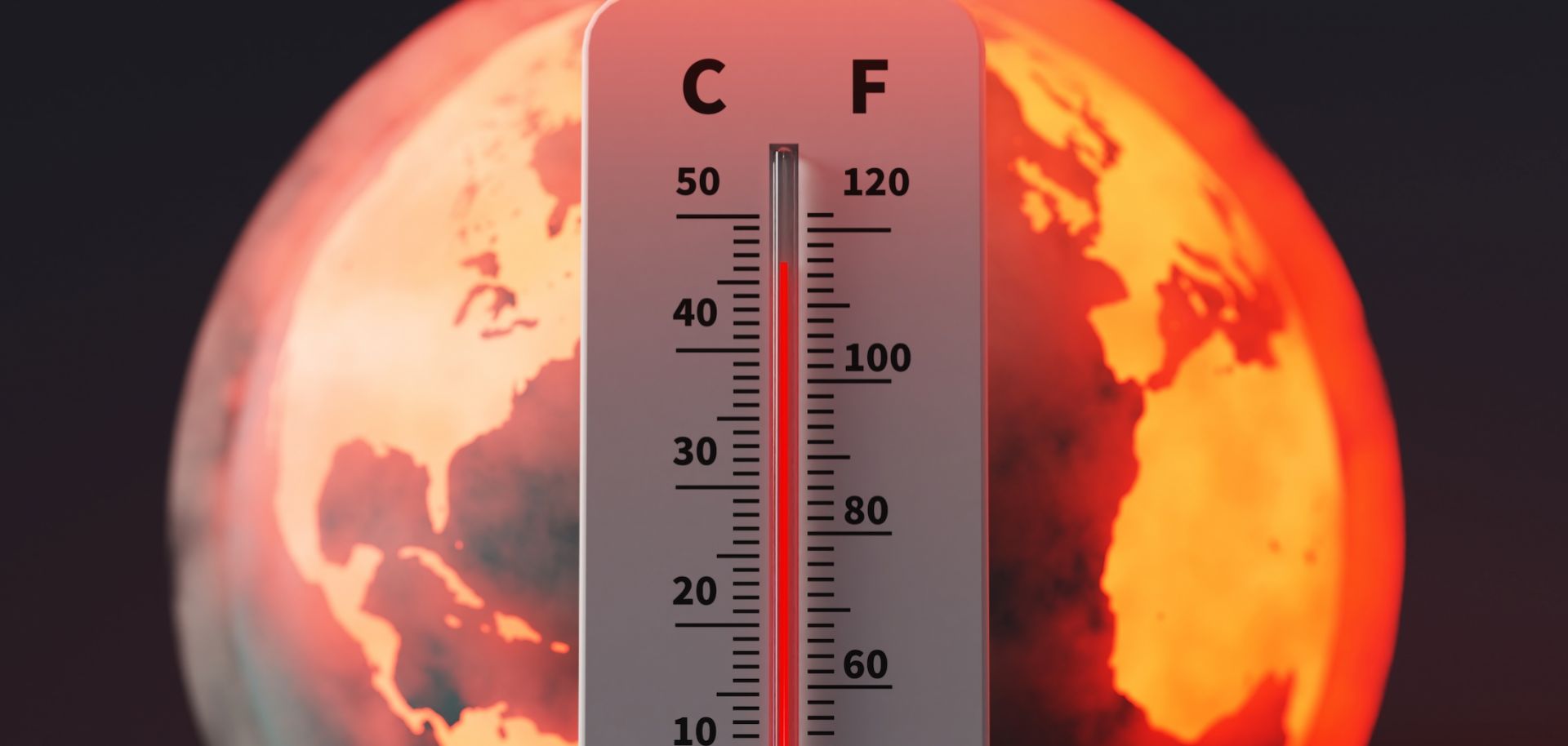
The 2026-2027 El Nino climate event will disrupt weather patterns globally, raising safety and logistical risks, threatening food insecurity and escalating security threats. On June 11, the U.S. National Oceanic and Atmospheric Administration (NOAA) announced the development of El Nino, the warm phase of the El Nino Southern Oscillation (ENSO), the global climate phenomenon stemming from variation in sea surface temperatures in the tropical Pacific Ocean. The announcement came after scientists determined that the waters in the Nino-3.4 region in the central and eastern equatorial Pacific Ocean passed the 0.5 C-above-average threshold for consecutive months. New data released by NOAA on June 23 indicated that temperatures in Nino-3.4 reached 29.4 C, 1.7 C above the 30-year average. An El Nino is considered strong when it is at least 1.5 C over average. The high temperature and the fact that it was reached so early in the year suggest that there is an 89% chance of El Nino reaching at least "strong" intensity by December, with a 62% chance of it becoming a "very strong" or "Super El Niño" according to the U.S. Climate Prediction Center.

- ENSO includes three phases: the warmer-than-normal El Nino, the colder-than-normal La Nina event and a neutral phase, during which the Pacific has average conditions. The oscillation between the phases is irregular and extremely difficult to predict, as they do not cycle regularly; La Nina does not always follow El Nino. Previous incidents of El Nino have been followed by a neutral phase, after which there is another El Nino, though this sequence is uncommon.
- El Nino events most commonly last between nine months and a year, but it is also common for them to last between 12 and 18 months (as occurred in 2018-2019). From 1990 to 1995, two extended El Nino events occurred in quick succession. The first ended in late summer 1992, before another began in early 1993. Based on current data, scientists expect the current El Nino to extend through at least early 2027.
- The last El Nino occurred in 2023-2024, when it triggered high global temperatures, severe flooding in some regions and droughts, which damaged food production and caused significant delays to transits through the Panama Canal due to reduced water levels. Previous El Ninos occurred in 2018-2019, 2015-2016 and 2009-2010.
- There is evidence that climate change is contributing to the increasing severity of El Nino, as warmer temperatures globally make the fluctuations in Pacific temperatures more severe, but scientific debate on whether El Nino is occurring more frequently because of climate change is ongoing. El Nino events typically occur at intervals of between two and seven years.
El Nino impacts weather conditions in all parts of the world, but the form, severity and predictability of the consequences vary significantly by region. El Nino impacts are most predictable in regions closest to the tropical Pacific Ocean region, which are directly impacted by the phenomenon, while areas progressively further away have weaker teleconnections that make the impacts less predictable. The direct impact zone includes equatorial Pacific South America (particularly Peru and Ecuador), Southeast Asia and Australia. Peru and Ecuador see increased rainfall, creating flooding risks. Southeast Asia and Australia see warmer temperatures and reduced rain, which raises drought concerns. Areas away from the direct impact zone that still have strong teleconnections include parts of South America away from the equatorial Pacific and southwestern United States, including California, which see heavier rainfall and flood risks and Central America, which sees reduced rainfall. Sub-Saharan Africa and South Asia similarly face strong teleconnections that reduce rain in much of the region, though southern India and Sri Lanka face heightened flooding concerns. Areas with only moderate or low teleconnections, including northern North America, the Caribbean Sea and Europe, see impacts from El Nino. However, the impacts are generally weaker and more variable, with rainfall impacts in Europe particularly unpredictable. Forecasters expect the current El Nino to strengthen from June through the end of the year, with forecasters predicting with moderate confidence that it will reach peak intensity between December and February. After early 2027, the outlook for the current El Nino is less clear, with low-confidence predictions of it gradually weakening through the spring. However, it could also stay at peak intensity for a longer period and extend into mid-to-late 2027.
- Teleconnections refer to how climate conditions impact climate conditions elsewhere globally.

The 2026 El Nino phenomenon comes during a period of already-elevated global uncertainty from conflicts in the Middle East and U.S. tariff threats, creating economic challenges and supply chain disruptions. The conflict between the United States and Israel and Iran has resulted in severe disruptions to fuel, fertilizer, petroleum products and other downstream components. Though the scale of the conflict has declined following the June 17 memorandum of understanding between the United States and Iran, persistent clashes suggest that even in a best-case scenario, conditions will be slow to return to normal. As concern about further strikes in the Strait of Hormuz will persist over the coming weeks and months, shipping and energy companies will be hesitant to resume normal operations, meaning supply chain disruptions are set to persist for at least the next few months. These dynamics have raised inflation across the world, straining government finances at a time when economic uncertainty is already elevated due to increased trade tension between the United States and its main trading partners. Because of the conflict with Iran, most sectors have faced supply chain and operational disruptions, with technology and electronics companies facing increased downstream energy costs and shortages of helium and components. The agricultural sector faces particularly significant challenges as reduced natural gas production and exports from the Gulf have in turn reduced production of nitrogen fertilizers. Fertilizer prices around the globe have increased, raising costs for agricultural production and creating concerns of food insecurity in low-income countries, particularly in South Asia, Sub-Saharan Africa and Latin America.
- Fuel disruptions in recent months due to the near-total stop to shipments through the Strait of Hormuz have strained energy supplies globally. The International Energy Agency called the disruptions the largest oil supply disruption in history, as 10.1 million barrels per day of supply were lost in March following the outbreak of the conflict.
- In May, the World Bank reported that its fertilizer price index rose more than 12% in the first quarter of 2026 in comparison to the fourth quarter of 2025, reaching the highest level since October 2022. The World Bank attributed the rise to the closure of the Strait of Hormuz. Prior to the start of the Iran war, fertilizer had already surged in price because of the COVID-19 pandemic and disruptions from the Russia-Ukraine conflict, as Russia is one of the largest fertilizer exporters globally.
The most immediate and direct impacts from El Nino will be tropical storms, drought and increased rainfall, creating safety, logistical and supply chain disruptions for businesses globally. With the current El Nino highly likely to continue through early 2027, weather disruptions are already beginning. The most immediate impact will be a lighter-than-usual Atlantic hurricane season, as disrupted wind patterns hinder the formation of strong tropical storms. In the near term, while some storms will form during the hurricane season, they will be less likely to reach hurricane status. NOAA predicts only one to three major hurricanes, down from three to five in 2025. This will reduce safety concerns and risks of infrastructure damage in the Caribbean, Central America and the southeastern United States through November. By contrast, El Nino will raise the threat of typhoons in the western Pacific Ocean, raising the safety threats from highly damaging storms, as well as related damage to infrastructure and business disruptions. These concerns will be particularly pronounced for Guam, the Philippines, Taiwan, China and Japan, with risks extending at least through November. In South Asia, Australia and southern Africa, drought and warmer temperatures will further strain water and electricity supplies, due to both reduced hydroelectric generation and greater electricity demand, with risks in India and Zambia, which have previously faced electrical grid challenges. Reduced rainfall in equatorial South America, Central America and northern North America will not create immediate negative impacts, but over time could trigger droughts in the region that would disrupt infrastructure, including most significantly reducing water availability for the Panama Canal, a development that would risk further straining global shipping. Drought in these regions will also create an elevated risk of wildfires. Finally, increased rainfall elsewhere in East Africa, the southern Pacific coast of South America and parts of North America could cause floods that would damage transportation infrastructure and create safety risks for local staff. The highest risks will be in countries where local governments have slow disaster responses, such as East Africa, though risks will remain even in places with adept disaster-response capabilities.
- During the 2023-2024 El Nino, the drought in Panama forced the Panama Canal Authority to reduce both the number of transits per day, from 34 to 22, and the maximum ship draft, requiring cargo to be offloaded from some ships. This led to weeks-long delays to transits through the canal and forced some ships to take the longer route around South America. It is uncertain whether the 2026-2027 El Nino will have a similar impact, as authorities have reported taking steps to improve water management, but if the El Nino extends beyond early 2027, the risk of disruptions will rise.
- Flooding and drought additionally escalate health threats in impacted regions, as both can result in decreased sanitation and force populations to rely on contaminated water sources. Dry conditions can worsen air quality from both increased dust and wildfire smoke, creating respiratory health risks.
El Nino will negatively impact food production globally, raising operating costs for the agricultural sector and exacerbating already pronounced food insecurity-related humanitarian threats. Both drought and flooding will create disruptions to food production around the world, preventing planting or destroying crops. The scale of the negative impacts will be dependent on El Nino's length, the level of weather disruptions and local governments' capacities to respond. These dynamics would worsen further if U.S.-Iran tensions do not ease, allowing normal shipping in the Strait of Hormuz to resume. Fertilizer production and shipment disruptions would risk further compounding elevated operating costs and reducing crop yields, as some farmers would be forced to go without fertilizer or use less than needed. If Iran war-related business disruptions persist over the coming months and El Nino lasts for over a year, these issues could trigger a more severe humanitarian disaster. Food insecurity could rise in much of the low-income world, with the most severe risks in sub-Saharan Africa, South Asia and Southeast Asia and, to a lesser extent, Latin America. Even in regions less directly affected or in higher-income countries able to take action to reduce the risk of local food insecurity, food prices will likely rise, contributing to food price inflation in areas less directly affected by El Nino, such as Europe, North Africa and the Middle East. High-income countries will implement measures to reduce disruptions, including subsidies for the agricultural sector and consumers and export restrictions, but even in these countries, costs could still rise.
- In Sub-Saharan Africa, the countries at highest risk of food insecurity include Somalia, Sudan, Nigeria, Zimbabwe, Zambia and Mozambique, with pronounced risks also in Namibia and South Africa. In Asia, risks will be high in India, Bangladesh, Pakistan and the Philippines. The poorer Central American countries of Guatemala, Honduras and Nicaragua, as well as Caribbean island nations, will also be at risk.
- Further contributing to food insecurity concerns globally, the El Nino event comes as the United States has significantly reduced international humanitarian aid through USAID funding cuts in early 2025. The reduction of food-aid programs in particularly vulnerable regions will contribute to the risk of food insecurity escalating to famine conditions. The U.N. Food and Agriculture Organization and World Food Programme are seeking $202 million to prepare to respond to El Nino, but gaps in funding and resources are certain.
- In the United States, California is poised to receive higher-than-usual rainfall, a development that would likely alleviate long-standing drought concerns in one of the country's most critical agricultural regions, reducing operating costs for some of the U.S. agricultural sector. However, increased rainfall could cause flooding that would damage agricultural infrastructure and crops.
There is a high risk that El Nino's impacts could raise inflation and potentially even cause recessions. As seen in previous El Ninos, the mix of investment uncertainty, food production disruptions, infrastructure damage and broad business disruptions means that even if El Nino does not reach a strong intensity as predicted by forecasters, it would still create negative economic impacts globally. First, price increases due to production and shipping disruptions are likely to contribute to inflation. Infrastructure damage and subsidies will also strain government finances, which could be a problem for fiscally constrained states. Damage to local operating environments and broad concerns of future instability and future negative impacts as climate change escalates could reduce foreign direct investment in countries facing particularly significant environmental impacts and government response limitations, such as Mozambique, Zambia, Bangladesh, Pakistan, Peru and Ecuador. The risk that countries tip into technical recessions will be high, a concern likely to become more pronounced in late 2026 and early 2027. An extreme scenario in which the current El Nino is particularly strong and extensive and economic challenges from the Middle East conflict do not alleviate would raise the risk of more severe recessions. This risk will be most significant in countries already experiencing high economic risks, including Zimbabwe, South Sudan, Haiti and Malawi.
- The 2023-2024 El Nino's damage to Peru's infrastructure and food sector combined with local political instability to trigger an economic contraction of 0.6% in 2023.
Over the next year and beyond, challenges from El Nino could drive anti-government sentiment, political instability and insurgencies and terrorism. El Nino's challenges to economic stability would likely contribute to socioeconomic grievances globally. Anti-government unrest is possible even in higher-income countries, where inflation has already triggered unrest in recent months. Over the coming months and into 2027, these challenges will also risk escalating political instability, as strained government finances hinder the delivery of social programs and services. Such dynamics will likely fuel anti-government protests in much of the world, particularly the Global South. Some will be short-lived and have low turnout, but others will evolve into mass unrest that causes significant logistical challenges for businesses and travelers. These frustrations will also risk worsening xenophobic and racist violence in places most severely impacted by El Nino, as groups blame foreigners for poor economic prospects. It will also risk contributing to anti-corporate sentiment, which is already elevated amid AI-related job cuts around the world. Environmental activists will focus frustrations from natural disasters on corporations viewed as contributing to climate change, creating particular concerns for extractive industry sector companies. Frustrations over food insecurity and economic conditions will also fuel terrorist recruitment, including Islamist extremist groups and local extremist organizations. While Western governments will broadly remain adept at identifying and disrupting higher-capability attacks, lone-actor attacks could increase. Countries with poorer government security capabilities will be at risk of larger attacks. In countries such as Mozambique and Haiti, strained government capabilities could strengthen such groups to the point of significantly raising conflict threats, posing significant safety and operational risks for business and humanitarian organizations.
- Food insecurity and famine have previously triggered mass unrest and El Nino-related unrest has previously significantly weakened governments. The 1997 El Nino caused severe crop failures globally that worsened food insecurity in Indonesia and escalated economic challenges, ultimately triggering mass unrest in the country that forced the resignation of President Suharto in 1998.
- Climate disaster-related famine and poverty have long driven global migration. Countries that face severe impacts from El Nino will likely see at least a moderate increase in migration from low-income countries. The highest migrant flows are likely from central and southern Africa and poorer countries in the Western Hemisphere. Such dynamics will risk further escalating anti-migrant sentiment in higher-income countries like the United States and Europe, in some cases triggering protests and larger government crackdowns against migrant communities.