
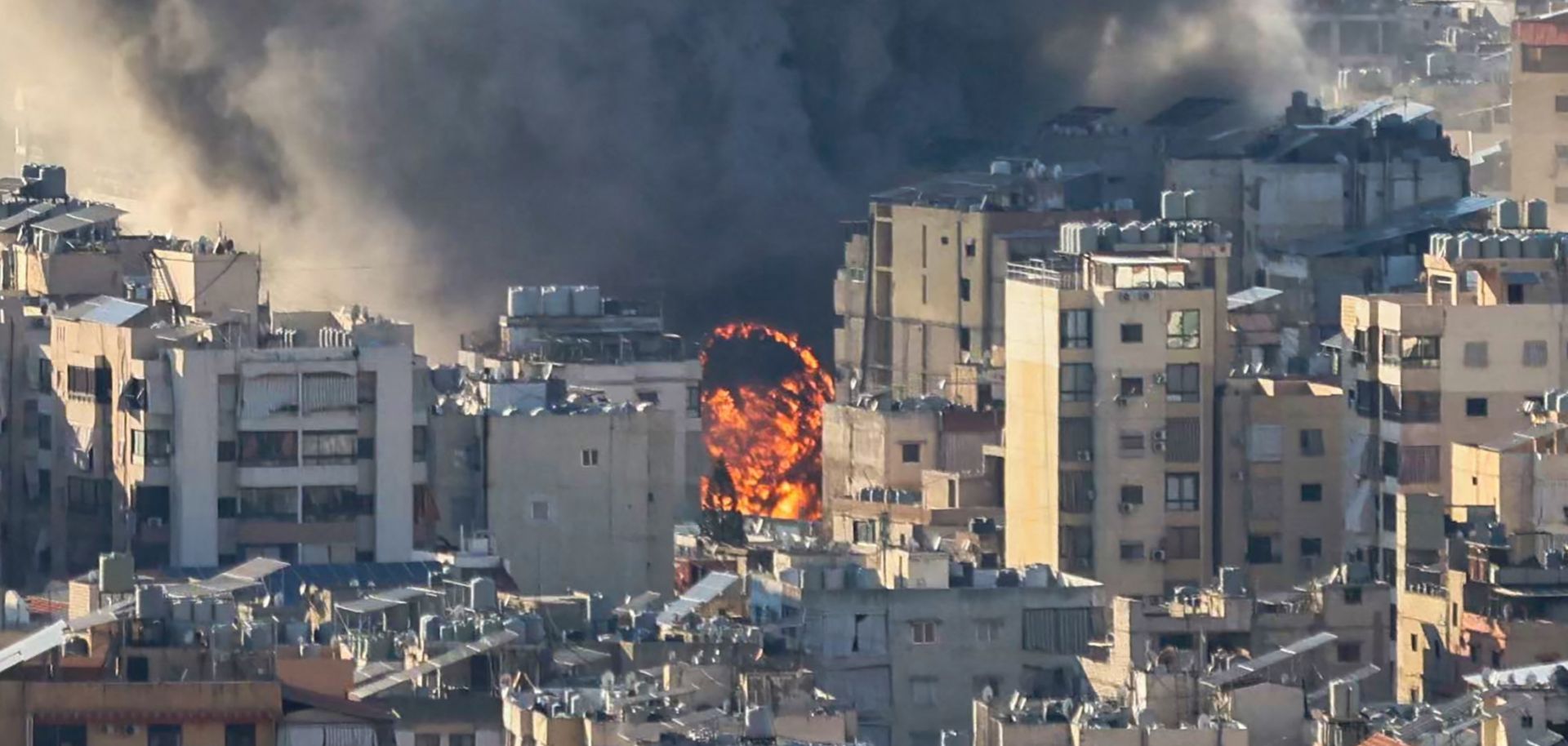
Despite a renewed push by the Lebanese government to ban Hezbollah's military activities, Israel is highly likely to escalate its military campaign against Hezbollah in retaliation for the group's recent attack, worsening Lebanon's security environment and likely delaying upcoming elections. On March 2, the Lebanese government issued a decree outlawing Hezbollah's military and intelligence activities, while instructing the army to enforce the second phase of the group's disarmament. The decision came hours after Hezbollah conducted its first attack against Israel since the Hezbollah-Israel ceasefire took effect in November 2024 by launching rockets and drones into northern Israel in retaliation for the killing of Iranian Supreme Leader Ayatollah Ali Khamenei on Feb. 28 during a new round of U.S. and Israeli strikes against Iran. Although the Hezbollah attack did not cause any significant physical damage or casualties, Israel subsequently announced a wider offensive against Hezbollah in Lebanon, launching airstrikes in and around Beirut that killed at least 31 people, including Hussein Makled, the head of Hezbollah's intelligence wing. Pointing to the likelihood of further Israeli assassinations, Israeli Defense Minister Israel Katz posted on X that Hezbollah Secretary-General Sheikh Naim Kassem was a "marked target for elimination."
- Hezbollah initially conducted attacks against Israel in late 2023 in solidarity with Palestinians in Gaza amid the Israel-Hamas war. However, after a year of fighting and several Israeli attacks that degraded Hezbollah's military capabilities and killed several members of Hezbollah's senior leadership, including then-Secretary-General Hassan Nasrallah, Hezbollah and Israel reached a ceasefire agreement in November 2024.
The apparent return to more significant fighting between Israel and Hezbollah comes amid mounting Israeli frustrations over the slow pace of Hezbollah's disarmament and a lack of confidence in the Lebanese government's ability to successfully disarm the militant group. Despite efforts by the Lebanese government to restrain Hezbollah from becoming involved in the current round of conflict on the side of Iran, Hezbollah's attack on Israel appears to have provided a casus belli for Israel to expand military operations against the group. Since the ceasefire between Hezbollah and Israel entered into effect in November 2024, Israel has continued to intermittently strike the group across Lebanese territory, including in Beirut in several instances. These strikes were largely driven by Israel's frustration with the Lebanese government's hesitancy and slow pace of disarming Hezbollah throughout the year, despite high levels of Israeli and U.S. pressure on the Lebanese government, which itself rhetorically expressed a harder line on Hezbollah. In November 2025, Israeli Prime Minister Benjamin Netanyahu warned that the Lebanese government must uphold its commitment to disarm Hezbollah and prevent the group from rearming, or else Israel would defend itself. In mid-February, Hezbollah rejected the Lebanese government's timeline for the second phase of disarmament, which would have given the militant group four months to disarm in the region north of the Litani River and south of the Awali River, claiming that disarming in areas north of the Litani would support Israel.
- In September 2025, the Lebanese Cabinet approved a plan by the Lebanese Armed Forces, or LAF, to disarm Hezbollah, but did not provide a timeline for disarmament and noted the constraints on the LAF's ability to execute the plan. However, Israel repeatedly said it would not withdraw its forces from positions in southern Lebanon until Hezbollah's successful disarmament.
- The United States and Israel boycotted the Feb. 25 U.S.-led ceasefire monitoring committee meeting in Beirut amid frustrations over the lack of progress on disarming Hezbollah. Israel refused to send a representative, and the United States said it was prioritizing regional deployment plans; the meeting occurred just days before the United States and Israel attacked Iran.
- In late October 2025, Israeli and Arab intelligence sources noted that Hezbollah was rearming quickly, especially by expanding its arsenal of rockets, anti-tank missiles and artillery, despite the ongoing Israel-Hezbollah ceasefire and sporadic Israeli attacks.
The Lebanese government's decree outlawing Hezbollah's military activities is likely an effort to signal commitment to disarming Hezbollah, seek foreign support for the LAF and try to curb Israel's retaliation, though the near-term effects will likely be limited and will risk fueling unrest. Hezbollah's attack against Israel undermined Lebanese Prime Minister Nawaf Salam's key goal of avoiding another war between Hezbollah and Israel. Additionally, the Hezbollah attack reinforced the perception that the militant group still poses a significant security threat and highlighted the inability of the LAF to prevent the group from attacking Israel. For these reasons, Salam's decree to ban Hezbollah's military and security activities, as well as his call for the Lebanese military and security services to crack down on Hezbollah, are likely designed to signal Beirut's commitment to upholding its pledge to disarm Hezbollah, consolidating state control of weapons and undercutting Hezbollah's capability to drag Lebanon into future conflicts by leaving decisions of war and peace solely in the hands of the state. The Lebanese government's revitalized efforts to crack down on Hezbollah are likely also attempts to contain the intensity of Israel's attacks on Lebanon by demonstrating its commitment to more practical and stricter steps in the roadmap to disarming Hezbollah. Furthermore, Salam is looking to the United States and Gulf Arab countries for financial and military support for the LAF's disarmament efforts. Despite these goals, the LAF will face the same constraints of limited financial and material resources, which will likely hinder the effectiveness of any efforts to disarm Hezbollah for the foreseeable future. Instead, the March 2 decision, in addition to any potential future practical steps by the government and the LAF to try to forcefully disarm the group, will elevate the risk of social unrest — mainly from Hezbollah's supporters but also potentially its opponents, who would benefit from the group's weakening. Furthermore, should the LAF undertake practical steps to disarm the group, such as raiding a depot without prior consultation, there would be a growing risk of friction between Hezbollah militants and the LAF that could quickly devolve into at least sporadic violence that would undermine Lebanon's already precarious domestic security environment.
- Lebanon and France were scheduled to hold a conference for the LAF in Paris on March 5 to garner international support for the LAF and its efforts to disarm Hezbollah. However, the conference has been postponed until April due to the ongoing conflict between the United States, Israel and Iran.
- The Hezbollah attack against Israel drew frustrations from even close allies of the group, including parliament speaker Nabih Berri, who backed the Lebanese state's outlawing of Hezbollah's military activities.
Israel is highly likely to escalate its attacks against Hezbollah, likely fueling fragmentation between the group's political and militant wings and resulting in the postponement of Lebanese elections. Regardless of Beirut's domestic efforts, in the coming days and potentially weeks Israel is highly likely to escalate attacks against Hezbollah targets in southern Lebanon, the Bekaa Valley, Beirut and the neighboring suburbs, including assassination attempts on Hezbollah's senior leadership. This escalation will be driven by Israel's security imperatives ahead of its 2026 general election, due by late October. As part of this campaign, Netanyahu will seek Hezbollah's disarmament, and his government is highly unlikely to allow the Lebanese government to lead the process, especially after months of limited progress. As such, Israel will try to forcibly disarm Hezbollah through increased airstrikes and possibly limited ground incursions. Although Israel's tempo of attacks may not reach the same pace as during the height of the 2023-24 conflict — especially since Israel will conduct additional waves of attacks against Iran and potentially sporadically attack Iranian-backed regional allies, including Yemen's Houthis and some Shiite militias in Iraq — Israel will likely conduct more frequent attacks against Hezbollah than during their ceasefire. Renewed Israeli operations will likely widen fissures within Hezbollah, with the group's militant wing likely to assume a hard-line approach while the political wing may be increasingly willing to agree to at least some level of disarmament, especially if Israel assassinates additional senior leaders. Regardless, Israeli attacks on Lebanon will almost certainly worsen the security environment within the country and result in a postponement of the general election, which was scheduled for May, due to security risks.
- On March 1, Israel announced that it had called up 100,000 reservists in addition to the 50,000 reservists on duty to fortify its borders, including with Lebanon, in preparation for a multi-theater conflict.
