
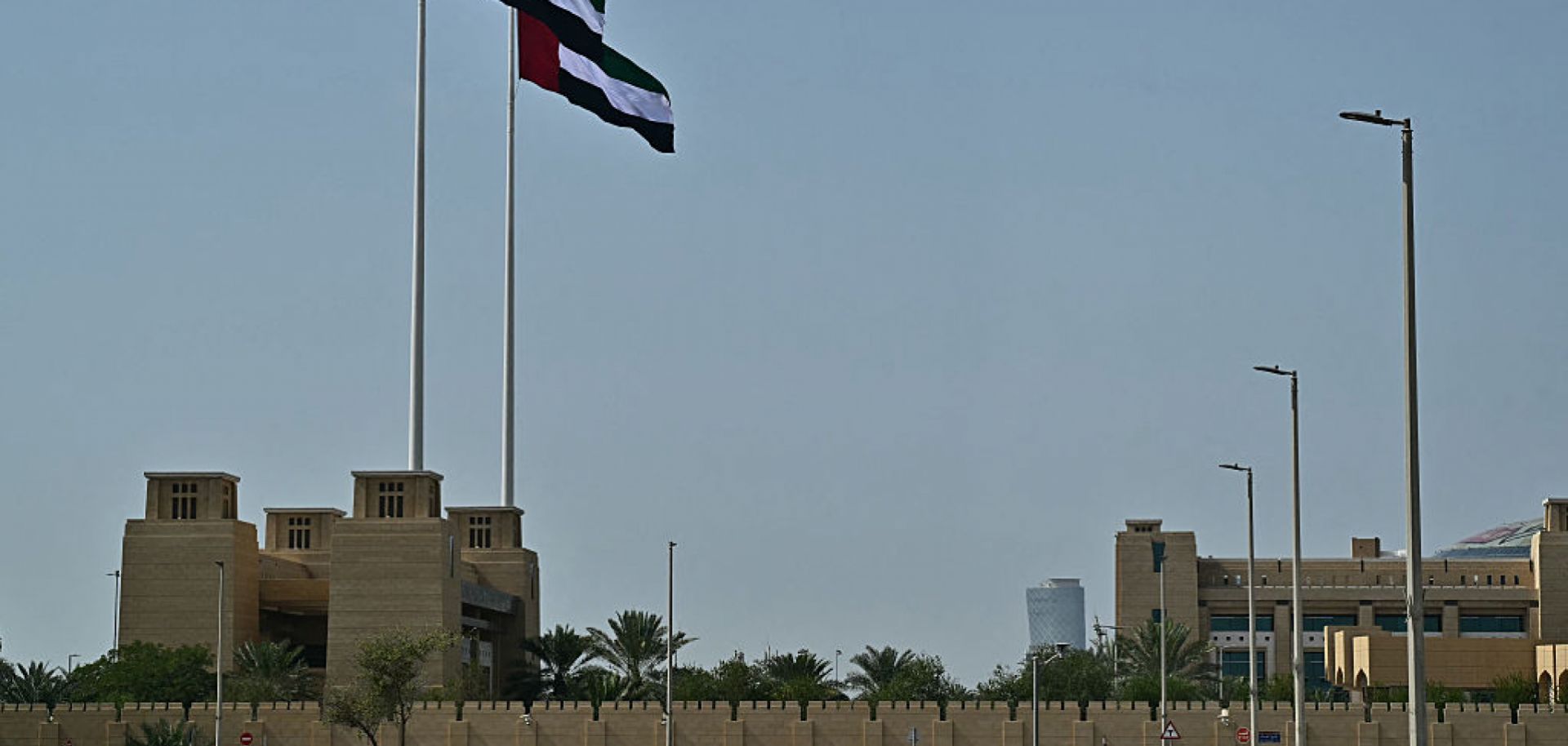
U.S.-brokered talks between Russia and Ukraine will likely continue, and to deliver limited confidence-building steps. But they are unlikely to produce a near-term settlement, as Russia will continue to press its territorial demands while using diplomacy to manage sanctions pressure and build leverage ahead of a spring-summer offensive. On Feb. 4-5, delegations from Russia, Ukraine and the United States held a second round of trilateral talks, which resulted in a reciprocal exchange of 314 prisoners of war (157 per side), the first such exchange in five months. All three sides described the talks as "constructive" and "productive," saying discussions focused on mechanisms to implement and monitor a ceasefire, unresolved territorial issues, including the Eastern Ukrainian region of the Donbas, and possible security arrangements for Ukraine. Other outcomes of the talks included a formal announcement to resume high-level U.S.-Russia military-to-military contacts and, reportedly, an informal deal to continue observing the core limits of the New START nuclear arms control treaty for at least six months despite its Feb. 5 expiration. Following the talks, Ukrainian President Volodymyr Zelensky said discussions would continue, and indicated that the next round of negotiations would likely be hosted by the United States. The Abu Dhabi meetings followed an initial session held Jan. 23-24.
- U.S. Special Envoy Steve Witkoff and U.S President Donald Trump's son-in-law Jared Kushner led the U.S. delegation, while National Security and Defense Council Secretary Rustem Umerov led the Ukrainian delegation, and military intelligence chief Adm. Igor Kostyukov led the Russian delegation.
- The New Strategic Arms Reduction Treaty, aka New START, was the last remaining U.S.-Russia nuclear arms control treaty. It formally expired Feb. 5, and can no longer be legally extended. The same day, Trump wrote on Truth Social that rather than extending the treaty, calling it a "badly negotiated deal" that was "grossly violated," Washington should pursue a "new, improved, and modernized" nuclear arms control treaty, potentially including China.
- Following the talks, the United States and Russia announced the resumption of high-level military-to-military dialogue, suspended in 2021. Gen. Alexus Grynkewich, commander of U.S. European Command, was designated to lead the channel, which would provide a "consistent military-to-military contact" as the parties continue efforts "toward a lasting peace."
Russia's continued participation in the U.S.-led peace process reflects a tactical effort to manage sanctions risk and test U.S. leverage over Kyiv rather than a shift away from its maximalist war aims. While Russia has not abandoned any of its maximalist goals — for example, it insists that Ukraine must withdraw its forces from the Donbas and that the region should be internationally recognized as Russian territory — the Kremlin is still participating in the U.S.-led peace process. Moscow is aware that a breakdown in talks could trigger renewed U.S. sanctions, tougher enforcement mechanisms for the existing sanctions or increased military support for Ukraine. At the same time, Moscow appears intent on testing how far Washington is willing to press Kyiv to accept territorial concessions, using the talks to probe U.S. red lines and willingness to coerce Ukraine in pursuit of a deal. These strategic calculations take place against the backdrop of mounting economic strain, with Russian oil and gas revenues sharply down at the start of 2026, alongside intensifying external pressure on export routes. Washington has ramped up pressure on India, a key purchaser of Russian crude, to reduce imports, while the European Union has announced a new sanctions package targeting Russian oil shipping. If adopted, the EU measures would increase financial and logistical challenges for Moscow. In this context, Russia has prioritized direct engagement with Washington. By reviving military-to-military contacts and signaling continued adherence to New START limits, the Kremlin seeks to present itself as a responsible stakeholder to forestall further sanctions pressure. Moscow is also leveraging the Abu Dhabi format to advance its long-standing objective of shifting negotiations into a primarily U.S.-Russia channel and sidelining Europe — Kyiv's principal financial backer — from the core diplomatic process.
- Following the talks, Russian officials quoted by TASS reiterated that international recognition of the Donbas, eastern Ukraine's industrial region comprising the Donetsk and Luhansk oblasts, as Russian territory was a prerequisite for peace. Moscow also continues to oppose any deployment of Western troops or peacekeepers in Ukraine.
- Russia's oil and gas revenues fell sharply at the start of 2026, with January receipts down by roughly 50% year on year, driven by lower global prices, steeper discounts on Urals crude following U.S. sanctions on Rosneft and Lukoil imposed in October, and a stronger ruble that reduced budget proceeds.
- On Feb. 5, U.S. Treasury Secretary Scott Bessent said at a Senate Banking Committee hearing that any further sanctions against Russia, including potential measures targeting Russia's shadow oil fleet, would depend on how the peace talks evolve. He added that existing U.S. sanctions on major Russian oil companies had helped bring Moscow to the negotiating table.
- On Feb. 5, the European Union announced a new proposed sanctions package that would introduce a full maritime services ban on Russian crude oil, expand listings of shadow fleet vessels to 640 ships, restrict maintenance and other services for liquefied natural gas tankers and icebreakers, and tighten measures against Russian banks, alternative payment channels and sanctions circumvention. EU governments are expected to vote on them within the next two weeks. On Jan. 26, 14 European governments warned they may intercept tankers linked to Russia's shadow fleet transiting European waters. These measures, combined with Ukrainian drone and naval attacks on Russia-linked tankers since late 2025, will increase operational, legal and security risks for Russian oil exports.
While diplomatic contacts will likely continue, their impact will remain limited unless changes on the battlefield or in U.S. pressure alter the underlying balance shaping Russia's and Ukraine's negotiating positions. The trilateral talks will likely continue in the coming months, but they will remain a largely technical track, serving as a venue to explore potential ceasefire mechanics, monitoring arrangements and a sequencing and verification framework that could be activated if and when a political decision to halt fighting is reached. The format will also allow the parties to test red lines and clarify nonnegotiable positions, but it is unlikely to produce progress on core issues such as territorial concessions and security guarantees, as the incompatibility between Russia's demands and Ukraine's sovereignty red lines remains unbridgeable for now. As a result, and absent a major battlefield shift or a politically driven breakthrough, U.S.-led diplomacy will likely stay active but limited in scope. Within this context, discussions regarding security guarantees from the West and/or assurances from Russia will likely include securing Ukraine's access to major ports in Odesa and Mykolaiv. This next phase of the talks will be shaped equally by Washington's willingness to credibly couple diplomacy with economic pressure and by developments on the battlefield. Against this backdrop, Russia's military objectives for the spring-summer offensive will likely focus on maximizing territorial gains in Donetsk and along the Zaporizhzhia axis, both for their strategic and symbolic value. In the Kremlin's calculations, advances in these areas would strengthen Moscow's leverage in any eventual freeze of the line of contact, allowing Russia to preserve control of the territories it occupies. Given Russia's very slow progress on the battlefield to date, Moscow may consider committing its additional strategic reserves to accelerate progress, but a failure to translate such an escalation into decisive gains would erode its leverage and make Russia more likely to accept a negotiated settlement later in 2026.
- Open-source reporting and Ukrainian military assessments indicate that Russian forces are continuing preparations for a spring-summer campaign. These include the formation and deployment of additional units; the movement of reserves and logistics toward forward areas, particularly along axes leading toward the Sloviansk-Kramatorsk agglomeration in northern Donetsk and parts of the Zaporizhzhia front; the accumulation of ammunition and equipment; and the increased use of missile, air and drone strikes to degrade Ukrainian defenses and shape conditions ahead of potential ground offensives.
- The Donetsk region is politically and militarily significant because the capture of its remaining parts (currently under Kyiv's control) would allow Moscow to claim full control of the Donbas within its administrative borders and dismantle Ukraine's most heavily fortified defensive belt in the east. The area is also critical for water supply, as much of Russian-occupied Donetsk depends on infrastructure linked to the Siverskyi Donets-Donbas canal system, disruptions to which have already caused chronic shortages. The Zaporizhzhia axis is meanwhile strategically important for securing Russia's land corridor to Crimea, protecting key logistics routes in southern Ukraine and increasing pressure along the Dnipro River line.
