
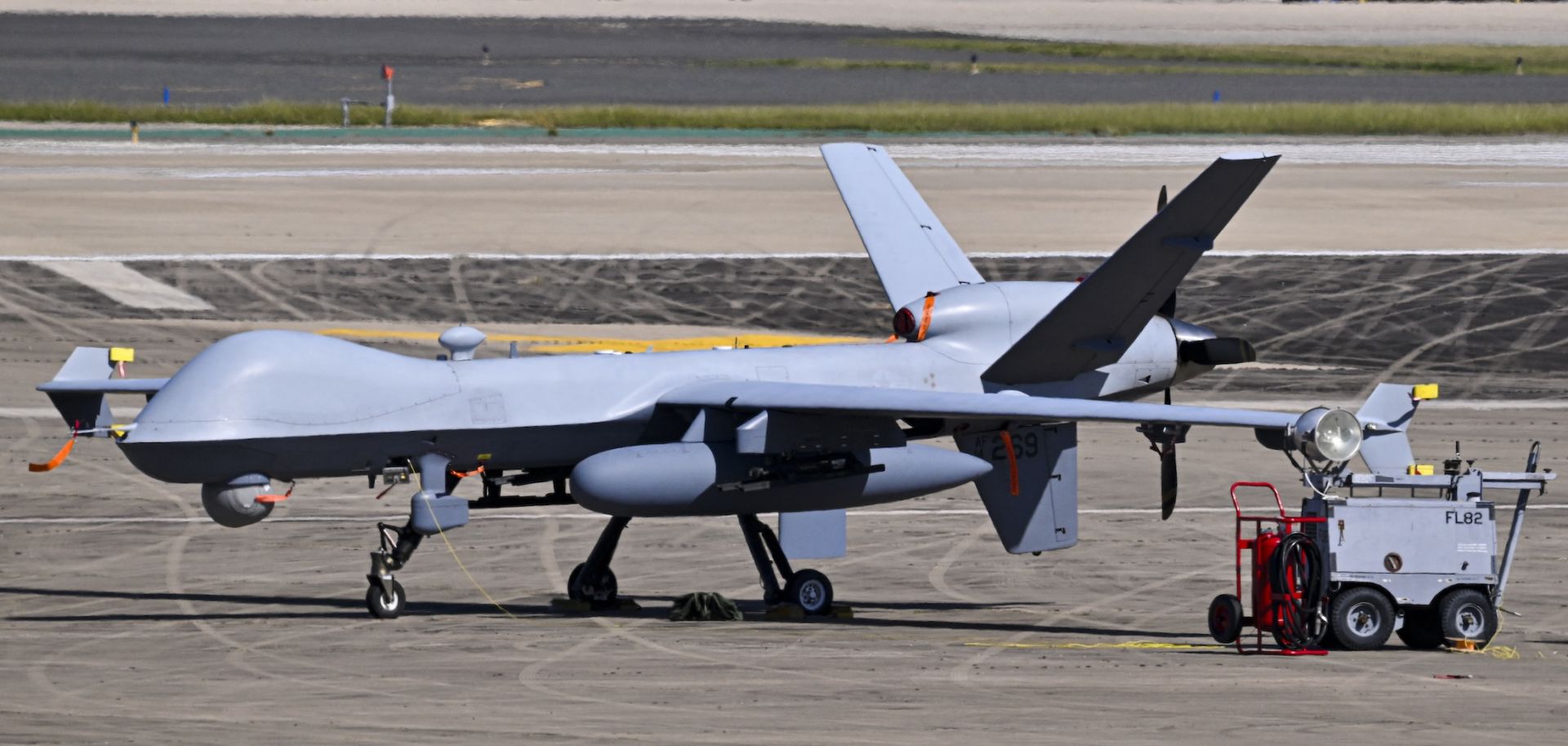
A U.S. drone strike on an alleged drug trafficking port facility in Venezuela will escalate bilateral tensions and make further strikes highly likely in the coming weeks, though a U.S. ground invasion of the country remains unlikely for the foreseeable future. On Dec. 29, CNN reported that the U.S. Central Intelligence Agency, or CIA, carried out a drone strike against a port facility on Venezuela's coast earlier in December, in the first known U.S. attack on a land target within Venezuela. The strike reportedly targeted a dock in an unidentified remote area that the U.S. government believes was being used by the Venezuelan gang Tren de Aragua to store drugs prior to loading them onto boats to be trafficked out of the country. CNN's reporting — subsequently echoed by other media outlets — indicates the strike destroyed the facility, but did not result in casualties, as no one was in the facility at the time. The White House and the CIA have declined to comment on the operation.
- The new reporting comes after U.S. President Donald Trump made comments during a Dec. 26 interview suggesting the strike occurred two days earlier, indicating it may have occurred around Dec. 24, though this remains unconfirmed. On Dec. 29, when asked by reporters about these comments, Trump noted that a large explosion had destroyed an unspecified drug facility.
- Tren de Aragua is most active in the coastal state of Aragua, located just west of Caracas. However, the gang also has extensive operations in other Venezuelan states between Aragua and the Colombian border, including the coastal state of Carabobo. Another possible location for the U.S. strike is Sucre, a coastal state east of Caracas, which is closer to Trinidad and Tobago, as Tren de Aragua is also heavily active in the area.
- Tren de Aragua originated as a Venezuelan prison gang, but in the last five years, it has expanded across the Western Hemisphere, engaging in the trafficking of Venezuelan migrants, including to the United States, among other illicit activities like drug trafficking. Since returning to the White House in January, the Trump administration has increased pressure on the group, including by designating it as a Foreign Terrorist Organization and Specially Designated Global Terrorists — legal moves that give U.S. authorities wider latitude in targeting the group.
The drone strike is the latest escalation in broader U.S. security operations targeting drug traffickers and the government of Venezuelan President Nicolas Maduro. The drone strike follows months of increased U.S. military activity in the Caribbean region, as part of the Trump administration's broader effort to expand U.S. national security focus on the Western Hemisphere, combat drug trafficking to the United States and increase pressure on left-wing authoritarian governments in Latin America, particularly Maduro's. Since August, the United States has substantially expanded its military presence in the region, and since Sept. 2, the U.S. military has carried out dozens of strikes against alleged drug trafficking boats that have so far killed over 100 people. Prior to the reported drone strike on the Venezuelan port facility, Trump had repeatedly stated that the United States was considering kinetic strikes against land-based drug trafficking targets, and also publicly confirmed that he had authorized the CIA to carry out covert operations within Venezuela. On Oct. 2, the White House informed Congress that the United States was in a state of ''armed conflict'' with cartels in Latin America, and on Nov. 13, U.S. Secretary of Defense Pete Hegseth announced Operation Southern Spear to target narco-terrorists in the Western Hemisphere. Tensions further escalated after the United States seized a sanctioned tanker departing Venezuela on Dec. 10. On Dec. 16, Trump then declared a blockade of all sanctioned oil tankers entering and leaving Venezuela, and pursued actions to enforce the blockade over the subsequent days and weeks. In response to this growing U.S. pressure, the Venezuelan government has declared a state of emergency, deployed soldiers to its western border with Colombia, armed and trained civilians to use rifles, and increased domestic anti-drug operations. Maduro has also repeatedly called for peace while criticizing U.S. actions as an effort to steal Venezuelan oil.
More U.S. strikes on Venezuelan territory are highly likely in the coming weeks, though these actions are extremely unlikely to reduce overall drug trafficking activities, while Maduro will remain hesitant to directly attack U.S. targets and is unlikely to be forced from power absent more aggressive U.S. actions. In the near term, the United States is highly likely to conduct further similar strikes in Venezuelan territory against infrastructure and logistics hubs allegedly linked to drug trafficking. These strikes will likely be confined to remote areas and primarily target camps, storage facilities, ports, airstrips and other transportation infrastructure used by cartels. The campaign will probably involve a mix of CIA and U.S. military operations, as well as more covert actions like cyberattacks and physical sabotage. Over time, these escalating U.S. operations could eventually expand to direct strikes against Venezuelan military facilities, which the Trump administration may increasingly view as legitimate targets due to the Venezuelan military's alleged engagement with drug trafficking groups. However, such strikes are highly unlikely to reduce overall drug trafficking to the United States, which remains a very profitable business due to high U.S. demand. Cartels will thus be incentivized to overcome any temporary setback by quickly adopting new trafficking methods, such as smuggling drugs via commercial cargo vessels or relying more heavily on alternative routes through Central America with less U.S. military activity. Moreover, Venezuelan groups such as Tren de Aragua are less responsible for drug trafficking to the United States compared with Colombian and Mexican criminal organizations, further reducing the impact these U.S. strikes will have on the flow of illicit Latin American drugs into the U.S. market. For its part, the Venezuelan government appears intent on avoiding a further escalation with the United States, which will deter Caracas from conducting retaliatory kinetic strikes on U.S. military assets in waters off the coast of Venezuela, Trinidad and Tobago, or Puerto Rico. However, Venezuela may take other actions in response to U.S. strikes on its soil, including arbitrary detention of U.S. citizens (as it has done in the past) and harassment of energy sector vessels and infrastructure in the region, including by sailing Venezuelan ships near tankers, as previously seen off the coast of Guyana. Finally, despite the expanded military presence in the Caribbean, the United States remains unlikely to escalate to a ground invasion of Venezuela for the foreseeable future, given U.S. voters' opposition to deploying troops to new foreign conflicts. By themselves, the expanded strikes on Venezuela are also highly unlikely to sufficiently weaken Maduro to force his resignation or trigger his overthrow via a popular revolution or military coup. That said, recurring U.S. attacks over a prolonged period of time — especially if expanded to not only military but also political, economic and other sensitive targets on Venezuelan territory — would likely build pressure on Maduro and give momentum to the opposition, aligning with the White House's goal of creating the conditions for regime change without directly overthrowing Maduro's government.
- On the off chance that the Trump administration is planning to conduct a full ground invasion of Venezuela, it would not happen anytime soon, as a successful invasion would require a significant, months-long buildup of personnel and resources in the region.
- The drone strike in Venezuela further confirms the Trump administration's intent to conduct strikes on drug trafficking groups on land, which could expand to other Latin American countries over the coming year. Mexico and Colombia are the most likely targets for such U.S. strikes, given their critical roles in drug production and trafficking to the United States, as well as rhetoric from Trump and other top U.S. officials repeatedly citing these countries as at-risk for future strikes.
