
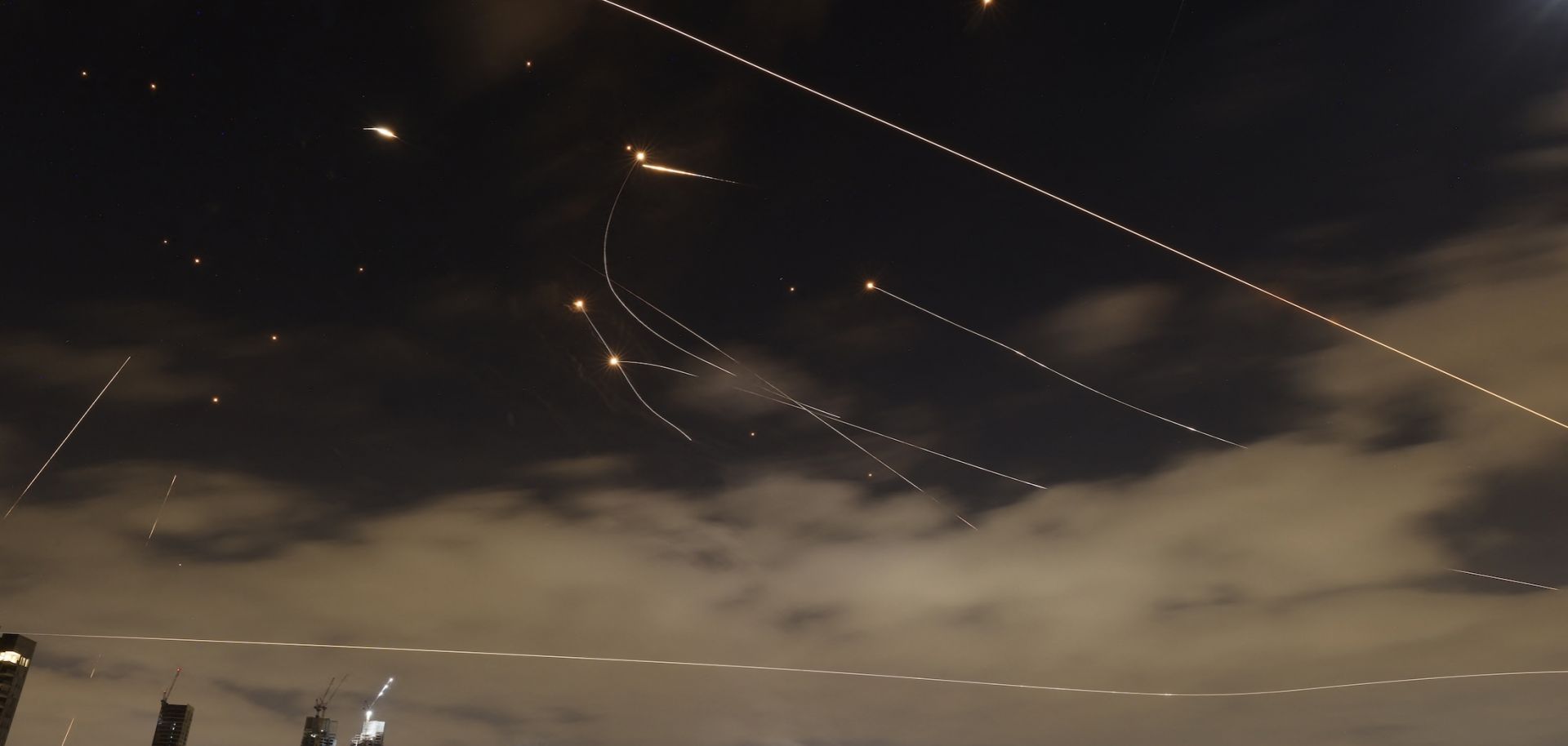
Israel's upcoming deployment of a new laser aerial defense system will reduce threats from short-range rockets and drones while reinforcing a long-term push for defense self-sufficiency and expanding opportunities for international defense production partnerships and exports. Israel is set to deploy the Iron Beam laser defense system by the end of the year, following the completion of operational testing of the system in September. The defense ministry and primary Israeli military contractors Elbit and Rafael have confirmed that the first batteries are scheduled for transfer to the Israel Defense Forces, or IDF, on Dec. 30. Initial operational use of the system is expected in 2026. If implemented as scheduled, the deployment will make Israel the first country to field a combat-ready laser air defense system. The defense ministry reported that the 100-kilowatt system successfully intercepted missiles, mortar rounds, UAVs and other aerial threats during weeks of testing, demonstrating the ability to destroy targets with high precision (allegedly within seconds, although this is not publicly verified).
- Israel fields a layered air defense architecture comprising many systems, each with its own role to counter aerial threats. Iron Dome intercepts short-range rockets, mortars and some drones, while David's Sling is designed for medium-range rockets, cruise missiles and some tactical ballistic threats. Arrow-2 and Arrow-3 provide high-altitude interception capabilities against medium- and long-range ballistic missiles. Israel also has U.S.-supplied Patriot batteries and THAAD air defense systems that offer an additional layer against aircraft and some missile threats. Iron Beam is being introduced as a very short-range, high-energy laser system to counter drones, mortars and short-range rockets at low cost, complementing rather than replacing the existing interceptor-based layers.
Israel is deploying the Iron Beam system and expanding domestic arms production to reduce reliance on foreign military suppliers and prepare for potential renewed conflict with Hezbollah, the Houthis and Iran in 2026. Israel is preparing for what it views as unfinished conflicts in 2026 by strengthening its aerial defense architecture through the rollout of the cost-effective Iron Beam system designed to be efficient against some short-range threats. The deployment also reflects a broader strategic shift toward greater defense self-sufficiency as Israel seeks to rely more heavily on largely indigenously produced systems and less on imports of key components and finished materiel. In the past two years of war with Hamas, Hezbollah and other regional adversaries, Israel has faced periods of political friction with Western states that export arms, ammunition and components of larger systems to Israel over its actions in Gaza and elsewhere. Consequences have included temporary export slowdowns, leading to Israeli stockpiles of certain equipment, such as air defense interceptors, becoming depleted. These experiences highlighted the vulnerability created by dependence on foreign suppliers during protracted conflicts. In response, Israel has increased investment in local production lines for munitions, interceptors and advanced air defense components, aiming to reduce foreign dependencies and ensure resilience in the event of renewed large-scale fighting.
- In November 2025, Israeli Prime Minister Benjamin Netanyahu publicly stated that his government was working on a long-term initiative to develop independent munitions production with "minimal dependence on the United States" framing it as a strategic lesson from the recent wars and U.S. debates on arms transfers.
- A recent report by the Stockholm International Peace Research Institute showed that Israel increased its arms imports between 2020 and 2024, becoming the world's 15th-largest arms importer, up from 34th a decade earlier. The rise underscores how dependent Israel has become on external suppliers even as it exports high-tech systems.
- A report by the Council on Foreign Relations notes that, between October 2023 and mid-2025, the United States shipped around 90,000 tons of weapons and equipment to Israel on hundreds of flights and dozens of ships, including massive amounts of ammunition and bombs. Despite this, Israeli officials continue to see such dependence as untenable.
Iron Beam will strengthen rather than replace Israel's multilayered air defense architecture. Despite moves toward defense self-sufficiency, Israel will remain reliant on U.S. support and foreign supplies for at least the next few years. Defense officials say Iron Beam will complement Israel's existing aerial defense umbrella, providing an additional interception method alongside proven systems like Iron Dome, David's Sling and Arrow. Although early field tests have shown promising results, Iron Beam will require years of operational evaluation before Israel can fully assess its performance, maintenance demands and integration with command-and-control networks. Israel will accelerate efforts to expand domestic arms production and reduce dependence on foreign suppliers but will continue to depend on other air defense systems that require imported munitions as the transition unfolds. Even as Israel develops more cost-effective and efficient indigenous systems, the benefits will be incremental rather than immediate.
Iron Beam's integration into Israel's aerial defense umbrella will reduce the threat of short-range rockets and drones from Iranian proxies while supporting Israel's risk tolerance abroad. Israel's deployment of Iron Beam will reshape how its multilayered missile defense architecture functions. If effective, the laser system will absorb a large share of short-range drone and rocket fire, easing the burden on costly interceptor stocks required by other systems. Iron Dome will also be vital to combat more complex projectile threats like large barrages of rockets from Hezbollah in case of another conflict. More broadly, the deployment of Iron Beam will give Israel another advantage in reducing aerial threats, adding another layer of defensive deterrence and discouraging at least some of Iran's nearby proxies from waging large-scale conflict using short-range systems — and, in case of conflict, reducing their effectiveness. Furthermore, beyond defensive capabilities, Iron Beam will also support Israel's regional offensive military actions, with its leadership more confident in its ability to absorb retaliations. Israel, already emboldened by its operational successes in the past two years against Iran and its allies, will remain risk tolerant.
- Despite optimistic Israeli assessments of Iron Beam, there are still some operational constraints to consider for its efficiency, especially as the system is yet to see combat operations. Some of these constraints include reduced effectiveness in bad weather and incapability to engage high-speed or maneuvering ballistic missiles, meaning Israel will continue relying on traditional interceptor systems for the foreseeable future. This also suggests that, despite some Israeli speculation that Iron Beam could thwart ballistic missile attacks from Iran, the system would not improve Israeli air defense capabilities against these higher-altitude, faster-moving threats, meaning Israel will still need to rely on other air defense systems to check Iranian threats.
The deployment of Iron Beam will encourage Israel to deepen defense production partnerships and exports and accelerate efforts by other countries to acquire similar low-cost, directed-energy air defense systems. Western countries have already expressed interest in Iron Beam. Israeli air defense systems have proven their effectiveness in the past few years, making them of high interest to countries including Germany, the United States and others. Already, Israel has signed a cooperation framework with Lockheed Martin to adapt Iron Beam and eventually co-produce other laser air defense capabilities. Israel's plans also envision eventual export to other countries, positioning Iron Beam as a future co-produced system for partners in Europe and elsewhere once it reaches full operational maturity. Although interest from foreign governments will be substantial, several limitations will shape the near-term trajectory of exporting the Iron Beam system, including the IDF's prioritization of domestic fielding, refinement and operational validation, Israeli military contractors' production capacity, the ability of other countries to integrate such a system into their own air defense architectures and the risk of technology theft by countries such as China and Russia. But over time, Israel is poised to become a major exporter of directed-energy defense systems, especially if Iron Beam is proven on the battlefield. Ultimately, this will lead other states to either seek to acquire Israeli systems, accelerate their own parallel programs or covertly attempt to replicate the technology, including potentially by theft. The war in Ukraine has prominently demonstrated the importance of having air defenses that not only can defend against longer-range ballistic missiles but also a deluge of shorter-range threats like drones that can quickly overwhelm traditional air defense systems at significant cost to the defender, meaning interest in directed-energy systems will only grow.
- Germany signed a contract worth approximately 3.6 billion euros ($4.2 billion) in September 2023 to purchase Israel's Arrow-3 system — the largest defense export in Israeli history — after receiving U.S. approval earlier that summer. In December 2025, Berlin activated the first Arrow-3 components at Holzdorf Air Base in eastern Germany and is pursuing follow-on orders as well as expanded cooperation with Israel Aerospace Industries — the prime Israeli contractor. The purchases underscore Europe's growing appetite for Israeli missile defense technology and increase the likelihood that future systems, including Iron Beam, will be considered for co-production or acquisition by Germany once fully operational.
