
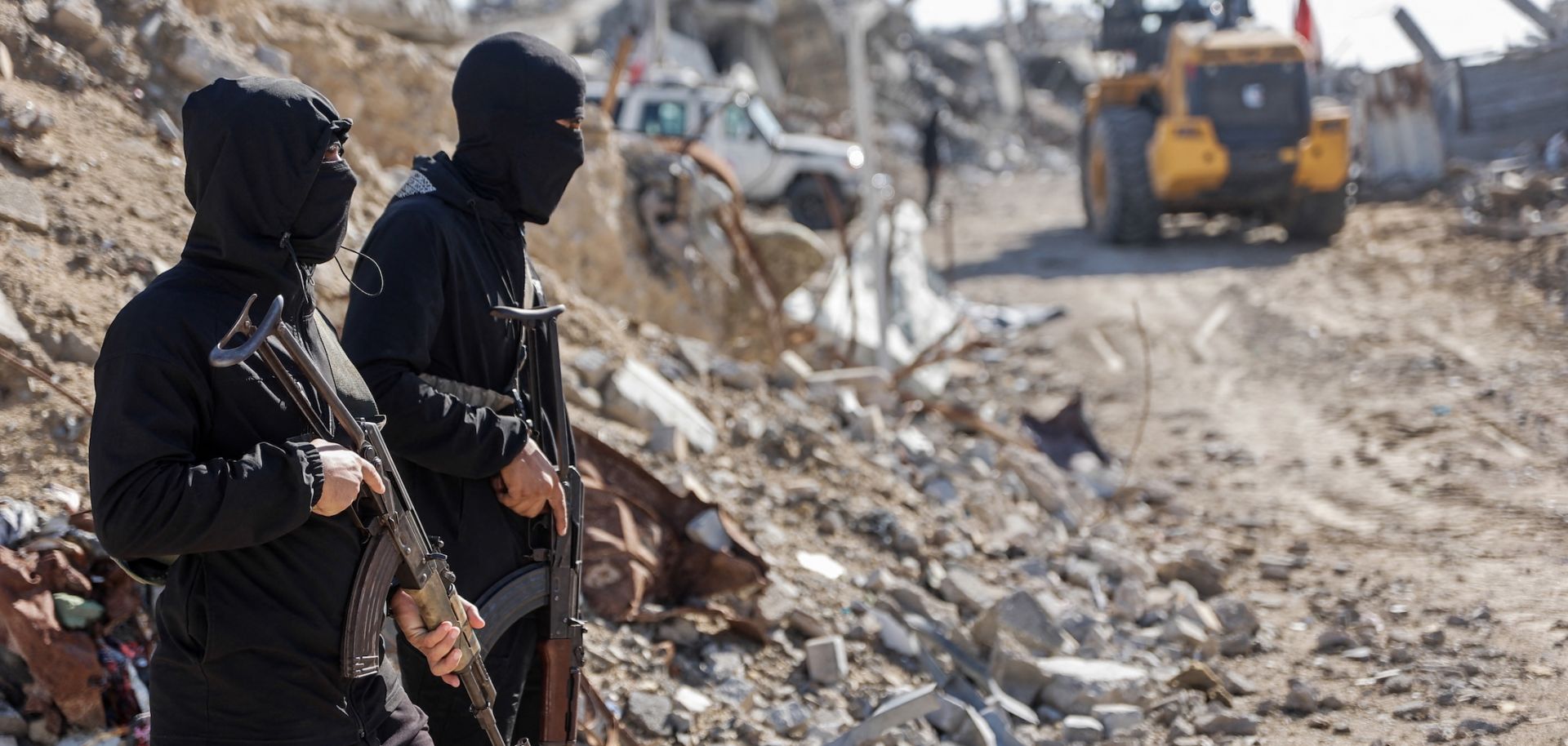
Early reconstruction efforts in the Israeli-controlled portion of the Gaza Strip will further advance a de facto partitioning of Gaza, enabling Israel to apply military pressure on Hamas to disarm without returning to full-scale war, preventing significant domestic or international backlash while forestalling a resumption of Houthi attacks. As the Israeli military implements a plan to divide the Gaza Strip, private contractors have begun the construction of the first U.S.-backed semipermanent compound to house Palestinians in Rafah, in the Israeli-controlled portion of the territory. Each so-called "Alternative Safe Community" is projected to be able to eventually house 20,000-25,000 Palestinians and to have schools and medical facilities, but will likely take several months to construct and cost tens of millions of dollars. The U.S.-backed plan proposed the construction of at least six of these compounds. However, even as construction on the first of these compounds begins, several unresolved questions regarding the plan remain, including whether Palestinians would be able to leave the compounds at will, whether Israeli vetting policies would exclude a large number of Palestinians from entering the communities and where funding for the compounds will come from.
- The physical structures proposed in the initial plan would likely be similar to the containerized semi-permanent structures that have previously been used to provide temporary housing after natural disasters, such as the February 2023 Turkey-Syria earthquake, and to house refugees after wars.
- Although the first of the compounds is projected to be fully constructed within months, the construction of other compounds could take even longer due to the need to clear a significant amount of rubble and unexploded ordnance before any construction can begin.
Efforts to begin reconstruction come as negotiations between Israel and Hamas have largely stalled and the United States pressures Israel to improve living conditions while seeking to further weaken Hamas control of the Gaza Strip. Despite speculation that U.S. President Donald Trump wants to symbolically announce the start of the second phase of the Hamas-Israel ceasefire in the coming weeks, negotiations have largely stalled. This is mainly due to significant gaps between the parties, especially over Hamas's disarmament, even though Hamas officials have indicated some willingness to discuss "freezing or storing" weapons, suggesting the possibility of a multi-year truce. As a result of the lack of progress, the Gaza Strip remains divided by the "Yellow Line," to where Israel Defense Forces, or IDF, withdrew during the first phase of the ceasefire, which took effect on Oct. 10. The majority of Palestinians in Gaza are in the western portion of the Gaza Strip, under Hamas control. However, both the United States and Israel have vowed that no reconstruction aid will go to the Hamas-controlled territory because of fears that Hamas would weaponize the influx of aid to boost recruitment and strengthen its control in the territory. Still, President Trump's 20-point plan to end the Gaza War has gained momentum, with international backing from a Nov. 17 U.N. Security Council resolution. The U.S.-backed plan aims to improve the living conditions with improved shelters, easier aid distribution within the compounds since Palestinians would not be dispersed through larger territories and through some job provision. In doing so, the plan aims to undermine Hamas through depopulating the territory under the group's control by incentivizing Palestinians to move from Hamas-controlled to the compounds in the Israeli-controlled territory.
- Trump initially unveiled his plan in late September. It has acted as a framework for the first phase of the ceasefire agreement. Even so, the plan has numerous unresolved details, including about postwar governance and the prospects of a full Israeli withdrawal from Gaza.
- According to a November 2025 report from the United Nations Trade and Development, Gaza's GDP decreased by 83% in 2024, the last fully reported year. The 2.3 million Palestinians in the Gaza Strip were all living below the poverty line. Moreover, numerous humanitarian aid agencies have reported persistent food insecurity throughout the Strip, the spread of communicable diseases due to poor hygiene and poor housing situations, since many Palestinians have been internally displaced and have only temporary shelters.
- Despite the Hamas-Israel ceasefire remaining largely intact, the IDF has conducted airstrikes against alleged militant targets, killing at least 370 additional Palestinians since Oct. 10, according to the Hamas-run Gaza Ministry of Health.
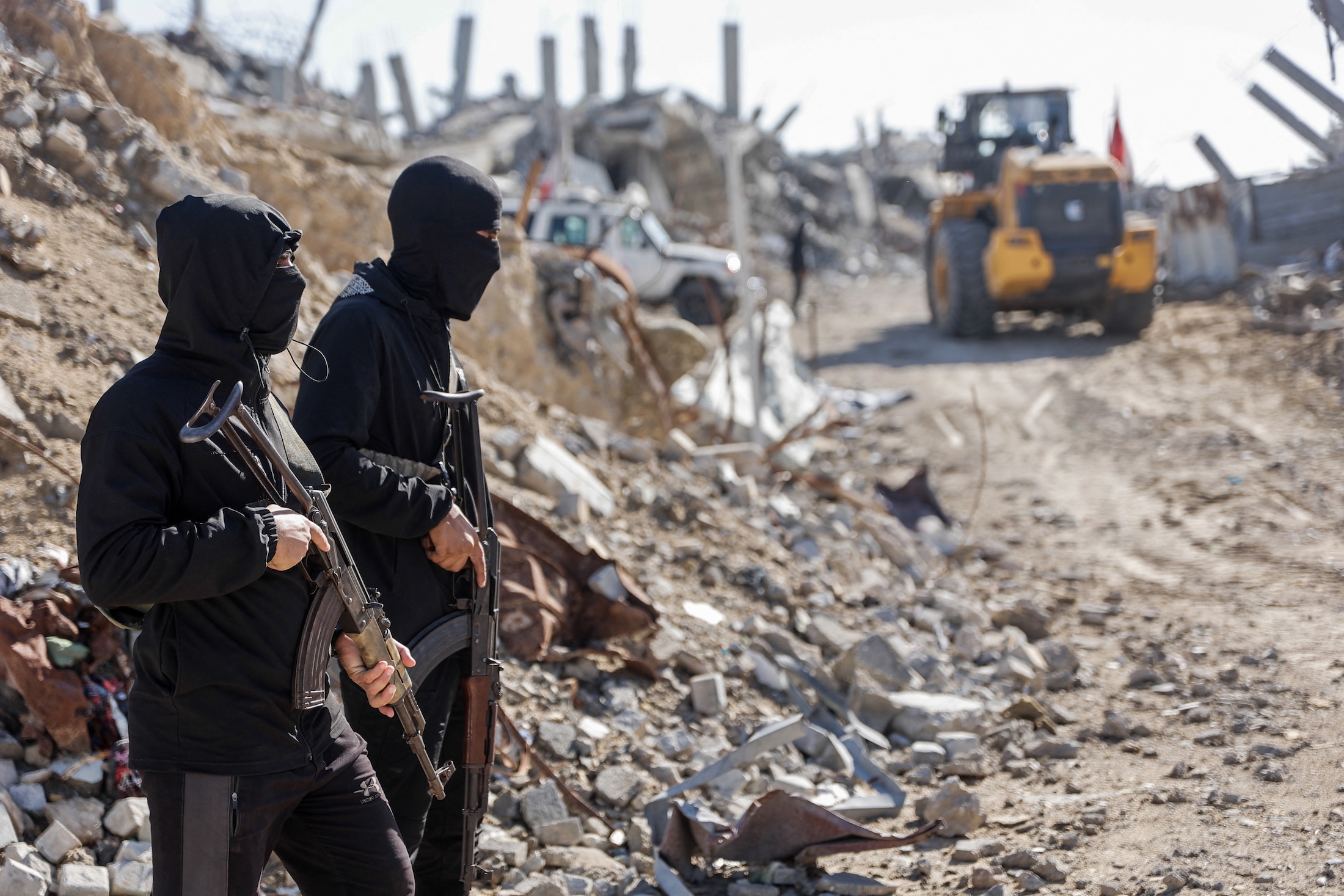
The de facto partitioning of Gaza will enable Israel to gradually pressure Hamas toward disarmament through military operations short of a return to full-scale war, which will likely further weaken Hamas without provoking Israeli domestic backlash. The construction of the semi-permanent compounds will likely cement the de facto partitioning of the Gaza Strip, especially since a breakthrough in the second phase of negotiations remains highly unlikely. Yet despite Israel's stated imperatives to eliminate Hamas — either through military conquest or a political agreement for disarmament — the partitioning of the Gaza Strip will likely appease both far-right Israeli politicians pushing for a harder line against Hamas (and whose support is crucial for Prime Minister Benjamin Netanyahu) and an increasingly war-weary Israeli public over the next several months. This is because Israel will be able to continually pressure Hamas toward disarmament without straining its military resources. Hamas will likely resist this pressure by waging a low-level insurgency against the IDF in the Strip and by rejecting pressure to disarm. But as long as Israel controls the Rafah border crossing and the distribution of humanitarian aid to the western portion of the Strip, Israel will be able to slowly weaken Hamas's governing ability. In addition, though Israel will require a sustained military presence along the Yellow Line and within the Israeli-occupied portion of the Strip, it will not require the high level of mobilization that it had during intense military operations during the full-scale war. As a result, Israeli operations in Gaza are less likely to be disruptive to public life and less likely to stoke popular backlash. This means that the IDF will be able to temporarily escalate operations, most likely through airstrikes, in response to incidents such as the Dec. 3 Hamas attack that injured five IDF troops in Rafah without returning to active ground combat.
- Although Israel is unlikely to upend this status quo in the next few months, Israeli elections are due by October. If polls indicate unfavorable results for Netanyahu, he may escalate against Hamas to stir up right-wing support, despite the risk that this strategy could backfire by decreasing public confidence in his handling of the conflict and reigniting criticism that his government does not have a clear strategy for Gaza.
- With Hamas' military capabilities heavily degraded from more than two years of fighting, disrupted supply chains and a lack of organized battalions, the group's threat to the Israeli public is low. Hamas has only been able to launch a few rockets from the Strip within the last year. In addition, the Israel-controlled portion of the Strip acts as a buffer between Hamas and Israeli territory.
This status quo will likely decrease some European pressure on Israel, resulting in continued Israeli trade and research cooperation funding with the European Union, while the Houthis are unlikely to resume their maritime attacks barring a more significant Israeli military escalation, which, if sustained, would likely facilitate a gradual return to traffic through the Red Sea. Even though the construction of the compounds will face significant logistical challenges and lack Palestinian buy-in, the relative calm of the de facto partitioning will likely de-escalate tensions between Israel and some European countries over the coming months. Already, the European Union has suspended its plan to potentially sanction senior far-right Israeli officials. Germany resumed arms exports to Israel, suspended in August, on Nov. 24. While European countries will focus on improving living conditions for Palestinians in Gaza and some will remain strong critics of Israel, generally, European pressure on Israel will continue to decrease. As a result, the European Union is unlikely to follow through on threats of suspending some portions of the bilateral trade agreement and pausing funding for research cooperation. Furthermore, European purchases of Israeli defense and military equipment, sales of which grew throughout the Hamas-Israel conflict, will likely continue to expand in 2026. Separately, partitioning of Gaza is unlikely to meet the threshold for the Houthis to resume their attack campaign against Israeli-linked maritime targets or Israeli territory. Barring a significant Israeli escalation in the Gaza Strip, such as a major ground operation, or a new Israeli military campaign against the Houthis, the group is likely to refrain from resuming attacks in the Red Sea. While the decrease in Houthi attacks has resulted in some companies resuming Red Sea transits, many shipping companies and maritime insurers remain wary of the route. But a period of several months without Houthi attacks will likely gradually restore shipping companies' confidence.
- Prior to the ceasefire, countries such as Spain and the Netherlands imposed arms embargoes against Israel, though these were mainly symbolic gestures since they export few arms to Israel compared to the United States and Germany. However, there was mounting diplomatic pressure within the European Union for a cohesive strategy against Israel, including by potentially curbing tech funding and/or imposing sanctions.
- On Nov. 9, the Houthis' military chief of staff published a letter stating that the group's solidarity campaign with Palestinians would be halted. In addition to attacks against commercial traffic in the Red Sea, Houthi strikes on Israeli territory had disrupted port operations in Eilat and forced the port to halt operations over unpaid taxes in July. Additionally, Houthi attacks targeting Ben Gurion Airport near Tel Aviv intermittently interrupted operations.
- In 2024, European purchases of Israeli arms reached around $8 billion, about double the 2023 figure. European arms purchases are largely driven by efforts to improve air defense systems, such as the German purchase of the Arrow 3 antiballistic missile air defense system, following the Russian invasion of Ukraine in 2022.
- If Israel conducts a campaign against the Houthis to further weaken the Iran-backed "axis of resistance," the Houthis are likely to resume attacks against Israeli territory in response, but could also resume maritime attacks against Israeli-linked shipping. However, due to geographic and logistical constraints, Israel is unlikely to be able to wage a sustained campaign against the Houthis. Israeli attacks would, as a result, likely be sporadic.
