
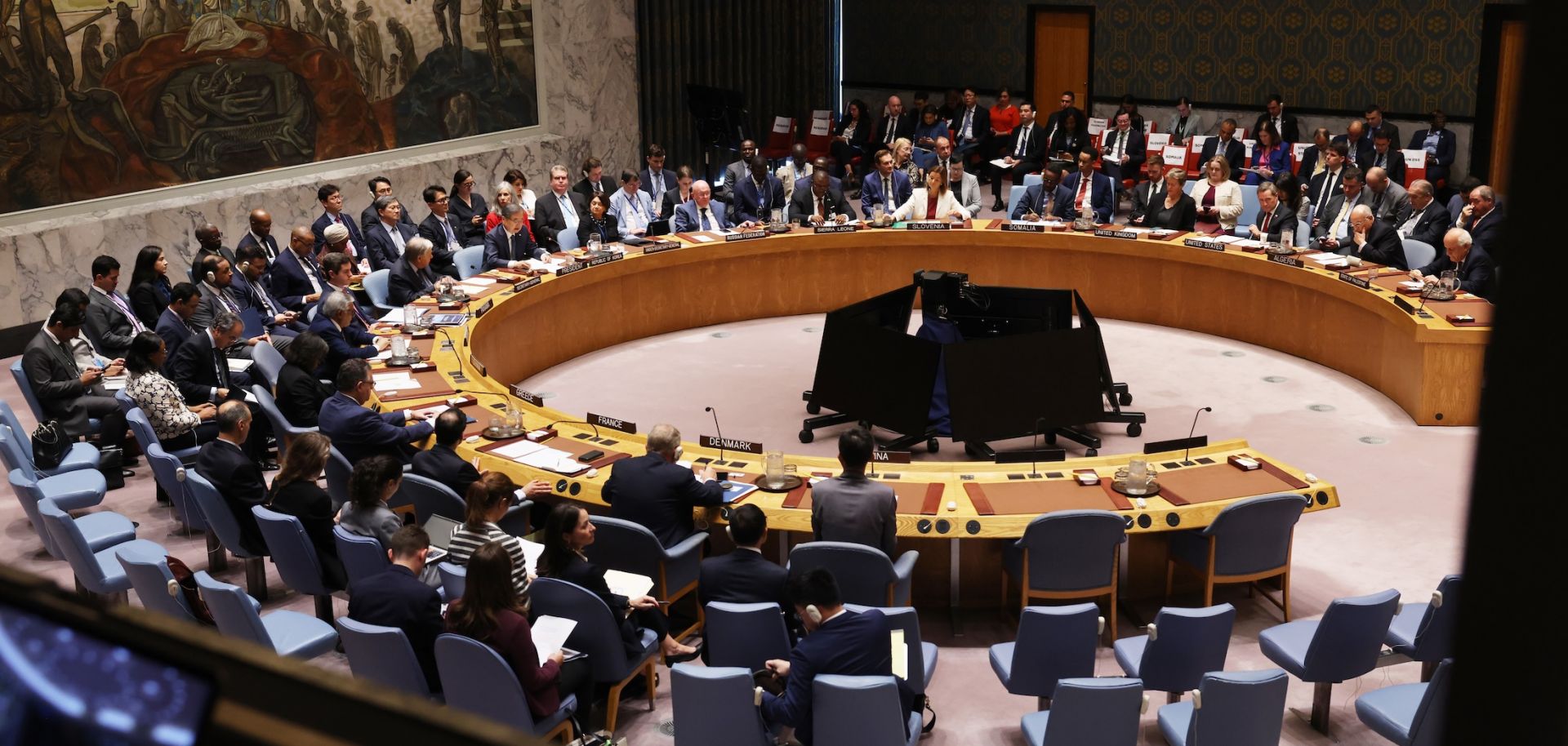
Western countries' growing recognition of Palestinian statehood is largely symbolic and will likely galvanize Israel's push for West Bank annexation, risking further Israeli isolation abroad and sporadic violence at home. Ahead of the start of the high-level debate at the U.N. General Assembly on Sept. 21-22, several Western countries — including Australia, Canada, France and the United Kingdom — recognized Palestinian statehood. Israeli Prime Minister Benjamin Netanyahu called their decisions ''a huge reward to terrorism,'' a sentiment echoed by other senior Israeli officials and U.S. President Donald Trump. Following the series of new recognitions, approximately 80% of U.N. member countries recognize Palestinian statehood.
- Several countries, including Australia and France, outlined conditions that must be met prior to their establishment of embassies in the Palestinian territories. France's requirements included freeing all remaining Israeli hostages in the Gaza Strip, while Australia demanded long-awaited reforms by the Palestinian Authority, which governs the West Bank and is the most plausible Palestinian-led governing body to take control of the Gaza Strip in several Western-backed proposals. Australia also demanded reassurances that the militant group Hamas would not have a place in the Palestinian government.
- While Western momentum for recognizing Palestinian statehood has grown, several other countries — including Germany, Italy and the United States — have so far resisted this surge.
The growing Western momentum for Palestinian statehood comes amid mounting concern over Israeli military operations in Gaza and the seeming impossibility of returning to a negotiated two-state solution to the conflict between Israel and the Palestinian territories. Many Western countries previously said Palestinian statehood should come through a negotiated agreement between Israel and the Palestinian Authority. However, the current right-wing Israeli government under Prime Minister Netanyahu has repeatedly rejected the prospect of a resumed path toward Palestinian statehood in the wake of the Oct. 7, 2023, Hamas attacks on southern Israel. Additionally, polling suggests that the next Israeli government is also likely to be right-wing following elections that must take place by October 2026. As a result, a change of government is unlikely to restart a negotiated path to Palestinian statehood. Tensions between Western countries and Israel have also grown as Israel has expanded its military operations in Gaza and the Palestinian death toll has risen to over 66,000 people, according to the Hamas-run Gaza Health Ministry. Furthermore, many Western countries have increasingly faced domestic pressure to take a harsher stance against Israel as the humanitarian crisis in the Gaza Strip worsens and Israel continues to hamper aid inflows into Gaza. Separate from recognition, some Western states have also taken other steps against Israel, albeit mostly with symbolic impact.
- In July, British Prime Minister Keir Starmer outlined a series of conditions for Israel to meet or else the United Kingdom would recognize Palestinian statehood. These conditions included agreeing to a ceasefire, improving the humanitarian situation in the Gaza Strip and returning to a path to Palestinian statehood.
- Some European countries, including the Netherlands (which does not recognize Palestinian statehood) and Slovenia (which does), have imposed travel bans and sanctions on far-right Israeli ministers, including National Security Minister Itamar Ben-Gvir and Finance Minister Bezalel Smotrich, for allegedly advocating for the ethnic cleansing of the Gaza Strip.
- On Sept. 23, Spain imposed a total arms embargo on Israel, prohibited the transit of aircraft fuel that could be used in Israel's military operations and prohibited imports of Israeli products made in West Bank settlements. These moves, however, are unlikely to have a major impact, as Spain is not a significant military supplier to Israel and goods imported from settlements were likely already boycotted.
- A Sept. 16 report by a U.N. monitoring commission said Israel had committed genocide against Palestinians in Gaza and specifically accused Netanyahu, Israeli President Isaac Herzog and former Israeli Defense Minister Yoav Gallant of inciting genocide. Previously, the International Criminal Court issued arrest warrants for Netanyahu and Gallant in November 2024 for alleged war crimes during the Israel-Hamas war.
The recognition of Palestinian statehood is largely symbolic and will have minimal practical impacts on the Palestinian territories' international standing or humanitarian conditions due to Israel's control over financial systems and the physical movement of people and goods. The latest recognitions indicate increasing Israeli international isolation, but this momentum will have few tangible impacts. First, Palestine remains merely an observer of the United Nations since full U.N. membership would require U.N. Security Council approval, which the United States would certainly veto. Second, the conditions that countries like France and Australia require to be met before they open embassies in the Palestinian territories and have fully active bilateral relations are not fully in the Palestinian Authority's control (like freeing hostages) or are lengthy endeavors (such as implementing various reforms). As such, fully normalized relations with a Palestinian state will likely be a slow process for many countries. Third, Israel will not alter or reduce its military operations in the Gaza Strip or increase freedoms in the West Bank due to the recent recognitions, and in fact has threatened the opposite. Under the Netanyahu government, Israel has demonstrated significant risk tolerance and defiance of international pressure, especially since Israel maintains U.S. backing. Furthermore, Israel maintains significant control over Palestinian institutions and individuals in both Gaza and the West Bank, meaning that even if countries want to expand relations with Palestinian entities, they will require some cooperation with Israel. Israel controls access to diplomatic missions in the Palestinian territories, and the Palestinian financial system is heavily reliant on its ties to the Israeli banking system, since it is Israeli shekel-denominated, meaning that it is not fully integrated into international financial systems. With such Israeli control over Palestinians, including restricting movement through the West Bank and controlling humanitarian aid inflows to Gaza, Western recognition of Palestinian statehood is very unlikely to meaningfully improve the living conditions of Palestinians in both the Gaza Strip and the West Bank.
- Several countries, including Canada and Australia, have indicated support for providing medical care to Gazans in the West Bank, offering financial assistance, medical equipment and/or personnel if the medical aid corridor between the Gaza Strip and the West Bank reopens. However, this will benefit only a small number of Gazans in need and is largely symbolic.
Israel has limited leverage to directly retaliate against the countries that moved to recognize Palestinian statehood, and will instead likely do so through mostly symbolic measures, like preventing official visits, denying visas and revoking diplomatic credentials. Israel has few options to directly retaliate against countries for their recognition of Palestinian statehood. Because the European Union is Israel's largest trading partner, any sort of economic retaliation would likely have adverse effects on Israel's own economy. Moreover, for the vast majority of Israeli exports to the European Union — excluding specialized semiconductors and AI chips — EU countries have alternatives. Furthermore, Israeli arms exports to Europe reached around $8 billion in 2024, an increase from $4.6 billion in 2023, and while this could theoretically be a point of leverage, Israel is unlikely to halt exports in retaliation as its defense industry grows and the government worries about the harmful economic consequences of prolonged regional conflicts. As a result, most of the direct measures that Israel takes against the countries are likely to be largely symbolic, such as revoking diplomatic accreditations, closing Israeli embassies abroad, denying officials visas and barring senior officials from visiting Israel. So far, Trump has rhetorically condemned the recognitions but has not taken any significant retaliation. Although Israel will likely push for the White House to take a harder stance against these countries for their recognition of Palestinian statehood, Trump is unlikely to do so unless there is an internal push by Israel hawks in the administration to take more punitive measures.
- Following the Norwegian recognition of Palestinian statehood in May 2024, Israel revoked the diplomatic accreditations of eight Norwegian diplomats working with the Palestinian Authority, forcing Norway's Representative Office in al-Ram, in the West Bank, to close. In December 2024, months after Ireland recognized Palestinian statehood, Israel closed its embassy in Dublin, Ireland, citing ''extreme anti-Israel policies.''
- After French President Emmanuel Macron signaled intent to recognize Palestinian statehood, Israeli Foreign Minister Gideon Saar said that a potential visit by Macron ''has no place.''
Israel will likely make further moves toward annexing the West Bank, which would further isolate Israel internationally and increase the risk of clashes with settlers, as well as sporadic attacks by Palestinian militants. While Israel will likely take some of these mostly symbolic measures, it will also increasingly push for annexation of parts of the West Bank, for which Netanyahu is expected to seek Trump's green light during a Sept. 27 visit to Washington. Following previous waves of Palestinian statehood recognition, Israel has taken steps to isolate Palestine, including Finance Minister Smotrich's June push to cancel the waiver that facilitated transactions between Palestinian and Israeli banks, and Israel's Aug. 20 approval of the controversial E1 settlement that would cut off east Jerusalem (the likely capital of a Palestinian state) from the rest of the West Bank. If Trump greenlights West Bank annexation, despite reported Sept. 23 reassurances to Arab leaders that he would not permit it, the Netanyahu government will have more flexibility to annex the Palestinian territory, especially ahead of early elections. Even if Trump does not approve it at this time, Netanyahu will likely continue to dangle the idea of a phased annexation of the West Bank to incentivize far-right members of the government to remain in his fragile coalition. But even if he loses power, the likely election of another right-wing government means that the prospect of annexation will likely still be used as a concession to gain crucial political support from the far right. If Israel moves forward with annexation, Israel would likely annex the existing settlements in the West Bank, some of the smaller villages and the connections between major cities like Ramallah and Jenin, but would be very unlikely to annex the major cities themselves. Doing so would hinder Israeli cooperation with several Gulf countries, including Bahrain and the United Arab Emirates, countries with which Israel has normalized relations, and further isolate Israel internationally — especially since several Gulf countries, including Saudi Arabia and the United Arab Emirates, have said that Israel would be crossing a ''red line.'' Finally, regardless of the scale, any annexation of parts of the West Bank would increase the likelihood of violent clashes between Israeli settlers and Palestinians, and elevate the risk of violent attacks committed by Palestinian militants in the West Bank, Jerusalem and elsewhere in Israel.
- Days after Smotrich called for the annexation of 82% of the West Bank, U.S. Secretary of State Marco Rubio cautioned that Western countries' recognition of Palestinian statehood would ''create big problems'' and galvanize the Israeli push for annexation.
- On Sept. 22, Israeli Foreign Minister Gideon Sa'ar said that Israel was not considering annexing parts of the West Bank under the Palestinian Authority's control but instead was considering annexing the existing Israeli settlements in the West Bank.
