
In two recent columns, we examined the current wave of U.S. political violence, identifying some factors that seem to fit prior historical patterns and others that appear distinct to the current period. Perhaps more important than reviewing the current landscape, however, is considering what comes next. While the frequency, intensity and type of political violence are ever-changing, the fundamental threat is constant. Surveying the horizon, the spread of artificial intelligence (AI) appears very likely to stoke existing extremist ideologies and give rise to new ones, catalyzing violence in the coming years.
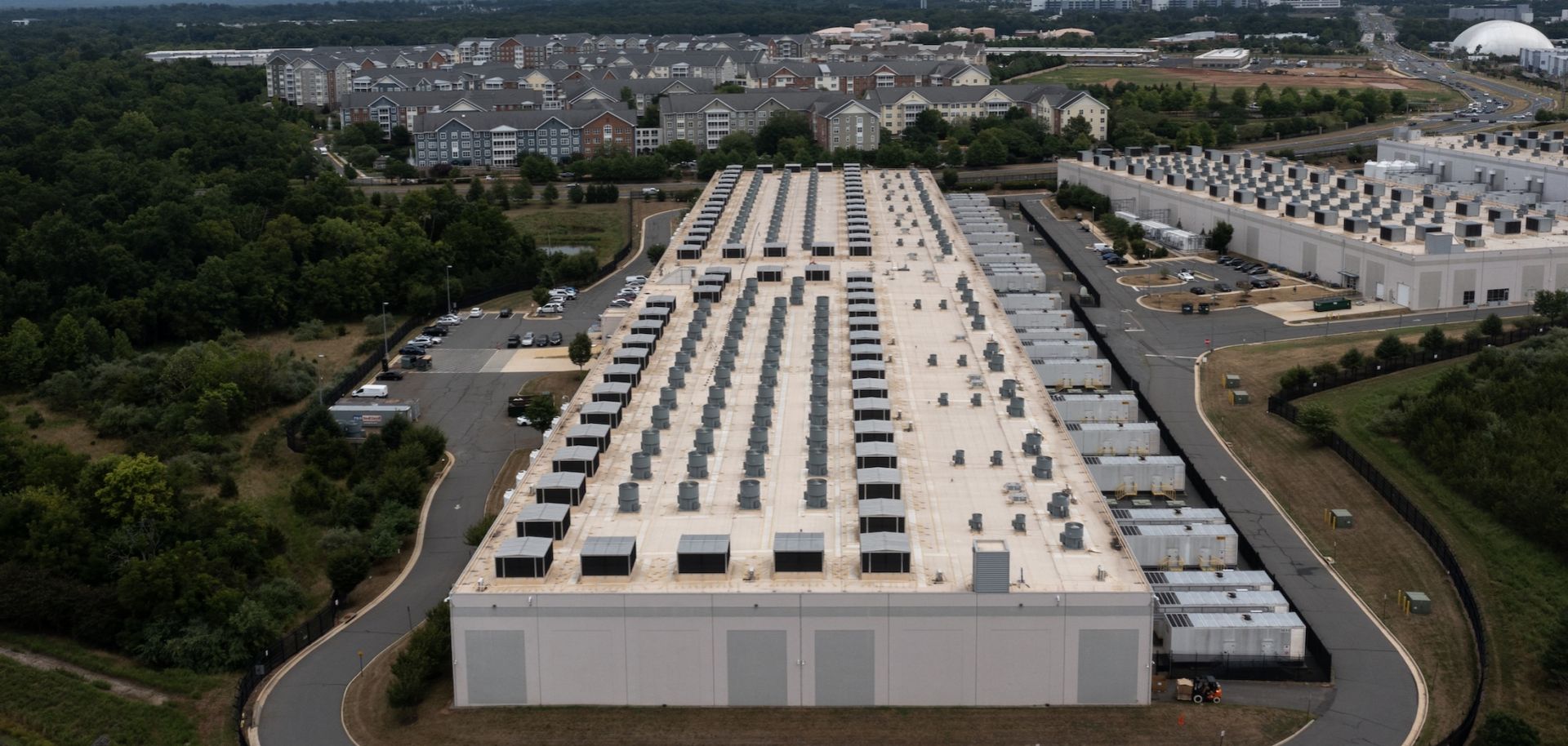
Thus far, only sporadic violent plots and a few low-level attacks have targeted AI infrastructure like data centers. For the most part, pushback has taken the form of rhetoric and some nonviolent protests. The muted response reflects the fact that, for now, AI has yet to significantly demonstrate the type of grand promises or perils forecast by its dreamers or doomsdayers. This will not last. As AI ripples across societies and workplaces, upending daily life, labor markets and politics, the upheaval will inevitably spark backlash — and at least some of the aggrieved will resort to violence.
Pathways to Pushback
AI is not the only issue that threatens to stoke violent backlash. Environmental degradation, accelerating climate change, advancements in biotechnology, expanding digital surveillance and the proliferation of autonomous systems are just some of the changes likely to drive radicalization in some fringes.
But the impact of AI will likely dwarf these other developments. First, because more capable AI is likely to amplify or facilitate their emergence by, for instance, enabling advances in biotechnology or more effective surveillance. But more significantly, AI is also poised to directly impact the daily lives and livelihoods of a huge swath of the global population. It will shake up almost every industry and change daily life in ways that are both eminently forecastable, like disrupting labor markets, and in others that will be unexpected, for better or worse. As history reveals in prior periods of major societal shifts, these changes are certain to provoke backlash, generating grievances that portend multiple pathways to violence.
The most predictable way AI could stoke anger is by displacing workers. As the technology advances, it is likely to replace a growing number of human workers at increasingly advanced tasks. It may, over time, create more jobs than it destroys. But the interim period will be tough for workers. Companies will lay off employees who will struggle to reskill. Middle-skilled jobs may be hollowed out in favor of low- and high-skilled work. Even as the transition eases, wages in some industries are likely to remain persistently depressed.
Some geographical areas are likely to be disproportionately affected and may struggle to recover. And while prior periods of technological transformation, such as the Industrial Revolution in the late 19th century and the rise of factory automation in the mid-20th century, affected primarily blue-collar workers, AI's impacts will be disproportionately felt by their white-collar counterparts. Moreover, its impacts will be far more wide-ranging than prior periods of technological change that were heavily concentrated in certain sectors. These developments will fuel anti-government and anti-corporate sentiment, pushing at least some subset of resentful individuals toward violence.
Then there are environmental grievances. AI has numerous green use cases, but the data centers needed to train and run the models require vast amounts of electricity, water and critical raw materials that fuel extractive industries. Sustainable means can supply some of this demand, but they will likely fall far short of the projected scale of data center construction in the coming years. These developments will only amplify the grievances of already aggrieved environmental extremists.
Likewise, both left- and right-wing extremists, as well as others who are suspicious of government surveillance, will take issue with the incorporation of AI into myriad tools to physically monitor people, collect data about them and otherwise surveil them far more effectively. Social justice activists may also accuse AI systems of perpetuating bias and discrimination on racial, ethnic, gender, sexuality or other grounds. This could also take a political turn if AI systems are accused of being slanted toward liberal or conservative views. No matter the precise grievance, a subset of people will eventually resort to violence.
Anger at Big Tech also threatens to morph into broader anti-tech extremism. At a minimum, existing allegations that tech firms are too wealthy, politically powerful and responsible for vast societal harms will only grow as AI proliferates. They will rile not only anti-tech radicals but also others who will object to what they see as AI generating vast corporate profits for the owners of capital while contributing to mass joblessness, environmental degradation and labor abuses. Violence will come to be seen as necessary and justifiable by at least some. They will take inspiration from previous anti-tech extremists, in particular Ted Kaczynski, known as the Unabomber, whose 1995 manifesto blamed technology for societal collapse.
As they grow more capable and are given tasks of greater consequence, AI systems will also inevitably experience high-profile accidents or make major mistakes that harm humans, potentially fatally, leading some people to seek violent retaliation. Further, AI systems eventually matching or even surpassing human intelligence — a goal leading AI labs are explicitly working toward — would at least put on the table the possibility of systems outwitting their human masters to act against human well-being if their incentives do not align with humanity's. Even if such sci-fi horror never comes to pass, the mere potential will stoke anxiety and propel some radicals toward violence.
This leads to the final pathway: conspiracy theories. As recent years have demonstrated, conspiratorial narratives — worsened by the spread of misinformation and outright disinformation — can drive people to commit violence, especially when deeply immersed in closed online communities. New technologies are a natural trigger for conspiracy theories, as they often provoke anxieties about the future and can be difficult for non-experts to understand. And compared to conspiracy-driven attacks against things like 5G cellular networks and COVID-19 vaccines, the spread of AI will likely generate orders of magnitude more conspiratorial accusations.
Rage Against the Machine
These many drivers for violence do not necessarily mean there will be some yearslong period of intense violence that affects larger numbers of people. Violent pushback could play out in many ways: a short period in which the AI shock catalyzes an uptick in violence that eventually declines; a longer-lasting but lower-level undercurrent of attacks; a series of ebbs and flows in violence as AI systems proliferate and their technical prowess improves; or a wholly different pattern we cannot yet envision. But no matter the precise trajectory, and even if the vast majority of people are not directly affected, property and to a lesser extent people connected to AI will see violent risks rise.
These myriad catalysts for violence open the door to a range of tactics and targets linked to AI. The most likely would be property damage and destruction of AI infrastructure. Data centers would be the most high-profile targets, but they are also generally hardened, meaning that edge infrastructure that is more publicly accessible — like supporting networking, sensor and telecommunications infrastructure — may become more attractive targets for vandalism, arson or other forms of property damage or destruction. For the same reasons, symbolic targets like autonomous systems that operate in public — like self-driving vehicles and delivery robots — would be at risk.
Threats to property would also extend to locations linked to the ownership or development of AI systems, such as the corporate offices of tech firms, research and development sites, and testing labs at universities. Logistics infrastructure like shipping and storage facilities for AI components could also be at risk — as could server rooms and similar infrastructure at corporate locations — especially if carried out or facilitated by employees with inside knowledge. Further, because AI is an immensely complex technology subject to significant popular misconceptions, a wide range of non-AI tech infrastructure could still be at risk from attackers who either do not understand or do not care about the distinctions. And as companies increasingly adopt AI, general anger against their decision will animate risks to a whole range of corporate offices and infrastructure, regardless of their explicit links to AI.
Undoubtedly, however, violence against people, not just property, will eventually emerge. Mass-casualty attacks appear unlikely, but targeted attacks would certainly be on the table. Tech executives, corporate leaders at companies that enthusiastically adopt AI and other high-profile individuals somehow linked to support for the technology are most at risk of harassment, intimidation and threats. But in what is already a high-risk environment for executives, it is only a matter of time before an assassination attempt targets an individual for their association with AI.
Organizationally, anti-AI radicals would probably not form hierarchical, clearly organized groups, but instead would likely coordinate in decentralized, cell-like structures. This would not only be in line with what is likely to be many of these individuals' belief systems that eschew centralized authority, but would also be advantageous from an operating perspective in making it harder for law enforcement to identify and disrupt anti-AI movements. Such structures would open the door to a variety of small cells with differing intents, capabilities and risk tolerances, leaving plenty of room for lone actors to commit violence of their own accord. In fact, whereas individual anti-AI cells, and more broadly loose movements, would have some interest in avoiding lethal attacks and would be more likely to focus on violence against property, it is lone actors, as repeatedly seen, who would have fewer inhibitions to attacking people.
Finally, threats will not remain confined to the physical world, but also emerge in cyberspace. In addition to what can be assumed to be a deluge of hacktivism and cyberespionage targeting AI systems and supporting infrastructure, sufficiently motivated and sophisticated threat actors will undoubtedly seek to use cyber means to threaten or actually carry out physical disruption or even destruction against AI systems and back-end infrastructure. Some nation-states and cybercriminal groups would have both the means and motives to do so, the former to harm adversaries and the latter to seek financial payouts. Well-placed insiders or select hacktivist groups would also have motives but presumably fewer means. A wildcard would be risk-tolerant companies that seek to harm rivals by using in-house cyber talent or, more likely, hiring proxy groups for plausible deniability.
Between a Chip and a Hard Place
These developments will put governments in a difficult position as they try to navigate both geopolitical competition over AI and address popular grievances at home. Led by the United States, China and, to a lesser extent, Europe and a range of middle powers like India, strategic rivalry will intensify in the coming years over the development and adaptation of both the hardware and software that support AI. Countries will be forced to compete, closely align with one of the leading AI powers or accept diminished geopolitical influence and economic competitiveness. Yet simultaneously, governments will have to address demands from their citizens to prevent or at least mitigate the disruptive impacts of AI on their lives and livelihoods — no easy task on top of already fraying social safety nets, increasing debt burdens, greying populations, emerging youth bulges, rising inequality and other challenges.
The emergence of a violent AI techlash will pressure this already difficult balancing act. While presumably no government will condone violence, leaders who do not find a way to address popular concerns over the proliferation of AI could turn even more people against the technology and add to the ranks of those willing to commit violence, even if in aggregate they remain comparatively small. For governments already trying to navigate transformational global changes like climate change and the energy transition, the shifts toward an AI world will only add to their challenges.
