
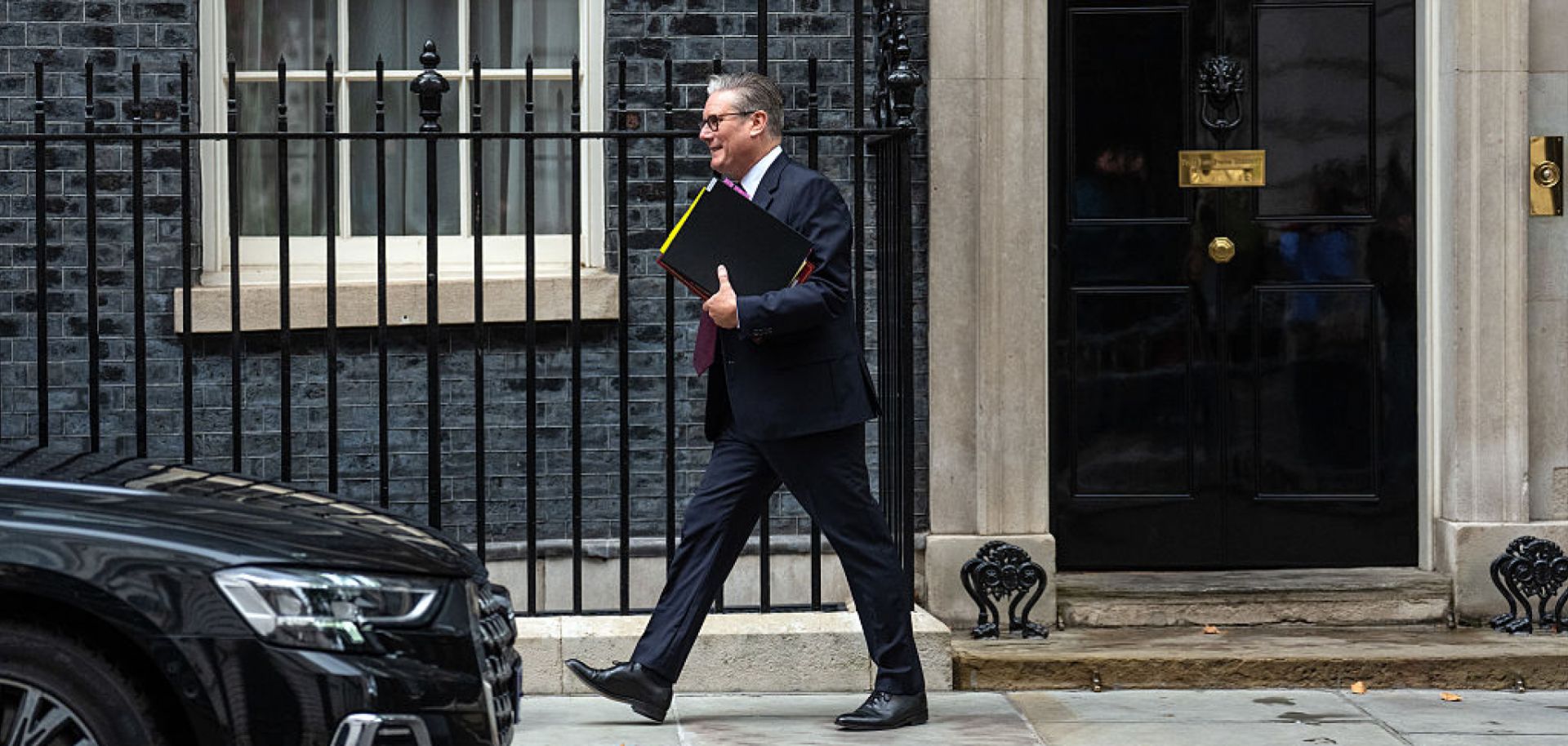
In the United Kingdom, the governing Labour Party's deputy leadership contest will intensify internal party criticism of Prime Minister Keir Starmer ahead of a politically painful budget in November, heightening risks of party rebellions, fractures and radical policy U-turns in the coming months. On Sept. 8, the Labour Party's National Executive Committee approved a timetable for the election of a new deputy leader following Angela Rayner's resignation Sept. 5 over a housing tax scandal. The party scheduled a debate for members of parliament Sept. 10, after which candidates must secure nominations from local parties, trade unions and affiliate groups by Sept. 23, before a ballot of members between Oct. 8 and Oct. 23. Although no one has yet formally declared their candidacy, potential contenders reportedly include figures on the party's left who have criticized Prime Minister Keir Starmer's leadership and policies, such as Dame Emily Thornberry and former Cabinet ministers Louise Haigh and Lucy Powell.
- Rayner resigned as deputy prime minister and housing secretary after the Prime Minister's ethics adviser found she had breached the ministerial code by underpaying taxes on her apartment. Her departure triggered a major Cabinet reshuffle. Foreign Secretary David Lammy was demoted to justice secretary, while Lucy Powell was sacked as leader of the House of Commons. Justice Secretary Shabana Mahmood was promoted to home secretary and Yvette Cooper moved from home secretary to foreign secretary.
- Labour's rules require candidates to secure the support of about 20% of Labour lawmakers before they can enter the deputy leadership contest. They must also win endorsements from at least 5% of local constituency parties or from three affiliated organizations, two of which must be trade unions. Only those meeting these thresholds progress to the final stage, where party members and affiliated supporters cast their votes in a ranked-choice ballot.
- The leadership contest has emerged against a backdrop of mounting criticism from senior Labour figures over the government's approach to workers rights. On Sept. 7, senior union leaders pressed Starmer to guarantee the passage of Rayner's Employment Rights Bill in full. The legislation would expand protections against unfair dismissal and prohibit the use of so-called zero-hours contracts. Union officials expressed particular concern that, after the reshuffle, the government could adopt a July amendment introduced in the House of Lords, which would replace the obligation for employers to provide guaranteed hours with only a right for employees to request them. They argue such a change would significantly dilute the bill by ending the right to contracts that reflect employees' regular working hours. New Business Secretary Peter Kyle reassured union general secretaries that the government intends to proceed with the bill.
Labour's deputy leader vote will happen as Starmer faces mounting backlash from his party's traditional base over fiscal restraint, welfare cuts, foreign policy and migration, which has eroded his authority despite Labour's substantial parliamentary majority. Labour returned to power with a large parliamentary majority in July 2024 after 14 years of Conservative rule, but in a challenging environment marked by strong and rising anti-immigration sentiment and persistent economic headwinds that significantly restrict fiscal space to pursue its reform agenda. Promises to revive growth and deliver far-reaching socioeconomic reforms have collided with a sluggish economy and a tight budgetary framework, limiting the government's ability to fulfill its promises and forcing compromises or outright reversals on several preelectoral commitments. All of this has led to strong internal criticism over fiscal, welfare and migration policies. The party's left wing demands a more distinct left-wing orientation on economic policy, including a wealth tax or relaxed borrowing rules to enable higher social spending, while Chancellor Rachel Reeves has insisted on adhering to self-imposed fiscal limits to avoid unsettling financial markets. Tensions have intensified as critics attacked Starmer's decision to harden asylum rules at a time when the far-right Reform UK has surged on an anti-immigration platform — with recent polls placing the party first, 8 percentage points ahead of Labour. Finally, grassroots Labour members have been critical of Starmer's overly cautious stance over Israel's military operations in Gaza and his tough response to pro-Palestine demonstrations in the United Kingdom.
- Labour faces significant fiscal constraints as gross domestic product growth has largely stagnated since 2022, while public debt has climbed to 95%-96% of GDP in recent years on the back of rising government spending. Debt servicing is rising and projected at 3.7% of GDP this year, exceeding priority spending areas like defense. Rising government bond yields and sterling weakness in recent weeks have also revived comparisons with former Conservative Prime Minister Liz Truss' 2022 so-called minibudget crisis, which caused severe financial market turbulence and ultimately forced her to resign. Reeves has thus so far sought to adhere to strict, self-imposed borrowing rules to reassure markets and avoid another destabilizing spike in borrowing costs, requiring day-to-day spending to be financed from revenues rather than borrowing, and for public debt to be falling as a share of GDP within five years.
- In June, more than 120 Labour lawmakers rebelled over proposed 5 billion pounds (about $6.8 billion) in welfare cuts, undermining Starmer's authority and further narrowing his government's room for maneuver on budgetary policies. He now faces renewed resistance over reports that the government could dilute planned labour reforms, meaning any eventual plans on that front are unlikely to go through.
- Despite internal party pressure, Starmer's Cabinet reshuffle suggests continuity in the government's centrist and cautious approach to policy. He elevated figures aligned with the party's right such as Shabana Mahmood, Pat McFadden and Peter Kyle. Mahmood's appointment as home secretary, in particular, points to a tougher stance on migration and asylum.
The deputy leadership race threatens to deepen Labour's internal rifts and further erode Starmer's authority ahead of the unveiling of the next budget in November, increasing the risk of internal rebellions, policy reversals and growing political instability, though a government collapse and early elections remain unlikely given Labour's poor polling. The deputy leadership contest will offer Labour's members and members of parliament a high-profile platform to challenge Starmer's direction, amplifying rifts over his government's fiscal, migration and foreign policy. With figures on the party's left already mobilizing over wealth taxation, opposition to fiscal caution and discontent over the government's response to Gaza, the campaign will sharpen ideological divides and diminish party unity. This will come just weeks before Reeves is scheduled to deliver the government's next budget in November, which will likely include politically painful tax hikes and spending cuts amid sluggish growth, rising borrowing costs and the failure of July's attempt to save money through welfare reductions, which left Reeves under pressure to find savings elsewhere. Without room to adjust fiscal policy and allow the government to deliver economic reforms and meet preelectoral pledges, Labour must decide between unpopular or ineffective options, either one of which will further erode its popularity and party unity. In this environment, the risk of a significant fracture within the party will rise in the medium term, with potential internal rebellions that could even trigger splits or even force a leadership change to replace Starmer as both party leader and prime minister. Early elections, however, remain unlikely given Labour's poor standing in opinion polls. Even short of a leadership contest, Starmer may have to concede to the left by adopting higher taxes on the wealthy, stronger labour protections or shifts in foreign policy, such as a more critical stance on Israel, to hold his party together.
