
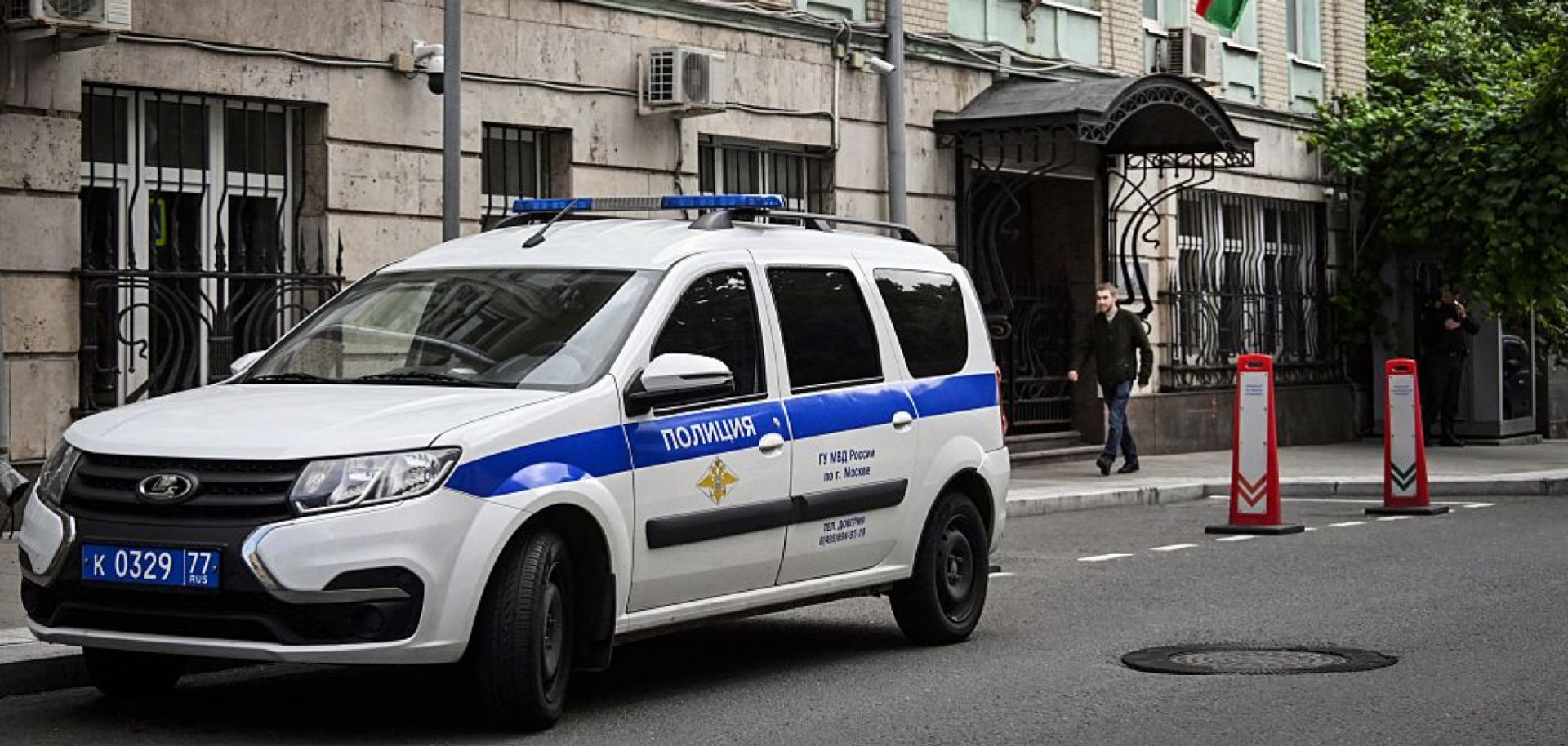
The diplomatic row between Azerbaijan and Russia illustrates the Kremlin's declining influence in the Caucasus and will increasingly enable competing powers to fill the void, especially if the feud worsens. In recent days, Baku and Moscow have traded tit-for-tat measures that have further weakened their relationship. Problems began on June 27, when Russian authorities arrested dozens of people of Azerbaijani origin, two of whom died after being taken into custody, in connection with a string of unsolved violent incidents in 2001-11. In response, on June 29, Azerbaijani authorities canceled all cultural events with Russian participation as well as two intergovernmental meetings. On June 30, Azerbaijani police raided the office of the Russian state-backed news agency Sputnik over the outlet's continued operation after the rescission of its license earlier this year; police detained seven employees (two of whom were formally arrested) on multiple charges, including espionage, fraud and illegal financing. Eight more Russians were arrested a day later on allegations of drug smuggling and cybercrime. In retaliation, on July 1, Russian authorities detained but later released the leader of the Azerbaijani diaspora in the Ural region of Russia, as well as an influential Azerbaijani businessman in the city of Voronezh.
- On July 1, Azerbaijani authorities announced that post-mortems of the two brothers who died in Russian custody after being arrested on June 27 showed signs of being beaten. Azerbaijani state prosecutors said they had opened an inquiry into "the torture and deliberate killing with particular cruelty of Azerbaijani citizens and ethnic Azerbaijanis by officers of law enforcement agencies of the Russian Federation."
- Between July 1 and 2, the foreign ministry in each country summoned the ambassador from the other to lodge an official protest against the other's recent actions. On July 2, Russia's foreign ministry spokesperson warned Russian travelers "to carefully consider the current situation."
The crisis illustrates fraying ties between Baku and Moscow, whose complex relationship has soured since late 2024. Since the breakup of the Soviet Union, Russia has held significant sway in Azerbaijan, which it deems part of its larger sphere of influence in the Caucasus, due to significant political, economic, military, cultural and other sources of influence. Nonetheless, since its emergence as an independent country, Azerbaijan has sought to keep Russia at arm's length, including by leaving the Russian-led Collective Security Treaty Organization and never joining the Russia-led Eurasian Economic Union. More recently, Baku has sought to balance close ties with Moscow with growing relations with other countries — including Turkey, multiple European countries, the United States and China — largely by leveraging its status as a burgeoning oil and gas producer. An opening for closer Azeri-Russo relations came in September 2023, when Azerbaijani forces overran Armenian troops in the disputed territory of Nagorno-Karabakh as Russian peacekeepers stood by. In the conflict's wake, Russia, which historically had backed Armenia in its decades-long rivalry with Azerbaijan, appeared to abandon its prior policy in favor of deepening ties with Baku. This culminated in a visit by Russian President Vladimir Putin to Baku in August 2024, his first trip there in six years. However, Putin's visit and attempts to strengthen energy and military ties failed to prevent Azerbaijan from expanding ties with other powers, especially Turkey, which has been steadily increasing its influence in the Caucasus, particularly Azerbaijan, given its status as a predominantly Turkic state. Ties between Baku and Moscow then nosedived in December 2024 after the Russian military mistakenly shot down an Azerbaijani passenger plane that crashed in Kazakhstan, killing 38 people. Russia never took formal responsibility for the incident and, in a pointed diplomatic snub, Azerbaijani President Ilham Aliyev did not attend Russia's high-profile Victory Day celebrations on May 9.
- Spurred by their "Allied Interaction" agreement signed in February 2022, which declared their intention to "build relations on the basis of allied interaction," Russia and Azerbaijan have drawn closer, particularly in the energy sphere. In August 2022, state-owned companies from both sides agreed to export Russian natural gas to Azerbaijan, helping Moscow find a new destination for its exports as Europe pivoted away from Russian energy in the wake of its invasion of Ukraine earlier that year, while Baku improved its ability to meet domestic energy needs, freeing up supply to be sent to Europe.
- On July 1, the Azerbaijani media outlet Minval published what it claimed were "written testimonies, audio clips and technical details" providing alleged new evidence that Russian forces shot down Azerbaijan Airlines Flight 8243 on Dec. 25, 2024. The unconfirmed evidence alleged that the Russian defense ministry, not merely a local air defense unit as previously alleged, was directly involved in the order to shoot down the flight.
Russia's weakening sway in the Caucasus gives outside powers opportunities to increase their influence, especially if relations between Baku and Moscow continue to deteriorate. To be sure, both sides have incentives to de-escalate their row. For Azerbaijan, a more adversarial relationship with Russia could lead Moscow to revive its military and other support for rival Armenia, and/or step up asymmetric actions like imposing trade restrictions and conducting cyberattacks to pressure the government in Baku. As a result, Aliyev's actions thus far suggest he is more interested in taking advantage of the situation to solidify his domestic political control than to impose material damage on Russia. For Russia, tenser ties with Azerbaijan could lead Baku to make good on its longstanding desire to establish the Zangezur Corridor linking mainland Azerbaijan to its Naxcivan exclave in Armenia, which would increase Ankara's influence in the Caucasus, given that it would create a land corridor connecting Turkey to Azerbaijan. Russia would also risk losing a key corridor via Azerbaijan that enables it to evade Western sanctions and trade with Iran. But even if the two reduce current frictions, the feud illustrates Russia's growing loss of influence in the Caucasus, as Yerevan shows no signs of abandoning its larger reorientation of foreign policy to reduce dependencies on Moscow. Moreover, while the ruling government in Georgia has a pro-Moscow tilt, it also expresses a desire to balance ties with Russia with those of other countries — and its population is generally anti-Russian, putting a ceiling on the Kremlin's influence there. These realities mean that, especially if the feud between Azerbaijan and Russia worsens, countries from outside the region will have more opportunities to exploit Russia's loss of influence, particularly as the Kremlin remains focused on the war in Ukraine. Turkey has the most to gain, especially as it appears to be taking steps to normalize relations with Armenia. But both the European Union, which increasingly sees Azerbaijan as a key energy source, and the United States, which views Azerbaijan as useful for countering Iranian influence, stand to gain. China would also have opportunities to strengthen its influence in the region, building on its comprehensive strategic partnership deal inked with Azerbaijan during Aliyev's state visit to Beijing in April 2025.
- Russia is Azerbaijan's largest non-oil trading partner and is the destination for about one-third of its non-oil exports (particularly agricultural products), giving the Kremlin some degree of leverage to impose restrictions, as it has had for various goods during disputes with other countries. In May 2025, Baku blamed Moscow for a major cyberattack on multiple media outlets in February, illustrating one of the asymmetric ways in which Russia could retaliate against perceived slights by Azerbaijan.
- Azerbaijan has walked a fine line during the war in Ukraine, voicing support for Ukraine's territorial integrity and providing humanitarian aid while also not joining Western sanctions on Russia and serving as a transshipment point for restricted goods to enter Russia. On July 1, Ukrainian President Volodymyr Zelensky called Alyiev to give condolences for the deaths of the two Azerbaijani citizens in Russian custody and express solidarity with Azerbaijan in the face of Russian threats. If Azerbaijani-Russian relations deteriorate significantly, Baku could increase support for Kyiv.
- On June 20, Armenian Prime Minister Nikol Pashinyan traveled to Ankara to meet with Turkish President Recep Tayyip Erdogan, and Pashinyan said they held "in-depth" talks to try to normalize relations. Since losing the 2020 war against Azerbaijan and especially since the 2023 loss of Nagorno-Karabakh, Pashinyan has reoriented foreign policy away from historic reliance on Russia, which he has accused of abandoning Armenia, and toward outreach to the West, including by trying to patch up its decades-long dispute with Turkey.
