
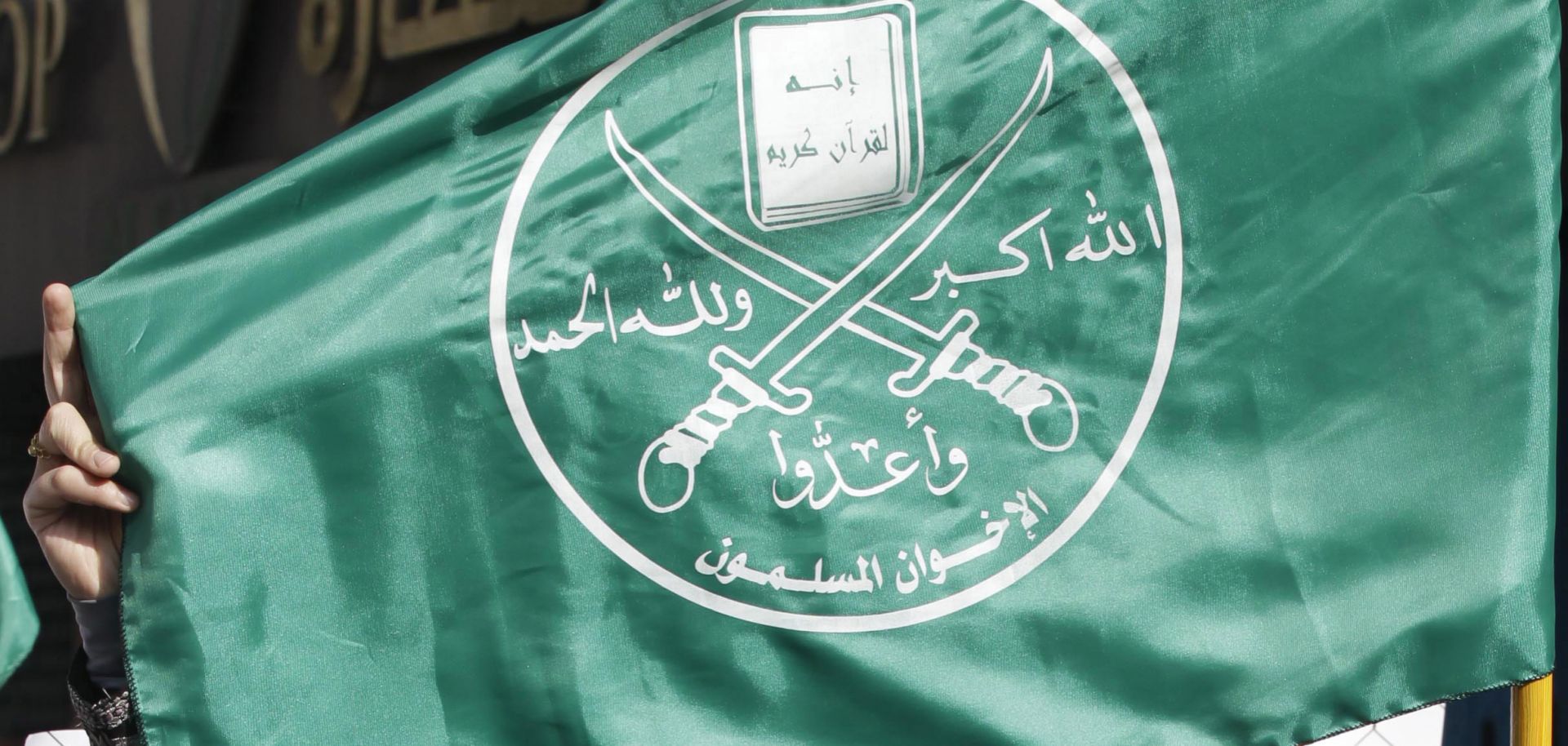
Jordan's ban on the Muslim Brotherhood is unlikely to cause broader political unrest as long as the group's political wing remains intact, but Iranian support for the Muslim Brotherhood's militant factions and worsening economic grievances will maintain the threat of social unrest and militancy. Just over a month has passed since Jordanian security forces announced on April 15 that they had arrested 16 individuals linked to the Muslim Brotherhood after thwarting a plot by the organization to attack various domestic targets. A week later, Jordan banned the Muslim Brotherhood, seized the group's assets and prohibited individuals from promoting its political Islamist ideology. Since then, however, Jordan's crackdown on the Muslim Brotherhood has largely spared the Islamic Action Front, or IAF, which is the political wing of the Muslim Brotherhood and has the largest number of seats in Jordan's National Assembly. Against this backdrop and amid U.S. concerns about instability in Jordan, including from the threat of political Islamist groups like the Muslim Brotherhood, the United States has resumed the majority of its military and financial aid to Jordan, though most development aid remains frozen.
- The Muslim Brotherhood denied responsibility for the terrorist plot, claiming that its actions in Jordan have promoted change through political dialogue, but did acknowledge that some members of the organization may have acted independently. Following the arrests, the IAF suspended three members due to alleged connections to the plot. Jordanian security forces investigated the IAF's offices during the crackdown on the Muslim Brotherhood, but the government has not banned the political party, which has significant support throughout the country, especially in major urban areas like Amman.
- The Muslim Brotherhood is banned in many Middle Eastern countries, such as the United Arab Emirates and Egypt, which also consider the group a terrorist organization. These countries are concerned that the Muslim Brotherhood could undermine their governments and provoke domestic social unrest.
- In an April 15 meeting between U.S. Secretary of State Marco Rubio and Jordanian Prime Minister Jafar Hassan, the two diplomats reportedly discussed the threat of political Islam and the Muslim Brotherhood within the kingdom, although it was unclear whether they discussed banning the organization.
- On Jan. 20, U.S. President Donald Trump issued an executive order that called for a 90-day freeze on virtually all foreign assistance programs, including Jordan's, while the administration reviewed them. In 2023, the last fully reported year, the United States disbursed $1.7 billion in foreign assistance to Jordan, making it one of the largest recipients of U.S. foreign aid in the Middle East. The United States allocated most aid to budgetary support and foreign military financing, though it also included more than $60 million in educational programming, $16.6 million for water supply and sanitation improvements, and additional funds to improve healthcare provision.
The Muslim Brotherhood's ban comes after years of tension with the government and amid concerns about instability in Jordan. The more secular Jordanian monarchy has long had tenuous relations with the Muslim Brotherhood, particularly since the 2011 Arab Spring protests collapsed long-standing governments throughout the region and led to a surge in political Islamist movements, including in Tunisia and Egypt. In 2015, Amman decided to no longer recognize the Muslim Brotherhood as a legal organization and allowed the group's license to expire. Thereafter, the group rebranded itself as the "Muslim Brotherhood Association" and severed its ties with the broader Middle Eastern movement, pivoting to focus on Jordan domestically. Since the outbreak of the Israel-Hamas conflict in October 2023, the Muslim Brotherhood has capitalized on the popular critiques of Jordan's normalized relations with Israel and U.S.-Jordan cooperation. Jordanian officials have retaliated by accusing the group of organizing protests in collaboration with Hamas, which Jordan expelled from the country in 1999. Tensions escalated further in March 2024, when Jordanian security services disrupted an Iranian-backed plan to smuggle weapons from Syria into Jordan to support a Muslim Brotherhood cell plotting acts of sabotage against the kingdom. The Jordanian government's concerns about the Muslim Brotherhood have coincided with other security issues that threaten the kingdom, including the potential for revived Palestinian militancy and/or jihadism, as well as poor economic conditions, which now-frozen USAID development programs had aimed to address.
- According to Jordan's Department of Statistics, Jordan's unemployment rate remained relatively unchanged between the third and fourth quarters of 2024 (the most recent data available), hovering around 21.4%. However, the unemployment rate for Jordanian youth aged 15-24 was around 46%, more than double the national average.
- Between 50% and 60% of Jordanians are of Palestinian descent, and Jordan hosts over 2.3 million Palestinian refugees, making the country's populace strongly pro-Palestinian. As a result, the Jordanian government has supported the Palestinian cause through humanitarian aid and rhetorical criticism of Israel. However, Jordan's foreign policy has remained pragmatic, as the country relies on Israel for potable water and on the United States, which backs Israel, as a key ally.
- Jordan's monarchy has a tumultuous history with Palestinian militancy. In 1951, Palestinian militants assassinated Jordan's King Abdullah I, and in 1970, the Jordanian government and the Palestine Liberation Organization, or PLO, clashed after PLO factions called for supporters to overthrow the monarchy.
Amman's decision not to ban the IAF will reduce the risk of broader political unrest, but the Muslim Brotherhood may still split into political and militant factions, which may cause the IAF to moderate some of its positions. Jordan's crackdown on the Muslim Brotherhood has produced little domestic pushback, in large part because the Jordanian government has not directly targeted the IAF, the IAF has not called for broader protests and the IAF has distanced itself from the disrupted terrorist plot. In the absence of further plots (thwarted or successful) with strong links to the party, Jordanian authorities will likely continue to refrain from repressing the IAF and its supporters. As a result, Jordanians who ideologically align with the Muslim Brotherhood are unlikely to significantly resist the ban because they will still have some representation within the government, even if the IAF's legislative powers are limited. However, the IAF's positions will likely be too moderate for more hardline Muslim Brotherhood supporters, potentially fracturing the group along political and militant lines. Additionally, if the Muslim Brotherhood's militant factions become more active, the IAF will likely further moderate its positions — at least in the short term — to distance itself from the group and avoid a crackdown, widening divisions between the two factions.
Iran will likely capitalize on the Muslim Brotherhood's ban by increasing its support for militants in Jordan to try to destabilize the kingdom, though Jordanian security forces will largely thwart these efforts. The more militant factions of the Muslim Brotherhood, some of which reportedly have ties to Hamas and Hezbollah, will likely look to Iran for financial, material and training support to conduct attacks and other destabilizing operations in Jordan. While Iran has previously focused its efforts and resources on its regional "Axis of Resistance" — including Hamas, Hezbollah, the former al Assad regime in Syria, Iraqi Shiite militias and the Houthis in Yemen — many of Iran's proxies have been largely degraded, leading Iran to increasingly try to strengthen Hamas in the West Bank. However, this effort requires Iran to smuggle weapons through Jordan to the West Bank, a goal more easily reached amid Jordanian instability. To destabilize Jordan, Iran will likely attempt to increase support to militant factions of the banned Muslim Brotherhood, but the group's threat level will likely be relatively limited for several reasons. First, Jordan's security services are adept and, following the ban, will maintain surveillance on Muslim Brotherhood affiliates to proactively disrupt potential plots. Second, the December 2024 collapse of Syria's al Assad regime has disrupted some smuggling routes and weakened the grip of Iranian-backed militias, likely rendering them less effective. Finally, Jordan's ban on the Muslim Brotherhood will reduce members' access to resources, likely limiting their attacks to those that use small arms and improvised explosive devices. With these limitations, the Muslim Brotherhood is unlikely to destabilize Jordan, even with increased Iranian support. However, evidence of Iranian interference, including thwarted plots and intercepted smuggling shipments, will heighten tensions between Jordan and Iran.
- Iranian-backed militias in Jordan helped smuggle weapons to the West Bank to support Palestinian militancy and boost Hamas, though some of the weapons remain within Jordanian territory. In January, following the collapse of the al Assad regime, the Israel Defense Forces reported a surge in weapons smuggling attempts into the West Bank via Jordan.
- According to an April 2024 Asharq Al-Awsat report, Iranian-backed militias attempted to infiltrate Jordan to boost Palestinian militancy within the kingdom, though Jordanian security forces have largely thwarted these efforts.
- Amid ongoing U.S.-Iranian nuclear negotiations, Iran has scaled back support for its proxy network, especially for Shiite militias in Iraq and the Houthis in Yemen. However, Iran is unlikely to abandon its proxy strategy entirely, as Tehran will want to maintain some regional deterrence in case negotiations collapse.
The United States will very likely continue to provide security and economic assistance to strengthen the Jordanian government, but frozen development support will exacerbate domestic socioeconomic grievances that the IAF and anti-government groups will exploit. Despite tensions between the U.S. Trump administration and the Jordanian government, particularly over resettling Palestinians from Gaza, the United States is very likely to continue providing security and economic assistance to the kingdom, especially since Jordan is a key military and political ally in the region. Furthermore, persistent regional uncertainty in the context of Israel-Iran tensions, the Israel-Hamas war, the regime change in Syria and Iraq's upcoming Nov. 11 parliamentary elections increases the United States' imperative to maintain stability in Jordan by supporting a strong central government. The amount of U.S. foreign assistance will likely remain relatively steady, as it mostly has over the past several years, and increasingly focus on strengthening border security and training Jordanian security forces. However, unless alternative funders fill the gaps from USAID cuts, development aid will remain scarce. The impacts on Jordanian youth, many of whom would likely benefit from USAID-funded programs and experience a higher rate of unemployment, will be particularly severe. Persistent economic struggles will likely increase support for political Islamist movements, including the IAF, among Jordan's youth, as well as fuel resentment that radicalizes some youth toward militancy.
- U.S. President Donald Trump previously threatened to cut off aid to Jordan if the kingdom did not accept his proposal to resettle Palestinians from Gaza en masse to Egypt and Jordan. However, the White House's decreased promotion of this plan and resumed military and financial aid indicate that the Trump administration is now taking a more pragmatic approach to bilateral relations.
- In early May, U.S. Health and Human Services Secretary Robert F. Kennedy Jr. alleged that Jordan had only accepted 44 of the 2,000 Palestinian humanitarian refugees that Jordan's King Abdullah II had committed to accept during his February visit to the White House. Jordan's limited support for aiding ill and injured Palestinians has also frustrated other senior U.S. politicians across the political spectrum.
- Following Trump's campaign pledges to reduce U.S. military presence in the region, the United States announced a drawdown of around 600 troops from Syria, though some will remain to support Kurdish-led efforts to counter the resurgence of the Islamic State. Similarly, the Trump administration has not indicated that it intends to diverge from the Biden-era agreement to end the U.S.-led counterterrorism coalition in Iraq by September, though some forces would remain in Iraqi Kurdistan. These changing dynamics risk a resurgence of jihadism in the region, which the United States would likely counter in part by leveraging its military presence in Jordan.
