
Editor's Note: This article is the third installment in an ongoing RANE series on the shifting patterns of global trade. The first installment provided a broad overview of the geopolitical and economic implications of these shifts. The second examined how recent changes to U.S. trade and tariff policies will affect nearshoring trends in Canada, Latin America and the Caribbean.
Rising tensions between Israel, the United States and Iran are increasing the likelihood of strikes on Iranian territory that could trigger an Iranian retaliation against shipping in the Strait of Hormuz, a development that would increase oil prices, generate trade disruptions and, over time, could incentivize Gulf states to find alternative oil export routes. For years, the Strait of Hormuz — a vital waterway connecting the Persian Gulf to the Arabian Sea and measuring approximately 35 to 60 miles (55 to 95 kilometers) in width — has remained a key geopolitical flashpoint between the United States and Iran, owing to its strategic importance for global trade and energy transit. At least 30% of the world's sea-traded crude oil passes through the strait daily. Given its importance for global oil markets, in the past decades, Iran has repeatedly threatened to blockade the strait as part of its broader rivalry with the United States, Israel and its Gulf neighbors. The latest threat came on Feb. 9, when the commander of Iran's Islamic Revolutionary Guard Corps, or IRGC, threatened to block the Strait following U.S. President Donald Trump's signing of an executive order on Feb. 4, which restores the U.S. administration's maximum pressure campaign against Iran, a hallmark of President Trump's first term. The strategy aims to exert maximum economic pressure on Iran — including by aiming to cut its oil exports to zero — in order to try to force Iran into negotiating a more comprehensive agreement to curb not only its nuclear program but also its regional influence, ballistic missile program and support for proxy groups.
- The Strait of Hormuz is one of the narrowest chokepoints on the map for global shipping. According to data by the International Monetary Fund, over 30,000 vessels pass through it each year.
- According to the U.S. Energy Information Administration, in 2022, about 21 million barrels of oil passed through the Strait of Hormuz each day, making up 21% of the world's total daily oil consumption. According to data from Bloomberg, tankers carried almost 16.5 million barrels per day of crude and condensate from Saudi Arabia, Iraq, Kuwait, the United Arab Emirates and Iran through the Strait in 2024. The strait is also vital for global liquefied natural gas (LNG) transportation, as over 20% of worldwide LNG shipments, primarily originating from Qatar, travel through it.
Iran's decades-long threat to blockade or use other means to attack or interfere with maritime passage through the Strait of Hormuz is designed to deter Israel and the United States from a direct attack against it, but regional shifts in the balance of power have recently renewed Iranian threats. For years, Iran has maintained a sizable naval presence in the Strait of Hormuz, using its presence as a coercive tool to threaten to physically blockade the strait, attack or harass Western and Arab commercial and military vessels, or otherwise disrupt maritime travel to apply pressure during periods of heightened tensions with the United States and Israel. Blocking or disrupting traffic in the strait has remained a key part of the Iranian strategy to deter U.S. and Israeli military action. With Israel having degraded Iran's regional proxies and the pro-Iranian regime in Syria having collapsed, Tehran's influence and forward defensive strategy have weakened over the past year. Against this backdrop, recent reports suggest that Israel, emboldened by its successes against Hamas and Hezbollah and perceiving support from the Trump administration, is preparing for strikes on Iran with potential U.S. backing at some point in 2025. As diplomatic efforts to defuse tensions between Washington and Tehran remain stalled, Iran has reiterated its threats to close the Strait of Hormuz, mimicking its past strategy, especially as Tehran feels much more vulnerable compared to the past decade.
- Iran has strategically built up its naval and military presence around the Strait of Hormuz in the past years, with the IRGC Navy specializing in asymmetric warfare, fast attack boat swarms, drones, mine-laying, electronic warfare and anti-ship missile attacks. At the same time, the Islamic Republic of Iran Navy operates larger warships, submarines and maritime patrol forces to project power beyond the Persian Gulf, all supported by heavily fortified coastal missile batteries, naval bases in Bandar Abbas, Qeshm, Abu Musa, Jask and Chabahar.
- For its part, the United States maintains a presence through the U.S. Fifth Fleet, based in Bahrain, with aircraft carriers, guided-missile destroyers, littoral combat ships and P-8 Poseidon reconnaissance aircraft, while other Western allies, including the United Kingdom, France and others, contribute warships, maritime patrol aircraft, and intelligence-sharing through Operation Sentinel and the Combined Maritime Forces, which protect regional shipping routes from Iranian threats, piracy, terrorism and trafficking. Regional Arab states such as Saudi Arabia, the United Arab Emirates and Bahrain also maintain coastal defenses, naval patrol boats and advanced air defense systems.
- Iran has a history of intercepting commercial vessels in the Strait of Hormuz, with the latest incident taking place on March 31, when Iranian forces seized two foreign tankers allegedly smuggling diesel fuel. While it remains unclear whether legitimate concerns drove Iran's latest seizure, IRGC forces have previously boarded, detained, harassed or otherwise targeted vessels transiting the strait during periods of tension with the United States, highlighting Iran's political motivations.
Tanker War
During the Iran-Iraq War in the 1980s, the belligerents engaged in what became known as the Tanker War (1984-88), which involved both nations targeting each other's oil tankers and merchant ships in the Persian Gulf to disrupt oil exports and thus sap revenues needed to fund the war. This conflict resulted in over 400 attacks on commercial vessels, generating significant volatility in global oil markets, with insurance premiums for shipping routes in the Gulf rising substantially. These disruptions forced major oil-importing nations to seek out alternative sources and routes to mitigate supply disruptions. In July 1987, the United States intervened by reflagging Kuwaiti tankers under the U.S. flag and providing naval escorts to ensure the safe passage of oil shipments, which eventually helped protect commercial vessels but did not entirely deter Iranian attacks such as the mining of the tanker SS Bridgeton on July 24, 1987, despite being under U.S. escort. These measures highlighted the strategic importance of the Persian Gulf in global energy supply chains and underscored the vulnerability of oil trade to regional conflicts.
Tighter U.S. sanctions on Iran will likely push Tehran toward more aggressive nuclear moves, increasing the risk of an Israeli strike, potentially backed by the United States, which would trigger Iranian retaliation against Israel and raise the risk of retaliation in the Strait of Hormuz, though not necessarily against Gulf countries. In the coming months, U.S. maximum pressure policies are poised to escalate further, with little indication of a diplomatic breakthrough that could bring Iran back to the negotiating table. This is likely to strengthen hardliners in Iran, who will advocate for a more aggressive nuclear posture, further enriching uranium close to a level needed to develop a nuclear weapon, viewing it as a necessary deterrent against Israeli and U.S. pressure, and are likely to refuse to negotiate under pressure. Meanwhile, with Israel maintaining a consistently hawkish posture and viewing Iran as increasingly vulnerable, the likelihood of preemptive action is rising. At the same time, the current Trump administration has demonstrated a higher tolerance for risk, as seen in its recent military campaign against the Houthis. Together, these factors contribute to a growing risk of a preemptive Israeli strike on Iran — potentially with U.S. support — targeting not only Iran'’s nuclear facilities but also its oil and gas infrastructure. If that occurs, Iran would likely be compelled to retaliate not only by directly striking Israel but also by making good on threats against maritime traffic; this would include attacking oil tankers and military assets in the Strait of Hormuz in a bid to disrupt global oil trade and drive prices up to an extent it forces the United States — which is likely to support Israel but is also able to influence Israeli decision-making — to deescalate. In addition to Iran's direct retaliation, its remaining proxies in Iraq and the Houthis in Yemen — who have already reinstated their naval blockade in the Red Sea — are likely to target regional oil and gas infrastructure. However, Iran's normalized ties with Saudi Arabia and the United Arab Emirates suggest that retaliatory attacks against Gulf states are unlikely to be part of an initial response — particularly if those countries remain neutral. This is especially true if they deny the United States the use of military assets stationed on their territory to support a strike on Iran.
- After Iran initially rejected a letter from Trump requesting direct talks, Iran and the United States are set to meet for indirect talks on an agreement on April 12
- In late March, the United States appeared to deploy B-2 stealth bombers to the island of Diego Garcia, a strategic base in the Indian Ocean, in an apparent pre-positioning of assets that could be used to strike Iran from outside of the surrounding region without needing to use Gulf-based capabilities.
- Iran's stockpile of uranium enriched to 60% significantly increased between November 2024 and February 2025, a period covering Trump's re-election and the beginning of his second term in office.
- Israel and Iran traded a series of tit-for-tat direct strikes in 2024. On Oct. 26, Israel conducted precision strikes on military targets in Iran — including a nuclear weapons research facility at the Parchin military complex — in retaliation for Iran's Oct. 1 ballistic missile attack. Notably, Iran has yet to respond to this latest round of escalation. However, in a future attack, Israel is more likely to strike at actual Iranian nuclear facilities, including uranium enrichment facilities and nuclear reactors, to disrupt operations — a move that would be much more escalatory from Tehran's perspective.
While Iran lacks the capability to completely block the Strait of Hormuz for an extended duration, Tehran will likely employ asymmetric tactics to disrupt maritime trade and exert pressure while compensating for its conventional military limitations relative to the United States. Despite possessing considerable asymmetric naval capabilities and having previously claimed it could close the Strait of Hormuz, Iran lacks the capacity to do so for a sustained period and has historically shown little intent to follow through on such threats. This is primarily due to the significant presence of U.S. and allied military forces in the region, whose capabilities far exceed those of Iran. Additionally, Iran seeks to apply pressure on the United States and its allies without provoking a full-scale conflict that could result in the destruction of its oil infrastructure and nuclear program. Even so, an Iranian response in the strait would likely manifest in tactics previously seen but which could grow in frequency and intensity, such as harassing commercial shipping by steering towards them, laying naval mines, launching drone or missile strikes on tankers, and seizing selective commercial vessels. Iran would prioritize targeting oil tankers and vessels belonging to nations it perceives as adversarial or those enforcing sanctions against its economy, which could include Saudi- and UAE-linked oil tankers, even if Iran refrains from attacking those countries' territory directly. However, knowing that Western and regional navies are well-prepared with mine-clearing ships, missile defense systems and naval escorts, Iran would likely also rely on other tactics, such as using a combination of IRGC speedboat swarms, cyberattacks on port infrastructure, GPS jamming to divert ships and strategic tanker seizures, to create instability without triggering a full-scale war.
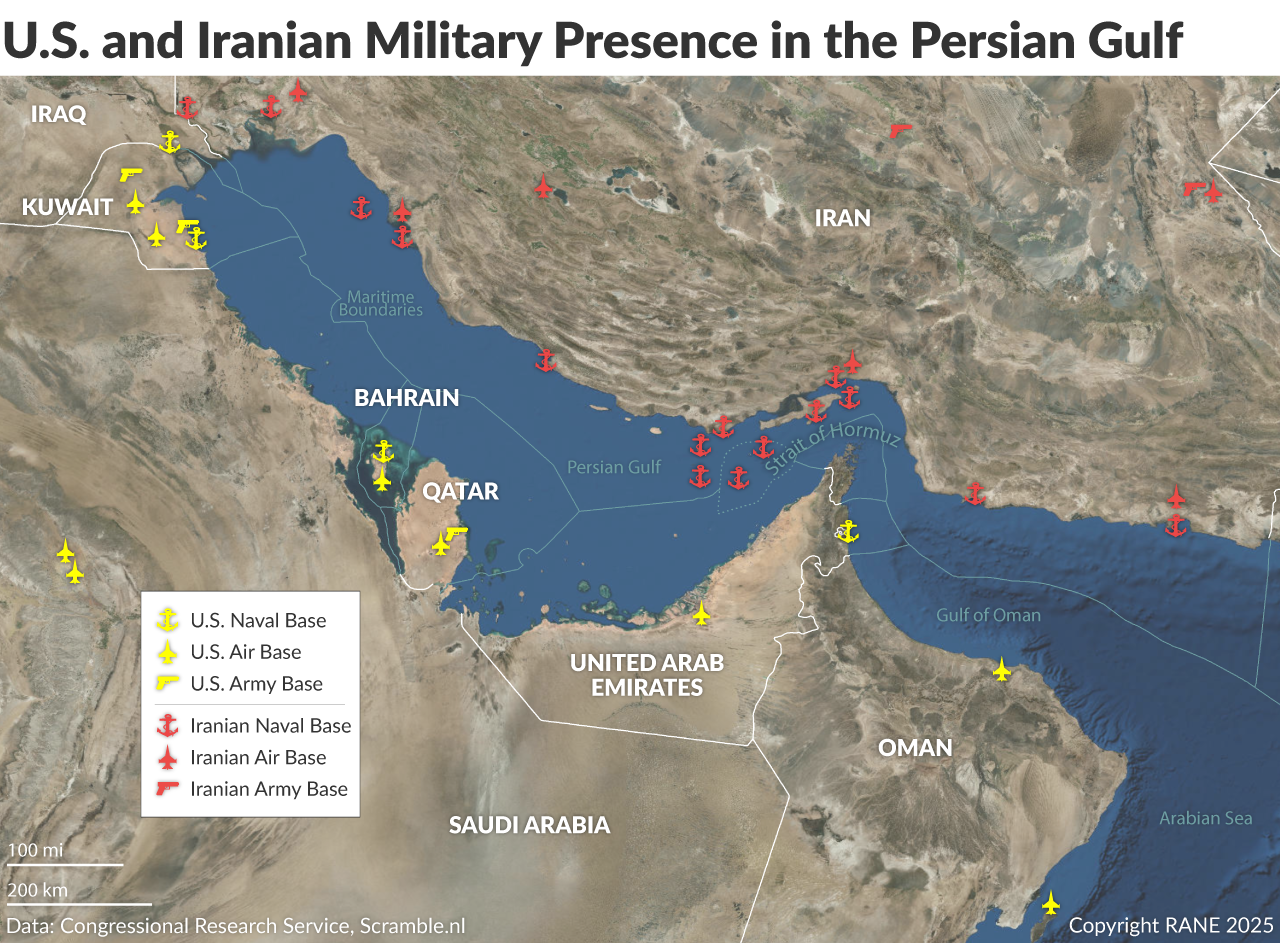
An Iranian military escalation in the Strait of Hormuz would likely cause short-term disruptions to global oil flows, heightening volatility in energy markets and driving up regional shipping insurance premiums, which would risk triggering direct U.S. military strikes against Iranian targets. Any attempt by Iran to block or disrupt passage would lead to at least temporary spikes in global oil prices, likely above $100 per barrel, resulting in increased energy costs, higher insurance premiums for regional shipping and broader oil market instability, especially in the event of a successful Iranian hijacking or bombing of a tanker. Such actions would also prompt military responses, particularly by the United States, especially if U.S. tankers or military vessels are targeted by Iran either directly or by accident. This would prompt an American retaliation directly against Iranian military bases on the coast and naval assets. Additionally, in response to heightened threats, the United States and its Western allies would likely increase maritime patrols, escort oil tankers through convoys, and deploy more surveillance drones and mine-clearing assets to deter Iranian attacks, attempting to curb any impact on energy markets despite Iran's military actions.
- Highlighting the risk of an energy shock, the September 2019 drone strikes on Saudi Arabia's Abqaiq and Khurais oil facilities, claimed by the Houthis but for which the United States and other countries blamed Iran, temporarily halted about 5% of global oil production, causing Brent crude prices to surge by nearly 20% — the largest single-day jump in decades.
- U.S. military strikes against Houthi rebels in Yemen on March 15, which began the ongoing wave of U.S. attacks in response to their assaults on Red Sea shipping, led to a modest increase in oil prices. This escalation raised concerns about potential disruptions in oil flow through critical maritime routes, contributing to the price uptick, meaning that a broader escalation with Iran would at least have the same impact.
An Iranian military escalation would undermine relations with Gulf states, prompt oil-producing states to find alternative routes and induce major oil importers to exert pressure on them to boost supply and stabilize prices. Even if Iran did not directly attack Gulf states' territory, a sustained Iranian military escalation in the Strait of Hormuz would undermine recent diplomatic progress with Gulf states, particularly with Saudi Arabia and the United Arab Emirates, which have in the past few years made progress to at least ease regional tensions with Iran through economic and security dialogues. A renewed deterioration in regional relations would likely prompt Gulf states to adopt strategic countermeasures to safeguard their energy exports. These could include redirecting shipments through alternative routes such as Saudi Arabia'’s East-West Pipeline (Petroline), which transports crude from the Gulf to the Red Sea and bypasses the Strait of Hormuz, albeit with limited capacity. Similarly, the United Arab Emirates could increase reliance on its Fujairah oil terminal, which enables some exports to flow directly into the Arabian Sea. Additionally, oil-producing nations with spare capacity, such as Saudi Arabia and the United Arab Emirates, would face pressures from major importers to boost supply, given their ability to ramp up production and use their strategic oil reserves. Over time, Gulf states also would likely seek to strengthen security partnerships — such as anti-piracy and smuggling operations in and around the Persian Gulf — with India, China and other key consumers to maintain stability in global energy markets.
- All things equal, oil-producing states like the Gulf countries generally would prefer higher oil prices, but ultimately, they would face pressure to stabilize oil prices from allies like the United States, and other oil-importing countries like China, Japan, the United Kingdom and European states which heavily depend on oil and gas imports from Gulf States. That said, in a scenario in which Iran and/or its regional proxies attack Gulf energy infrastructure, attacks that successfully take key nodes offline could limit the ability of Gulf states to ramp up supply to bring down higher oil prices.
Over time, Iran's actions could accelerate efforts to reduce dependence on the Strait of Hormuz, which, if regional states can overcome constraints, would weaken Tehran's ability to use it as a geopolitical bargaining chip in the longer term. In the short term, countries like Saudi Arabia and the United Arab Emirates will bet on their normalized ties with Iran to try to deter Iran from retaliating against Gulf tankers and oil and gas infrastructure as part of Tehran's broader confrontation with Israel and the United States. However, in the event of a major escalation in which Iran decides to include Gulf oil and gas infrastructure in its targets, Gulf countries may accelerate long-term efforts to shift away from using the Strait of Hormuz as their main route of export for oil and gas. These may include expanding the capacity of alternate pipelines like the Petroline and investing in other ports, such as the Yanub port in Saudi Arabia, to handle more crude and refined products. Additionally, states may accelerate investments in alternative routes, like the Iraq-Turkey pipeline that goes towards the Mediterranean. However, these projects would need massive financing and time to complete and would also come with various other security threats, including sabotage and attacks by regional armed groups, putting constraints on their near-term likelihood. Furthermore, Gulf states, foreign partners and stakeholders like the United States and the United Kingdom may also coordinate more closely via energy-sharing frameworks, such as regional alliances that would allow them to address potential energy impacts from geopolitical turmoil. While long-term projects, all of these potential strategic shifts would weaken Iran's use of the Strait of Hormuz as a bargaining chip during heightened geopolitical tensions and may even force Tehran to change course to avoid losing potential future partnerships and leverage in and around the chokepoint.
