
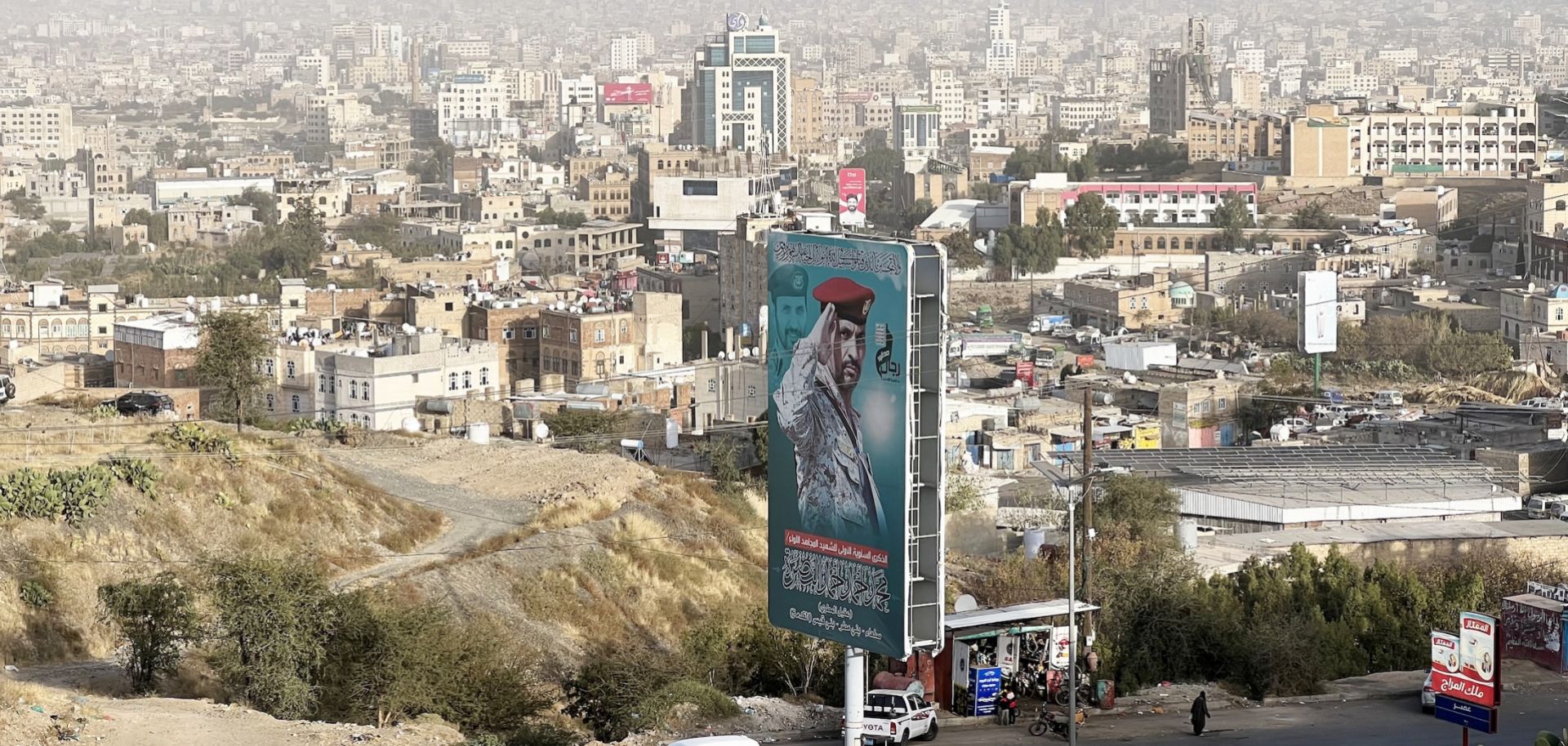
Israel will likely expand its campaign against the Houthis in Yemen, first focusing on targeted strikes on Houthi military infrastructure and officials; but when this likely fails to deter the militants, Israel will escalate further, potentially spreading the conflict into the Gulf states and restarting the Yemeni civil war. Israel has recently escalated its air campaign against the Houthi movement in Yemen in response to repeated Houthi attacks on Israel. Most recently, on Dec. 26, Israel struck Yemen's capital of Sanaa, including its airport, as well as ports and power plants in places like the key port city of Hodeidah. The strikes came just a few days after Israeli Defense Minister Israel Katz warned that the Israeli military would soon start targeting Houthi leaders, as it had with Hamas and Hezbollah. Despite the threat, Houthi political bureau member Mohammed al-Bukhaiti said that while the group expected escalations from both Israel and the United States, it would continue to fight using all means available until Israel's military occupation of Gaza came to an end.
- The Houthis have fired over 400 missiles and drones at Israel since the beginning of the war in Gaza in October 2023. While Israeli air defenses have intercepted most Houthi missiles and drones before reaching their targets, a handful have resulted in casualties within Israel.
- The Israeli security establishment has increasingly focused on how it can deter and degrade both Iran and its final major remaining ally, the Houthis. Though some hawks within the security cabinet have pushed for more strikes directly on Iran, the government currently appears to be favoring strikes on the Houthis as Israeli leaders await for U.S. President-elect Donald Trump to retake office and shift Washington's regional strategy back toward being stridently anti-Iran.
- The Houthis are also continuing to engage in a maritime attack campaign against ships linked to Israel and more broadly the West. Since January 2024, the United States and the United Kingdom have conducted dozens of airstrikes against the Houthis in an attempt to end their campaign, but so far have been unsuccessful.
Israel has long worried about the potential for Houthi attacks, but Yemen's geographic distance and the diplomatic and strategic complexities of a campaign there had deterred the Israelis from engaging in covert or overt operations until the start of the Gaza war in October 2023. As early as 2019, Israeli Prime Minister Benjamin Netanyahu was warning that Iran was supplying the Houthis with advanced missiles designed to strike Israeli targets. But Israel never carried out preemptive action against such arsenals, in part due to the complexities of conducting an aerial operation far from Israeli territory in the southern part of the Arabian Peninsula, which posed the risk of losing aircraft to Houthi missiles or mechanical failure. Israel also faced notable diplomatic opposition against striking Houthi targets in Yemen, particularly from the United States, Saudi Arabia and the United Arab Emirates, which were then seeking to de-escalate their involvement in the Yemeni civil war. However, once the Israel-Hamas war erupted in Gaza, the Houthis began launching direct strikes on Israel in solidarity with the Hamas, breaking past precedent. Most of these strikes were intercepted, which decreased the urgency to strike back, especially as Israel focused on fending off threats from Hamas in Gaza and Hezbollah in Lebanon. But now, with Hamas and Hezbollah degraded, and with Iran's major ally in Syria also overthrown, Israel sees an opportunity to escalate its campaign to end the Houthi attacks.
- Israel and Yemen are over 2,000 kilometers, or 1,300 miles, apart. Though this geographic distance is surmountable by the Israeli Air Force, it is nevertheless a constraint on how often Israel can conduct sorties against the Houthis. In neighboring Lebanon and Gaza, by contrast, Israel was able to conduct hundreds of airstrikes per day at the height of its campaigns against Hamas and Hezbollah, which effectively destroyed much of their arsenals.
- This geographic distance, along with a lack of reliable Israeli proxies or allies in the country, also limits Israeli intelligence capabilities in Yemen. Though there have long been rumors of Israeli-Emirati intelligence cooperation in Yemen, this has never been confirmed, and such operations are likely not nearly as significant as Israel's intelligence operations in Lebanon that led to the successful campaign against Hezbollah.
In the coming weeks, Israel will likely increase the scope and scale of attacks on various Houthi targets, including civilian infrastructure that serves a dual military purpose, and Houthi leaders. The Israelis will likely focus more strikes on infrastructure related to the Houthis' campaign against Israel, including more attacks on power plants, ports and airports used to smuggle weapons from Iran, as well as Houthi leaders who are spearheading the military campaign. Israel may also target leaders aligned with the Houthi movement, Mohamed al-Atifi, who serves as defense minister of the Houthi-led government in Yemen. This campaign will likely unfold in waves, particularly as Israel awaits the power transition in the United States, anticipating President-elect Trump to take a more hawkish stance on the Houthis as he did during his first term. Israel will not deploy ground forces in Yemen, and will instead approach the campaign from the air. This is due to logistical constraints, as the Israeli military has no basing support in the country, as well as political concerns regarding deploying ground forces in a territory where they would be vulnerable to guerrilla attacks by the Houthis.
- The parts of Yemen under Houthi control are relatively undeveloped, with few power plants, roads and military infrastructure for the Israelis to target. This means that even with a slower pace of strikes, Israel's impact on the Houthi-held infrastructure could be significant.
The Houthis will likely resist this military pressure and continue their strikes against Israel, while any Israeli assassinations of Houthi leaders would risk backfiring by shoring up domestic support for the militant group. Without a ground component to destabilize the Houthis' position within Yemen itself, Houthi leaders will likely conclude they can withstand the probable pace of Israeli strikes and potential assassinations, and continue to benefit from the popular boost they have gained within Yemen for repeatedly attacking Israel. In addition, Iran's sophisticated smuggling networks will likely be able to resupply the Houthis with enough components to maintain their pace of drone and missile strikes against Israel itself, even if such strikes are not militarily significant. However, instead of coercing the group, Israeli assassinations of Houthi leadership would only risk generating more domestic sympathy for the group, shifting northern Yemen's political system further toward the Houthis while weakening the independence of the General People's Council, a former adversary of the Houthis that switched sides during the civil war, and tribal elements in the country.
- The Houthis have enjoyed a recruitment boost due to their confrontation with Israel during the Gaza war. According to U.N. estimates, the group currently has around 350,000 fighters — multiple times that of the roughly 30,000 fighters it had in 2015 shortly after the outbreak of Yemen's civil war. However, many of these Houthi fighters are also members of local tribes or other political movements in Yemen, such as the General People's Council.
- The Houthis can utilize multiple launching platforms to strike Israel and tend to favor a decentralized approach to storing and deploying these weapons, making it difficult for Israel to erode this arsenal quickly.
- The 2004 assassination of key Houthi leader Hussein Badreddin al-Houthi, which gave the movement its name, did not break up its nascent insurgency but radicalized the movement and helped it grow to eventually take over the capital Sanaa in 2014. This casts doubt on the efficacy of a slow-moving Israeli assassination campaign against Houthis leaders and their allies.
Without a strategic change in the Houthis' behavior, Israel will take a more aggressive approach by lobbying the United States to increase its military and diplomatic pressure on the movement; Israel may also directly strike Iranian forces in Yemen or Iran itself to convince Tehran to cut back on its support for the Houthis, and could potentially even seek coordination with local forces inside Yemen as well. To end Houthi strikes, the Israelis will be incentivized to consider other, more aggressive options to pressure the Houthis. While the Israelis could maintain a status quo of an extended war of attrition with the Houthis until the movement has exhausted its arsenal or endured too many casualties, Israel's strategic behavior since the start of the Gaza war suggests the current government will be more escalatory than that. Instead, Israel will seek to weaken the Houthis' balance of power in Yemen itself, which it could do in several ways. First, Israel will lobby the United States to escalate its military campaign to degrade and destroy the Houthis' military infrastructure and assassinate leaders, while also pressuring Washington to redesignate the Houthis as a top foreign terrorism organization — something that is more likely to happen under Trump, who added the group to the U.S. terrorism list in his first term. In another, more escalatory step, Israel could strike Iranian forces in Yemen or in Iran itself in either a single attack or a series of attacks in an attempt to convince Tehran to reduce its support for the Houthi movement and/or withdraw its advisors from the country. Finally, in an unlikely option that would become more viable the longer the Houthis held out against U.S. and Israeli strikes, Israel could attempt to coordinate with the local Yemeni actors, like the Southern Transitional Council in southern Yemen, to try to include a ground component against the Houthis, particularly around restive cities like Taiz and Hodeidah where the Southern Transitional Council is currently fighting the Houthis. Increased Israeli intelligence aid and/or air strikes to undermine these frontline positions might weaken the Houthis' ability to hold these key positions.
- In campaigns against Hamas, Hezbollah and Iran, Israel has routinely chosen to be more aggressive in its tactics to weaken these adversaries, ignoring previously signaled red lines to do so.
- Iran has continued to threaten to attack Israel for its October 2024 strikes on Iran's air defenses and nuclear program. If Iran follows through on this threat, it would prompt an Israeli counterattack that might be designed to also weaken the Iranian infrastructure used to support the Houthi movement, like Iranian ports and drone manufacturing sites.
- The United Arab Emirates has demurred from siding with Israel in the course of the Gaza war for fear of regional escalation. But Abu Dhabi's proxies, like the Southern Transitional Council in Yemen, might be open to coordinating with Israel if the group believes it would increase its political support in Washington, where the Southern Transitional Council has been lobbying for allies to aid their ultimate goal of secession.
But a more aggressive Israeli strategy against the Houthis or Iran will increase the likelihood of retaliations against Gulf Arab targets and Israel, and will also risk restarting the Yemeni civil war. Should a more aggressive Israeli strategy begin to destabilize the Houthi movement, the militants would be more incentivized to potentially resume strikes on other regional targets in an attempt to roil global energy markets and produce diplomatic backlash to Israel's expansion of its military campaigns to Yemen. These strikes might target U.S. forces stationed in Gulf Arab countries, as well as Saudi and Emirati targets (like energy facilities) and civilian targets (like airports and ports). As the Houthis try to threaten both energy prices and the security of key pro-Israel states, these attacks would collapse slow-moving Saudi-Houthi ceasefire negotiations in Yemen and risk reigniting more intense fighting in the Yemeni civil war, which has largely been dormant since 2022. Meanwhile, Israeli strikes on Iranian advisors in Yemen would incentivize Iran to conduct counterstrikes on Israel, which would likely trigger Israeli retaliatory strikes on Iran that would run the risk of Iran expanding its counterstrikes to U.S. and Gulf Arab targets across the region.
- While Houthi-Saudi ceasefire negotiations remain ongoing, the Houthis will not have the same incentive to continue them should a U.S.-Israeli campaign against the movement cut off vital humanitarian aid through its ports and airports and/or destabilize its domestic position — especially if the Houthis conclude the Saudis would be reluctant to retaliate for fear of being seen as aligning with Israel in a foreign war.
- Between 2016 and 2022, the Houthis struck Saudi Arabia dozens of times, and in 2022 attacked Abu Dhabi as well, as the Houthis retaliated against Saudi and Emirati involvement in the Yemeni civil war. But the Houthis reduced their attacks after Russia invaded Ukraine in February 2022, as the global energy and food shocks brought on by war significantly impacted Yemen and spurred the Houthis to begin ceasefire negotiations with the Saudis to ease their economic isolation.
