
Editor's Note: On Sept. 28, Hezbollah confirmed the death of its leader, Hassan Nasrallah; he died in a Sept. 27 Israeli airstrike in Beirut, Reuters reported Sept. 28. He was killed alongside top Islamic Revolutionary Guards Corps Gen. Abbas Nilfourshan, according to Iranian state media. Nasrallah's death is a major political and security blow to the militant group, capping a campaign of assassination against top Hezbollah commanders that began when Hezbollah entered the Gaza War alongside Hamas in October 2023. It will create temporary organizational challenges for the militants and disrupt aspects of its command and control while a successor is chosen and morale across the movement is low, giving Israel a window of opportunity to escalate strikes against Hezbollah across Lebanon in an attempt to force the militant group to exit the Gaza War. But it will also create a strong desire to retaliate both inside Lebanon and in the militant movement, likely furthering the conflict rather than seeing a de-escalation. Meanwhile, the killing of an Iranian commander increases the chances that Iran will be compelled to retaliate against Israel directly, something it has threatened to do so since July 2024, when Israel assassinated Hamas leader Ismail Haniyeh in Tehran. Nasrallah took power in 1992 after his predecessor, Abbas al-Musawi, was killed in an Israeli assassination. He led Hezbollah through multiple conflicts with Israel, including the 2006 war, and oversaw the guerrilla campaign that led to Israel's withdrawal from southern Lebanon in 2000. He also deepened ties with Iran, intervened in Syria's Civil War on behalf of Syrian President Bashar al-Assad, and built up a large rocket and missile arsenal to deter Israeli attacks on both Hezbollah and Iran.
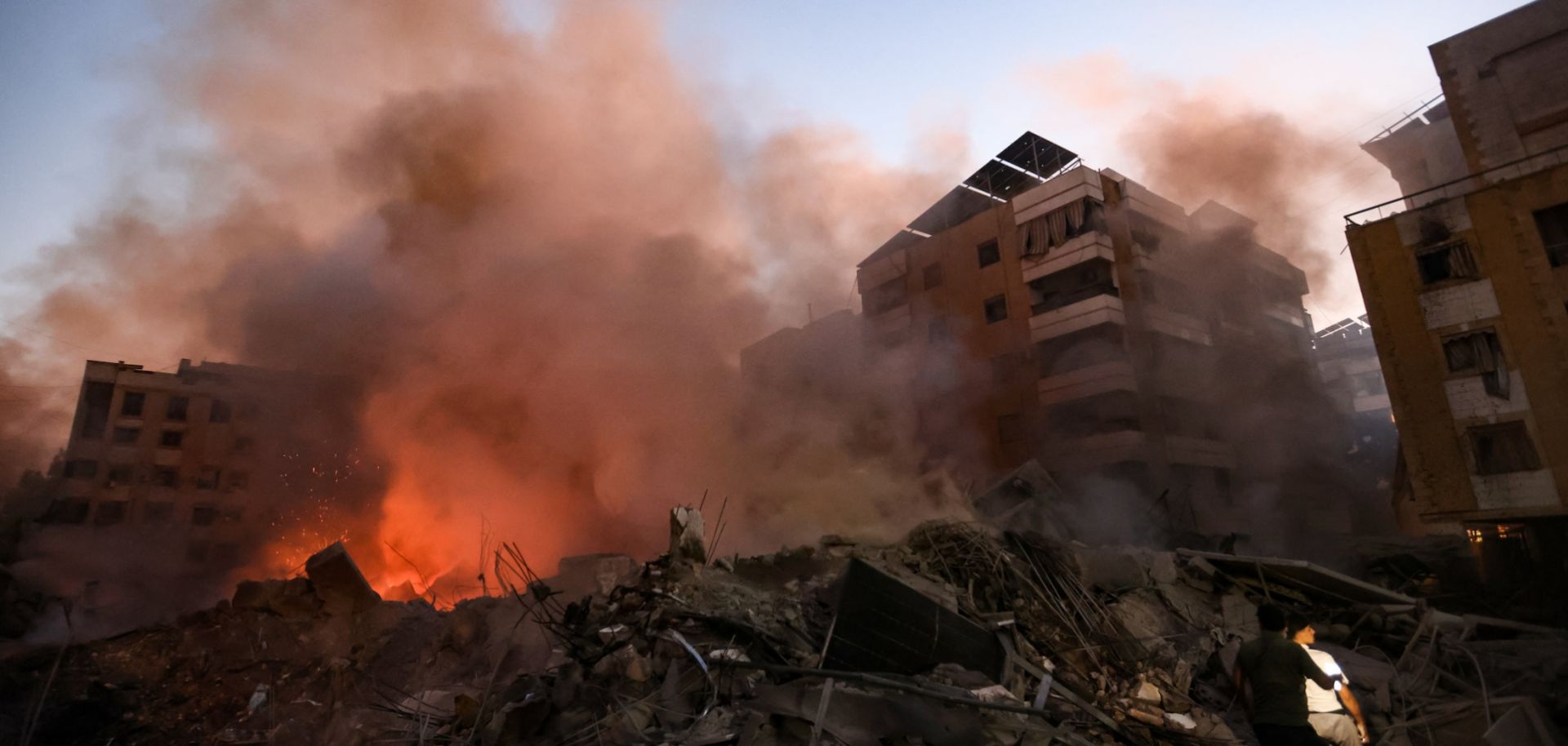
Israel's attempted assassination of Hezbollah leader Hassan Nasrallah indicates that Israel will further escalate targeted strikes on the Lebanese militant group's most senior political figures, thus compelling Hezbollah to also expand the scope and scale of its strikes on Israel. But such strikes are unlikely to deter Israel, raising the risk that Iran will eventually have to directly intervene to protect Hezbollah, its most reliable proxy. On Sept. 27, the Israel Defense Forces (IDF) carried out multiple airstrikes on the Haret Hreik neighborhood of the Beirut suburbs, where Hezbollah's main military headquarters is located, in an attempt to kill Nasrallah. Hezbollah claimed that he was not killed in the strike, which targeted an underground bunker routinely used by both Hezbollah and Iranian forces to coordinate their ongoing conflict with Israel. Nevertheless, as of the evening of Sept. 27, Hezbollah had not yet provided clear proof that Nasrallah had survived. Regardless, the attack confirms a recent shift in Israel's assassination efforts against the group, which have increasingly focused on killing top political figures after previously focusing on Hezbollah's military leadership. The strike came against the backdrop of Israel's continued buildup of ground forces for a potential invasion of southern Lebanon, as Israel continues to demand a withdrawal of Hezbollah forces from its northern border.
- The Israelis reportedly notified the administration of U.S. President Joe Biden a few minutes before launching the attack, though a Pentagon spokeswoman said the U.S. defense secretary was only notified of the attack once it was underway.
The deliberate targeting of Nasrallah is further evidence that Israel will no longer limit its assassination campaign to military leaders or low-level political officials. In recent months, Israel has been steadily escalating its assassination campaign against senior officials in both Hezbollah and Hamas, with Israeli strikes moving from targeting political leaders to military ones. On July 31, Israel killed Hamas' political chief Ismail Haniyeh with a brazen attack in the Iranian capital of Tehran. Israel had avoided targeting Nasrallah during its previous conflicts with Hezbollah, including the 2006 war and Israel's Operation Grapes of Wrath in 1996. This was largely due to concerns that assassinating Nasrallah would compel the militant group, as well as its sponsor Iran, to escalate directly against Israel and inflict significant damage on its armed forces and civilian centers. But since the beginning of its war with Hamas in Gaza in October 2023 and its subsequent border conflict with Hezbollah, Israel has steadily been climbing up through Hezbollah's ranks in a targeted assassination campaign of military leaders, including its number two Fuad Shukr, who was killed on July 30 in Beirut. Israel again increased the pace of its assassinations on Sept. 17-18, when it conducted a covert strike against Hezbollah by denotating pagers and walkie-talkies used by the group's members. The deadly assault on Hezbollah's electronics coincided with Israel's security cabinet authorizing an expanded campaign against Hezbollah and the Israel Defense Forces' approving expanded operations against the group, in a bid to pressure Hezbollah to stop striking Israel in solidarity with Hamas and withdraw its fighters from Israel's northern border.
- Israel previously assassinated Nasrallah's predecessor, former Hezbollah Secretary-General Abbas al-Musawi, in 1992.
The attempt on Nasrallah's life will compel Hezbollah to expand its operations against Israel, including by launching direct strikes on Tel Aviv with larger barrages than in previous phases of the conflict, as well as increased attacks on Israeli forces along the border. Israel's recent series of brazen covert and overt operations against Hezbollah, and the latter's comparatively restrained responses, are straining its supporters' belief that the group can defend them and deter Israel, while also emboldening Hezbollah's domestic opposition to challenge the group's legitimacy. So far, Hezbollah has continued to absorb the losses incurred from Israel's large-scale bombarding campaign and covert operations. However, the attempted assassination of Nasrallah (who is the most influential figure in not only Hezbollah but among many Lebanese Shiites), combined with the likely resulting mass civilian casualties from Israel's Sept. 27 airstrikes near Beruit, will force the group to conduct expanded strikes on Israel itself in an attempt to both carry out a revenge operation and deter further Israeli attempts on Nasrallah and other senior Hezbollah leaders. Although Hezbollah is continuing to recover from the disruption of its command and control following the recent pager attacks and targeted assassinations, the group remains capable of launching large salvos of medium-range ballistic missiles at major Israeli cities and military locations. As it accelerates the pace of its actions to more widely target Israel, Hezbollah will likely also use its more sophisticated and long-range ballistic missiles, as well as rockets and missiles with heavier loads of explosives, to target the major Israeli cities of Haifa and Tel Aviv. Additionally, Hezbollah will continue to bomb Israel's Upper, Central and Lower Galilee regions as the group seeks to impose heavy economic costs on Israel in the ongoing open conflict. These strikes will likely be increasingly designed to overwhelm Israel's air defenses and inflict significant casualties in retaliation for the attempt on Nasrallah.
- The Sep. 17-18 pager attacks against Hezbollah demonstrated Israel's superior intelligence capabilities over the group and ability to inflict massive casualties. Hezbollah sources have announced that 1,500 of its operatives have been left incapacitated after being injured in the assault.
Israel, for its part, will likely keep trying to kill Nasrallah and other key Hezbollah leaders amid the growing specter of an Israeli ground invasion of southern Lebanon. Israel's preferred strategic outcome in Lebanon is for Hezbollah to withdraw from the two countries' border north of the Litani river without necessitating a potentially costly ground invasion. Israel currently believes it can achieve this by continuing to attack Hezbollah's leadership and infrastructure, in the hopes of eventually forcing the group to de-escalate and withdraw from the border by heightening the perceived existential threat Israel poses to Hezbollah. Further emboldened by its air defense systems that have so far mitigated Israeli casualties from militant attacks, Israel will thus likely continue to deepen its campaign to eliminate Hezbollah's leaders. But Hezbollah is unlikely to quickly acquiesce to such a campaign, preferring to instead wage an extended war of attrition against Israel. With Hezbollah unwilling to concede to its military pressure, Israel will, in turn, become increasingly likely to consider ground incursions into southern Lebanon and potentially even a full-scale ground invasion to create a physical buffer between itself and Hezbollah militants.
- On Sep. 27, the United States sealed a $8.7 billion package of military aid for Israel that would mainly supply ammunition for air defense systems.
- According to unnamed senior Israeli intelligence sources cited in a recent Al-Monitor report, Israel previously considered killing Nasrallah twice, but the Israeli cabinet rejected both plans. If he survived the Sept. 27 attack, this indicates that Israel will likely again try to kill him and other leaders.
- Just hours after the Sept. 27 attack, the IDF called for civilian evacuations from southern Beirut, a strong indication of a sustained campaign in the Hezbollah stronghold.
As Israel's assassination and targeted attack campaign against Hezbollah continues, Iran will increase its scale of aid to Hezbollah to ensure the Lebanese militant group remains a formidable proxy force, but as Israel's campaign against Hezbollah continues, Tehran may ultimately be forced to directly intervene. In the face of Israel's growing aggression, Iran will initially push other regional militias in the Iranian-led Axis of Resistance to conduct attacks in support of Hezbollah. These militias include the Houthis in Yemen and Kataib Hezbollah in Iraq, which have already pledged to target Israel's civilian and military infrastructure with drones and ballistic missiles if another wider war breaks out between Israel and Hezbollah, to overwhelm Israeli air defenses. But Iran has so far refrained from conducting a direct strike on Israel, despite Israel's repeated provocations on its allies, and on its soil (as evidenced by Haniyeh's assassination in Tehran in July 2024). Instead, Iran has preferred to remain a supplier and coordinator of militant attacks against Israel in a way that avoids giving Israel justification to strike Iran or prompts the United States to directly intervene against Iran on Israel's behalf. However, this stance has strained Iran's reputation as the leader of the anti-Israel bloc in the region. And with Hezbollah's senior leadership now existentially threatened by Israel's expanding assassination campaign, Iran will have both a political and strategic incentive to conduct operations directly against Israel to shore up its position as a reliable partner and ally for members of the Axis of Resistance. This may take the shape of another direct Iranian strike against Israel, similar to Iran's attack on the country in April 2024. But Tehran may also focus on covert escalation by targeting Israeli embassies and Israeli-linked businesses and individuals abroad.
- The Houthis launched a ballistic missile toward Tel Aviv early on Sept. 27 that was downed by Israel's air defense, making it the second time in two weeks that the Irani-backed Yemeni militia has done so.
