
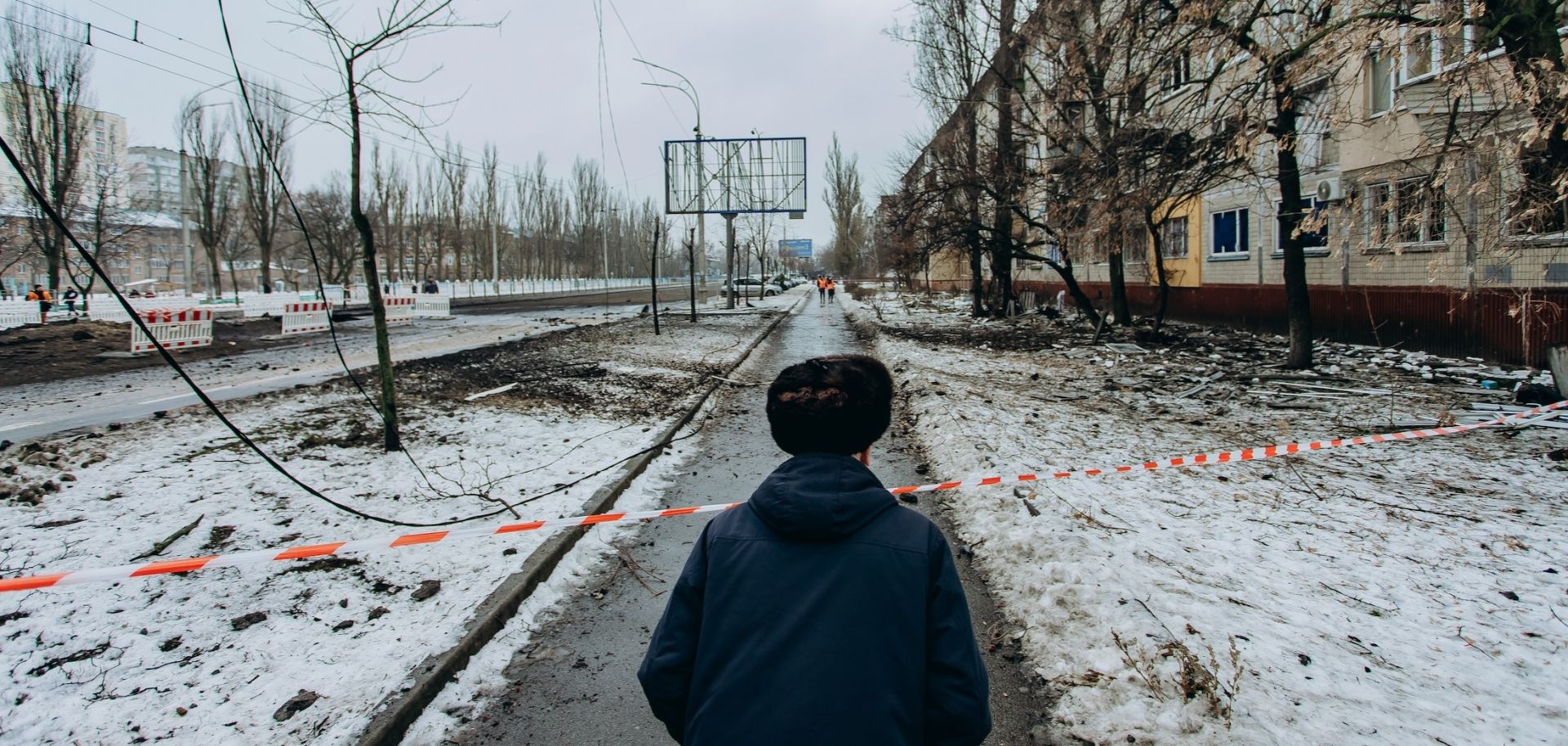
Ukraine will likely experience its worst post-invasion winter yet amid Russia's intensifying air bombing campaign against Ukraine's energy infrastructure, prompting more Ukrainians to flee the country, which could in turn weaken Ukraine's battlefield position in the long run by exacerbating its manpower shortage in 2025 and beyond. At a press conference on Sept. 10, Ukrainian Prime Minister Denys Shmyhal warned this coming winter could be "the most difficult" compared with the previous three winters Ukraine has experienced since Russia's February 2022 invasion, noting that sustaining energy supplies "is one of our biggest challenges." He emphasized that the government is taking active measures and building resilience to secure heating for homes that may no longer be able to rely on the electricity grid. He highlighted using domestic natural gas — of which Naftogaz reported production up 7% compared with last year to 8.6 billion cubic meters — to fuel industrial mobile natural gas heating units for apartment buildings. But the prime minister demurred when asked exactly how long Ukrainians should expect power outages to last this winter, saying it was currently impossible to predict. The statement came as other Ukrainian officials and organizations are painting an increasingly dire picture of the likely unprecedented conditions of the impending winter, especially amid likely intensified Russian attacks on the country's energy infrastructure.
- On Sept. 4, the director of the Ukrainian Energy Industry Research Center said that even under the best-case scenario in which further damage to energy generation capacity is minimal, large parts of Ukraine could still be without power for 8-10 hours per day. But under a plausible scenario in which one of Ukraine's nuclear power plants is off the grid for an extended period, or if hydroelectric generation falls due to the destruction of another dam on the Dnieper, entire regions of the country could be rendered without electricity completely during the cold, winter months.
- On Sept. 5, Ukraine's Center for Combating Disinformation laid out an optimistic and a pessimistic scenario. Under the optimistic scenario — in which the operation of Ukraine's nuclear power plants is stable, about 3 gigawatts (3,000 megawatts) of currently offline capacity is repaired and winter is mild to average, power outages could last up to 12 hours per day. However, under the pessimistic scenario — where Ukraine is only able to restore 2 gigawatts of currently offline power, some nuclear power is off the grid due to damage or unscheduled maintenance, and the winter is colder than average — Ukraine's energy system would then be in crisis, with many Ukrainians spending up to 20 hours a day without electricity or heating.
Ukraine's electricity shortfall will likely worsen significantly in the coming months due to a lack of generation and transmission capacity, which will likely be exacerbated by an intensified Russian air campaign. Blackouts have been common in Ukraine since the beginning of the war. But they have become significantly more severe and widespread since the spring of 2024 amid a series of Russian mass airstrikes that damaged nearly all of Ukraine's thermal (coal and natural gas) power plants, removing over 50% of Ukraine's overall generation capacity, much of it beyond repair. Accordingly, Ukraine's electricity grid is now dependent on three nuclear and several hydroelectric power plants for the majority of its power, in addition to small amounts from other renewables and imports from the European Union. While Russia has so far refrained from conducting direct mass attacks on these facilities, it has continued to attack transmission lines to cut off these facilities from the grid this winter. Furthermore, Ukraine's dependence on a smaller number of generation facilities and lack of transmission system redundancy from them, which will be only exacerbated by future strikes, makes the power system much more vulnerable to Russian kinetic strikes and cyberattacks than ever before. Russia is very likely to attempt to exploit this vulnerability as Western countries are set to further relax restrictions on the use of long-range systems to strike deeper inside Russia. This will strongly motivate Moscow to escalate its attacks against Ukraine and its electricity infrastructure, as opposed to only escalating its preexisting cyber and sabotage campaigns against the West (a larger escalation of which could risk a Russia-NATO conflict). Russia's air campaign against Ukraine will likely enter full force only around November, when falling temperatures would maximize the impacts of disruptions from such strikes, and when the slowed pace of battlefield offensives will free up munitions previously used to strike enemy forces.
- On Sept. 12, Russian President Vladimir Putin said that if NATO countries allow Ukraine to use Western long-range weapons to strike inside Russian territory, it would "change the very essence, the nature of the conflict, and it will mean that NATO countries are at war with Russia." Putin said this was because Western satellite targeting data and NATO states authorizing the input of the data is essential to the strikes. The statement clearly shows the Kremlin's intent to escalate in response to the move, even though Moscow's retaliation will correspond to the threat to Russia and its leverage over Ukraine posed by the strikes, which the U.S. Pentagon believes will likely be limited.
- During a visit to Kyiv on Sept. 11, U.S. Secretary of State Antony Blinken announced the disbursal of $700 million in humanitarian support, primarily to restore Ukraine's electricity grid and build resilience in the energy systems — highlighting the U.S. prioritization of the issue ahead of winter. U.S. concern about Ukraine's air defense was also highlighted on June 20, when the White House ordered to redirect to Ukraine planned shipments of Patriot interceptor missiles from other allied nations. Countries such as Germany and Romania are also seeking to accelerate the delivery of long-promised anti-air systems.
Ukrainian resilience measures will somewhat mitigate the effects of increased blackouts but will likely prove insufficient to prevent an uptick in Ukrainians leaving the country. The Ukrainian government and its citizens are taking numerous steps to build resilience against and mitigate the effects of Russia's air campaign and likely blackouts. The Ukrainian government says that 85% of power generation facilities now have some form of reinforcement, usually in the form of large sand gabions or new concrete facades around critical components. In addition to attempting to rebuild its damaged thermal power plants, the government aims to replace them by installing one gigawatt of decentralized capacity this year, specifically hundreds of smaller, more easily concealed power stations — generation capacity that will be hard for Russia to take offline. Ukraine's relatively abundant natural gas, resulting from the destruction of gas power plants and gas-intensive industrial facilities that reduced demand, along with continued imports from neighboring countries, will also support expanded residential heating — similar to what is common in many European nations. Portable industrial diesel generators and smaller gasoline generators are also becoming increasingly commonplace throughout large cities in the country. Finally, many Ukrainians are acquiring large home batteries to ensure some power during the long winter and even repurposing EV batteries for home use. However, there is no assurance that energy production facilities will be adequately protected or that alternative systems will be in place to maintain power generation. Meanwhile, personal generators and large home batteries remain too costly for many Ukrainians and require more time to charge than most worst-case scenarios would permit. This means that, with a lack of electricity or heat threatening basic living conditions and even survival, thousands more Ukrainians could potentially flee the country this year and next because of the harsh winter.
- An economic analysis by the National Bank of Ukraine published Aug. 2 forecasts that a staggering 700,000 more people could leave Ukraine this year and next. The bank cites safety concerns stemming from long power outages as a primary driver of people's decision to flee.
The prospects for a difficult winter could prompt a modest increase in Western support, but not to the extent of preventing further demographic damage to Ukraine, which will likely increase Moscow's leverage and embolden Russia to continue the war in 2025 and potentially beyond. Ukraine's difficult winter and likely subsequent uptick in refugee flows to the European Union could, given the political sensitivity of migration to many European states and ability to benefit anti-establishment parties, prompt European governments to increase both humanitarian and military support to Ukraine. However, European states remain financially and industrially constrained from significantly improving Ukraine's outlook, as they themselves already lack sufficient air-defense systems and are reluctant to issue more debt to fund resilience initiatives and other defense systems for Ukraine. This means the coming winter is more likely to deal demographic damage to Ukraine while resulting in an overall increase in Russian negotiating leverage, as the uptick in Ukrainian refugees will further exacerbate Ukraine's biggest near-term challenge in the war with Russia — its manpower shortage. While a significant majority of refugees will be women and children, the winter will inevitably also see some young men illegally attempt to flee — both those actively evading mobilization, as well as young men aged 18-25 not yet mobilized but still performing jobs important to the economy and war effort. This winter, therefore, runs a significant risk of showing and exacerbating Ukraine's inability to achieve a steady stream of manpower to continue the war later next year and beyond, thereby emboldening Russia to continue the war, leveraging a growing mobilized manpower advantage to keep gaining ground and degrading the Ukrainian military and population. Moreover, this will also deal mid- to long-term demographic damage to Ukraine, making it more vulnerable to potential future Russian invasions even if the current one ends.
- According to the CIA World Factbook, in 2024, Ukraine is estimated to have the highest death rate in the world at 18.6 deaths/1,000 population and the lowest birth rate in the world at 6 births/1,000 population, highlighting the immense mid- to long-term demographic damage dealt to the country by Russia's invasion.
