
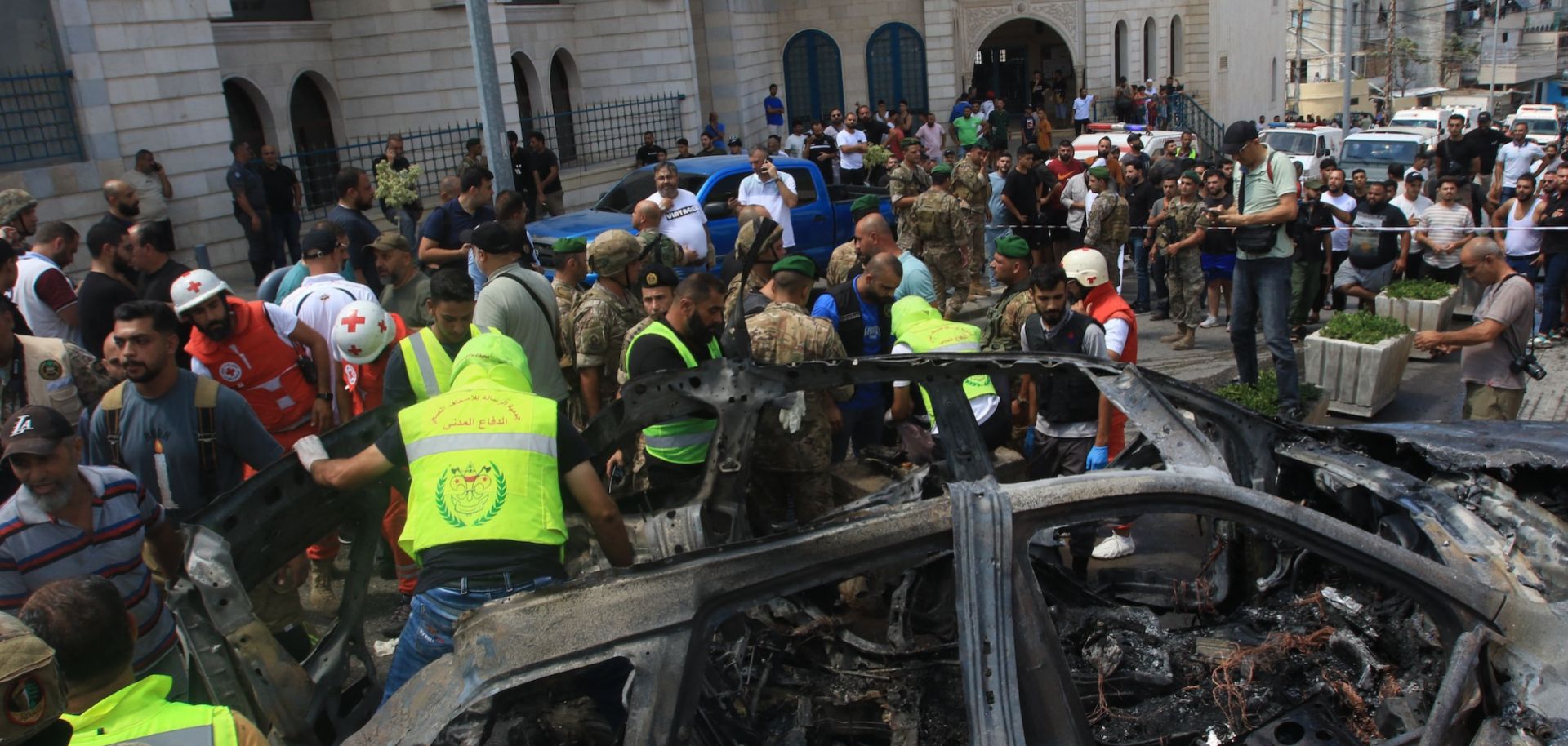
For now, Israel's assassination of a Fatah official appears like a one-off operation that will worsen Fatah-Israel ties, radicalize some Fatah members and weaken Fatah's interest in cooperating in governing the Gaza Strip. But should the strike signal the start of a larger assassination campaign against Fatah, it would significantly increase the likelihood of a full-scale uprising in the West Bank. On Aug. 21, the Israel Defense Forces (IDF) said it carried out an airstrike on Fatah official Khalil Makdah earlier the same day, as the IDF and Shin Bet accused Makdah and his brother, senior Fatah official Munir Makdah, of working with Iran and Hezbollah to smuggle arms into the West Bank to attack Israel. The initial reaction from Fatah was critical but so far non-escalatory, with a central committee member saying that Israel was trying to ignite a full-scale war with the strike but the official did not threaten any specific retaliation.
- As the controlling party of the Palestinian Authority (PA), which governs the West Bank, Fatah nominally accepts Israel and is not part of the current Hamas-Israel war in Gaza. But some of Fatah's members have associations with the Al-Aqsa Martyrs Brigade, a loose network of militant groups not formally part of Hamas or other large groups like Palestinian Islamic Jihad in the West Bank. The brigade has kept up violent attacks against Israel since its inception during the Second Intifada two decades ago. Members of the Al-Aqsa Martyrs Brigade are occasionally captured or killed in Israeli operations, usually in the West Bank, but operations against them in Lebanon are rarer.
- Israel has accused the Mukdah brothers of ties with Iran for years, saying they were part of the network that smuggles Iranian arms into the West Bank for attacks on Israel.
- Israel has embarked on a more aggressive assassination campaign against senior militants since the start of the Gaza war in October, including assassinating Hamas political head Imsail Haniyeh in Iran on July 31 and Hezbollah's senior commander Fuad Shukr in Beirut on July 30.
At the moment, this appears to be a single operation designed to assassinate a Fatah leader with alleged ties to Iran rather than a concerted campaign to escalate against militant members of the Palestinian political force. Khalil Makdah was a senior official in the Al-Aqsa Martyrs Brigade as well as a member of Fatah. And given recurrent attacks on northern Israel by Palestinian militants besides Hamas, he was already a likely target of Israel's campaign in Lebanon to assassinate commanders involved in strikes on Israeli territory. His killing may also have been the result of an operational opportunity for the Israeli Defense Forces (IDF), which may have assessed it had a chance to strike without causing further escalation with Hezbollah as the IDF awaits the Lebanese militant group's long-threatened counter-strike on Israel for the killing of Shukr. Finally, there have been no political statements or media leaks that suggest Israel is ready to embark on an anti-Fatah military campaign, especially as Israel is seeking a partnership with the PA to help govern Gaza once the war there winds down.
- The factions in Fatah loyal to PA President Mahmoud Abbas generally do not support the Al-Aqsa Martyrs Brigade, seeing its members as potential rivals for power in the Palestinian movement; these same factions enable Israeli forces to operate in the West Bank with less pushback than in Gaza.
Makdah's assassination will worsen Fatah-Israel ties, create splits inside Fatah itself between pragmatists and militants, and drive some members of Fatah to join the Al-Aqsa Martyrs Brigade or other militant groups, ultimately weakening Fatah's interest in helping to govern the Gaza Strip after the war. Most immediately, Fatah will remain overtly critical of Israel's assassination and may also reduce security cooperation, at least temporarily, with the IDF. Meanwhile, given that Fatah is already divided over Israel's war in Gaza, some disaffected members of the movement will likely become more critical of President Abbas' leadership and/or more hawkish toward Israel. This will make it harder for the PA to coordinate with Israel for a possible plan to govern Gaza once the war there ends, especially if Fatah members start demanding that the PA reduce or cut ties with Israel as a response to Makdah's killing. Finally, some members of Fatah will likely defect to the Al-Aqsa Martyrs Brigade or other armed Palestinian groups like Hamas, which is actively trying to usurp Fatah's leadership role in the Palestinian national movement. Hamas' Oct. 7 attacks on Israel have already boosted the group's popularity in the West Bank, and if Hamas' popularity continues to grow, Fatah may be forced to make political concessions to the group as part of their ongoing reconciliation process, which could result in Hamas having a stronger leadership role in the Palestine Liberation Organization (PLO), the umbrella organization for the Palestinian national movement that dominates the PA.
- Israel is trying to develop a post-war plan for Gaza that would include the PA, but must first overcome PA and Fatah's skepticism that their role in helping govern the strip would not undermine their claim to leadership in the Palestinian movement. The PA has already reportedly rejected an offer to run Gaza's Rafah border crossing to Egypt because Israel would not allow it to fly Palestinian flags at the crossing.
- Hamas-Fatah reconciliation is underway, with both sides pledging unity after their formal split nearly two decades ago. But Fatah has been wary of engaging in this process too quickly, for fear that it might bolster Hamas' political standing in the Palestinian government and give it control of some bodies, like the legislature, especially given Hamas' growing popularity in the West Bank following its group's Oct. 7 assault on Israel.
However, given the Israeli government's hawkishness and the overall worsening security situation in the West Bank, Israel may conduct further strikes and/or arrests on militant Fatah members in an attempt to weaken militancy in the West Bank, which could drive Fatah-aligned militants into alignment with Hamas and Hezbollah. Still awaiting retaliation from Iran and Hezbollah following its assassinations of senior militants in Tehran and Beirut in late July, Israel's government may conclude that it can also withstand backlash for an escalated campaign against the Al-Aqsa Martyrs Brigade and its Fatah members if such a campaign also disrupts the networks needed to supply arms and lead attacks in the West Bank. Israel would be more likely to conduct more strikes against Fatah if Iran and Hezbollah's eventual reprisal attacks do not inflict sufficient damage on Israel and/or do not escalate into a regional conflict, as the Israeli government might conclude that threats of retaliation from militant groups are not a large enough risk to deter further Israeli assassinations. Israel may also escalate against militant members of Fatah if security conditions in the West Bank further deteriorate and/or if there is a resumption of attacks on Israel, like suicide bombings, that can be traced to the West Bank. In response to such escalation from Israel, Fatah-linked militants in Lebanon may align themselves more closely with Hamas and Hezbollah, with whom they have been rivals for influence in the Palestinian refugee camps of Lebanon.
- On Aug. 18, a purported Hamas-backed suicide bomber, who was reportedly from the West Bank, attempted to target Tel Aviv in an unsuccessful operation. The attempted bombing followed threats by Hamas to expand such attacks against Israel from the West Bank.
- Iran's barrage of missile and drone attacks against Israel in April 2024 — which only resulted in one Israeli civilian death and some minor damage to a military airbase — did not deter Israel from striking Hamas' political chief Ismail Haniyeh in Tehran on July 31 during the politically sensitive time of the inauguration of Iran's new president.
Should Israel begin a sustained campaign against militant Fatah members, it would significantly increase the chances of at least parts of Fatah joining a formal uprising in the West Bank, the likelihood of which is rising amid the territory's growing instability. A sustained Israeli campaign would fracture Fatah, making the group ineffective as a civil and police force, while also leaving it unable to cooperate with Israel on security matters in the West Bank. Such conditions would be conducive to the start of another formal intifada in the West Bank led by militants like the Al-Aqsa Martyrs Brigade and Hamas — a risk that is already growing as Israel carries out ever more aggressive attacks in the territory and as Israeli settlers continue to attack Palestinians with general impunity. Should such an uprising begin with an Israeli campaign against Fatah militants underway, much of Fatah would likely join in the rebellion, even if the PA formally opposes the uprising. The defection of Fatah members would likely significantly reduce the capabilities of PA security forces. Security conditions in the West Bank would also worsen, resembling the violence of the 2000-05 Second Intifada, which saw a sustained suicide bombing campaign in Israel, attacks on settlements across the West Bank, and significant Israeli military casualties in the territory.
- There are approximately 15,000 PA police and security forces on current payrolls, but many of these members might join in militant attacks on Israel should their leaders become the target of Israeli assassination campaigns.
- Though a West Bank security crisis would require more forces, the IDF would likely rely on reservists, police forces and brigades suited for urban and counter-terrorism operations rather than the frontline combat brigades needed for Israel's ongoing conflicts with Hamas in Gaza and with Hezbollah in Lebanon. However, such a crisis would likely sap the Israeli government's political will to escalate to a new front in Lebanon.
