
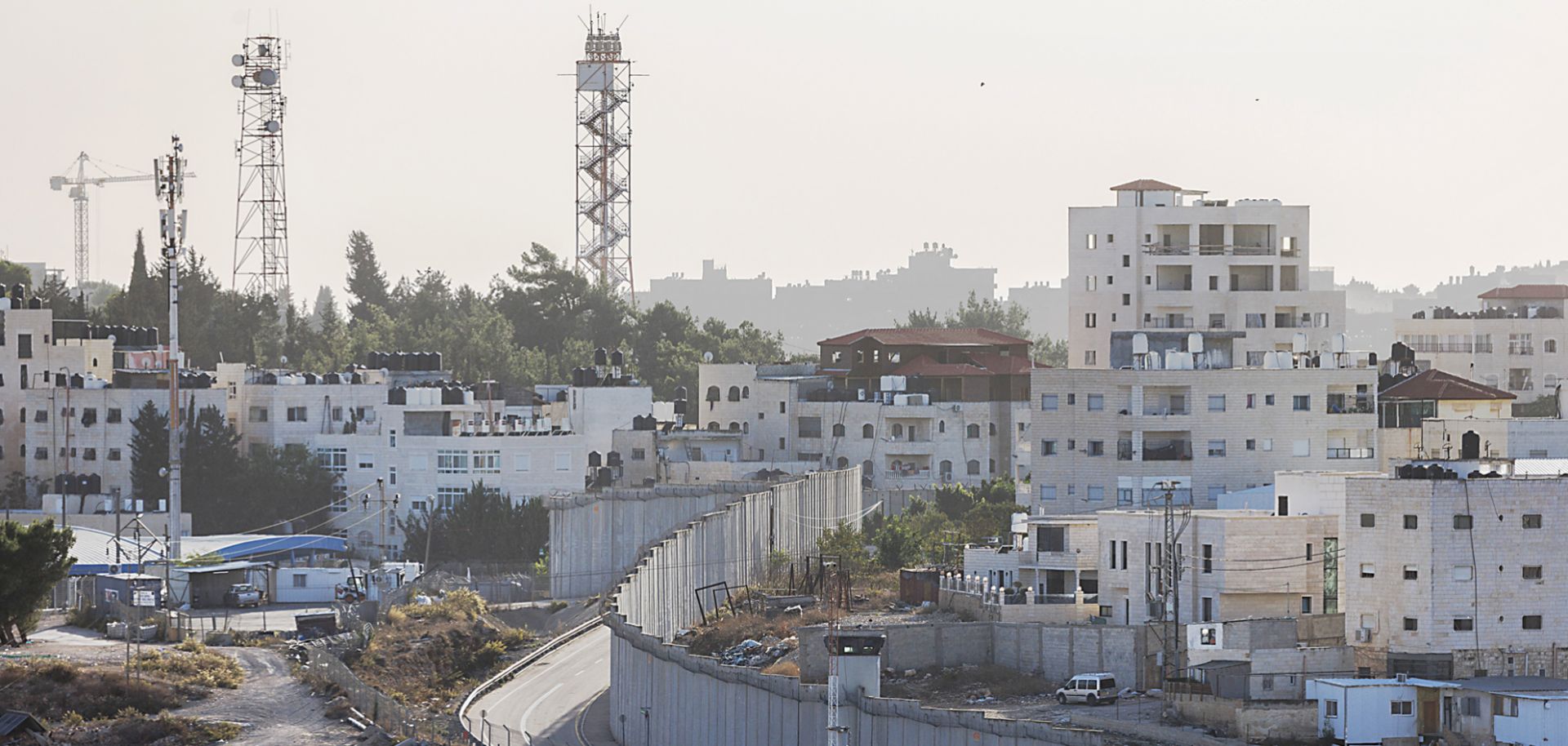
A little over a month into the Hamas-Israel war and a bit over two weeks since major Israeli combat operations began in the Gaza Strip, postwar governance for the territory is top of mind. While figuring out a viable plan is a necessary step in ending the current conflict and preventing the reemergence of Hamas or another group, anything resembling sustainable peace will require a future plan for the other Palestinian territory: the West Bank. In many respects, the West Bank is a far more complex puzzle, given that it is populated by both Palestinians and Israeli settlers (and a continual Israeli military presence), has a population (combining both Palestinians and Israelis) that is at least one-third larger than Gaza's, encompasses a territory that is vastly larger than Gaza, and borders (or comprises, depending on who you ask) East Jerusalem, which Palestinians claim as their capital. Without confronting the challenges posed by these thorny questions, whatever happens in Gaza will ultimately be insufficient to address both Israelis' security requirements and Palestinians' desires for self-determination. In short, war is in Gaza, but the path to peace is in the West Bank.
A Territory Born, and Mired, in Conflict
The modern history of the West Bank, which takes its name from its location on the western side of the Jordan River, began when British troops captured the territory from the Ottoman Empire during World War I, incorporating it into their Palestine Mandate. The West Bank then fell into Jordanian hands after the 1948 Arab-Israeli War, but was captured by Israel during the Six-Day War in 1967. From then until the early 1990s, the territory was under Israeli military control, though one that over time softened into a quasi-civil administration. It was not until a series of agreements under the framework of the Oslo Accords in the mid-1990s that West Bank governance was transformed, dividing the territory into three areas: Area A (approximately 18%) under full Palestinian control; Area B (approximately 22%) under joint Israeli-Palestinian control; and Area C (approximately 60%) under full Israeli control. As part of this process, the Palestinian Authority was created and installed as the governing body for Areas A and B. The division was supposed to be the stepping stone to a so-called ''final status'' agreement that would result in a Palestinian state, but the peace process collapsed under the weight of violence and political pushback on both sides.
The result has been an unstable and often violent status quo in which neither side is happy: Israelis see Palestinians as a continual source of militancy both in the West Bank and Israel itself, while Palestinians view Israelis as colonizers who have steadily expanded settlements that have undermined the Oslo Accords. Before the outbreak of the current Hamas-Israel war, turmoil in the West Bank had reached its highest level in years, with large spikes in all forms of violence, including Palestinian militant attacks, Israeli military raids and Israeli settler attacks. These violent confrontations were driven by, among other factors, the decreasing popular legitimacy and societal control of the Palestinian Authority, the rise of new grassroots militant groups not beholden to established leadership structures, and more aggressive Israeli military operations and settler activities.
Unsurprisingly, the outbreak of war last month has only turbocharged violence. While the eyes of the world have been focused on the Gaza Strip, violence in the West Bank has grown to levels not seen since the 2000-2005 Second Intifada. On every metric — including Israeli settler attacks, Israeli army raids, Palestinian militant attacks, and other forms of violence — trends show that the current conflict in Gaza has acted as an accelerant for the preexisting slow burn in the West Bank. Whatever low levels of trust and cooperation that may have previously been held tenuously together have all but evaporated as the various competing factions all try to push their conflicting interests, with Israeli settlers and troops collaborating to violently enforce land claims, Palestinians taking up arms across society to blur lines between militants and civilians, and the Palestinian Authority battling internally among its own members and externally against rival grassroots groups to sustain its increasingly fragile claims to leadership. In short, the warning signs for a Third Intifada — and, with it, the prospect of regional escalation even after major combat operations in Gaza are over — are proverbially blinking red.
A Complex Puzzle
No doubt, creating a manageable postwar governance plan for the Gaza Strip will be exceedingly difficult, but it is becoming increasingly clear that no matter what happens in Gaza, the path to sustainable peace will run through the West Bank. To begin with, one of the major ideas being floated in regard to Gaza's postwar governance is for the Palestinian Authority to take over from Hamas, which from the Israeli perspective, may be the easiest pill to swallow among a menu of unappetizing options, given the various constraints on other plans like a full Israeli reoccupation of Gaza or the deployment of an international peacekeeping force. However, Palestinian Authority President Mahmoud Abbas said on Nov. 10 that the body would only agree to administer Gaza if Israel signed a comprehensive peace agreement establishing a Palestinian state based on the pre-1967 borders and with East Jerusalem as its capital. Thus, it appears Israel will not find the lasting security guarantees it seeks without also addressing the arguably more complex challenges that bedevil the West Bank, which, after decades of Israeli settlement activity and Palestinian militancy, has become a mishmash of IDF and PA control that will prove incredibly difficult to untangle.
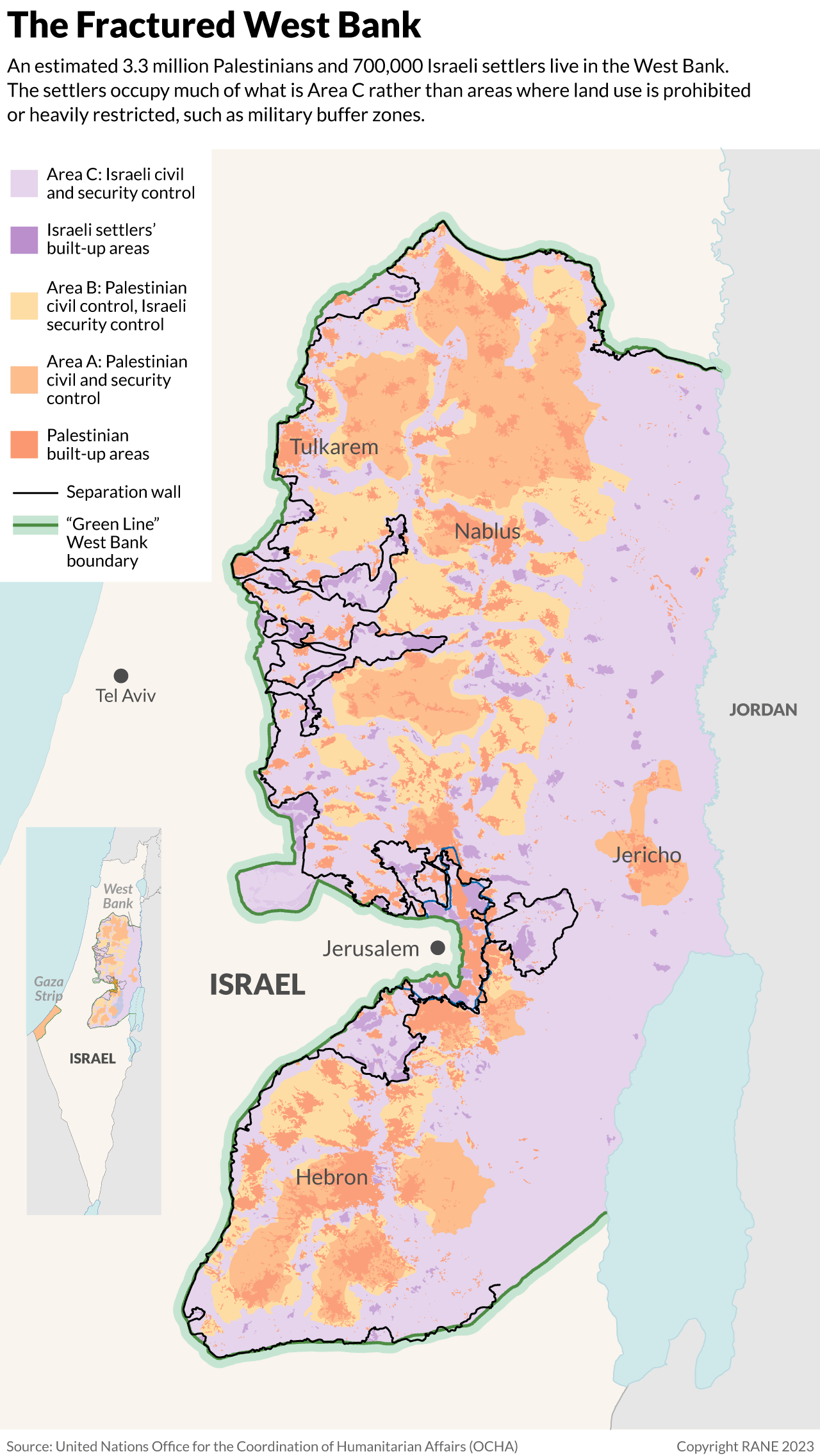
Compared with Gaza, the West Bank's status will have a much greater impact on Palestinians' future, given their claim to East Jerusalem as their capital, and the fact that the West Bank is more populous and geographically expansive. If there is ever to be sustainable peace, Palestinians will expect full control over the territory or at least a much larger slice of it than they have now. However, it is hard to imagine the Israeli government — certainly not in its current form under Prime Minister Benjamin Netanyahu's right-wing government — agreeing to this.
After overseeing Israel's unilateral withdrawal from Gaza in 2005, former Prime Minister Ariel Sharon faced steep pushback from within his Likud party (with none other than Netanyahu as the leading critic), eventually resulting in Sharon leaving the party to found another. In the current climate in Israel, it would take an extremely brave — and perhaps politically suicidal — act of courage for a future government to withdraw settlers and troops from the West Bank, one that is particularly hard to imagine with Gaza's future so uncertain and Netanyahu's right-wing coalition partners unwilling to meet the Palestinian Authority's demands for a comprehensive peace deal. The fact that any future peace agreement could have to make some allowance for a Palestinian right of return, even if only in a limited way, would only further complicate matters. And any returnees would be much more likely to go to the West Bank than the Gaza Strip, given the latter's physical destruction during the current war and its much smaller amount of territory.
Then there is the question of West Bank governance, which remains unanswered. The Palestinian Authority has lost essentially all of its credibility after years of corruption and mismanagement, and will face a major succession crisis after 88-year-old President Abbas is no longer in office, meaning that future governance in the West Bank will face the same if not more intense challenges as in Gaza. While postwar governance in the Gaza Strip will undoubtedly face major hurdles, in some ways a post-Hamas future offers something akin to a clean(er) slate to build on compared with the West Bank, where the Palestinian Authority is too weak to govern on its own but there is seemingly no viable alternative. And if Palestinian Authority governance is in some way brought (back) to the Gaza Strip as part of a postwar governance plan, the idea that the serially corrupt, divided and under-resourced Palestinian Authority could manage both territories at once seems improbable, absent significant and sustained foreign financial, security and political support that could generate a host of complications as time wears on.
Of course, as has often been the case in Israeli-Palestinian peace talks, the status of Jerusalem — specifically, East Jerusalem — looms as potentially the largest stumbling block, with Palestinians comprising a majority of those living in that section of the city. It is hard to imagine the Palestinian Authority ever agreeing to a deal that does not explicitly recognize the area as their capital, yet getting Israeli buy-in for this remains as precarious as ever. Even setting aside the massive political challenges and symbolic significance of an Israeli government ceding such territory, enormous practical matters would remain as the Old City, the location of some of the holiest sites in both Judaism and Islam (and Christianity), is in East Jerusalem. Thus, figuring out how to enable access for worshippers from both faiths while also ensuring security — a tricky balancing act that has frequently sparked violent unrest when Israeli security forces have stopped Palestinians from visiting the al-Aqsa Mosque — will undoubtedly persist and risk future violent flare-ups. As challenging as figuring out Gaza's postwar future will be, it is spared the seemingly intractable debate over East Jerusalem that will plague any future negotiations over the West Bank.
Peace Process Redux
As difficult as any future talks will be, the fact is that the Israeli-Palestinian peace process has returned to mainstream discourse in a way that is not likely what Hamas had calculated would happen. While the precise rationale for Hamas' Oct. 7 attacks on Israel remains unclear, the assault was likely partially aimed at disrupting Arab-Israeli normalization and reviving armed resistance to the Jewish State. To that end, the subsequent outbreak of the Hamas-Israel war has put a notional Israeli-Saudi normalization deal on ice, while also forcing regional governments that had recently drawn closer to Israel to publicly condemn Israeli actions in Gaza. However, the underlying drivers for Arab-Israeli rapprochement will remain intact once the current conflict is over. Among other factors, shared suspicion of Iran and the potential for mutually beneficial economic cooperation — not to mention strong pressure from the United States — will strongly incentivize more Arab countries to normalize their relations with Israel in the coming years, and finding some sort of resolution to the Israeli-Palestinian conflict will be necessary as part of that process.
Perhaps ironically, therefore, Hamas' attacks violently showed that a return to the status quo ante is impossible and, in turn, the attacks may end up being the most significant impetus for a return to peace talks than anything else in the past two decades. While Israel's ongoing war against Hamas will force it (and the international community) to confront postwar governance in the Gaza Strip, the West Bank is actually where the most difficult questions will have to be tackled if there is ever to be a lasting peace between Israelis and Palestinians.
