
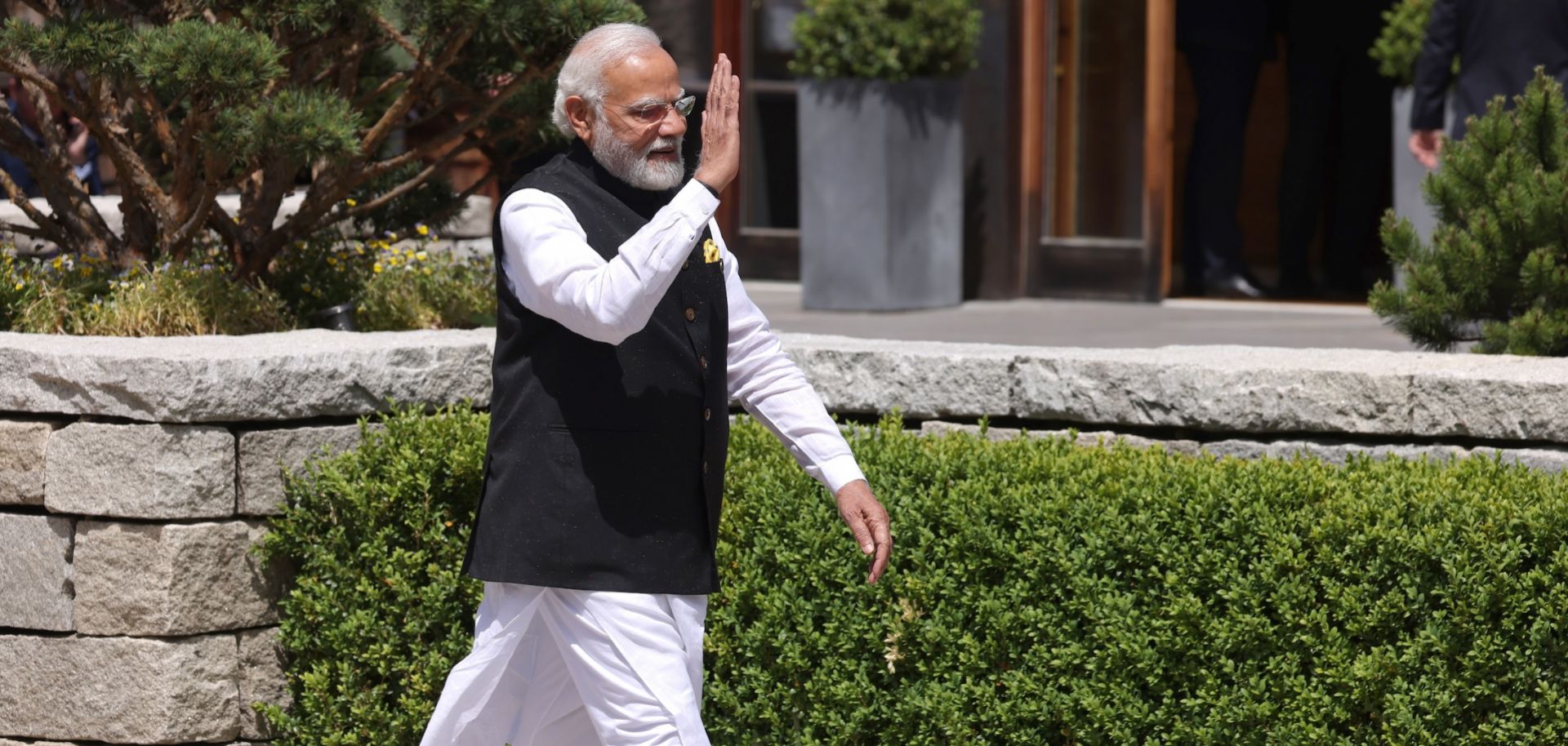
Indian Prime Minister Narendra Modi's upcoming trip to Ukraine is likely aimed at addressing backlash from his recent controversial visit to Russia, as India tries to balance its diplomatic stance, mitigate Western criticism, and reinforce its advocacy for dialogue and peace in the ongoing conflict. On Aug.19, India's Ministry of External Affairs confirmed that Modi will visit Ukraine on Aug. 23 at the invitation of President Volodymyr Zelensky. The visit will be the first time an Indian prime minister has traveled to Ukraine since the two countries formally established diplomatic relations in 1992. Modi's trip also follows his July meeting with Russian President Vladimir Putin in Moscow, in what was Modi's first official visit to Russia since securing a third term as India's prime minister. Ukraine and its Western allies widely condemned Modi's trip to Moscow, which coincided with deadly Russian attacks on civilian targets in Ukraine, including a children's hospital.
- Fighting remains ongoing in Ukraine, where Russian forces are currently advancing to capture the strategic eastern city of Pokrovsk. Ukrainian troops also launched an incursion into Russia's western Kursk region two weeks ago.
- Modi's visit to Ukraine will coincide with Ukraine's National Flag Day, which is observed the day before the country's Independence Day on Aug. 24 and honors the national flag's symbolism in representing Ukraine's sovereignty.
- Before visiting Ukraine, Modi will also visit Poland from Aug. 21-22, marking the first visit by an Indian prime minister to the country in 45 years. While in Warsaw, Modi will meet with Polish President Andrzej Duda and Prime Minister Donald Tusk, likely focusing on defense and bolstering economic ties between India and Poland.
To assuage Western concerns about India's deepening ties with Russia, Modi will likely seek to strengthen relations with Ukraine during his trip, as New Delhi seeks to reinforce its neutrality in the conflict. During his July meeting with Putin in Moscow, Modi praised Russia as India's ''all-weather friend'' and agreed to boost trade ties with the country. This sparked a backlash in Ukraine while exacerbating Western scrutiny over New Delhi's continued cooperation with Moscow amid the war and refusal to criticize Russian aggression in Ukraine. Indeed, despite pressure from the West, India has notably refrained from outright condemning Russia's invasion of Ukraine since the onset of the war in February 2022, advocating instead for diplomatic solutions to the conflict. India has also undermined Western sanctions by continuing to purchase Russian oil throughout the conflict, which New Delhi has defended on the grounds of prioritizing its own national interests — further straining relations with the West. Against this backdrop, Modi's planned visit to Ukraine is likely aimed at assuaging Western criticism by signaling that India also remains committed to maintaining ties with Kyiv. Discussions during Modi's upcoming trip to the war-torn country will thus likely focus on strengthening bilateral relations and potentially reviving trade between India and Ukraine, which decreased from $3.38 billion in 2021 to $2.58 billion in 2022 in the wake of Russia's invasion. Government officials have also indicated that discussions will cover areas such as agriculture, economy, defense, pharmaceuticals and people-to-people ties, with Kyiv and New Delhi expected to sign several agreements.
- Zelenskyy described Modi and Putin's meeting in July as a ''huge disappointment and a devastating blow to peace efforts, witnessing the leader of the world's largest democracy embrace the world's most brutal criminal in Moscow on such a significant day.''
- Since launching its invasion of Ukraine, Russia has provided India with discounted crude oil, which saw Indian imports of Russian oil surge in early 2022. In July, India was Russia's second-largest crude oil buyer, importing $2.8 billion worth of Russian crude, according to the latest monthly data from the Centre for Research on Energy and Clean Air. Russia has also historically been a key arms supplier to India, though India has since 2023 diversified its sources. Slight tensions have recently arisen between India and Russia amid the former's call for the latter to repatriate several Indian citizens who signed up for ''support jobs'' with the Russian military but were later sent to fight on the frontlines in Ukraine, though this issue is unlikely to severely disrupt the two countries' relationship.
- India imported $1.33 billion worth of Ukrainian goods in 2023, with sunflower-seed, safflower, and cotton-seed oils comprising the bulk ($1.26 billion) of those imports. Meanwhile, India's exports to Ukraine totaled $147.85 million in 2023, with pharmaceuticals comprising about $62.09 million of those exports.
To maintain its neutral stance on the conflict, India will likely seek to facilitate dialogue between Russia and Ukraine, rather than engage in direct mediation efforts, resulting in a continued balance in relations with both countries. This could see New Delhi explore trade agreements with Kyiv and Moscow, as well as support each country in peace negotiations. India's cordial ties with Russia — along with its ability to engage key states from the Global South and beyond for Ukraine's post-war recovery — put it in a unique position to potentially facilitate a resolution to the Russia-Ukraine conflict. Modi's balanced relations with both Zelensky and Putin further position him as a potential mediator between the warring countries' leaders and their governments, underscored by Ukraine's hope that Russia's deepening cooperation with China — India's key strategic rival — could sway New Delhi to align more closely with Kyiv and the West. But while ending the war aligns with India's interests (especially given the impact Western sanctions have had on Russian-Indian trade), India typically avoids direct involvement in such global conflicts, and New Delhi is unlikely to deviate from this precedent by participating in direct mediation between Russia and Ukraine. Instead, New Delhi will try to indirectly facilitate communication between Moscow and Kyiv and encourage dialogue and diplomacy. India could also help negotiate some deals with Russia, such as the return of Ukrainian children and prisoners. Additionally, New Delhi could host peace talks or negotiations between Ukraine and Russia, providing a platform for dialogue. India may also offer trade concessions or preferential trade agreements to Ukraine in specific sectors. But despite pushback from Western states, India remains unlikely to scale back its purchases of Russian oil as it continues to prioritize its own interests.
- At the Summit on Peace in Ukraine hosted by Switzerland in June, India was one of the nations that chose not to sign the final statement, dealing a setback to Ukraine's efforts to broaden international support in its defense against Russia's invasion. Despite its neutrality, India has provided substantial non-violent and humanitarian aid to Ukraine, including essential medicines, medical equipment and school buses, underscoring its efforts to maintain relations with both Russia and Ukraine irrespective of their conflict with each other.
- When asked about India's stance on the Ukraine conflict in a June 2023 interview with The Wall Street Journal, Modi stated, ''Some people say that we are neutral. But we are not neutral. We are on the side of peace. All countries should respect international law and the sovereignty of nations.'' He also emphasized the importance of ''diplomacy and dialogue'' in resolving the conflict.
