
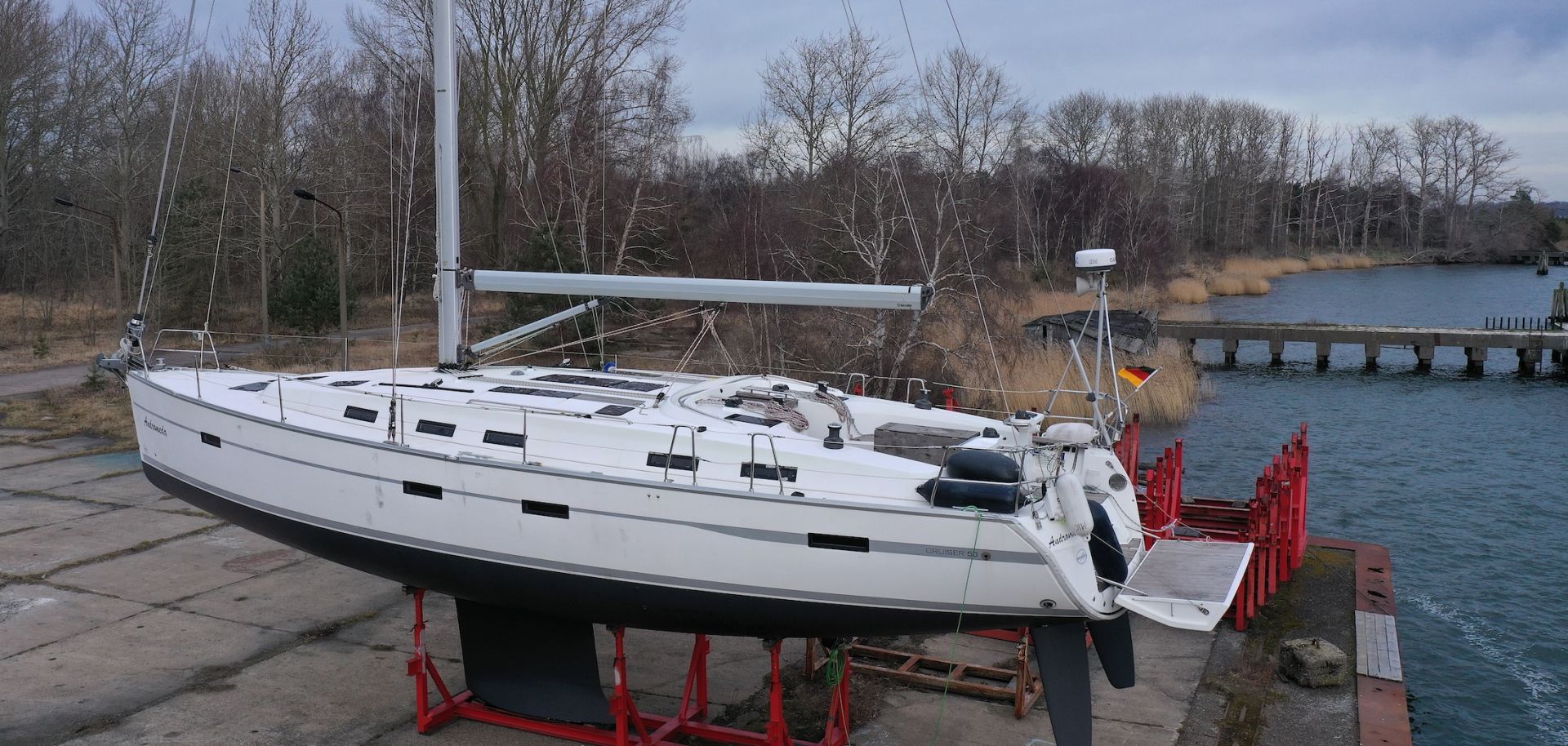
In a high-profile article published late on Aug. 14, The Wall Street Journal provided the latest and arguably most detailed publicly available account that Ukraine was responsible for sabotaging the Nord Stream 1 and 2 pipelines under the Baltic Sea in late September 2022. The plan reportedly was hatched during an evening of heavy drinking among the plotters in May, shortly after Ukrainian soldiers had repelled Russia's initial invasion force. Financed by private businessmen and senior military officers, the operation that emerged four months later reportedly cost only about $300,000 and involved a chartered pleasure yacht with a crew of six, including well-trained soldiers and expert civilian mariners. In the nearly two years since the risky and highly secretive sabotage operation was carried out, numerous allegations have emerged that Ukraine was responsible — most Western intelligence services appear to have largely known or at least assumed this for more than a year — and widespread speculation regarding the implications of Ukrainian complicity, if confirmed. While it remains to be seen whether the article, published just a day after it came to light that Germany had issued an arrest warrant for one of the alleged Ukrainian saboteurs in June, will harm Ukraine's relations with its Western backers (and with Germany in particular), at a minimum the recent revelations are a useful case study for how we as analysts assess situations amid deep uncertainty. Like much of the world, we originally judged — with good reason at the time — that the most likely perpetrator was Russia. Given the information we had at the time, it had the greatest ability to carry out the sabotage operation. Moreover, even if sabotaging its own natural gas pipelines would have been counterproductive, we theorized about multiple factors that could have incentivized Russia to attack European energy infrastructure. But if we assume the validity of information that has now come to light, we can identify at least three analytic biases that we should always be aware of.
The Unitary Actor
To put it lightly, making sense of the world is a difficult business. One of the most challenging parts is that there are so many actors — countries, companies and armed groups, to name just a few of the many we routinely assess in our daily work — that a frequent analytic assumption is that each actor is a single, united entity that implicitly rules out internal differences. This is a convenient analytic shortcut to help make sense of a complex world, but we know it often fails to pass muster. Consider how many times the leader of a country wants to pursue a policy, but is stymied by legislative opposition — not to mention by the countless government agencies, interest groups and other constituencies that affect policymaking. We know these things happen frequently, yet we often talk about countries' policies as if there is complete unity among the many (and frequently divergent) actors that influence a country's actions.
Assuming the journal's reporting is accurate, there were multiple cleavages within Ukraine as an entity that illustrate the fallacy of the unitary actor model. First and foremost, President Volodymyr Zelensky allegedly initially approved the plan, but subsequently ordered it stopped after pressure from the CIA, which had learned of the plot. But despite Zelensky's direction, Ukraine's then-military chief, Valerii Zaluzhnyi, reportedly nonetheless went ahead with the operation, supposedly because Zaluzhnyi claimed it had already begun and could not be called off. Perhaps this was true, perhaps this was a coordinated excuse to provide Zelensky a degree of plausible deniability in being able to blame a subordinate or — perhaps, especially given the eventual falling out between the two — Zaluzhnyi simply did not care what Zelensky wanted. Whatever the reason, there was clearly not a united Ukrainian actor.
Also consider the role of Ukrainian businessmen in the plot. As analysts, we tend to think of military operations, especially those as secretive as this, as the preserve of governments — not something the private sector is involved with. Yet the journal report indicates that the plan may not have ever gotten off the ground without significant support from private businessmen. As the military reportedly had no funds to finance the sabotage operation, it apparently fell to businessmen to provide the money. Moreover, it was a businessman who apparently leased the boat that was eventually used. While media reporting thus far has not confirmed as much, it is reasonable to assume that the extensive role of private businessmen extended to other parts of the sabotage operation.
Mirror Imaging and Rationality
Another major analytic challenge is to try to view the world from the perspective of the actors we are assessing. Given that each of us is the product of the environment in which we were initially raised and then exposed, this is incredibly hard. Thus, our analysis often defaults to assuming that other actors' perceptions match our own and, as such, will act in ways that we assume to be rational. To be fair, we have analytic tools — like using the framework of empathetic analysis — that can help, but these are imperfect. After all, can we seriously put ourselves in the shoes of the leader of a terrorist group and truly understand how he sees the world? We can certainly try, but this is incredibly hard to do effectively all the time. But failure to do so comes at a major cost because other actors do not necessarily interpret events as we do, nor do their actions necessarily match our perceptions of what is rational behavior.
Again, the journal reporting, if accurate, illustrates this problem. The Ukrainian operation was very risky, not merely due to the logistical challenges of physically carrying out the sabotage operation, but also due to the potential repercussions of alienating Western backers at a time when the Ukrainian military was in dire need of Western support. That those involved apparently deliberately did not write anything down to avoid leaving evidence testifies to the fact that they knew the operation would be incredibly controversial, especially with some of their closest foreign allies. In forging ahead with the operation, the Ukrainian officials aware of the operation did not follow the directions of the United States and imperiled relations with Germany (the end point for the Nord Stream 1 and 2 pipelines) — Ukraine's two largest military backers. More broadly, even though neither pipeline was delivering gas at the time, the sabotage risked spiking natural gas prices at a time when Europe was deeply concerned over supply shortages ahead of the colder winter months. Moreover, the operation could technically be considered an act of war under international law. Given the incredibly high stakes, reasonable analytic mirror imaging from our perspective would assume that it would not be rational for Ukraine to forge ahead with the plan, especially because the sabotage operation had unclear benefits. And yet from the perspective of those involved in the plot, the high-risk endeavor was apparently ultimately worth it if it could even slightly reduce Russia's natural gas leverage over Europe.
Military Culture
Just like societies, countries also have different cultures when it comes to their militaries. These are products of their unique histories, bureaucratic processes and a host of other factors. Like many NATO allies, but to an even greater extent, the United States has traditionally prioritized the development, acquisition and use of high-cost, high-tech capabilities to gain a decisive edge to dominate an adversary in conventional warfare. U.S. citizens like me (and most other Westerners) begin from this perspective, but we implicitly know that other countries' militaries do not necessarily operate in the same way. Furthermore, despite decades of fighting insurgencies in which this U.S. (and, in many cases, a broader Western) way of war has shown its clear limitations, as analysts we often default to this perspective on military power.
Once again, the journal report, if accurate, shows the weakness of this logic. It would be perfectly reasonable to assume that the complexity of the sabotage operation required the resources of a highly capable nation-state like Russia that could marshal the resources of vast security services, underwater vehicles, advanced satellites and other capabilities. After all, the plan required perpetrators to blow up pipelines about 260 feet below the surface of the Baltic Sea in an incredibly precise fashion that avoided carrying out the attacks in NATO's territorial waters, and then escape. Moreover, how could Ukraine, which was literally fighting for its survival at the time, divert sufficient resources and keep such a sabotage operation hidden from public view? And yet, the plan reportedly cost just $300,000 and involved only simple diving gear, basic navigation equipment and publicly available maps of the sea — all of which were carried out on a fairly small pleasure yacht.
Making the Best of It
At the risk of sounding defensive, none of these points mean that we got it "wrong" when we initially judged that Russia was the most likely culprit. Given the information publicly available at the time, and our knowledge of past Russian and Ukrainian behavior, this judgment call makes sense. But the passage of time always brings more details to light, and thus it is incumbent on us as analysts to factor in new information as we make our judgments going forward.
In this case, further confirmation beyond what had already come to light that Ukrainian leaders were willing to take such a large risk, even after reportedly being explicitly warned against doing so by the United States, indicates that at least some portion of Ukraine's leadership is much more risk-tolerant and the military forces more operationally capable and creative than we originally judged. Thus, as we now assess Ukrainian intentions and capabilities going forward, at a minimum we need to consider this high-risk behavior, as confirmed most recently in Kyiv's ongoing incursion into Russian territory. While many analysts, including our team, judge that the outcome of the U.S. election will be a crucial determinant of the future of the Russia-Ukraine War, it may not play out as most people envision. That is, should the reelection of former President Donald Trump lead Washington to reduce aid to Kyiv, this will not necessarily automatically translate into a decreasing intensity of the war as the Ukrainian military receives far less U.S. support and instead greater U.S. pressure to negotiate with Moscow. Perhaps instead, and as we highlight as a lower likelihood but higher impact scenario in our most recent assessment of the Ukraine conflict under a Trump presidency, a reduction in U.S. backing will merely embolden Ukraine to be more aggressive in attacking targets inside Russia, pressed by desperation that doing so is its last best option. This is of course no guarantee, but doing so would significantly raise the threat of a direct NATO-Russia conflict and, having now learned even more about Ukraine's role in the Nord Stream sabotage, such a scenario is eminently plausible.
And of course, bearing in mind these analytic biases is applicable far beyond our assessment of the trajectory of the Russia-Ukraine War. As we evaluate the likelihood of a wide variety of other scenarios — from the immediate trajectory of the crisis in the Middle East to the longer term risk of a Chinese invasion of Taiwan — it is crucial to bear these analytic biases in mind when we make our judgments. It is precisely when scenarios are most uncertain and publicly available information is most limited (or conflicted) that we need to fall back on the basics of our analytic tradecraft.
