
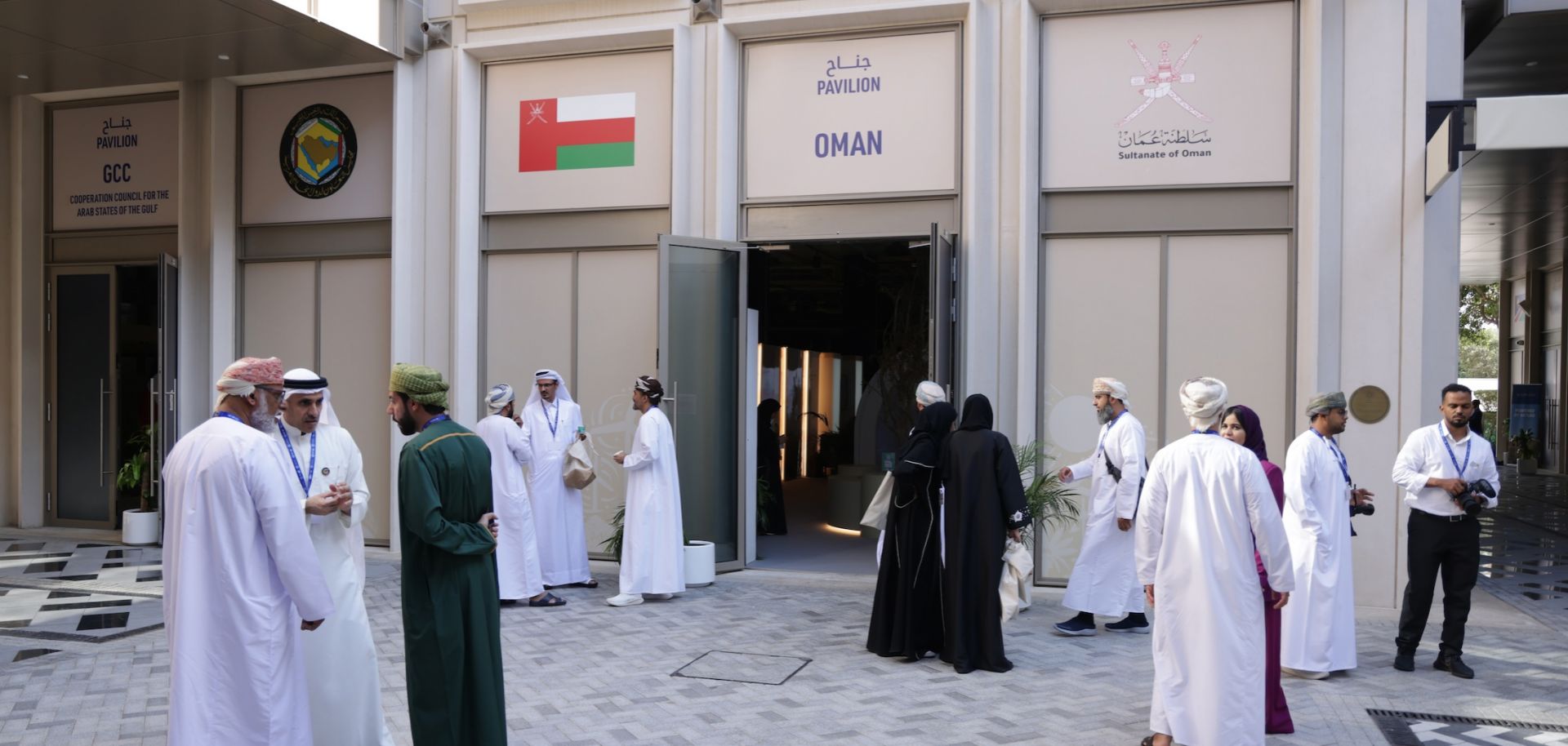
The July terrorist attack in Oman is unlikely to generate domestic political backlash or economic harm, and it is unlikely to indicate a greater threat of terrorist attacks in Gulf Cooperation Council, or GCC, countries. However, the attack will likely lead to a regional security crackdown against suspected terrorists and government critics. Nearly a month has passed since Oman suffered its first terrorist attack claimed by the Islamic State. On July 15, three Omani brothers killed six individuals — an Omani police officer, four Pakistanis and one Indian — and injured at least an additional 28 others at the Ali bin Abi Talib Shiite mosque in Muscat on the eve of the Shiite holiday Ashura. The three militants initially opened fire from the building adjacent to the mosque and then proceeded to hold some worshippers hostage before Omani security forces released the hostages and eventually killed the three militants. The following day, the Islamic State claimed responsibility for the incident, posting a video on its Telegram site that allegedly showed the attack.
- The three siblings reportedly held positions in an unnamed government ministry, within the Central Bank of Oman and in a municipal government — and the Royal Oman Police's subsequent investigation found that they supported extremist ideologies. A fourth brother posted a video condemning his militant siblings' actions and stated that their actions threatened national security.
- Violent attacks are very rare in Oman, and the country's curtailed media environment means details are rarely released. One of the last notable incidents prior to the July attack was a February 2022 attack in which a non-Omani violent extremist followed an American citizen to his residence and assaulted him with a knife. Omani security forces subsequently detained the perpetrator and deported him, but little other information on the incident has been made publicly available.
The Islamic State directed attacks against GCC countries in the mid-to-late 2010s, but the group's weakened capabilities and improved GCC counterterrorism efforts have more recently shifted the threat to radicalized individuals acting independently. Terrorist attacks and other violent incidents are very rare in Oman, largely due to the country's adept security forces and neutrality in regional affairs. These factors largely insulated Oman from Islamic State attacks between 2015 and 2019, when the group coordinated assaults against other GCC countries, including Saudi Arabia and the United Arab Emirates. The Islamic State previously declared Saudi Arabia its enemy due to Riyadh's close ties with the West, and the group has depicted conquering Saudi Arabia in its propaganda. However, even at the Islamic State's peak, the group never controlled significant territory on the Arabian Peninsula, and regional affiliates, including Islamic State Najd Province (its branch in Saudi Arabia) and Islamic State Yemen Province, had membership numbering in the hundreds of fighters, mostly composed of former al Qaeda fighters. As the Islamic State's capabilities in the Arabian Peninsula have weakened, both due to significant efforts by GCC security forces to crack down on extremist sympathizers and a broader regional weakening of the Islamic State following the collapse of its caliphate in 2019, the main terrorist threat in GCC states has come from individuals or small cells inspired by the Islamic State or other extremist groups, but who act independently.
- The Islamic State, like many Islamist terrorist groups, has tried to gain momentum from Hamas' Oct. 7, 2023, attack on Israel and resulting anger over Israel's invasion of Gaza to boost recruitment, despite the Islamic State's divergence in ideology and at times criticism of Hamas. As a result, individuals and small cells inspired by the Islamic State have attempted and in some cases successfully conducted gun, knife and crudely made bomb attacks around the world, often without any direct contact with the Islamic State.
- Islamic State Najd Province was established in 2014 and claimed responsibility for several mosque attacks within Saudi Arabia and Kuwait, including the May 2015 suicide bombing of a Shiite mosque in Saudi Arabia's Eastern Province that killed at least 21 individuals. Radicalized individuals have also conducted attacks in the region, including stabbing attacks in Riyadh and Abu Dhabi.
- All GCC countries are part of the Global Coalition to Defeat ISIS. GCC countries have worked to counter Islamic State propaganda and online recruitment activities, provided funds in Iraq and Syria to stabilize the liberated regions formerly controlled by the Islamic State, and arrested hundreds of individuals purported to support the group or allegedly planning to execute attacks.
The attack is very unlikely to result in domestic backlash against the sultan and Omani government or harm foreign investment opportunities due to the swift and competent response of the Omani security forces and the infrequency of attacks. The Omani government led by Sultan Haitham bin Tariq Al Said will likely face little domestic backlash for the attack because most of the victims were not Omani nationals and a single attack is unlikely to undermine perceptions of security in the country. Moreover, the first responders' and security forces' swift response to free the hostages, provide medical care to those injured and conclude an investigation within days of the attack have instilled confidence in the government's ability to respond to such attacks. Several foreign ministries from regional countries, including Saudi Arabia, praised the Omani security forces' "speed and efficiency." In addition, the rarity of the event means it is very unlikely to threaten opportunities for foreign investment in the country as Oman makes efforts to diversify its economy. Oman will need to maintain its low-risk security environment to maintain investor confidence, but one isolated attack is unlikely to change international perceptions of the country's security.
- Oman seeks foreign investment as part of its Vision 2040 plan to diversify its economy from oil and gas and expand its tourism, logistics and manufacturing sectors. Foreign direct investment, which comprises 75.9% of foreign investment in Oman, has increased over time. In 2022, Oman received 27,135 billion Omani riyals (around $70 billion) in foreign direct investment, an 8.2% increase from 2021.
Despite the likely lack of political and economic consequences, the attack will probably lead Oman and other regional countries to crack down on terrorist threats and government critics. Against an uptick in Islamist extremist propaganda calling for attacks against Western targets and countries seen as pro-Western, the shock of the attack will increase security concerns in the short to medium term in Oman and other GCC countries. Security concerns are particularly high following the success of recent high-profile Islamic State attacks in other regions, such as the January and March mass casualty attacks in Iran and Russia, respectively, as these successes may inspire radicalized individuals or small cells to carry out attacks with readily available weapons like firearms, knives or even crudely made improvised explosive devices. Additional successful attacks, especially in the Middle East, may further embolden radicalized individuals to attempt similar attacks. To forestall this prospect, GCC countries will likely crack down on suspected extremist supporters and make a series of arrests not only to thwart potential terrorist attacks but to demonstrate security forces' abilities. To prevent terrorist groups' online recruitment efforts, GCC security forces also will likely increase their online presence and crack down on the social media accounts of extremist suspects. Under the guise of counterterrorism efforts, security forces will likely also target human rights activists, government critics and other individuals seen to be inciting "social unrest," citing terrorism concerns stemming from the Oman attack and regional tensions. The United Arab Emirates and Bahrain — GCC countries that have normalized relations with Israel as part of the Abraham Accords — as well as Saudi Arabia will also likely target pro-Palestinian critics of Israel and the governments' stances on the Israel-Hamas war. However, details of the Oman attack do not demonstrate that extremist sympathizers in GCC states have gained heightened capabilities, as the attackers acted on their own and used guns, which are relatively easy for GCC citizens to obtain for hunting and sporting purposes (though they are less accessible for personal ownership). Furthermore, the attack does not portend a reorganization of the Islamic State on the Arabian Peninsula since it was perpetrated by radicalized Omani citizens who did not cross borders or receive broader support from a larger Islamic State cell in the region.
- The attack will likely lead Oman and GCC countries to scrutinize members of the Al-Hasani tribe, of which the militants were a part. Due to tribal lineages and historical migration patterns in the Arabian Peninsula, there are likely many Al-Hasani family members in other GCC countries. Since the three brothers shared extremist views, other countries will likely investigate whether other family members share similar ideologies that may indicate their intent to conduct a terrorist attack. In addition, the attack may increase scrutiny of government workers and their ideologies since two of the siblings had careers within different levels of the Omani government.
- On Aug. 2, the United Arab Emirates' Public Prosecution claimed that it uncovered efforts to resurrect the al-Islah movement, which the country considers a terrorist organization and is closely associated with the Muslim Brotherhood. Emirati news sources have alleged that in addition to financing terrorism, engaging in money laundering and supporting foreign efforts to destabilize Emirati security, fugitives from the 2013 al-Islah crackdown have provided "false information" to international human rights organizations and degraded the United Arab Emirates' reputation abroad. These allegations likely indicate that human rights activists and government critics have been included in government terrorism investigations.
- Saudi Arabia executed 100 people between January and mid-July, frequently due to political dissent. This marks a 42% increase in executions compared with the same time in 2023.
