
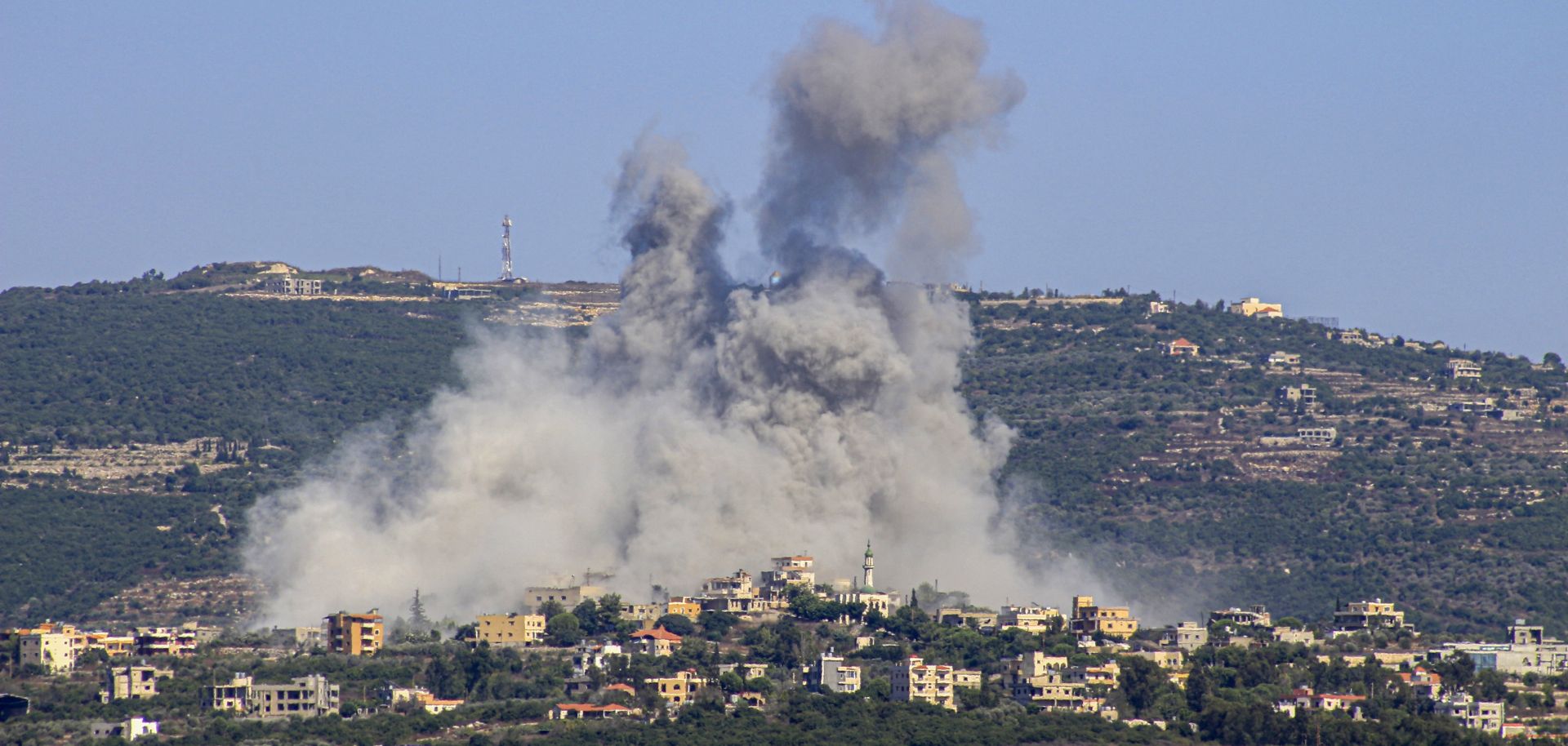
Israel will likely respond to the deadly rocket attack on Majdal Shams by intensifying its attacks on Hezbollah military sites deeper in Lebanon, though despite its current preference to avoid sparking a full-scale war, should Israel strike Beirut in its response, Hezbollah would retaliate by striking Haifa or Tel Aviv, initiating a tit-for-tat cycle that would almost certainly slide into a wider war. On July 28, Israel's security cabinet granted Prime Minister Benjamin Netanyahu's government the authority to determine the ''manner and timing'' of a response to a deadly rocket attack in the Israeli-controlled Golan Heights on July 27. In that incident, a rocket struck a football field in the town of Majdal Shams, killing at least 12 individuals, including teenagers and children, while injuring dozens of others. Israel quickly attributed the attack to the Lebanese armed group Hezbollah, which had launched dozens of rocket attacks just before the incident, including an attack on an Israeli military base around Mount Hermon a few miles away from the town of Majdel Shams. The United States also attributed the attack to Hezbollah, though the group was quick to deny involvement, instead claiming Israel's air defense system had failed and that one of its rockets hit the football field. The incident marks the deadliest in Israel or Israeli-annexed territory since the Oct. 7 surprise attack by the Palestinian militant group Hamas that triggered the ongoing war in Gaza. In response, Israel has pledged a strong-scale retaliation against Hezbollah in Lebanon, raising the specter of a slide toward a wider war.
- In response to the attack on Majdal Shams, Israeli politicians largely united in demanding escalation, with opposition leader Yair Lapid calling for action that would end the threat to Israel's north, while far-right politicians, like Finance Minister Bezalel Smotrich, demanded strikes on Beirut itself in retaliation.
- On July 27, Israeli air defenses intercepted a Hezbollah reconnaissance drone heading toward the Karish gas field, a contested area with Lebanon for decades. In a speech the week earlier, Hezbollah Secretary General Hassan Nasrallah threatened to target unevacuated Israeli border towns and deeper areas in Israel if Israel continued to strike civilians in Lebanon.
- Since June, both Israel and Hezbollah have intensified their attacks deeper into each other's territories, with Israel consistently striking Hezbollah infrastructure in southern Lebanon and Hezbollah targeting areas in Israel's lower Galilee, including Nahariya, Acre and regions near Nazareth.
Israel is unlikely to immediately launch a wider ground military operation on Lebanon, but will intensify its attacks in ways that sustain the risk of a larger conflict. Israel's reluctance to initiate an imminent ground invasion in the wake of the Majdal Shams attack is due to several factors, including the town's location in the disputed Golan Heights and the victims' Druze identity, whose community has a weak political influence in the Israeli government. Furthermore, Western powers, notably the United States, have urged Israel to avoid striking targets, such as Beirut, that might provoke a stronger Hezbollah response to prevent tensions from escalating into a regional war. Despite these constraints, the Majdel Shams attack offers Israel an opportunity for a more significant escalation than usual, which it will likely seize to intensify its targeting of Hezbollah military infrastructure, potentially expanding its air campaign to include southern Lebanese cities like Nabatieh, Tyre and Sidon, while also targeting towns in the Bekaa Valley more often. This escalation would likely also involve airstrikes on Hezbollah positions and stockpiles in Syria. Additionally, Israel may use this opportunity to assassinate Hezbollah commanders and officials who are higher up in the group's chain of commanders, and are located in areas deeper inside Lebanon and Syria. In response to these attacks, Hezbollah would likely strike sensitive Israeli military sites in Israel's north. To this end, daily skirmishes between Israel and Hezbollah will likely intensify in the coming weeks, thereby sustaining the possibility of either side conducting a miscalculation similar to the Majdal Shams attack that could then trigger a wider conflict.
- Israel has clearly communicated, via diplomatic channels and several public statements by Israeli officials, that retaliation is intended to damage Hezbollah without triggering a wider war, despite calls from the Israeli far-right to launch an invasion into Lebanon.
In the unlikely event that Israel attacks the Lebanese capital of Beirut or strikes vital civilian infrastructure such as the city's international airport, Hezbollah would likely respond by targeting major Israeli cities like Tel Aviv, Haifa and Jerusalem, or Israel's gas fields, almost certainly triggering a wider war. Under either political pressure or out of a strategic desire to respond strongly to the Golan Heights attack, Israel may still choose to strike high-profile targets in missions intended to signal the escalated risks of Hezbollah action against Israel. Such an attack would initiate a tit-for-tat cycle by making Israel's targeting of major Lebanese cities more frequent, which would, in turn, likely compel Hezbollah to respond in kind by attacking Israeli cities to maintain its deterrence capabilities and uphold the pre-existing rules of engagement with the Israel Defense Forces (IDF). If Israel does decide to strike Beirut, it would be intended to deliver a political and logistical blow to Hezbollah, demonstrating the group's inability to protect vital Lebanese infrastructure and cutting off its air supply route to Iran. While Israel would hope to deter the group from responding to such an attack and push it toward a military withdrawal from southern Lebanon, a strike on Beirut — especially if accompanied by more frequent attacks against other major Lebanese cities and civilian infrastructure — would breach significant red lines for both sides, making sustained war almost certain. An Israeli attack on Beirut would also significantly increase the risk to personal safety in Israel, particularly for travelers, due to potential collateral damage. Targeting the Beirut airport would cause substantial travel disruptions, especially if the runway is targeted, similar to the 2006 war.
- The United States has cautioned Israel against targeting Beirut, fearing that it would cross Hezbollah's red lines and trigger a wider war, especially as Hezbollah would respond proportionally by targeting other cities.
- The Associated Press reported on July 28 that Hezbollah has moved its more advanced precision-guided missiles away from Lebanon's southern border with Israel to protect the missiles and retain them for use should there be a need in the aftermath of Israel's impending retaliation.
The Golan Heights attack will make Israel's political leadership more hawkish, raising the specter of Israeli ground incursions into Lebanon in the coming months, in turn keeping the risks of regional war elevated. The IDF has already completed operational plans for a major cross-border operation in southern Lebanon and awaits the political order from the government to carry them out. The Israeli government — wary of the lessons of its 2006 war with Hezbollah, which saw the Israeli government collapse not long after the conflict ended — is hesitant to invade without sufficient political support, both at home and abroad. But the recent Majdal Shams attack has notably increased domestic and international support for an operation to secure Israel's northern border, with the United States reinforcing that Israel has a right to defend itself from such attacks. Barring an unlikely diplomatic breakthrough between Hezbollah and Israel that sees Hezbollah withdraw from the border zones and end its attacks on Israel, Israel's government will continue to mobilize resources and international support for eventual ground incursions designed to pressure Hezbollah into withdrawal. But even a limited ground incursion would be difficult to contain to the areas along the Israeli-Lebanese border, especially if Hezbollah finds itself quickly overwhelmed by Israeli ground forces and feels compelled to strike Israeli cities to deter further Israeli progress, pushing the conflict into a wider war that could draw in Iran and the United States.
- Additionally, sustained escalation in the north could incentivize Israel to quickly reach a cease-fire with Hamas, as Netanyahu's government faces greater pressure to end the war in Gaza and shift its focus to the more acute threat posed by Hezbollah to Israel's north.
