
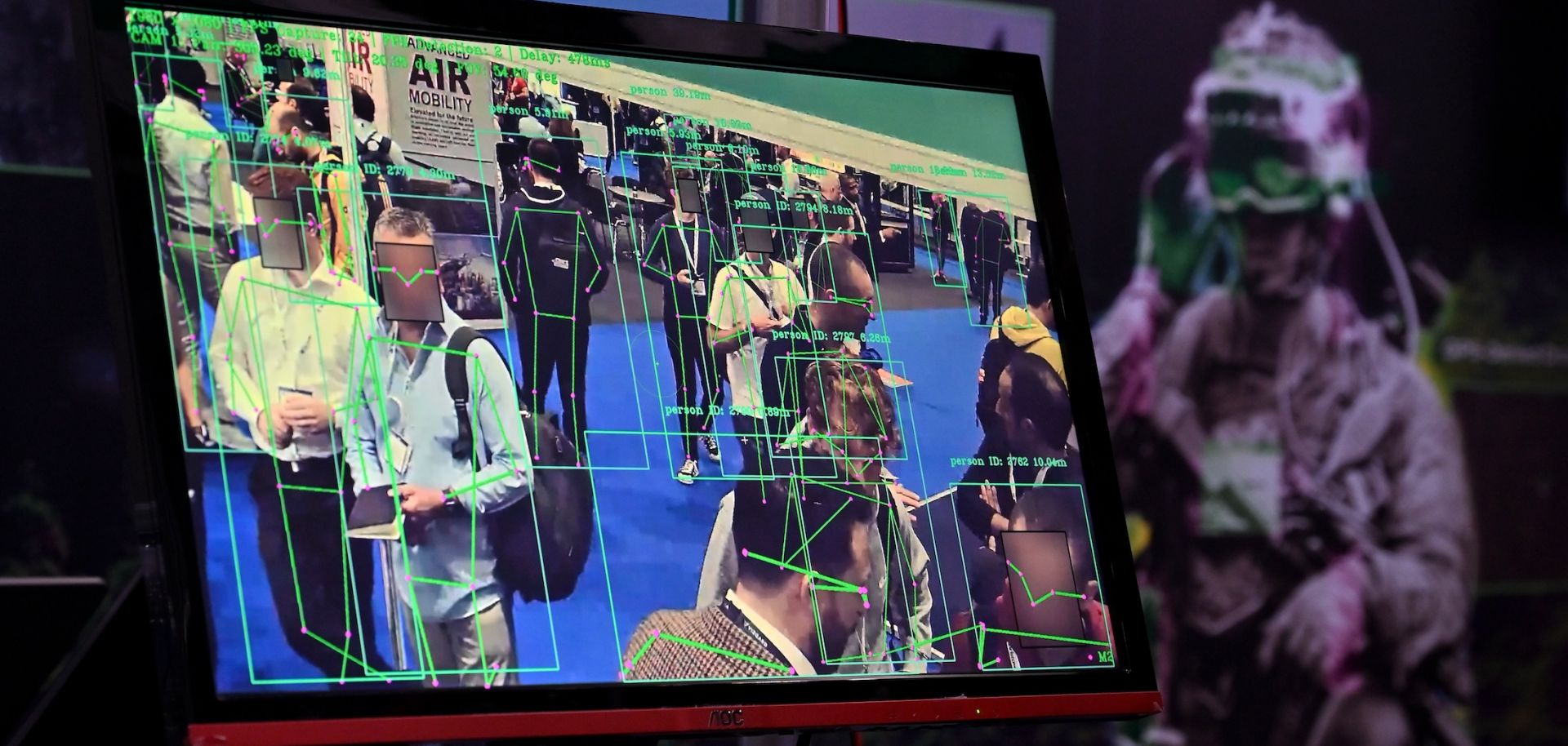
The development of autonomous military artificial intelligence (AI) systems will primarily be driven by global powers, especially those that are willing and able to test such systems in warzones around the world, which will initially reduce the technology's application for smaller, less-resourced countries. Since Russia launched its invasion in February 2022, Ukraine has become a testing field for various autonomous military AI applications. This resulted from a combination of efforts from Western companies bolstering aid in support of Kyiv and the fact that Ukraine's battleground provides access to prime military data to better train systems. Among these are U.S. and European companies focused on autonomous drones, along with more specialized companies analyzing battlefield data for military decision-making, facial recognition and other applications. Russia, which does not have an advanced AI industry, has allegedly deployed AI-powered drones in Ukraine, but a lot of ambiguity exists surrounding Russia's actual capabilities in AI weaponry.
- U.S.-based data analytics firm Palantir — a government contractor known for providing software to U.S. Immigration and Customs Enforcement (ICE) and of which the CIA was an early investor — has undertaken significant projects in Ukraine, going as far as to establish an office in Kyiv. Palantir's software uses AI to analyze satellite imagery, open-source data, drone footage and ground reports to present military options. In Ukraine, this has been applied to targeting in addition to intelligence collection, clearing land mines and helping with refugee resettlement.
- The United States and the United Kingdom are working to provide Ukraine with thousands of AI-powered swarm drones that could simultaneously target Russian targets.
- Ukrainian developers have said that their Saker Scout drones can find, identify and attack 64 different types of Russian military objects without a human operator.
As tech companies seek to take advantage of the real-life testing ground in Ukraine, several governments around the world have also sought to integrate AI for autonomous systems into their military arsenals. China and the United States are engaged in a race to develop autonomous applications, including fully autonomous weapons and AI-powered submarines and vehicles, though many of these projects remain classified. In the United States, the Department of Defense (DoD) has devoted considerable resources to Project Maven, an advanced surveillance system that would enable the military to automatically detect targets. At this stage, Maven is being used to analyze satellite imagery and other data for the initial identification of potential targets, but it is not being used to verify the targets or to autonomously deploy weapons against them. More recently, the DoD on Feb. 21 confirmed the deployment of Combined Joint All Domain Command and Control (CJADC2) to increase battlefield awareness for military operations, indicating a concerted effort by the U.S. military in recent years to build out its AI automation capabilities.
- In response to the growing military threat posed by China, Australia has invested resources into developing advanced AI-powered unmanned submarines, known as GhostSharks, which will be delivered by 2025. AI firm Anduril is aiming to build a factory in Australia to deploy these submarines ''at scale'' and also said it hopes to build the same type of submarine for the United States and its allies, including Japan, Singapore, South Korea, the United Kingdom and other European countries — all well-resourced nations with highly developed tech sectors.
- In 2023, China claimed to have developed an AI drone that can beat a human-operated unmanned aerial vehicle (UAV) in an aerial dogfight.
Over the next decade, highly advanced Western militaries and China will drive the development of autonomous weapons systems, while other countries will be constrained by a lack of access to quality training data and AI for autonomous systems' specialization. The countries that are rapidly developing AI for civilian applications include major Western military powers like the United Kingdom and the United States, as well as China and Israel. These countries will lead the way in cutting-edge technological innovation for military purposes due to their ability to leverage the already growing commercial AI talent and development pipeline, helping set the stage for how the technology will be applied within militaries. In the long run, such innovative countries will be able to train systems for general use cases, like predicting ice patterns and weather, which will aid in military planning. This means that systems will have to be retrained to become effective in new environments, such as desert terrain, as opposed to mountainous terrain on which they were originally trained. Applications will eventually trickle down to other militaries, especially as Western tech companies invest in testing new projects in emerging conflicts. Autonomous systems for sea and air, in particular, will likely be among the first to trickle down, as they are more transferable from environment to environment and are much easier to apply to alternative terrains compared with autonomous land systems. However, less well-resourced countries will still initially struggle to both train and test competent AI for autonomous systems due to multilateral or Western export controls, as well as their comparative lack of access to technological expertise, computational resources, and quality data for the intended purpose. Indeed, many less innovative countries may lack the financial and technological capacity — and/or desire — to undertake such projects, particularly for autonomous land systems. Professionals working in AI development will also be more likely to emigrate to more innovative countries in the West and Asia in hopes of better developing their education and skills, and advancing their careers, further hindering the ability of smaller, less-resourced countries to foster flourishing tech sectors and capitalize on the promise of AI innovation.
- Iran, for example, would feasibly have an interest in developing autonomous AI-military applications that it could use and also sell to other countries. But it would likely only be able to train such systems on testing data from Iran's specific terrain, weather patterns and altitude, reducing their effectiveness in an environment like Russia where there is significantly more tree coverage. Retraining autonomous military AI systems on environments different from those on which they were originally trained is an expensive and lengthy process that Iran and other countries with limited resources may deem not worth the time, effort and cost.
- The initial military adoptions of AI for autonomous systems will also lay the groundwork for how the technology will be governed internationally. Though this will primarily be a concern for Western nations that operate under a certain set of internationally agreed-upon global norms, it will nonetheless shape regulatory considerations for how autonomous AI-military applications will proliferate, and there may be some limits in place for how the technology can be shared.
Western tech companies will spearhead the development of autonomous military AI systems particularly in countries at war, which could build up the tech sectors of less well-resourced nations, but will also pose reputational risks for the companies testing and creating such technologies in particular conflict zones. For example, the AI testing ground that Ukraine has provided is creating applications specific to the Ukraine war. Palantir is leveraging AI trained on battlefield data collected in the conflict to help improve the targeting functions of tanks and artillery in Ukraine. This means that AI-enhanced targeting functions are being programmed specifically for use in Ukraine and will not be transferable to autonomous systems elsewhere because the same factors that improve targeting in the context of Ukraine may not be applicable in another setting. Tech companies may similarly capitalize on other emerging conflicts around the world to test data for emerging AI military applications. Such companies will also be incentivized to provide support to countries in conflict to access raw battlefield data to better train systems, provided that international regulations allow such action. This could help advance tech industries in countries that currently lack the technological expertise and financial resources needed to develop this sector of the economy. However, companies involving themselves in various conflicts — especially contentious ones like the ongoing Israel-Hamas war in Gaza — will also open themselves up to reputational risks, which could lead to boycotts of their services, media scrutiny and loss of important contracts external to their military applications.
Subsequently, autonomous AI military systems will be less effective in alternative environments, and less well-resourced nations will struggle to retrain access to such systems. If less well-resourced nations decide to undertake the investment to develop autonomous AI military systems, they may share the applications with neighboring countries with similar environments. For example, countries can utilize advancements in transfer learning and domain adaptation techniques to make applications more effective for new environments, though this would require access to high-level technical talent and a well-developed tech sector. In Ukraine, Western businesses have been incentivized to develop applications in the name of defense of democracy and for their own purposes in accessing battlefield training data from the primary source.
- AI-powered drones differ drastically from remote-controlled drones in how they are developed and operated. Many drone operators in Ukraine are able to use commercial, plastic remote-controlled drones to destroy much more advanced (and expensive) Russian weapons. This is because drone technology has become highly accessible through the ability to use sensors and algorithms to translate user inputs into precise commands for the drone to execute. In contrast, AI-powered drones operate autonomously without human control and require vast troves of training data to understand how to execute commands on their own. Remote control technology was able to proliferate in a relatively short time frame over the past decade as this technology became more widely applicable for commercial purposes following its initial use in military settings in the 1980s.
