
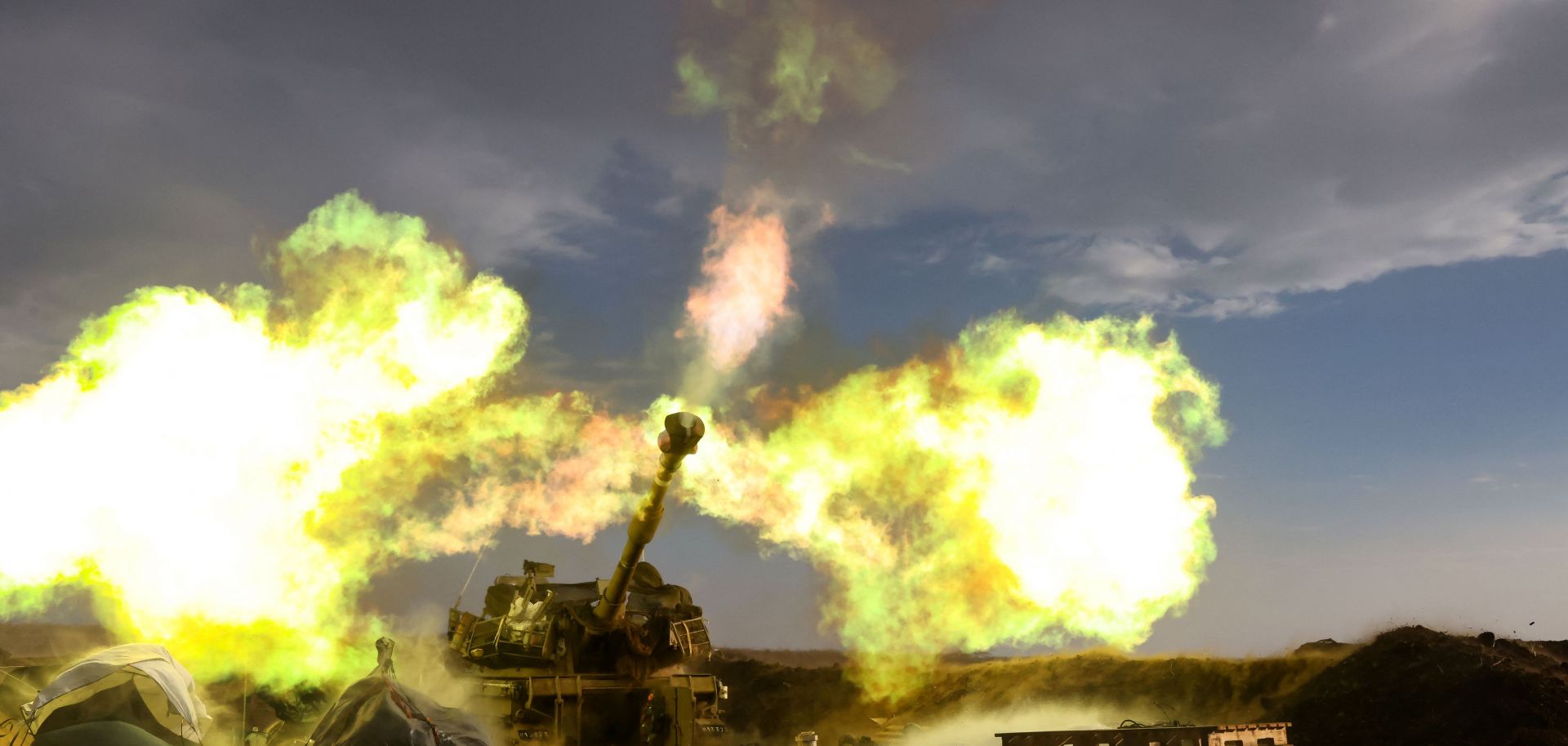
While a full-scale invasion of Lebanon is unlikely, in the coming weeks Israel will consider escalatory measures that involve stronger action against Hezbollah inside Lebanon, creating the risk of a multifront and lengthy war for Israel. As tit-for-tat exchanges escalate on the Israeli-Lebanese border, Israeli politicians are threatening widespread military action against the Lebanese militant group Hezbollah. In the latest saber-rattling statement from Israeli officials, Israel Defense Forces Chief Lt. Gen. Herzi Halevi on Jan.10 told Israeli troops that the government would put them in the necessary places to secure the northern border. The Israeli Health Ministry also warned hospitals in northern Israel to be ready to receive mass casualties and plan for potential disruptions to medical supplies in the event of a large-scale Hezbollah attack. The comments and warning come after an escalation between Israel and Hezbollah that has seen Israel target more high-profile Hezbollah military leaders in Lebanon and Hezbollah retaliate by trying to strike strategic Israeli military targets. These incidents are part of a wider pattern of steady escalation between the two sides as Hezbollah acts on its political imperatives to carry out solidarity attacks alongside Hamas in the course of the Gaza War, while Israel aims to establish a new strategic paradigm with Hezbollah that slows the militants' ability to cross the border and its northern frontier in response to the rapid Oct. 7 Hamas offensive in southern Israel.
- Since the 2006 Israel-Hezbollah War, the two sides have maintained a doctrine of reasonable deterrence with one another, carrying out symbolic clashes or limiting their retaliations to the Golan Heights. This comes after both sides' political leadership concluded that the 2006 war's inconclusive results came at too high an economic and military cost.
- Fighting with Hezbollah has remained limited mostly to the border, which has resulted in evacuations on both sides. But in Israel, where some 80,000 civilians have fled the northern border, many northern communities worry they will face an eventual Oct. 7-style assault from Hezbollah or Palestinian militants based in Lebanon, with mayors saying they will not support a return home until the IDF has established a sufficient buffer with Hezbollah.
- There is already nominally a U.N. buffer zone meant to be monitored by U.N. peacekeepers under the U.N. Interim Force In Lebanon and meant to be enforced by the Lebanese Armed Forces under the 2006 U.N. Resolution 1701. But this resolution has never been enforced, and Hezbollah enjoys freedom of action in the country's south.
- For its part, Hezbollah has signaled that it has no interest in escalating into a major war, but these signals are increasingly falling on deaf ears in Israel, where politicians, civilians and the military establishment have reframed their views of risks to Israel's borders after Oct. 7.
- In addition, Hamas is also building up bases in southern Lebanon alongside other militant groups, further incentivizing Israel to take action there.
Israel's ongoing military strategy is to use targeted escalation to pressure Hezbollah to withdraw from the border. This strategy relies on the steady escalation of targeted attacks on Hezbollah military leaders and assassinations of Hamas leaders deeper inside Lebanon to signal existential threats to Hezbollah's commanders and convince them to accept weaker positions on the Israeli border short of major Israeli ground operations. This strategy requires fewer Israeli military resources and allows the northern border to remain largely staffed by reservists as frontline combat units continue operations in the Gaza Strip. It also signals Israel's continued interest in a political outcome that sees the enforcement of U.N. Resolution 1701 and the withdrawal of Hezbollah forces from southern Lebanon. But this strategy creates new political incentives for Hamas and Hezbollah to retaliate against Israel directly for its targeted operations, especially for the assassination of leading commanders and officials. And this retaliation in turn reinforces Israel's strategic imperative to push the militants farther away from the border to reduce the effectiveness of its opponents' attacks.
- The IDF has assassinated several high-profile Hezbollah commanders since October 2023, including the head of its drone program and Hamas Politburo member Salah al-Arouri in Beirut as part of a campaign to signal the existential threat to such officials for the groups' having confronted Israel militarily.
- In retaliation for their deaths, Hezbollah has increased the scale of its rocket attacks on northern Israel and has targeted IDF Northern Command headquarters at Safed.
Should Israel's current military strategy fail to produce a viable buffer zone, Israel is likely to escalate to larger attacks on Hezbollah's military infrastructure to increase pressure on the militant group, including the use of sustained ground raids and deeper strikes beyond the southern border zone. This escalation scenario likely would involve more artillery, tanks and air power against entrenched Hezbollah positions with the potential for short-term limited raids by special operations forces, but would not involve sending massed troops inside Lebanese territory. The goal of this escalation again would be to signal to Hezbollah and Lebanon that Israel is preparing for larger scale ground incursions that could reignite a full-scale war. This campaign could begin even before the Israeli military winds down Gaza operations and frontline combat units return to the north, as it would rely on the Israeli Air Force and reservist brigades already deployed to the area. But this strategy would likely cause more militant and civilian deaths. This would once more incentivize the militants to escalate their retaliations against Israel as Hezbollah sought to showcase its ability to withstand such an assault and boost its legitimacy as a defender of Lebanon.
- Hezbollah has hardened much of southern Lebanon with bunkers and other infrastructure designed to mitigate a large-scale Israeli artillery and air attack, making it unclear how much damage the IDF could cause with this type of escalation and giving Hezbollah the ability to resist these efforts.
- An escalated air and artillery campaign would also likely cause more civilian casualties, further isolating Israel diplomatically and pushing the Lebanese government closer to supporting Hezbollah rather than pressuring it to withdraw.
- The northern front is currently held mostly by reservist units, while Northern Command frontline brigades, like the Golani Brigade, are deployed in Gaza.
Should these more widespread attacks fail, Israel will use battalion-level ground incursions into southern Lebanon to clear and hold territory from the militants and signal that Israel may escalate to a full-scale invasion. Israel is restrained from opting for a full-scale invasion in part because the occupation of Gaza means its resources would be stretched thin; it is therefore not keen on taking and holding territory in Lebanon permanently as it did from 1982 to 2000. But Israel could signal that such an option exists by carrying out limited ground incursions with full battalions into southern Lebanon and with frontline brigades that would be able to take and hold the territory temporarily. These operations would focus on clearing and holding territory, destroying Hezbollah infrastructure, and inflicting as much damage as possible on Hezbollah's military capabilities and fighters before withdrawing from the area — a campaign that could last months. This strategy would also likely be coupled with an escalated air campaign across Lebanon that might include deep strikes into Hezbollah's heartland in the Bekaa Valley and strikes on Beirut. But this strategy may once again reframe Hezbollah's political incentives to retaliate and dig in for a longer fight, especially if Israeli ground incursions cause Lebanese citizens and politicians to rally to Hezbollah's support as they did in 2006. In that case, Israel could be stuck in an extended border war with Hezbollah in which the path to de-escalation is constrained by political imperatives of both sides.
- A ground campaign would need the Northern Command's main brigades to return from Gaza and rearm, meaning sustained incursions are unlikely until the IDF controls the Gaza Strip.
- IDF ground incursions would encounter battle-hardened Hezbollah fighters with years of experience in Syria, which might result in significant IDF casualties that would weaken public support in Israel for a military campaign there.
Israel has the option of repeating a full-scale invasion once Gaza combat operations wind down, though doing so would likely trigger direct Iranian retaliation against Israel itself, making this unlikely. Israel is only likely to consider this option if it has full diplomatic backing from the United States, has completed its major military objectives in Gaza, has domestic political unity at home and support for the operation, and if Hezbollah has escalated to attacks to a level that includes things like strikes on Israeli cities — making its threat impossible to ignore. These are high hurdles, making an invasion similar to 1982 unlikely, though this scenario could emerge over time should Israel become bogged down in a border war with the militants and become unable to dislodge them. In this scenario, Israel would need to mobilize its frontline brigades and maintain a high call-up level of reservists for a major push into Lebanon, one that might set the goal of reaching the Litani River as the Israelis did in 2006 in an attempt to eject Hezbollah from the area. This campaign would likely take months, result in large numbers of military and civilian casualties for both sides, spark international outrage from Arab and Western allies, and prompt escalated Iranian retaliation against both the United States and Israel across the region, including possible Iranian direct ballistic missile and drone strikes on Israel itself once its primary proxy came under such a full-scale attack. Israel might also fail to achieve its objectives before its domestic political support collapsed or before the West pressured Israel to end the campaign. It would also carry immense political risks for the Israeli government that ordered it.
- Hezbollah is estimated to have up to twice as many fighters as Hamas, meaning that an Israeli invasion would face a significantly stronger force than what it faces in Gaza. That would extend the campaign given that in Gaza, it has taken the IDF two and a half months to take a smaller geography with fewer enemies.
- Hezbollah is directly connected by land to Iran via Syria and Iraq, meaning it would be easier to resupply and reinforce the group for an extended fight with Israel.
- The last Israeli government that attempted to eject Hezbollah from the south — that of former Prime Minister Ehud Barak — failed to achieve its military objectives and collapsed, ending Barak's career amid Israeli public anger in the wake of the 2006 war.
