
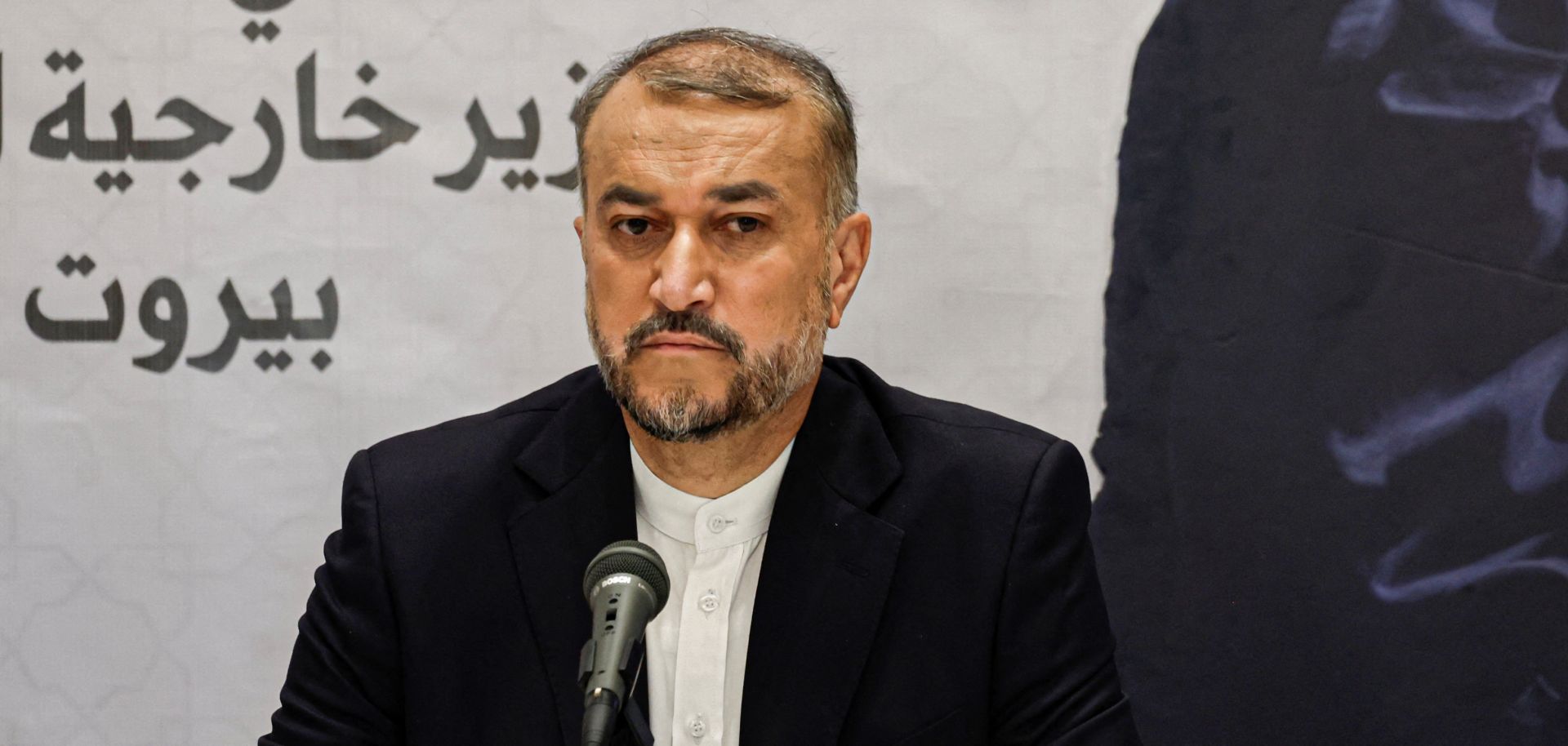
A series of Iranian warnings indicate a growing risk of the Israel-Hamas war expanding beyond its current geographic scope, with Tehran able to use multiple mechanisms to attack Israel and the West if it chooses. On Oct. 14, Axios, citing two diplomatic sources, reported that Iran had sent a backchannel communication through the United Nations to Israel saying that it does not seek escalation in the current Israel-Hamas war, but would be forced to intervene if Israel moves forward with its expected ground invasion of the Gaza Strip. In an interview with Al Jazeera the following day, Iranian Foreign Minister Hossein Amirabdollahian publicly warned Israel against invading Gaza, with Iranian state media quoting him as saying that ''Iran cannot remain a spectator'' if Israeli troops go into the strip and that the United States would also face ''significant damages'' in the wake of such an incursion.
- Al Jazeera reported that while visiting the Qatari capital of Doha on Oct. 15, Amirabdollahian told Qatar's emir that if Israel did not cease its attacks against Gazans, ''no one can guarantee that the situation will be under control and the scope of fighting won't expand.''
Iran's escalatory rhetoric indicates a growing threat of Tehran becoming more involved in the conflict, risking its spread to other countries in the region and potentially beyond. So far, the war has been largely confined to the Israel-Gaza theater as regional powers and the United States have sought to limit the risk of escalation. While Israeli forces have exchanged fire with Hezbollah and Palestinian militants in southern Lebanon, as well as struck some facilities in Syria, the conflict has principally involved Israel and Hamas, with the vast majority of fighting focused on the Gaza Strip and its environs. Moreover, Iran has refrained from taking any public credit for supporting Hamas' Oct. 7 attacks and, though Israel and the United States have accused Iran of propping up Hamas for years, they have not directly blamed Tehran for being behind Hamas' attacks. Nonetheless, this hesitance appears to be breaking down, with Israel specifically blaming Iran for telling Hezbollah to carry out attacks over the weekend of Oct. 14-15. From the Iranian side, its recent statements add to the risk of escalation and lay the ground for Tehran to get more involved, if it chooses. While Iranian rhetoric is already normally very aggressive towards Israel, its latest statements are more direct in implying violent action, even if not specified how or where, compared with its more routine denounciations of Israeli policy. As it vies for regional influence and seeks to portray itself as the vanguard of defending Palestinians against Israel, Iran likely feels growing pressure to join the conflict more assertively. Iranian state-affiliated media has focused heavily on the humanitarian emergency in Gaza and alleged Israeli abuses during its current campaign of airstrikes against the territory, likely partly in an attempt to justify greater Iranian involvement.
- On. Oct 15, Israel declared its northern border with Lebanon to be a closed military zone, a move to seemingly prepare for the risk of another front opening up, after further cross-border exchanges with Hezbollah.
- On Oct. 11, Iranian President Ebrahim Raisi and Saudi Crown Prince Mohammed bin Salman held their first direct phone call since signing a China-brokered deal in March to resume ties in an apparent attempt to limit the risk of escalation amid the current crisis. However, Iranian foreign policy is ultimately decided by Supreme Leader Ayatollah Ali Khamenei and the Supreme National Security Council, which are traditionally more hawkish.
If Iran were to become involved, it would have multiple means to conduct attacks directly and through proxies in nearby countries and cyberspace, threatening to open new fronts in the war and/or disrupt global energy markets. Iran's most immediate avenues to get more involved would be through the use of regional proxy groups in neighboring Lebanon or Syria, or farther afield in Iraq and Yemen. In addition to Iranian troops on the ground in at least the former two countries, Tehran has a network of allied militias in all four countries that it could use to strike at Israeli, U.S. or other Western targets. This could result in more aggressive rocket, missile or drone attacks, or even ground incursions from Lebanon or Syria directly onto Israeli-held territory, forcing Israeli soldiers to fight on multiple fronts; U.S. soldiers in Syria on their counter-Islamic State mission could also face threats. In Iraq, Iran could use its militias (which have already pledged to attack local U.S. interests if Washington provides more support for Israel) to attack U.S. troops, Western oil and gas companies or other foreign business operations. Meanwhile, in Yemen (where Iranian-backed Houthi rebels have also promised to retaliate if the United States get involved), Houthis could resume attacks that undermine the fragile de facto cease-fire and which could be calibrated to their (and Iran's) desired level of escalation. Given some degree of Iranian-Saudi rapprochement and the difficulty of targeting Saudi Arabia as a proxy for Israel, any attacks would be more likely if the United States were to become more militarily involved in the conflict as Iran and the Houthis may conduct attacks targeting Saudi oil and gas infrastructure, regional shipping or potentially even farther away targets in Gulf states as a proxy for their pro-Western orientation and the hosting of U.S. forces in places like Bahrain and Qatar. Should Iran seek to act particularly assertively, it could even attempt to try to ''close'' the Strait of Hormuz, though this would face multiple constraints, meaning Tehran is instead more likely to increase its harassment of ships transiting the waterway. Iran also has a wide variety of other asymmetric means to ratchet up pressure on Israel and the West, including by encouraging more militant violence emanating from the Gaza Strip or sponsoring further attacks against Israeli (or other Western) individuals, diplomatic facilities or business interests in third countries. No matter what happens on the ground, Iran would likely pursue more aggressive cyberattacks against Israeli or U.S. targets that go beyond the distributed-denial-of-service attacks and other fairly rudimentary attacks largely seen thus far. These cyberattacks could involve ransomware and data wipers, and potentially even attacks designed to cause physical destruction if Tehran wants to significantly escalate the conflict.
- Iran and Israel have engaged in tit-for-tat cyberattacks for many years. Iranian state-backed and independent hackers have also conducted numerous attacks that illustrate that they have both the intent and capability to cause physical harm. For instance, Iranian hackers are widely believed to have been behind the foiled cyberattacks against Israel's water infrastructure in April 2020 that aimed to raise chlorine levels to dangerous levels.
- If Tehran wanted to cause a larger disruption to global energy markets, Iran or its proxies could seek to take out a major regional oil and gas node, similar to the 2019 Iran-linked drone attack against Saudi Arabia's Abqaiq and Khurais oil processing facilities. Iranian naval forces (perhaps supported by Houthi rebels) could also try to shut down the Strait of Hormuz, through which about 15%-20% of global oil supply flows on a daily basis, taking advantage of the narrowness of the waterway and use of mines and other weapons to deny tanker traffic safe passage. That said, such a move would still be logistically very difficult and would almost certainly lead the United States and its allies to organize convoys to keep the strait open at least to some degree, thereby blunting the likely effectiveness of Iran's move were it to try it.
- Finally, in a worst-case escalation scenario, Iran could use its own missiles to directly strike Israeli targets, though this would all but ensure a massive Israeli response and risk sparking an even larger crisis. Thus, Tehran would likely only resort to such a strike after exhausting its comparatively less aggressive options, of which there are plenty (including many that offer some level of plausible deniability). But a major Israeli strike on Iranian soil or a significant targeted assassination, such as against Esmail Qaani, the Islamic Revolutionary Guard Corps-Quds Force commander, could push Iran over the edge.
