
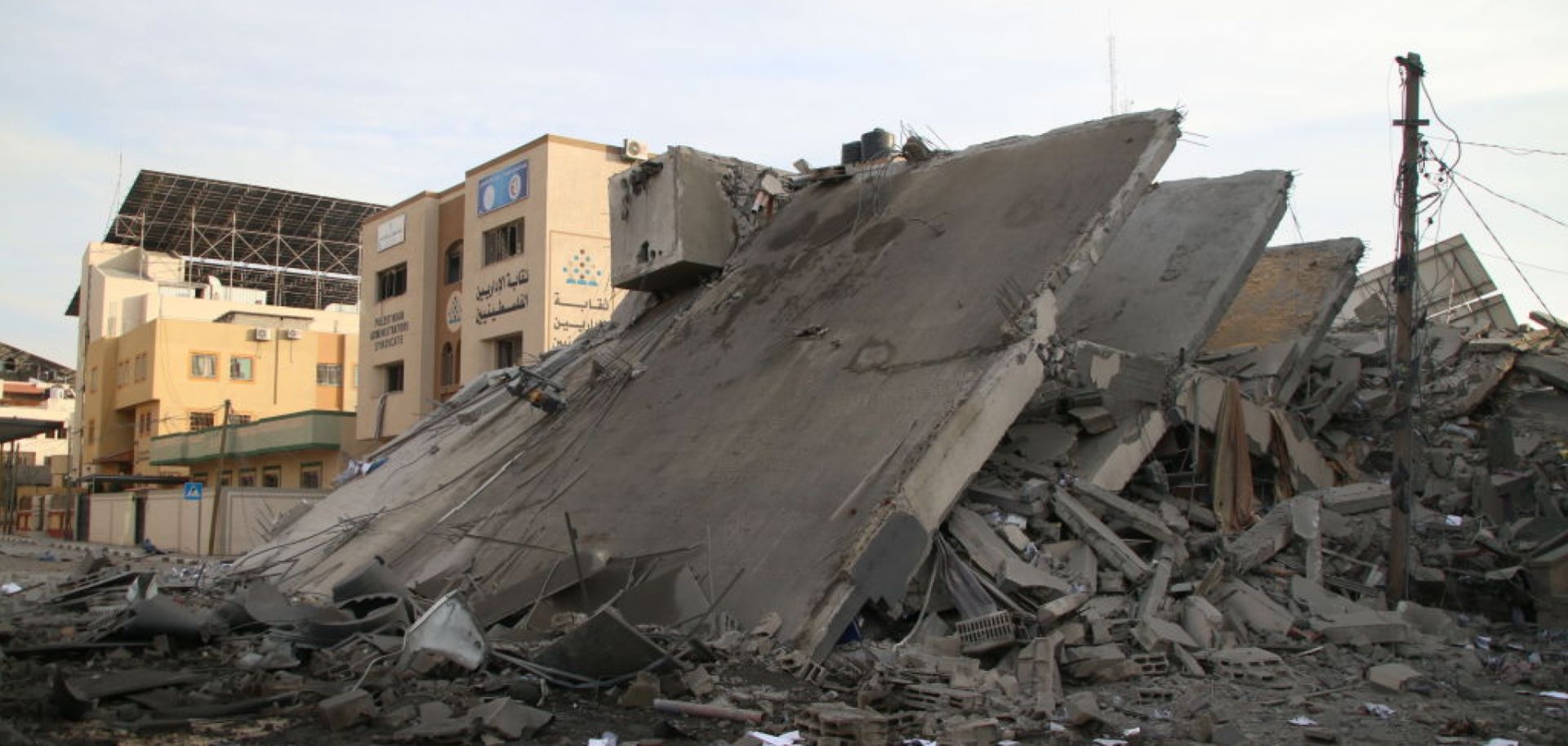
A large-scale Hamas attack threatens to significantly escalate conflict between Israel and militant groups. Violence could spread from Gaza to the West Bank, and attacks from Lebanon and unrest within Israel proper are also possible. Hamas, the Palestinian militant group that governs the Gaza Strip, and other armed groups like Palestinian Islamic Jihad (PIJ) launched a surprise attack Oct. 7 against Israel, firing thousands of rockets and carrying out a rare mass ground incursion into southern Israel. At least 100 Israeli casualties were reported, including soldiers and civilians, with many of them apparently caused by the ground incursion that targeted settlements, cities and at least one Israel Defense Forces base. Though details continue to emerge, Israeli media reported at least one IDF base had lost communications during the attack, while Hamas had reportedly made off with IDF equipment and a number of Israeli hostages. In response, Israeli Prime Minister Benjamin Netanyahu declared "a state of war" against Hamas and IDF reservists were called up. Flights in and out of Ben Gurion Airport were canceled as rocket fire reached as far north as Tel Aviv.
- It is unclear why Hamas struck now, but the militant group has experienced a financial crisis for months as the strip's economy suffers from the impact of high global inflation and an Israeli blockade. This situation became worse after Qatar, one of the few donors still supporting the strip, reportedly delayed payments to Gaza in July.
- In September, Hamas also resumed border provocations designed to pressure Israel into easing the blockade.
- Questions of legitimacy likely played a role in the operation: Hamas has been fending off challenges from other militant groups like PIJ and the Lions' Den, which have accused the group of being too accommodating to Israel. To refute such charges, Hamas has become increasingly willing to challenge the right-wing Israeli government by force in the West Bank, where some of Hamas' supporters and cells have raised violence to its highest level since the end of the Second Intifada in 2005.
- Ground incursions from Gaza are extremely rare, with Hamas and other militants like Palestinian Islamic Jihad preferring to launch rockets and conduct skirmishes from within the strip itself, in part because the Gaza-Israeli border is patrolled and fortified by the IDF. How militants were able to bypass these safeguards on this scale remains unclear, though Hamas does have an extensive tunnel network.
A sustained Israeli military operation in retaliation to degrade Hamas military infrastructure, recover any hostages, and destroy or recapture any IDF equipment held by the militant group is likely. The IDF has called up its reserve forces, suggesting it will carry out a sustained military campaign that increasingly looks like it will include a ground incursion into the strip. Israel's initial response will be to retaliate for the attack and to deter more rockets and infiltration attempts, but Israel will also begin operations to recover any hostages and military equipment captured by Hamas. Hamas has a long record of holding hostages for years, including Gilad Shalit, who was captured in 2005 and not released until 2011. Recovering hostages would require a ground incursion into the strip. With the Gaza Strip densely populated and filled with traps, tunnels and preplanned ambush points, such an operation could be costly for Israeli forces and Gazan civilians. Meanwhile, if Hamas did capture IDF vehicles, the IDF will likely focus on using air power to destroy vehicles that cannot be recovered by ground. Finally, the IDF will carry out targeted assassinations of senior militant leaders.
- Hostages will be a politically explosive issue for the Israeli government, making their recovery and safety an imperative.
- The last major Israeli ground invasion in 2014 targeted Hamas' tunnel systems, and resulted in heavy casualties for both sides.
A new Gaza war could escalate to new fronts in the West Bank, Lebanon and Israel proper, especially if it were sustained and resulted in significant Palestinian casualties. Violence is already at a recent high in the West Bank, in part driven by Hamas and other militant groups, and Hamas could decide to expand operations there. But even without Hamas' direction, grassroots anger in the West Bank is high, especially after incidents like the Israeli settler attack on the Palestinian village of Huwara in February 2023. Protests and individual attacks on Israeli forces and settlers throughout the West Bank are highly likely, with demonstrations already having broken out in East Jerusalem. Although Hezbollah has only signaled political, not military, support for the new conflict, Palestinian militants in Lebanon have now established networks capable of carrying out small-scale rocket fire on northern Israel. These groups may join in the conflict, forcing Israeli retaliation against their launch sites in Lebanon. Finally, during the last major Gaza conflict in May 2021, major riots broke out between Jews and Israeli Arabs within Israel itself as Israeli Arabs protested the conflict and clashed with far-right Israelis. Already angry over the far-right policies of the current government, Israeli Arabs may return to the streets, making a resumption of intercommunal violence possible.
- Israeli attacks against Lebanese targets could pull Hezbollah into the war, especially if the IDF kills Lebanese civilians or hits military sites associated with Hezbollah.
- Israel's domestic situation will be inflamed by far-right politicians, including National Security Minister Itamar Ben-Gvir, who now heads the country's police force and who has pressed for more aggressive tactics against protesters. Ben-Gvir oversees a national guard that has yet to be publicly deployed.
